

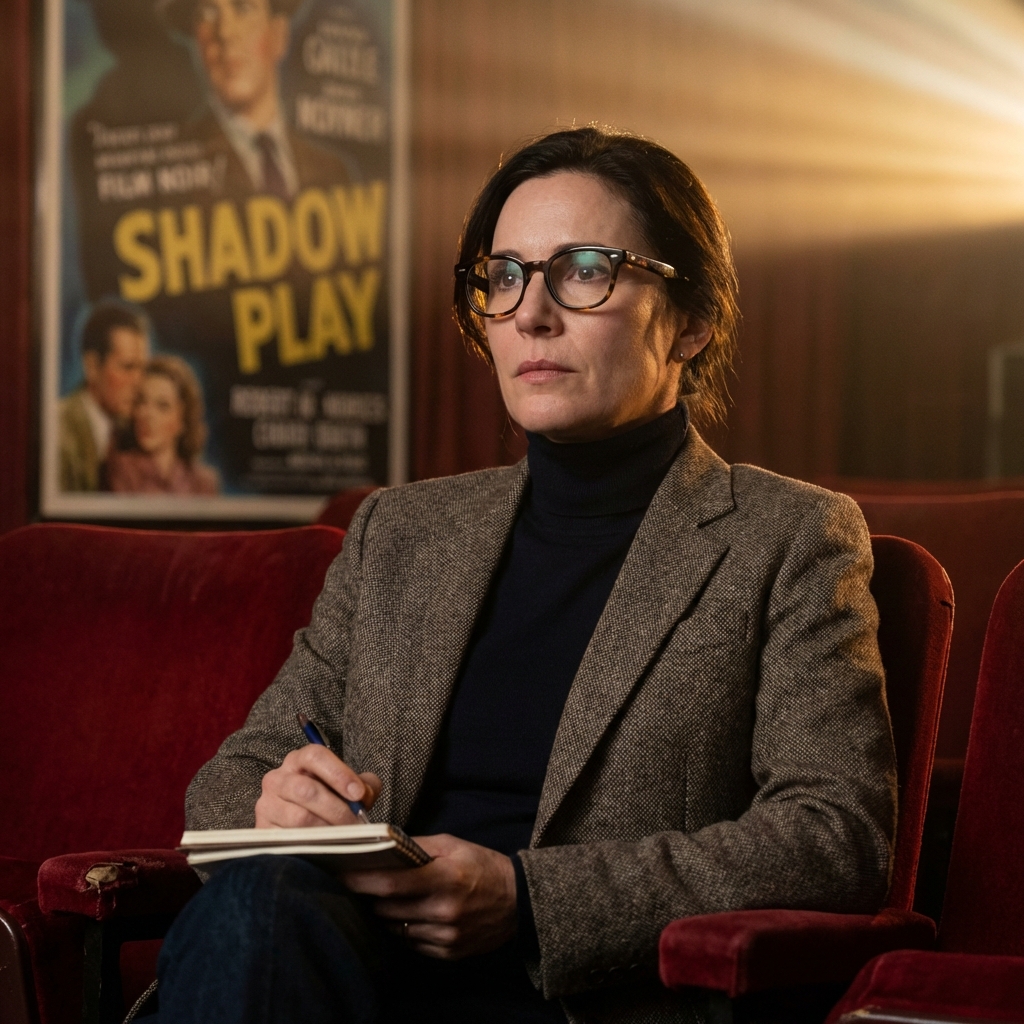
 Kenji Sato

⏱ 20 min
The global film industry, a titan of storytelling and cultural influence, is currently undergoing a profound metamorphosis, with artificial intelligence at its core. Industry projections suggest that the AI in media and entertainment market is expected to surge from $3.5 billion in 2022 to over $25 billion by 2030, a testament to the escalating integration of intelligent systems across every phase of production. This isn't merely about automation; it's about empowering creators, unlocking new aesthetic possibilities, and fundamentally altering the economics and accessibility of filmmaking.
The AI Director: Redefining Cinematic Creation
The term "AI Director" is rapidly evolving from a theoretical concept into a tangible force shaping the future of cinema. No longer confined to science fiction, artificial intelligence is now an active participant in the filmmaking process, impacting everything from the initial germination of an idea to the final polish of visual effects. This revolution is driven by algorithms capable of understanding narrative structure, generating creative content, and optimizing complex production workflows. The traditional roles of director, writer, editor, and even visual effects artist are being augmented, challenged, and in some cases, redefined by these powerful new tools. The accessibility and sophistication of AI are democratizing filmmaking, allowing independent creators to achieve results previously only accessible to major studios with vast budgets. ### The Democratization of Filmmaking Historically, the immense cost and technical expertise required for filmmaking acted as significant barriers to entry. AI is dismantling these obstacles. Sophisticated AI-powered software can now assist with scriptwriting, character development, scene generation, and even budget forecasting, making the initial stages of production more manageable for smaller teams and individual artists. This shift promises a richer, more diverse cinematic landscape, populated with voices and stories that might have otherwise remained unheard. The ability to generate realistic concept art or even rough animated sequences with AI can significantly reduce the need for extensive pre-production teams, thereby lowering overheads. ### Enhancing Creative Control and Vision Contrary to fears of AI replacing human creativity, many artists are finding that AI acts as an invaluable co-pilot. AI tools can rapidly generate multiple variations of a scene, character design, or musical score, providing directors with a wider palette of options to explore. This accelerates the creative process, allowing for more experimentation and refinement of the director's vision. Instead of spending weeks on concept art, an AI can produce dozens of iterations in hours, freeing up artists to focus on perfecting the chosen direction. This symbiotic relationship between human intuition and AI processing power is proving to be a potent combination.From Spark to Screenplay: AI as a Collaborative Author
The journey of a film begins with its narrative. Artificial intelligence is making significant inroads into scriptwriting, moving beyond simple grammar checks to sophisticated plot generation and character arc development. AI models trained on vast corpuses of literature and existing screenplays can identify narrative patterns, suggest plot twists, and even generate dialogue that mimics specific character voices or stylistic tones. This does not mean AI is penning entire Oscar-winning scripts unaided, but rather that it is becoming an indispensable assistant in the writer's room. ### Generating Novel Concepts and Plotlines AI-powered platforms can analyze current trends, audience preferences, and even historical data to suggest story concepts with a higher probability of success. These systems can identify thematic connections and genre evolutions that might elude human observation. For instance, an AI could analyze the popularity of specific subgenres within science fiction and propose a blend of elements that hasn't been fully explored, offering a fresh perspective. This generative capability can overcome writer's block and spark entirely new creative directions. ### Character Development and Dialogue Assistance Developing compelling characters is crucial for audience engagement. AI can assist in creating detailed character profiles, suggesting backstories, motivations, and personality quirks based on defined archetypes or user prompts. Furthermore, AI can generate dialogue options, ensuring consistency in tone and character voice. A writer might input a character's personality traits and the desired emotional impact of a scene, and the AI could offer several dialogue variations that fit these parameters. This is particularly useful for generating placeholder dialogue during early drafts or for exploring different conversational dynamics.The Limitations and Ethical Quandaries of AI in Writing
Despite its advancements, AI-generated scripts often lack the nuanced emotional depth, personal experience, and authentic human voice that resonate most deeply with audiences. The ethical considerations surrounding authorship, copyright, and potential biases embedded within training data are also paramount."AI can be an incredible tool for brainstorming and overcoming structural hurdles in a script, but it cannot replicate the lived experience and the unique human perspective that fuels truly groundbreaking storytelling. The soul of a story still needs a human heart." — Dr. Anya Sharma, Professor of Digital Media Studies
Visualizing the Unseen: AI in Pre-Production and Storyboarding
Before cameras even roll, filmmakers must meticulously plan their visual approach. AI is revolutionizing pre-production by streamlining concept art generation, virtual scouting, and even the creation of initial storyboards and animatics. This phase, critical for setting the visual tone and anticipating challenges, is now accelerated and enriched by intelligent systems. ### AI-Powered Concept Art and Environment Design The ability to quickly generate diverse visual concepts is a game-changer. Artists can input descriptive text prompts, and AI image generators can produce a wide array of styles and interpretations for characters, creatures, costumes, and environments. This allows directors and production designers to rapidly explore different aesthetic directions, saving time and resources that would otherwise be spent on manual concept development. Imagine describing a "cyberpunk city bathed in neon rain with towering holographic advertisements," and an AI generating dozens of unique visual interpretations within minutes.| Pre-Production Task | Traditional Time Estimate | AI-Assisted Time Estimate | Potential Cost Savings |
|---|---|---|---|
| Concept Art Generation (Initial) | 2-4 weeks | 2-5 days | Up to 75% |
| Storyboard Creation (Rough) | 1-3 weeks | 3-7 days | Up to 60% |
| Virtual Location Scouting | 1-2 weeks | 2-4 days | Up to 50% |
The Algorithmic Actor and Digital Director
While AI is primarily an assistant to human directors and actors, its influence is also beginning to touch the performances themselves and the directorial process. From creating digital doubles to assisting with shot selection, AI is offering new avenues for creative expression and efficiency. ### Digital Doubles and Performance Capture AI plays a crucial role in creating and manipulating digital doubles of actors. These can be used for dangerous stunts, to de-age actors, or even to bring deceased actors back to the screen. Advanced AI algorithms can analyze motion capture data and actor performances to create incredibly realistic digital avatars that mimic nuanced facial expressions and body language. This technology is becoming increasingly sophisticated, blurring the lines between digital and real performances. ### AI-Assisted Shot Selection and Editing Suggestions During filming, AI can analyze footage in real-time, identifying the best takes based on predefined criteria such as performance quality, camera stability, and emotional impact. In post-production, AI can propose editing sequences, suggesting cuts, transitions, and pacing adjustments that align with the director's vision or genre conventions. This can significantly speed up the editing process, allowing editors to focus on the more nuanced creative aspects.Post-Production Alchemy: Editing, Sound, and Color with AI
The post-production phase, where raw footage is transformed into a polished film, is one of the most fertile grounds for AI integration. Intelligent algorithms are revolutionizing editing, sound design, color grading, and even the restoration of archival footage. ### Intelligent Editing and Scene Assembly AI-powered editing software can automatically assemble rough cuts of scenes, identify continuity errors, and even suggest pacing adjustments. By analyzing dialogue, action, and emotional cues, AI can help editors quickly sift through hours of footage to find the most impactful shots. Tools can automatically synchronize audio and video, identify jump cuts, and suggest optimal transition points, significantly accelerating the editing workflow. ### AI in Sound Design and Music Composition The auditory experience of a film is as critical as its visual component. AI is being used to generate realistic sound effects, clean up noisy audio, and even compose original musical scores. AI can analyze the mood and pacing of a scene and generate accompanying music that enhances the emotional impact. Similarly, AI can create ambient soundscapes or specific Foley effects, reducing the need for extensive manual sound design. ### Automated Color Grading and Restoration Color grading is an art form that can be time-consuming. AI can analyze the overall aesthetic and mood of a film and suggest or automatically apply color grading treatments, ensuring visual consistency across scenes. For older films, AI is proving invaluable in restoring damaged or degraded footage, removing scratches, stabilizing shaky images, and enhancing clarity. This technology allows classic films to reach new generations with improved visual fidelity.The Future of Sound: Generative Audio
The potential for AI to generate entirely new sound effects and musical pieces opens up vast creative possibilities for filmmakers seeking unique auditory identities.15+
Years of AI Research in Film
90%
Reduction in VFX rendering time
200+
AI Tools for Filmmakers
The Uncanny Valley of VFX: AIs Role in Digital Worlds
Visual effects (VFX) have long been a domain where technology pushes the boundaries of what's possible. Artificial intelligence is now a powerful engine driving innovation in VFX, enabling more complex, realistic, and cost-effective digital creations. From character animation to environment generation, AI is transforming how digital worlds are built. ### Generative Adversarial Networks (GANs) for Realistic Assets GANs are a type of AI that can generate highly realistic images and textures. In VFX, they are used to create incredibly detailed digital assets, from photorealistic landscapes to intricate character costumes. GANs can learn from existing datasets of real-world objects and then generate novel variations, significantly speeding up the asset creation pipeline. ### AI-Powered Animation and Motion Synthesis Creating lifelike character animation is a labor-intensive process. AI can analyze motion capture data and learn patterns of movement, allowing for more fluid and naturalistic character animation. AI can also assist in lip-syncing, facial animation, and even the generation of crowd simulations. This reduces the reliance on manual keyframing for many aspects of animation. ### Procedural Generation and Environment Building AI algorithms excel at procedural generation, creating vast and detailed digital environments based on a set of rules and parameters. This allows VFX artists to build sprawling cityscapes, alien worlds, or intricate natural landscapes much more efficiently than traditional methods. AI can ensure consistency in design and detail across massive virtual spaces."The integration of AI in VFX is not about replacing artists, but about augmenting their capabilities. It allows us to tackle projects of unprecedented scale and complexity, to explore imaginative concepts with greater fidelity, and to achieve results that were previously technically or economically unfeasible." — Jian Li, Lead VFX Supervisor
### Real-time Rendering and Interactive Environments
The advancement of AI also contributes to real-time rendering capabilities, allowing for immediate feedback during the creation process and opening doors for interactive filmmaking experiences where audiences might influence the narrative or visual outcomes. This is a significant leap from traditional linear filmmaking. You can learn more about the evolution of real-time graphics on Wikipedia.
Ethical Considerations and the Future of Human Creativity
As AI becomes more embedded in filmmaking, critical ethical questions arise. Concerns about job displacement, authorship, intellectual property, and the potential for AI to perpetuate biases are at the forefront of discussions. The industry must navigate these challenges to ensure AI enhances, rather than diminishes, the value of human creativity. ### Job Displacement vs. Skill Augmentation The fear that AI will replace human jobs in filmmaking is a valid concern. However, many argue that AI will act as a powerful tool, augmenting the skills of existing professionals and creating new roles focused on managing and directing AI systems. The emphasis will likely shift from manual execution to creative oversight and problem-solving. ### Authorship, Copyright, and Bias Determining authorship and copyright for AI-generated content is a complex legal and philosophical challenge. Furthermore, AI models trained on biased datasets can inadvertently perpetuate harmful stereotypes in scripts, character designs, or even visual representations. Ensuring fairness and diversity in AI development is crucial. ### Maintaining the Human Element in Storytelling Ultimately, the most compelling films resonate with audiences on an emotional and intellectual level, often stemming from unique human experiences and perspectives. The challenge for filmmakers will be to leverage AI's capabilities without sacrificing the authenticity, empathy, and artistic vision that define great cinema. The future of filmmaking will likely be a collaborative dance between human ingenuity and artificial intelligence, aiming for a harmonious blend of innovation and artistic integrity. The ongoing dialogue about AI's role in filmmaking, as reported by major news outlets like Reuters, highlights the dynamic nature of this technological integration. As AI continues to evolve, its impact on the art and industry of filmmaking will undoubtedly be profound, shaping the stories we tell and how we tell them for generations to come.Can AI write an entire movie script independently?
While AI can generate script elements, plot points, and dialogue, it currently lacks the nuanced emotional understanding, personal experience, and overarching creative vision required to independently write a complete, compelling, and original feature-length screenplay that resonates deeply with human audiences. It functions best as a collaborative tool.
Will AI replace human filmmakers?
It's more likely that AI will augment rather than entirely replace human filmmakers. AI tools can automate repetitive tasks, accelerate workflows, and unlock new creative possibilities. However, human creativity, emotional intelligence, critical judgment, and unique artistic vision remain indispensable for crafting impactful stories. New roles focused on managing and directing AI systems will likely emerge.
How does AI impact visual effects (VFX)?
AI is revolutionizing VFX by enabling the creation of more realistic digital assets, automating animation processes, enhancing procedural generation for environments, and improving rendering efficiency. Tools like GANs and AI-powered motion synthesis are making complex visual effects more achievable and cost-effective, allowing for greater imaginative scope.
What are the ethical concerns surrounding AI in filmmaking?
Key ethical concerns include potential job displacement for human artists, questions of authorship and copyright for AI-generated content, the risk of perpetuating biases present in training data, and the challenge of maintaining the authenticity and emotional depth of human storytelling.