

 Marcus Thorne
⏱ 15 min
The global AI market is projected to reach over $1.3 trillion by 2030, with a significant portion fueling advancements in creative industries, as reported by Grand View Research.
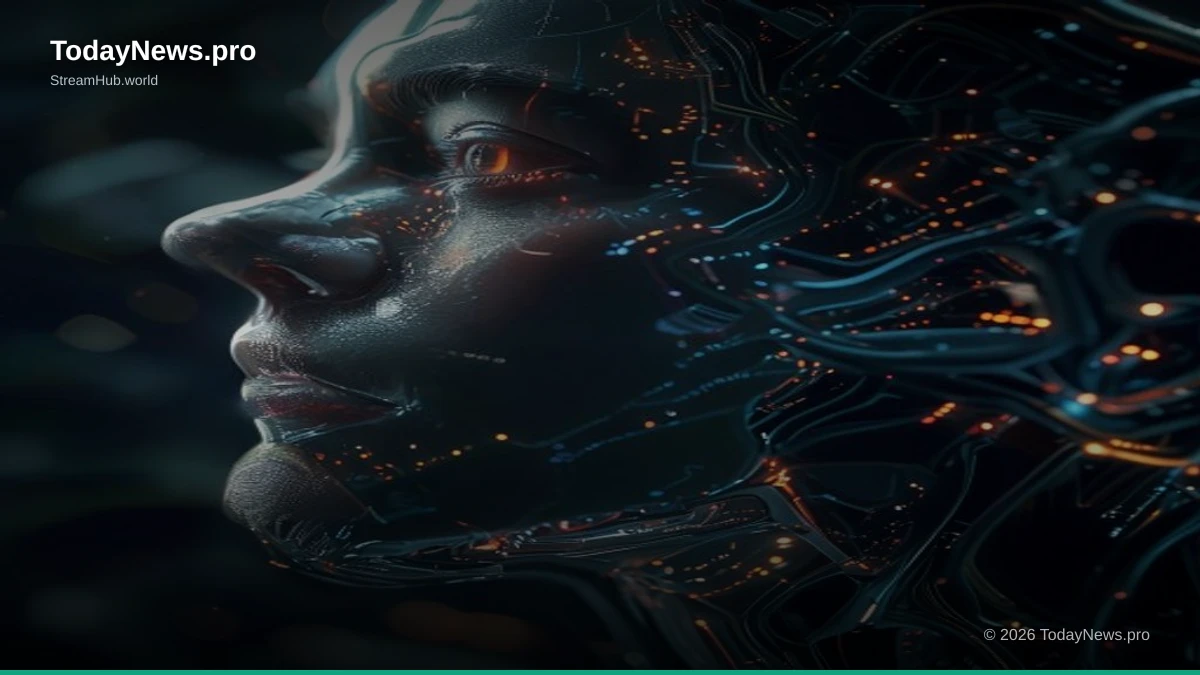
AIs Creative Revolution: From Algorithmic Art to Machine-Generated Masterpieces
The once-unthinkable notion of artificial intelligence as a creative force is rapidly becoming a tangible reality. What began as rudimentary algorithmic patterns has blossomed into sophisticated systems capable of generating art, music, literature, and even code that rivals, and in some instances surpasses, human output. This evolution is not merely a technological marvel; it’s a profound societal shift that compels us to re-examine our definitions of creativity, artistry, and authorship. The digital canvas is no longer solely the domain of human hands; it is increasingly being painted by algorithms, sparking both awe and apprehension across artistic disciplines. This revolution is democratizing creation, challenging established gatekeepers, and opening unprecedented avenues for human-AI collaboration, fundamentally altering the landscape of cultural production.The Dawn of Algorithmic Creativity
The roots of AI in creative endeavors stretch back further than many realize. Early experiments in the mid-20th century explored rule-based systems to generate musical compositions and visual patterns. These were often deterministic, following strict logical pathways to produce predictable, albeit novel, outputs. Think of early computer programs designed to mimic musical styles by applying predefined compositional rules. While groundbreaking for their time, these systems lacked the emergent complexity and nuanced understanding that characterize modern AI. They were more akin to sophisticated automatons than true generative artists. The subsequent decades saw a gradual increase in computational power and algorithmic sophistication, laying the groundwork for the breakthroughs that would soon follow.Early Explorations and Rule-Based Systems
Pioneering figures like George Antheil, who experimented with player pianos and algorithms in the 1950s, and Iannis Xenakis, who employed stochastic processes in music composition, demonstrated early inclinations towards mathematical and computational approaches to art. These were not AI in the modern sense but laid conceptual foundations. The focus was on understanding the underlying structures of artistic creation and translating them into a form that machines could process and replicate. The outputs were often abstract or stylized, reflecting the limitations of the underlying logic.The Emergence of Machine Learning in Art
The advent of machine learning, particularly neural networks, marked a significant turning point. Instead of explicitly programming rules, these systems began to "learn" from vast datasets of existing art, music, and text. This shift from rule-based generation to data-driven learning allowed for a much richer and more nuanced understanding of artistic styles, themes, and aesthetics. Early machine learning models could identify patterns and generate outputs that, while still rudimentary, hinted at a deeper capacity for creative expression. This period saw the birth of styles like "neural style transfer," where the artistic style of one image could be applied to the content of another.1950s
Early algorithmic music experiments
1980s
Advancements in rule-based expert systems for art
2010s
Rise of neural networks and style transfer
The Rise of Generative AI Models
The current era is defined by the explosion of highly capable generative AI models, such as Generative Adversarial Networks (GANs) and Transformer-based models like GPT-3 and DALL-E. These models have dramatically accelerated the pace and sophistication of AI-generated content. GANs, for instance, employ a competitive learning process between two neural networks – a generator and a discriminator – to produce increasingly realistic and novel outputs. Transformer models, initially developed for natural language processing, have proven remarkably adept at generating coherent and creative text, code, and even visual art when combined with appropriate architectures.Generative Adversarial Networks (GANs)
GANs represent a significant leap in image generation. By pitting a "generator" network against a "discriminator" network, they iteratively refine their ability to create synthetic data that is indistinguishable from real data. This has led to the creation of hyper-realistic images of people who don't exist, breathtaking landscapes, and unique abstract art. The "adversarial" process allows for a continuous improvement loop, pushing the boundaries of what the AI can convincingly produce.Transformer Models and Large Language Models (LLMs)
Transformer architectures, powering LLMs like OpenAI's GPT series and Google's LaMDA, have revolutionized text generation. These models, trained on colossal amounts of text data, can write stories, poems, scripts, and even mimic the writing styles of specific authors. Their ability to understand context, maintain coherence over long passages, and generate diverse creative outputs has made them invaluable tools for writers, marketers, and artists alike. When combined with image generation modules, LLMs can act as sophisticated prompts, guiding the creation of visual art.Diffusion Models and Their Impact
More recently, diffusion models have emerged as a dominant force in image generation, exemplified by tools like Stable Diffusion and Midjourney. These models work by gradually adding noise to an image and then learning to reverse this process, effectively "denoising" to create entirely new images from random noise, guided by textual prompts. Diffusion models are known for their photorealism, artistic versatility, and remarkable ability to interpret complex and abstract prompts, pushing the boundaries of what's possible in AI-generated visual art.Growth of AI-Generated Content Platforms
Defining Art in the Age of AI
The rapid advancement of AI in creative fields necessitates a fundamental re-evaluation of what constitutes "art." For centuries, art has been intrinsically linked to human consciousness, emotion, intent, and lived experience. AI, devoid of these qualities, generates outputs that are technically proficient and aesthetically pleasing, but do they possess the same intrinsic value? This question sparks intense debate among critics, artists, and philosophers. Is art solely about the final product, or is the process, the intention, and the human element inseparable from its definition?The Intentionality Debate
A central point of contention is intentionality. Human artists imbue their work with personal experiences, emotions, and specific messages. AI, on the other hand, operates based on patterns learned from data and the prompts it receives. Can an algorithm truly "intend" to convey a specific emotion or message? Or is the intention solely that of the human who crafted the prompt and guided the AI? This distinction is crucial for understanding the nature of AI-generated art.Human-AI Collaboration as a New Art Form
Many argue that the most compelling artistic outputs involving AI are not purely machine-generated but arise from a collaborative process. Here, the AI acts as a powerful tool, an extension of the human artist's capabilities, much like a paintbrush or a camera. The human provides the vision, the conceptual framework, and the iterative refinement, while the AI handles the complex generation and exploration of possibilities. This partnership blurs the lines between human and machine creativity, potentially giving rise to entirely new art forms. The human curator, prompt engineer, and editor become integral to the artistic process.Aesthetic Value vs. Human Experience
The debate also touches upon the very essence of aesthetic appreciation. While AI can generate visually stunning or musically complex pieces, the experience of art is often deeply personal and rooted in shared human understanding. Can a piece of art generated by an algorithm evoke the same emotional resonance as a work born from human suffering, joy, or contemplation? This is a question that only time and continued engagement with AI-generated works will truly answer."AI is not a replacement for human creativity; it's a powerful new medium. The challenge lies in understanding how to harness its potential while retaining the depth and nuance that only human experience can provide."
— Dr. Anya Sharma, AI Ethicist and Art Theorist
The New Frontier of Authorship and Ownership
The rise of machine-generated masterpieces directly challenges traditional notions of authorship and intellectual property. Who owns the copyright to an image generated by DALL-E? Is it the user who wrote the prompt, the company that developed the AI, or the AI itself? Current legal frameworks are struggling to keep pace with these new realities, leading to ongoing disputes and a need for new precedents. The question of ownership is not merely academic; it has profound implications for artists, creators, and the future of intellectual property law.Copyright Challenges and Legal Precedents
The U.S. Copyright Office, for example, has stated that works created solely by AI without sufficient human creative input are not eligible for copyright protection. This ruling, while clear in its current stance, is subject to interpretation and is likely to evolve as AI capabilities grow and collaborative methods become more sophisticated. The concept of "sufficient human creative input" remains a key area of legal debate.The Role of the Prompt Engineer
In the realm of prompt-based AI art generation, the "prompt engineer" has emerged as a crucial figure. Crafting effective prompts requires skill, creativity, and a deep understanding of how the AI interprets language and translates it into visual or textual output. This has led some to argue that the prompt engineer is, in essence, the author, imbuing the AI's output with their creative vision. However, this is still a nascent area of legal discussion.Licensing Models and Open Source Initiatives
Many AI development companies are exploring various licensing models for their creations, ranging from restrictive commercial licenses to more open-source approaches that allow for wider use and adaptation. The proliferation of open-source AI models further complicates the landscape, as it encourages innovation but also raises questions about attribution and derivative works.| AI Model | Primary Output Type | Copyright Status (General Guidance) | Key Companies/Developers |
|---|---|---|---|
| DALL-E 2 | Images | Requires human creative input; purely AI output generally not copyrightable. | OpenAI |
| Midjourney | Images | Terms of Service grant users broad usage rights, but ownership and copyright are complex. | Midjourney, Inc. |
| Stable Diffusion | Images | Open-source, allowing for extensive modification and use, but copyright for outputs is nuanced. | Stability AI, Runway, CompVis (LMU Munich) |
| GPT-3/GPT-4 | Text | Similar to image models; human creative input is key for copyright. | OpenAI |
Ethical Considerations and Future Trajectories
As AI continues its creative ascent, a host of ethical considerations demand our attention. These range from the potential for AI to displace human artists and workers to concerns about bias embedded within training data and the proliferation of misinformation through AI-generated content. Navigating these challenges requires a proactive and collaborative approach involving technologists, artists, policymakers, and the public.Bias in Training Data and Algorithmic Fairness
AI models learn from the data they are trained on. If this data contains biases—racial, gender, cultural, or otherwise—these biases will be reflected and potentially amplified in the AI's creative outputs. Ensuring fairness and equity in AI-generated content requires rigorous efforts to curate diverse and representative datasets and to develop techniques for detecting and mitigating bias. The potential for AI to perpetuate harmful stereotypes is a significant concern.The Economic Impact on Human Artists
The democratization of creation through AI tools raises questions about the economic viability of traditional artistic professions. Will AI-generated art flood the market, devaluing human-made works and making it harder for artists to earn a living? Conversely, could AI become a tool that enhances human artists' productivity and opens new markets? This economic restructuring is a critical area of ongoing analysis. For example, see this analysis from Reuters on artist concerns.The Future of Human-AI Creative Synergy
Looking ahead, the most exciting possibilities lie in the synergistic relationship between humans and AI. AI can serve as an inexhaustible muse, a powerful co-creator, and an innovative assistant, pushing the boundaries of human imagination. The future of art may well be a hybrid landscape where human intuition and AI's computational power converge to produce works we can currently only begin to imagine. Further exploration of this evolving relationship can be found on Wikipedia.70%
Of surveyed artists express concern about AI's impact on their careers.
2x
Potential increase in productivity for creative professionals using AI tools.
100+
New artistic styles and mediums potentially enabled by AI.
"We are at a pivotal moment. The question isn't whether AI can be creative, but how we will integrate this new capability into our cultural fabric responsibly, ethically, and in ways that elevate, rather than diminish, human artistic endeavor."
— Prof. Jian Li, Digital Media Studies
Is AI-generated art truly "art"?
This is a subject of ongoing debate. While AI can produce aesthetically pleasing and technically complex outputs, the definition of art often includes human intention, emotion, and lived experience, which AI currently lacks. Many view AI-generated works as a new medium or a product of human-AI collaboration rather than autonomous art.
Who owns the copyright to AI-generated art?
Current legal frameworks, such as those from the U.S. Copyright Office, generally state that works created solely by AI without significant human creative input are not copyrightable. Ownership is complex and often depends on the degree of human intervention in the creation process, the terms of service of the AI platform, and evolving legal interpretations.
Can AI replace human artists?
While AI can automate certain creative tasks and produce content efficiently, it is unlikely to fully replace human artists. Human creativity often stems from unique experiences, emotions, and nuanced understanding that AI currently cannot replicate. AI is more likely to evolve into a powerful collaborative tool that augments human creativity and opens new avenues for artistic expression.
What are the ethical concerns surrounding AI art?
Key ethical concerns include potential job displacement for human artists, the perpetuation of biases present in training data, the creation of misinformation or deepfakes, and questions of intellectual property and ownership. Ensuring fairness, transparency, and responsible development are crucial.