

 Marcus Thorne
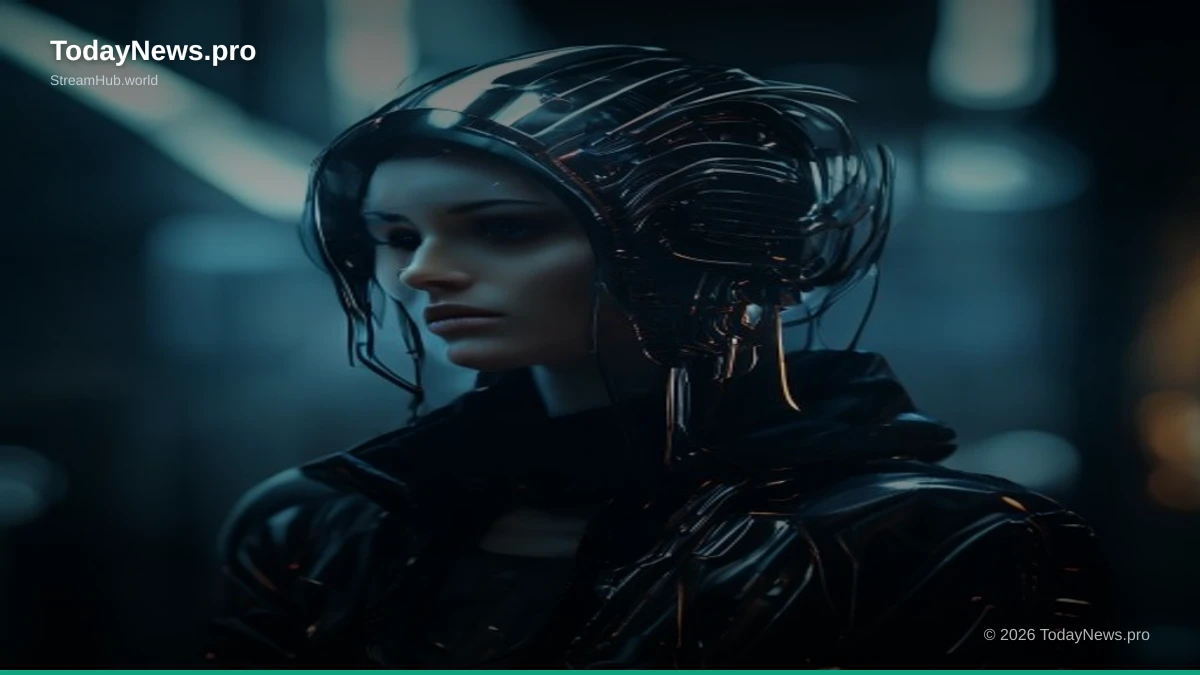
⏱ 20 min
In 2023, generative AI models produced an estimated 300 million images daily, a stark indicator of the seismic shift occurring in creative industries. Algorithms, once confined to data analysis and prediction, are now demonstrably creating art, composing music, and authoring literature, sparking a renaissance that is both exhilarating and unsettling.
The Algorithmic Muse: AIs Emergence in the Creative Landscape
The notion of artificial intelligence venturing into the realm of creativity was once the stuff of science fiction. Today, it is a palpable reality. Sophisticated neural networks, trained on vast datasets of human artistic output, are exhibiting an uncanny ability to generate novel and often breathtaking works. This transformation is not merely about replication; it is about synthesis, interpretation, and the generation of entirely new aesthetic experiences. The journey began with more rudimentary forms of generative art, but the advent of deep learning and transformer architectures has propelled AI's creative capabilities into uncharted territories. Models like DALL-E, Midjourney, and Stable Diffusion have democratized image creation, allowing individuals with no traditional artistic training to visualize complex concepts. Similarly, AI music generators are producing soundtracks, jingles, and even full-fledged compositions, while AI writing assistants are drafting articles, scripts, and creative prose. This technological leap is fundamentally redefining what it means to be an artist and what constitutes a creative act. The implications extend far beyond hobbyists. Professional artists, musicians, and writers are grappling with these new tools, exploring their potential to augment their own creative processes or, in some cases, facing direct competition. The speed at which these AI models are evolving suggests that their creative outputs will only become more sophisticated and indistinguishable from human creations, prompting a profound re-evaluation of artistic value and the role of human ingenuity.From Data to Doodles: The Underlying Technology
At the heart of this creative revolution lie complex machine learning algorithms, primarily Generative Adversarial Networks (GANs) and transformer models. GANs, introduced by Ian Goodfellow and his colleagues in 2014, involve two neural networks—a generator and a discriminator—locked in a perpetual game of one-upmanship. The generator attempts to create realistic data (images, text, etc.), while the discriminator tries to distinguish between real data and the generator's output. This adversarial process forces the generator to produce increasingly convincing results. Transformer models, on the other hand, excel at understanding sequential data, making them particularly adept at language and music. Their ability to process long-range dependencies in data allows them to grasp context and generate coherent narratives or complex musical structures. The sheer scale of data these models are trained on—billions of text documents, millions of images, and vast musical libraries—is what imbues them with their creative prowess. This training allows them to learn patterns, styles, and even emotional nuances that are then recombined and reinterpreted to produce original content.Painting Pixels: AI as a Visual Artist
The visual arts have arguably been the most visible frontier of AI's creative expansion. Tools like Midjourney and Stable Diffusion have taken the internet by storm, producing stunningly detailed and imaginative images from simple text prompts. These algorithms can generate photorealistic portraits, fantastical landscapes, abstract compositions, and art in the style of historical masters, all at a speed and scale previously unimaginable. The process is often one of iterative refinement. A user provides a textual description—a "prompt"—detailing their desired image. The AI then interprets this prompt, drawing upon its vast training data to generate an image. Users can then fine-tune the results by modifying the prompt, adding negative prompts (elements to exclude), or employing other stylistic controls. This collaborative dialogue between human and machine allows for the exploration of visual ideas that might be difficult or time-consuming to achieve through traditional methods. The impact on graphic design, illustration, and even fine art is already profound. Agencies are experimenting with AI-generated visuals for marketing campaigns, concept artists are using it for rapid prototyping of character designs and environments, and some artists are integrating AI outputs directly into their physical works. The question of whether these AI-generated images constitute "art" in the traditional sense is a subject of ongoing debate, but their aesthetic impact and commercial utility are undeniable.The Rise of the Prompt Engineer
As AI art generation tools become more accessible, a new skill set has emerged: prompt engineering. This involves crafting precise and evocative text prompts to guide AI models towards desired artistic outcomes. A skilled prompt engineer understands the nuances of how AI interprets language and can leverage specific keywords, stylistic descriptors, and compositional instructions to achieve unique visual results. It's a blend of technical understanding and creative intuition, turning language itself into a brushstroke.Art Market Disruption and New Aesthetics
AI-generated art is entering the art market, albeit with controversy. Auctions have seen AI-assisted artworks fetch significant sums, while galleries are beginning to exhibit pieces created with AI. This raises questions about provenance, artistic intent, and the very definition of an artist. Furthermore, AI is contributing to the emergence of entirely new aesthetic styles, characterized by surreal juxtapositions, intricate details, and a dreamlike quality that is uniquely born from algorithmic processes.| AI Image Generation Platform | Approximate Daily Image Output (Millions) | Key Features |
|---|---|---|
| Midjourney | 50+ | Discord-based, highly artistic and stylized output, extensive community. |
| DALL-E 3 (OpenAI) | 100+ | Integrated with ChatGPT, strong prompt adherence, versatile styles. |
| Stable Diffusion (Stability AI) | 100+ | Open-source, highly customizable, vast array of community-trained models. |
| Adobe Firefly | 20+ | Designed for commercial use, trained on licensed content, integrated into Adobe suite. |
Composing Code: AIs Symphony in Music Creation
The auditory world is also being transformed by AI. Music generation algorithms can now produce original melodies, harmonies, rhythms, and even full orchestral arrangements. These tools range from simple melody generators for background music to sophisticated systems capable of composing in specific genres and mimicking the styles of renowned composers. One of the most exciting applications is in assisting human musicians. AI can generate musical ideas, suggest chord progressions, or even create backing tracks, freeing up composers to focus on higher-level creative decisions. For independent artists and content creators, AI offers an accessible way to generate custom soundtracks for videos, podcasts, or games without the need for expensive licensing or hiring professional composers. The field is rapidly advancing, with AI models capable of understanding musical theory, emotional intent, and genre conventions. Companies like Amper Music, AIVA, and OpenAI's Jukebox are at the forefront, demonstrating AI's growing capacity to create music that is not only technically proficient but also emotionally resonant. While AI-composed music may not yet fully replicate the nuanced emotional depth of human performance, its ability to generate vast quantities of functional and aesthetically pleasing music is undeniable.AI as a Collaborative Bandmate
Many musicians view AI not as a replacement, but as a powerful collaborative tool. AI can act as an inexhaustible source of inspiration, providing fresh melodic fragments or harmonic ideas that a human artist might not have conceived. It can also handle the more repetitive or technically demanding aspects of composition, allowing the human artist to concentrate on the overarching vision and emotional narrative of the piece.Personalized and Adaptive Soundtracks
The potential for personalized music experiences is immense. Imagine video games where the soundtrack dynamically adapts to the player's actions and emotional state, or streaming services that generate unique ambient music tailored to a user's mood. AI is poised to make music more interactive and intimately connected to the listener's experience.Growth of AI Music Generation Market (Projected)
Weaving Worlds: AI as a Literary Innovator
The written word, a cornerstone of human expression, is also being shaped by AI. Large language models (LLMs) like GPT-3.5 and GPT-4 are capable of generating human-quality text, from simple emails and marketing copy to complex essays, poetry, and even fictional narratives. While initial AI-generated literature often lacked depth and originality, recent advancements have made AI-authored content increasingly sophisticated and coherent. For writers, AI can serve as a brainstorming partner, a tireless editor, or a tool for overcoming writer's block. LLMs can suggest plot twists, develop character backstories, or even draft entire chapters based on an outline. This has profound implications for content creation, journalism, and creative writing. News organizations are exploring AI for drafting routine reports, while authors are experimenting with co-writing projects, where AI generates substantial portions of the text, which are then edited and refined by a human. The ethical considerations surrounding AI authorship are particularly acute in literature. Questions of originality, plagiarism, and the very definition of a "writer" are being intensely debated. However, the potential for AI to democratize storytelling, assist emerging authors, and explore new narrative forms is undeniable. The ability of LLMs to process and synthesize vast amounts of literary knowledge opens up possibilities for innovative forms of creative expression.AI in Journalism: Efficiency and Ethical Challenges
The use of AI in journalism is growing, particularly for generating routine news reports, financial summaries, and sports recaps. This frees up human journalists to focus on in-depth investigative work, analysis, and human-interest stories. However, concerns about accuracy, bias, and the potential for misinformation remain significant.The Future of Storytelling: Co-creation and Novel Forms
AI is not just writing stories; it's helping to invent new ways of telling them. Interactive narratives that adapt to reader choices, dynamically generated plotlines, and hyper-personalized literary experiences are all on the horizon. The collaboration between human authors and AI promises to push the boundaries of what is possible in storytelling.70%
of content creators plan to integrate AI tools
40+
billion dollars projected market size for AI-powered creative tools by 2030
1000+
hours of video content can be generated daily by advanced AI systems
The Ethics of Algorithmic Art: Authorship, Copyright, and Authenticity
As AI systems become increasingly capable of generating creative works, a host of complex ethical, legal, and philosophical questions arise. Foremost among these is the issue of authorship. If an AI generates a piece of art, music, or literature, who is the author? Is it the AI itself, the developers who trained the model, the user who provided the prompt, or some combination thereof? This ambiguity has significant implications for copyright law. Current copyright frameworks are largely designed around human creators. Determining ownership and intellectual property rights for AI-generated content is a major legal challenge. In the United States, the U.S. Copyright Office has stated that it will not register works created solely by AI without human authorship, but the line between human-assisted and AI-generated creation is often blurry. Authenticity is another critical concern. In a world where AI can flawlessly mimic human styles and generate content at scale, how do we distinguish genuine human expression from algorithmic output? This has implications for artistic integrity, the value placed on human skill and experience, and the potential for deception. The debate over whether AI can possess genuine creativity or simply "recombine" existing data is ongoing."The concept of authorship is being fundamentally challenged. We are moving from a paradigm where creativity is solely attributed to human consciousness to one where algorithmic processes can produce outputs that are aesthetically and functionally indistinguishable from human work. This necessitates a reevaluation of our legal and philosophical frameworks."
— Dr. Anya Sharma, Professor of Digital Ethics, Stanford University
Copyright Conundrums: Who Owns AIs Creations?
The legal landscape is struggling to keep pace. For instance, a painting created by AI and entered into a competition sparked a debate when it won a prize. Copyright law, as it stands, typically requires a human author. This has led to discussions about whether AI creations should be considered public domain, owned by the AI's creators, or if new legal categories are needed. For more on intellectual property challenges, see this Reuters article.The Value of Human Artistry in an Algorithmic Age
If AI can produce technically perfect art, what then becomes the value of human artistic endeavor? Many argue that the value lies not just in the final product, but in the lived experience, emotional journey, and unique perspective that a human artist brings. The imperfections, the struggles, and the personal narrative behind human art are what give it a distinct and irreplaceable quality.The Human-AI Collaboration: A Symbiotic Future
Rather than viewing AI as a replacement for human creativity, many experts and practitioners see a future of profound collaboration. AI can serve as an incredibly powerful tool, augmenting human capabilities and opening up new avenues of creative exploration that were previously impossible. This symbiotic relationship has the potential to elevate human creativity to new heights. In music, AI can generate complex harmonic progressions that a composer might not have considered, or it can assist in orchestrating intricate passages. In visual arts, AI can rapidly generate variations of a design concept, allowing artists to explore more possibilities in less time. For writers, AI can provide plot suggestions, character dialogues, or even draft initial scenes, which the human author then refines, imbues with personal voice, and shapes into a cohesive narrative. This co-creative model allows humans to focus on the conceptual, emotional, and intentional aspects of art, while AI handles more of the generative, iterative, and technically demanding tasks. The result is not just AI-created art or human-created art, but a new form of hybrid creativity, where the strengths of both human intuition and algorithmic power are leveraged. The learning curve for mastering these collaborative tools will be steep, but the potential rewards are immense.Augmenting Creative Workflows
The integration of AI into existing creative workflows promises significant efficiency gains. Designers can use AI to generate hundreds of logo variations in minutes, musicians can experiment with countless melodic ideas, and writers can speed up their drafting process considerably. This allows for a greater focus on refinement, artistic direction, and the human touch.Democratizing Creativity
AI tools can also lower the barrier to entry for creative pursuits. Individuals who may not have had the technical skills or resources for traditional art, music, or writing can now express their ideas and create compelling content. This democratization can lead to a richer and more diverse creative landscape."The most exciting frontier is not AI replacing artists, but AI empowering artists. Think of it as having an infinitely skilled, tireless assistant who can execute your wildest ideas at lightning speed. The human element of vision, intent, and emotional depth will always be paramount."
— David Chen, Lead AI Ethicist, TechNova Solutions
Challenges and Opportunities in the AI Creative Renaissance
The rapid ascent of AI in creative fields presents a dual landscape of significant challenges and unparalleled opportunities. On the challenge side, issues of job displacement are a primary concern. As AI becomes more proficient, certain roles in graphic design, content writing, and even music production may be impacted. Ensuring a just transition and reskilling initiatives will be critical. Another significant challenge lies in the potential for AI to exacerbate existing biases. If AI models are trained on biased datasets, their creative outputs can reflect and perpetuate those biases. Ensuring fairness, equity, and ethical representation in AI-generated content requires careful attention to data curation and model development. However, the opportunities are equally profound. AI is poised to unlock new forms of artistic expression, accelerate innovation, and make creative tools more accessible to a wider audience. It can help us understand creativity itself better by providing a computational lens through which to examine artistic processes. The ability to generate novel solutions to complex problems, explore entirely new aesthetic frontiers, and personalize creative experiences for individuals marks a new era. Wikipedia offers a comprehensive overview of artificial intelligence and creativity.Addressing the Skills Gap and Job Transition
The creative industries will need to adapt. Educational institutions and training programs will need to equip future professionals with the skills to work alongside AI, focusing on prompt engineering, AI art direction, and the critical evaluation of AI outputs. Lifelong learning will become even more crucial.Fostering Ethical AI Development and Use
Developing ethical guidelines and regulatory frameworks for AI in creative fields is paramount. This includes addressing issues of bias, transparency, and the responsible deployment of AI technologies to ensure they benefit society as a whole.Can AI truly be considered 'creative'?
The definition of creativity is debated. AI can generate novel and aesthetically pleasing outputs by learning patterns from vast datasets. Whether this constitutes true "creativity" or sophisticated pattern matching remains a philosophical question. Many argue that intentionality, consciousness, and lived experience are hallmarks of human creativity that AI currently lacks.
Will AI replace human artists, musicians, and authors?
It is more likely that AI will transform these professions rather than entirely replace them. AI can automate certain tasks and generate content, but human oversight, artistic direction, emotional depth, and unique perspectives remain invaluable. A collaborative future where humans and AI work together is the most probable outcome.
How does AI learn to create art or music?
AI models, particularly deep learning models like GANs and transformers, are trained on massive datasets of existing art, music, or text. They learn patterns, styles, and structures within this data. When given prompts or parameters, they use this learned knowledge to generate new content that is statistically similar to the training data but can also be novel.
What are the main ethical concerns surrounding AI-generated content?
Key ethical concerns include: authorship and copyright ownership, potential for job displacement, the perpetuation of biases present in training data, the generation of misinformation or deepfakes, and the erosion of authenticity in creative works.