

 Elena Kogan
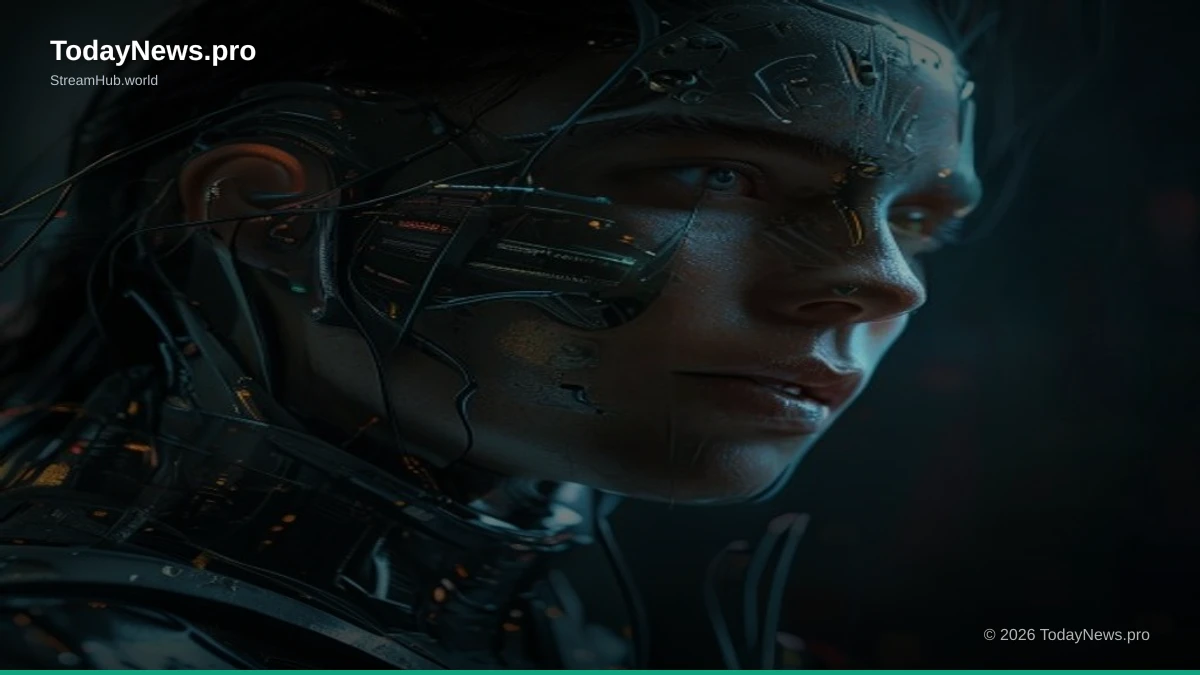
The global AI market, projected to reach over $1.3 trillion by 2030, is rapidly extending its influence into sectors once considered exclusively human domains, with the creative arts experiencing a profound transformation driven by algorithmic innovation.
The Algorithmic Brushstroke: AIs Emergence in the Creative Landscape
For centuries, the creation of art has been intrinsically linked to human emotion, intuition, and lived experience. The notion that a machine could replicate, or even contribute to, this deeply personal process was once the realm of science fiction. However, the advent of sophisticated artificial intelligence, particularly in the field of generative AI, has fundamentally altered this perception. Algorithms are no longer just tools for analysis or automation; they are becoming active participants in the creative process, acting as muses, collaborators, and even independent creators.
This paradigm shift is not merely about efficiency or novelty. It represents a fundamental redefinition of what it means to be an artist and what constitutes art itself. AI models, trained on vast datasets of existing artistic works, can identify patterns, styles, and aesthetic principles that might elude even seasoned human artists. They can then synthesize this knowledge to generate entirely new pieces, or offer novel interpretations of existing concepts.
The impact is already visible across various artistic disciplines. In visual arts, AI-powered image generators are producing stunning, often surreal, artworks that challenge traditional notions of authorship and originality. In music, AI composers are creating melodies and harmonies that blend seamlessly with human compositions, pushing the boundaries of sonic exploration. Even in literature, AI is assisting in scriptwriting, poetry generation, and narrative development, opening up new avenues for storytelling.
The Dawn of the Algorithmic Artist
The initial forays of AI into art were often rudimentary, focusing on stylistic transfers or pattern recognition. Early AI art might have been technically impressive but lacked the emotional depth often associated with human-created art. However, with advancements in deep learning, neural networks, and large language models, AI has gained the capacity for more nuanced and context-aware creative output. These systems can now understand prompts with a remarkable degree of sophistication, translating abstract ideas into tangible artistic forms.
This development has sparked considerable debate. Is the AI the artist, or is the human who prompts and curates the AI the artist? The answer is rarely straightforward, often pointing towards a hybrid model of creation where human intent and algorithmic execution intertwine. The AI becomes an extension of the artist's vision, a tool that can unlock possibilities previously unimaginable due to technical limitations or creative blocks.
The accessibility of these tools is also a significant factor. Previously, mastering complex artistic software or techniques required years of dedicated practice. Now, individuals with a strong artistic concept but perhaps lacking traditional technical skills can leverage AI to bring their visions to life. This democratizes art creation to some extent, empowering a broader range of individuals to engage in creative expression.
From Pixels to Poetry: AIs Multifaceted Artistic Capabilities
The capabilities of AI in the creative arts are as diverse as the arts themselves. From generating photorealistic images to composing intricate musical scores, AI is proving to be a versatile and powerful creative partner. Its ability to process and analyze massive amounts of data allows it to learn and replicate styles, understand complex aesthetic principles, and even innovate by combining elements in novel ways.
In the realm of visual arts, tools like Midjourney, DALL-E 2, and Stable Diffusion have become household names for digital artists and hobbyists alike. These platforms can take simple text prompts and transform them into elaborate visual narratives, ranging from hyperrealism to abstract expressionism. This has not only streamlined the concept art process for industries like gaming and film but has also opened up new avenues for individual artistic expression and exploration.
Generative Music and AI Composers
The sonic landscape is also being reshaped by AI. Companies like Amper Music, AIVA (Artificial Intelligence Virtual Artist), and Google's Magenta project are developing AI systems capable of composing original music across various genres. These AI can generate background scores for videos, create jingles, or even produce full-fledged musical pieces. They learn from existing musical traditions, understanding melody, harmony, rhythm, and orchestration, to produce output that is often indistinguishable from human compositions.
The applications extend beyond mere generation. AI can also assist human composers by suggesting chord progressions, melodies, or arrangements, acting as an intelligent assistant that overcomes creative inertia. This collaborative approach allows human musicians to explore new sonic territories and refine their work with unprecedented speed and precision.
Literary AI and Narrative Generation
The field of literature has seen significant advancements with large language models (LLMs) like GPT-3 and its successors. These models can generate coherent and contextually relevant text, enabling them to write poetry, short stories, screenplays, and even assist in novel writing. While current LLMs may still struggle with profound thematic depth or consistent character development over long narratives, their ability to generate creative prose and dialogue is rapidly improving.
Authors are beginning to experiment with AI as a co-writer, using it to brainstorm ideas, overcome writer's block, or generate descriptive passages. The ethical implications of AI-generated literature, particularly concerning copyright and authorship, are still being navigated, but the potential for AI to democratize storytelling and inspire new forms of narrative is undeniable.
The Evolution of Tools: Generative AI and Artistic Expression
Generative AI represents a significant leap forward from earlier forms of AI in creative applications. Unlike discriminative AI, which is designed to classify or predict, generative AI is built to create new data that resembles the training data. This fundamental difference is what enables AI to produce novel artistic outputs. The underlying technologies, such as Generative Adversarial Networks (GANs) and diffusion models, have been instrumental in this evolution.
GANs, for instance, involve two neural networks – a generator and a discriminator – locked in a perpetual game of creation and critique. The generator attempts to create realistic data, while the discriminator tries to distinguish between real data and generated data. Through this adversarial process, the generator becomes increasingly adept at producing outputs that are virtually indistinguishable from the original training set. Diffusion models, on the other hand, work by gradually adding noise to an image and then learning to reverse the process, effectively denoising it to create new images from scratch.
Democratizing Artistic Creation
The accessibility of these generative AI tools has been a key driver of their widespread adoption. Platforms offering user-friendly interfaces allow individuals without extensive technical or artistic backgrounds to experiment with sophisticated creative processes. A simple text prompt can be the starting point for generating complex visual art, intricate musical motifs, or creative prose. This democratization has lowered the barrier to entry for artistic creation, enabling a broader audience to explore their creative potential.
This shift has led to the emergence of new artistic movements and styles. AI-generated art often exhibits a unique aesthetic, sometimes surreal, other times hyperrealistic, and frequently pushing conceptual boundaries. The collaborative nature of prompting and refining AI outputs has fostered a new kind of artistry, one that blends human conceptualization with algorithmic execution.
The Proliferation of AI Art Platforms
The market for AI art tools has exploded, with numerous platforms catering to different needs and skill levels. Each platform often possesses unique characteristics, offering varying degrees of control, aesthetic styles, and output quality. This competition fosters innovation, with developers constantly refining algorithms and user interfaces to provide more powerful and intuitive creative experiences.
For instance, some platforms excel at photorealistic rendering, while others are geared towards abstract or stylized outputs. The choice of platform can significantly influence the final artwork, highlighting the importance of understanding the capabilities and limitations of each tool. Many artists are now becoming proficient not just in traditional artistic mediums but also in "prompt engineering" – the art of crafting effective text prompts to guide AI generation.
| Model Type | Examples | Primary Creative Application | Underlying Technology |
|---|---|---|---|
| Image Generation | DALL-E 2, Midjourney, Stable Diffusion | Digital art, concept art, illustration, graphic design | Diffusion models, GANs |
| Text Generation | GPT-3, GPT-4, LaMDA | Creative writing, poetry, scriptwriting, content creation | Transformer architecture (LLMs) |
| Music Generation | AIVA, Amper Music, Google Magenta | Original compositions, background scores, sound design | Recurrent Neural Networks (RNNs), Transformers |
| Video Generation | RunwayML, Synthesia | Short films, animation, virtual avatars | GANs, Diffusion models |
Case Studies: AI-Assisted Masterpieces and Innovations
The integration of AI into the creative arts is not a theoretical concept; it is a reality reflected in numerous groundbreaking projects and artistic achievements. These case studies offer tangible examples of how AI is shaping future masterpieces and pushing the boundaries of artistic possibility.
One of the most prominent examples is the auctioning of AI-generated art. In 2018, Christie's sold "Portrait of Edmond de Belamy," an artwork created by the Obvious art collective using a GAN, for a staggering $432,500. This event marked a watershed moment, legitimizing AI art as a collectible and valuable commodity, and sparking intense debate about authorship and artistic intent. While the piece was generated by an algorithm, the human artists who developed the algorithm and selected the final output were credited.
AI in Film and Animation
The film industry is increasingly leveraging AI for various creative tasks. AI algorithms are being used to generate realistic visual effects, create entire animated sequences, and even assist in scriptwriting. For instance, AI has been employed to de-age actors, generate background characters, and even create digital doubles. Tools like RunwayML are enabling filmmakers to create complex visual effects with greater ease and speed, democratizing high-quality visual storytelling.
Beyond visual effects, AI is also being explored for narrative development. AI can analyze vast libraries of screenplays to identify successful narrative structures and character arcs, offering insights to human writers. While AI cannot yet fully replicate the nuanced emotional depth of human storytelling, its ability to generate plot ideas, dialogue, and character concepts is a valuable asset in the pre-production phase.
AI in Music Composition and Performance
The music industry has witnessed significant AI integration. AI composers like AIVA have created soundtracks for films and video games, demonstrating their capacity to produce emotionally resonant and stylistically appropriate music. Human composers are also collaborating with AI, using it to generate new melodic ideas or explore harmonic variations they might not have conceived of independently. Companies like Amper Music offer AI-powered platforms that can generate custom music for content creators, tailoring the mood, genre, and length to specific needs.
The rise of AI-generated music raises questions about copyright and royalties. Who owns the rights to a piece of music composed by an AI? These legal and ethical quandaries are still being actively discussed and resolved as the technology matures and its output becomes more prevalent.
The Human Element: Collaboration vs. Replacement
The most pressing question surrounding AI in the creative arts is whether it will ultimately replace human artists or serve as a powerful new tool for collaboration. The prevailing sentiment among many artists and industry observers is that AI is more likely to augment human creativity rather than supersede it.
AI excels at tasks involving pattern recognition, data synthesis, and rapid iteration. It can generate variations of an idea, explore countless aesthetic possibilities, and handle tedious or repetitive aspects of the creative process. However, it currently lacks the subjective experience, emotional depth, consciousness, and cultural context that are foundational to human artistic expression. The "why" behind art – the intention, the lived experience, the desire to communicate a specific emotion or idea – remains a uniquely human domain.
AI as an Inspirational Muse
Many artists view AI as a powerful source of inspiration and a means to overcome creative blocks. By generating unexpected outputs, AI can offer novel perspectives or spark new ideas that a human artist might not have otherwise considered. It can act as an infinite well of visual or auditory concepts, a digital muse that provides a constant stream of potential starting points.
The process of interacting with an AI often involves a dialogue. The human artist provides prompts, guides the AI's output, curates the results, and refines them to align with their artistic vision. This iterative process highlights the collaborative nature of AI-assisted art, where the human's intent and aesthetic judgment are crucial in shaping the final piece. The AI becomes an advanced paintbrush, a sophisticated instrument, or an intelligent writing partner.
Redefining Artistic Skills
The rise of AI in creative fields is also leading to a redefinition of artistic skills. While traditional technical proficiency will always be valuable, new skills are emerging as essential. "Prompt engineering" – the ability to craft precise and evocative text prompts to guide AI – is becoming a critical skill for visual artists. Similarly, musicians might develop skills in AI music curation and arrangement, while writers might hone their ability to integrate AI-generated text into their narratives.
This evolution doesn't diminish the value of human artistry; it expands it. Artists who embrace AI as a tool can unlock new creative potentials and produce work that was previously impossible. The focus shifts from manual execution alone to conceptualization, curation, and the strategic use of powerful new technologies. The human remains the conductor, even when the orchestra is digital.
Ethical Considerations and the Future of Art
As AI becomes more integrated into the creative arts, a host of ethical considerations come to the forefront. These range from issues of copyright and authorship to the potential for bias in AI-generated content and the broader societal implications for artists.
One of the most contentious issues is copyright. If an AI generates a piece of art, who owns the copyright? Is it the developer of the AI, the user who provided the prompt, or the AI itself (a concept currently not recognized by law)? Legal frameworks are still catching up to these technological advancements, leading to uncertainty and ongoing debate. The use of copyrighted material in AI training datasets also raises concerns about fair use and intellectual property infringement.
Bias and Representation in AI Art
AI models are trained on vast datasets, and if these datasets contain biases, the AI will likely replicate and even amplify them. This can lead to AI art that perpetuates stereotypes or underrepresents certain demographics. For example, image generation models might default to generating art that reflects dominant cultural norms if trained on heavily skewed data. Addressing these biases requires careful curation of training data and ongoing refinement of algorithms to ensure equitable and inclusive creative outputs.
The potential for AI to generate hyperrealistic "deepfakes" also presents a significant ethical challenge, particularly in the realm of visual arts and media. Ensuring transparency about AI-generated content and developing robust detection mechanisms will be crucial to maintaining trust and preventing misuse.
The Evolving Role of the Artist
The future of the artist in an AI-augmented world is one of adaptation and evolution. Rather than being replaced, artists are likely to find new roles as curators, collaborators, and conceptual designers. The emphasis will shift towards their ability to guide AI, imbue work with personal meaning, and critically engage with the outputs of algorithms. The artist's unique perspective, emotional intelligence, and lived experiences will become even more valuable differentiators.
Furthermore, AI can democratize art creation, allowing individuals who might not have had access to traditional artistic training to express themselves creatively. This could lead to a richer and more diverse artistic landscape. However, it also necessitates a conversation about how to support and value human artists in an era where AI can produce vast quantities of aesthetically pleasing content.
The future of art will likely be a hybrid one, where human creativity and artificial intelligence work in tandem. The most compelling works may emerge from this synergy, challenging our perceptions and expanding the definition of art itself. Navigating this new frontier requires a thoughtful approach to technology, a commitment to ethical practices, and an open mind to the boundless possibilities of algorithmic inspiration.
Navigating the New Frontier: Expert Opinions
The rapid integration of AI into the creative arts has elicited a wide range of perspectives from industry leaders, artists, and technologists. While some express caution, the overwhelming consensus points towards AI as a transformative force that will redefine creative processes and outcomes.
Many experts emphasize the collaborative potential of AI. They envision a future where AI acts as an indispensable partner, augmenting human creativity rather than replacing it. This partnership can manifest in various ways, from AI-powered brainstorming tools that generate novel ideas to sophisticated rendering engines that bring complex visions to life.
The Symbiotic Relationship
Technologists often highlight the symbiotic relationship that is emerging. AI systems learn from human-created art, and in turn, they provide new avenues for human expression. This feedback loop is crucial for the advancement of both AI capabilities and artistic innovation. The more humans interact with and guide AI in creative endeavors, the more sophisticated and nuanced the AI's outputs become.
However, the discussion is not without its concerns. Issues surrounding data privacy, the ethical use of AI in generating content that mimics existing artists, and the potential for AI to flood the market with generic content are frequently raised. Ensuring that AI development prioritizes ethical considerations and supports the livelihoods of human artists is paramount for a sustainable and thriving creative ecosystem.
Looking Ahead: The Algorithmic Muse
The "algorithmic muse" is here to stay. As AI continues to advance, its role in the creative arts will undoubtedly expand. From generating novel visual styles and composing groundbreaking musical pieces to assisting in the creation of immersive narrative experiences, AI is poised to become an integral part of the artistic toolkit. The future of art lies not in a battle between humans and machines, but in a collaborative dance, where human ingenuity and algorithmic power converge to create masterpieces yet unimagined.