

 Peter Warren
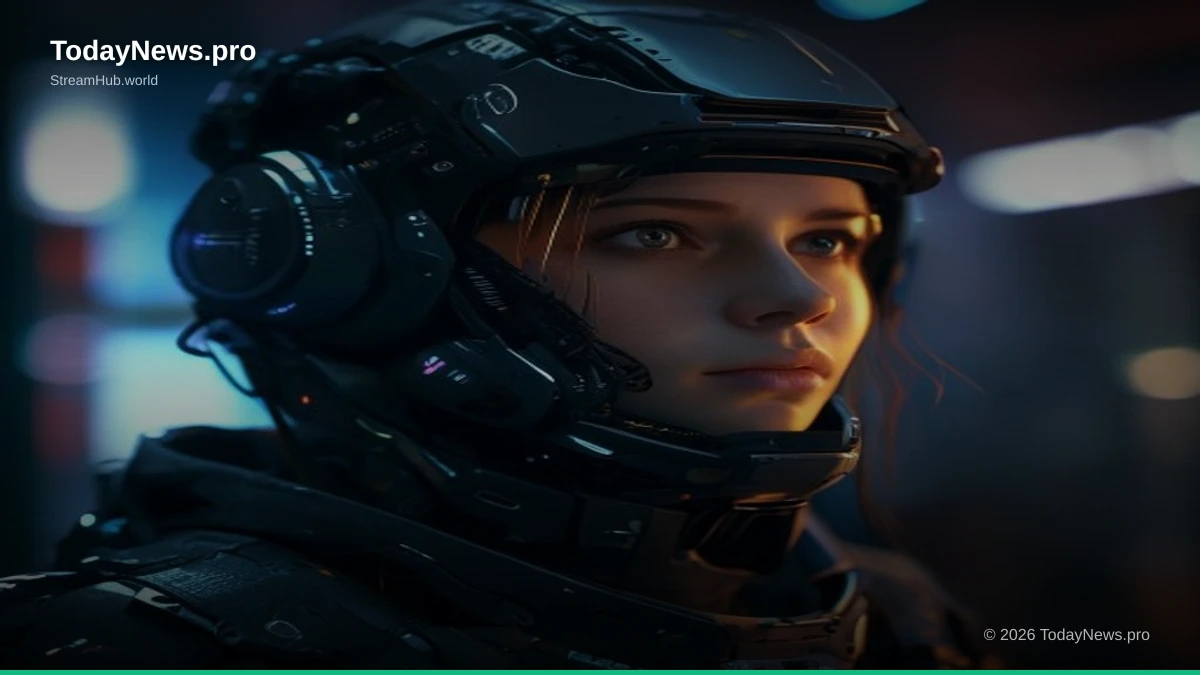
The global video game market is projected to reach $282.3 billion by 2027, a significant portion of which is driven by increasingly sophisticated player experiences, with AI companions emerging as a key differentiator.
The Silent Revolution: From Scripted Scripts to Sentient Souls
For decades, non-player characters (NPCs) in video games have served as little more than plot devices or obstacles. Their dialogue was pre-written, their actions predictable, and their emotional range limited to a few programmed reactions. They were the painted backdrops to the player's grand adventure. However, a profound shift is underway, driven by advancements in artificial intelligence. We are moving beyond the era of static, predictable characters and stepping into a new paradigm: that of the AI companion. These are not just characters that inhabit the game world; they are dynamic entities capable of learning, adapting, and forging genuine connections with players, fundamentally altering how stories are told and how deeply players can immerse themselves in virtual realities.
This evolution promises to transform the very fabric of interactive entertainment, offering experiences that are not only more engaging but also deeply personal. The implications extend far beyond mere gameplay enhancements, touching upon the very nature of storytelling and our relationship with artificial intelligence.
Defining the AI Companion: More Than Just a Digital Shadow
The term "AI companion" signifies a departure from traditional NPCs. While NPCs are typically designed with a specific purpose within a pre-defined narrative, AI companions possess a greater degree of autonomy and intelligence. They are characterized by their ability to understand context, process player actions and dialogue, and respond in ways that are not pre-scripted but rather generated dynamically. This includes a capacity for learning from player behavior, evolving their personalities, and even exhibiting emergent behaviors that surprise even their creators.
At their core, AI companions are designed to foster a sense of connection and partnership. They are intended to feel like individuals with their own motivations, perspectives, and even emotional responses. This is achieved through sophisticated natural language processing (NLP), sophisticated sentiment analysis, and adaptive learning algorithms that allow them to build a unique relationship with each player over time. They are not merely tools for the player; they are active participants in the unfolding narrative.
Key Differentiators from Traditional NPCs
- Dynamic Dialogue: Instead of reciting pre-written lines, AI companions can generate novel responses based on player input and the current game state.
- Adaptive Behavior: They learn from player actions, adapting their strategies, emotional expressions, and even their opinions of the player.
- Emergent Personalities: Their personalities are not fixed but can evolve organically through interactions, leading to unique companion experiences for each player.
- Contextual Awareness: They understand the nuances of the game environment and the ongoing narrative, reacting appropriately to events.
The Spectrum of AI Companionship
It's important to recognize that AI companionship exists on a spectrum. At one end are more advanced NPCs with enhanced reactivity, like those found in games that offer more branching dialogue options. Further along are companions with distinct personalities and learning capabilities, such as the dog in Fallout 4, who displays loyalty and can be directed. At the cutting edge are true AI companions powered by large language models (LLMs) and advanced machine learning, capable of holding nuanced conversations, developing unique relationships, and influencing the narrative in profound ways. These cutting-edge examples are the true harbingers of the revolution we are witnessing.
The Evolution of Companionship in Gaming
The concept of a helpful or loyal companion in games is not new. From the trusty sidekicks of early adventure games to the more complex allies in modern RPGs, developers have long sought to create characters that players could rely on. Early examples were often rudimentary, with limited AI and repetitive dialogue. Think of the silent protagonist's ever-present, but often passive, companion in early The Legend of Zelda titles, or the more directive but still largely scripted allies in games like Final Fantasy.
The transition towards more intelligent companions began with improved scripting and decision trees. Games like BioShock introduced characters with more defined personalities and motivations, even if their actions were still largely governed by pre-set parameters. The introduction of squad-based mechanics in games like Mass Effect allowed for more complex party dynamics, where companions had distinct combat roles and loyalty missions that offered glimpses into their backstories. However, these companions, while more sophisticated, still operated within a largely defined narrative framework. Their interactions, while sometimes feeling personal, were ultimately dictated by the game's design.
Milestones in Companion AI
- Early Era (Pre-2000s): Limited AI, scripted behaviors, often voiceless or with minimal dialogue (e.g., Navi in The Legend of Zelda: Ocarina of Time).
- Emergence of Personality (2000s-2010s): Companions with distinct personalities and loyalty systems, more complex dialogue trees (e.g., Garrus Vakarian in Mass Effect).
- Advanced Reactivity (2010s-Present): Companions with more nuanced emotional responses and dynamic interactions based on player choices (e.g., Dogmeat in Fallout 4).
- Generative AI Era (Late 2010s-Present): Companions capable of natural language understanding, learning, and dynamic narrative contribution (e.g., experimental mods and future AAA titles).
The advent of powerful AI models is now pushing the boundaries, allowing for companions that can engage in spontaneous conversations, offer unsolicited advice, and even develop unique relationships with players that deviate from any pre-written script. This is the leap from a well-crafted NPC to a truly emergent digital personality.
Under the Hood: Technologies Powering Advanced AI Companions
The creation of believable and engaging AI companions relies on a confluence of cutting-edge artificial intelligence technologies. At the forefront are advanced Natural Language Processing (NLP) and Natural Language Generation (NLG) models. These allow companions to understand player input, including complex sentences and nuanced emotional cues, and to generate coherent, contextually relevant, and often surprisingly human-like responses. Large Language Models (LLMs), like those powering advanced chatbots, are increasingly being integrated to provide a foundation for dynamic conversation.
Beyond language, machine learning plays a crucial role. Reinforcement learning algorithms enable companions to learn from player actions and in-game events, adapting their behaviors and strategies over time. This can manifest in various ways, from a companion becoming more cautious after the player has been injured in a specific type of encounter, to them developing a preference for certain dialogue options based on positive player reinforcement. Behavioral trees and state machines are still employed for foundational character actions, but they are augmented by these more flexible AI systems.
Core AI Technologies
- Natural Language Processing (NLP): Understanding player speech and text.
- Natural Language Generation (NLG): Creating dynamic, on-the-fly dialogue.
- Machine Learning (ML): Enabling companions to learn from player interactions and adapt their behavior.
- Sentiment Analysis: Interpreting the emotional tone of player input.
- Reinforcement Learning: Allowing companions to optimize their actions based on feedback.
The Role of LLMs
Large Language Models are particularly transformative. Instead of relying solely on pre-defined dialogue trees, LLMs can generate an almost limitless variety of responses. This means a companion can react to an unexpected player action with an original remark, rather than a canned phrase. Furthermore, LLMs can be fine-tuned on specific character lore and personality traits, ensuring that the generated dialogue remains consistent with the companion's established persona. This allows for a level of conversational depth and spontaneity previously unimaginable in gaming.
Consider the potential for a companion to recall a past event shared with the player, offer a unique perspective on a current dilemma based on its learned personality, or even initiate a conversation about something it observed in the game world. This level of dynamic interaction moves the player experience from being guided by a story to co-authoring it with their digital companions.
Revolutionizing Narrative: Dynamic Storytelling and Player Agency
Perhaps the most profound impact of advanced AI companions will be on game narrative. Traditional storytelling in games, while often branching, is ultimately constrained by the developer's pre-defined narrative paths. AI companions, with their ability to learn and react dynamically, can break these constraints, leading to truly emergent storytelling. Instead of simply following a script, the narrative can evolve organically based on the player's choices, the companion's evolving personality, and their unique relationship.
Imagine a companion who, after witnessing the player make a morally ambiguous decision, begins to express doubt about the player's character, subtly influencing future dialogue options or even altering its willingness to assist. Conversely, a companion who consistently sees the player act altruistically might become more trusting and proactive in offering support. This level of dynamic response elevates player agency from making choices within a pre-determined framework to actively shaping the narrative through their interactions and the relationships they cultivate.
Emergent Narrative Paths
AI companions can introduce unforeseen plot twists, alter the stakes of quests, and even lead to entirely new narrative branches that were not explicitly designed by the developers. Their learned behaviors and evolving opinions can create emergent story arcs that feel unique to each playthrough. A companion's past experiences within the game world, combined with its learned understanding of the player's character, can lead to personalized insights and reactions that deepen the narrative's emotional resonance.
Enhanced Player Agency
With AI companions, players are no longer just making binary choices. They are engaging in ongoing dialogues and relationships that have tangible consequences. A companion's trust, loyalty, or even distrust can become a crucial gameplay mechanic, influencing quest outcomes, available resources, and even the companion's willingness to sacrifice for the player. This fosters a much stronger sense of ownership over the narrative, as players feel their actions and their relationships are genuinely shaping the story's direction.
Deepening Immersion: Emotional Bonds and Unpredictable Interactions
Immersion in video games is about creating a believable and engaging virtual world that captivates the player's senses and emotions. AI companions are poised to become one of the most potent tools for achieving this goal. By fostering genuine emotional bonds, these digital entities can make the virtual world feel more alive, more consequential, and more personal. When a player feels a true connection to their companion – perhaps through shared moments of triumph, empathy during times of hardship, or even frustration over disagreements – the game world transcends being a mere playground and becomes a lived experience.
The unpredictability introduced by advanced AI also contributes significantly to immersion. Instead of knowing precisely how a character will react, players must navigate relationships with entities that can surprise them, challenge them, and even express opinions that diverge from their own. This element of the unknown mirrors real-world relationships, making the virtual interactions feel more authentic and engrossing. A companion might offer unsolicited advice based on its learned understanding of the player's struggles, or express fear during a dangerous encounter, making the player feel a deeper sense of responsibility and connection.
Building Emotional Resonance
The ability of AI companions to remember past interactions, acknowledge the player's achievements (or failures), and express a range of emotional responses is key to building emotional resonance. When a companion can recall a shared adventure or offer comfort after a difficult loss within the game, it moves beyond being a mere gameplay mechanic to becoming a true ally. This can lead to players feeling a genuine sense of grief if a companion is lost, or profound joy if they help their companion achieve a personal goal. The development of these digital relationships can be as impactful as any story-driven narrative arc.
The Power of Unpredictability
The most advanced AI companions will be those that can act in ways that are not always predictable. This doesn't mean random or nonsensical behavior, but rather emergent actions that stem from a complex internal state and a learned understanding of the player and the world. For example, a companion might develop a quirky habit, express a unique philosophical viewpoint, or even engage in behavior that conflicts with the player's immediate goals if it believes it's for the best. These unpredictable moments create a sense of surprise and genuine interaction, making the game world feel less like a simulated environment and more like a dynamic, living space.
The Ethical Frontier: Challenges and Opportunities in AI Companionship
As AI companions become more sophisticated and integrated into our gaming experiences, they bring with them a host of ethical considerations. The potential for deep emotional attachment raises questions about player well-being and the nature of human-AI relationships. Developers must consider how to design these companions responsibly, ensuring they don't exploit player vulnerabilities or foster unhealthy dependencies. The line between a compelling virtual companion and a manipulative digital entity can be thin, and developers bear a significant responsibility in navigating this space.
Furthermore, the data collected by these AI companions – regarding player behavior, preferences, and even emotional states – raises privacy concerns. Robust data protection measures and transparent policies are paramount. The potential for bias in AI models also needs careful attention; companions that reflect societal biases can perpetuate harmful stereotypes, detracting from the intended immersive experience. On the flip side, AI companions offer incredible opportunities for accessibility, providing engaging experiences for individuals who may have social anxieties or physical limitations that make traditional multiplayer interactions challenging.
Ethical Considerations
- Player Well-being: Designing companions that foster healthy relationships and avoid exploitation.
- Data Privacy: Protecting player data collected through AI interactions.
- Bias Mitigation: Ensuring AI companions are free from harmful stereotypes.
- Digital Dependency: Understanding and addressing the potential for unhealthy attachments.
Opportunities and Future Potential
The opportunities presented by advanced AI companions are immense. They can unlock new forms of accessible gaming, offering personalized experiences for players with diverse needs. They can serve as powerful tools for narrative exploration, allowing for unprecedented levels of player agency and emergent storytelling. As AI technology continues to evolve, we can anticipate companions that not only enhance gameplay but also provide meaningful digital companionship, pushing the boundaries of what we expect from interactive entertainment and our relationships with artificial intelligence.
The journey beyond NPCs has just begun. As AI continues its relentless march forward, the companions we encounter in our games will become less like programmed puppets and more like digital souls, forever changing the landscape of interactive storytelling and our understanding of what it means to truly connect.