

 David Chen
⏱ 15 min
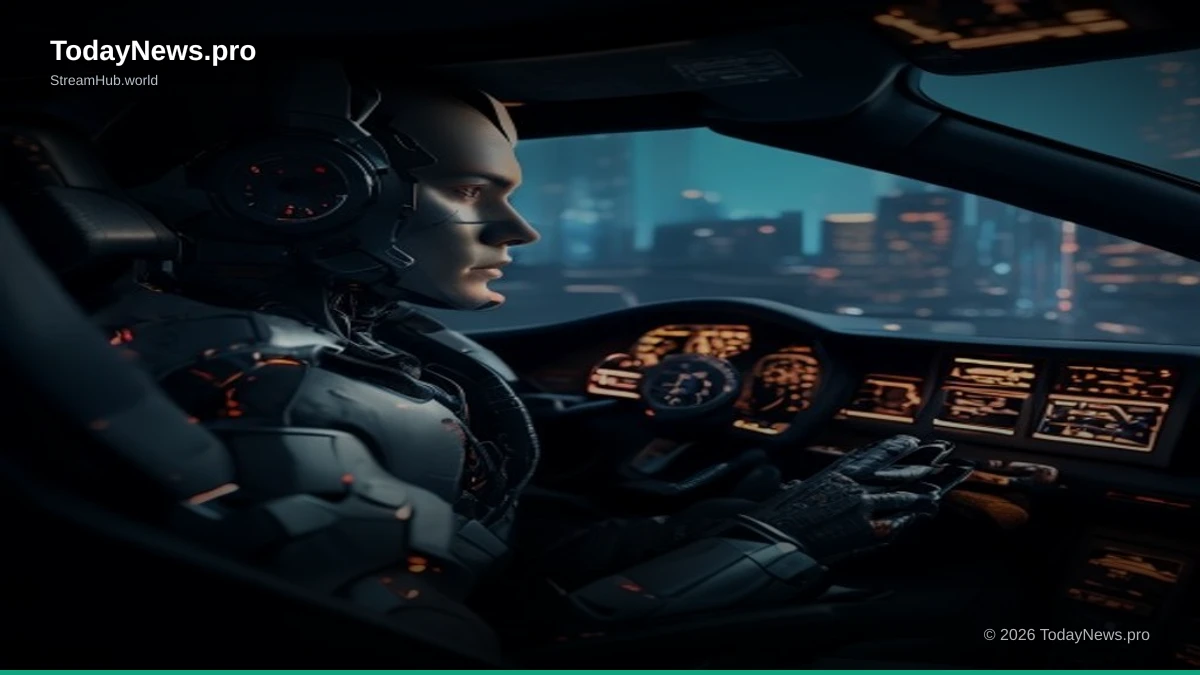
According to a recent study by Statista, the global generative AI market is projected to reach $110.8 billion by 2030, signaling a seismic shift in how creative endeavors are conceived and executed. This isn't just about faster algorithms; it's about a fundamental redefinition of the creative process, positioning Artificial Intelligence not as a replacement for human imagination, but as an indispensable co-pilot.
AI as Your Co-Pilot: Redefining the Creative Landscape
The very essence of creativity has always been tied to human ingenuity, emotion, and lived experience. For centuries, artists, writers, musicians, and designers have relied on their innate talents, honed skills, and often, laborious processes to bring their visions to life. However, the advent of sophisticated Artificial Intelligence, particularly generative AI, is rapidly transforming this landscape. We are no longer solely reliant on the singular spark of human genius; instead, we are entering an era where AI acts as a powerful augmentation, a tireless collaborator, and an insightful advisor. This symbiotic relationship promises to democratize creative tools, accelerate innovation, and unlock entirely new forms of artistic expression. The fear of AI replacing human creators is slowly giving way to an understanding of its potential to amplify human capabilities, making complex tasks accessible and freeing up artists to focus on higher-level conceptualization and refinement.Democratizing Access to Creative Tools
Historically, mastering complex creative software or techniques required years of dedicated practice. Tools for 3D modeling, animation, graphic design, and even advanced writing often had steep learning curves. Generative AI is beginning to lower these barriers dramatically. Individuals with compelling ideas but lacking specific technical skills can now leverage AI to translate their concepts into tangible outputs. This democratization means that a wider pool of people can participate in creative production, fostering a more diverse and vibrant ecosystem. For instance, a small business owner can now generate professional-looking marketing materials without hiring an expensive agency, or an aspiring writer can overcome writer's block with AI-generated plot suggestions.Accelerating the Iterative Process
Creativity often involves extensive iteration and experimentation. Artists might sketch dozens of concepts, musicians might compose numerous melodies, and writers might draft multiple versions of a scene. AI excels at rapid generation and variation. This allows creators to explore a far wider range of possibilities in a fraction of the time. Instead of spending hours on preliminary sketches, an artist can use AI to generate hundreds of stylistic variations of a core idea. This accelerates the exploration phase, enabling creators to quickly identify promising directions and then apply their unique human touch for refinement. This speed boost is invaluable in fast-paced industries like advertising and game development.Unlocking Novel Forms of Expression
AI is not just about doing existing things faster; it's about enabling entirely new artistic modalities. Generative adversarial networks (GANs) can create images that are indistinguishable from real photographs, while AI-powered music generators can compose pieces in styles never before conceived. The combination of human intent and AI's generative power can lead to art that is surreal, hyperreal, or abstract in ways that were previously difficult or impossible to achieve. This opens up new avenues for conceptual art, interactive installations, and personalized creative experiences that were beyond the reach of traditional methods. The dialogue between human intuition and algorithmic output can yield surprising and profound results.The Dawn of Generative AI in Art and Design
The realm of digital art and design has been one of the earliest and most visibly impacted sectors by generative AI. Tools like DALL-E 2, Midjourney, and Stable Diffusion have captured public imagination with their ability to conjure stunning visuals from simple text prompts. These platforms are not merely image filters; they are sophisticated engines capable of understanding complex semantic relationships and translating them into visual realities. This has profound implications for illustrators, concept artists, graphic designers, and even hobbyists. The ability to rapidly prototype visual ideas, generate unique assets, and explore diverse artistic styles is transforming workflows.Text-to-Image Generation: A New Canvas
The most prominent manifestation of generative AI in art is text-to-image synthesis. Users describe what they want to see, and the AI generates an image. This has moved beyond novelty to become a powerful tool for ideation and content creation. Imagine a game developer needing concept art for a fantasy creature; instead of commissioning an artist for initial sketches, they can generate dozens of variations within minutes. Similarly, a marketer can quickly visualize campaign imagery without lengthy mood board sessions. The precision and stylistic control offered by these models continue to improve, blurring the lines between AI-generated output and human-created artwork.AI in 3D Modeling and Animation
Beyond 2D visuals, AI is making inroads into 3D modeling and animation. Generative AI can assist in creating 3D assets from 2D images or even text descriptions, significantly reducing the manual effort required. Tools are emerging that can automatically generate textures, rig character models, or even suggest animation sequences. This has the potential to dramatically speed up the production pipeline for video games, films, and virtual reality experiences. The ability to rapidly populate virtual worlds with unique and detailed assets will redefine the scope and scale of digital environments.Generative Design in Product and Architectural Development
In fields like product design and architecture, generative AI is being used for "generative design." This involves setting parameters and constraints, and then allowing the AI to explore thousands of potential design solutions. This can lead to highly optimized and novel forms that a human designer might not have conceived. For example, AI can design lighter, stronger, and more material-efficient components for manufacturing or optimize building layouts for maximum natural light and energy efficiency. This approach shifts the designer's role from direct creation to curation and refinement of AI-generated options.Adoption Rate of AI Tools in Creative Industries (Projected)
Beyond the Brushstroke: AIs Impact on Different Creative Fields
While visual arts have seen dramatic advancements, AI's influence extends far beyond the canvas. Music composition, writing, game development, and even fashion design are experiencing profound transformations, each with unique implications for creators and consumers alike. The core theme remains consistent: AI as an enhancer and accelerator, augmenting human creativity rather than supplanting it.AI in Music and Audio Production
Generative AI is revolutionizing music creation. Algorithms can now compose original melodies, harmonies, and even full orchestral pieces in various genres. Tools like Amper Music and Jukebox by OpenAI can generate royalty-free background music for videos, podcasts, or games, saving significant time and cost. Beyond composition, AI is used for audio mastering, sound design, and even generating realistic voiceovers. This democratizes music production, allowing aspiring musicians to experiment with complex arrangements and soundscapes.AI as a Muse for Writers and Storytellers
For writers, AI tools like GPT-3 and its successors serve as powerful assistants. They can help overcome writer's block by suggesting plot points, character dialogues, or even generating entire drafts of content. While AI can produce coherent text, human writers remain essential for infusing work with emotional depth, nuanced storytelling, and unique voice. AI can handle the heavy lifting of drafting or outlining, allowing writers to focus on refining narrative arcs, developing compelling characters, and ensuring thematic coherence. The role shifts from solitary creation to collaborative ideation with an intelligent machine.AI-Powered Game Development and Virtual Worlds
The gaming industry is a fertile ground for AI integration. Generative AI can create vast and detailed game worlds, populate them with unique non-player characters (NPCs), design intricate levels, and even generate dynamic storylines that adapt to player choices. This drastically reduces development time and costs, allowing for more ambitious and immersive gaming experiences. AI can also assist in game balancing, testing, and even creating personalized gameplay experiences for individual players. The potential for AI to generate endless variations of content ensures replayability and keeps virtual worlds fresh and engaging.AI in Fashion and Textile Design
The fashion industry is embracing AI for design innovation. AI algorithms can analyze trends, predict consumer preferences, and generate novel garment designs and textile patterns. This allows designers to explore a wider array of styles and optimize for factors like material usage and manufacturing feasibility. AI can also be used to create virtual try-on experiences, personalize clothing recommendations, and even manage supply chains more efficiently. The fusion of AI with traditional craftsmanship is leading to more sustainable and responsive fashion design processes.| Creative Field | Task | Time Saved (Average %) |
|---|---|---|
| Graphic Design | Logo ideation | 60% |
| Illustration | Concept art generation | 50% |
| Writing | Drafting blog posts | 40% |
| 3D Modeling | Asset texturing | 35% |
| Music Production | Background score composition | 70% |
Ethical Considerations and the Future of Human Creativity
The rapid integration of AI into creative fields naturally raises critical ethical questions. Concerns about copyright, attribution, job displacement, and the very definition of art in an AI-assisted world are at the forefront of discussions. Addressing these challenges is crucial for ensuring that AI serves as a beneficial tool for human creativity and society.Copyright and Intellectual Property in the Age of AI
A significant legal and ethical debate surrounds copyright ownership of AI-generated art. Who owns the copyright: the user who provided the prompt, the AI developer, or the AI itself? Current legal frameworks are struggling to keep pace. The debate also extends to the training data used by AI models, which often includes copyrighted material. Ensuring fair use and compensation for original artists whose work contributes to AI training datasets is paramount. This is an evolving area with ongoing legal challenges and discussions.The Specter of Job Displacement and Skill Evolution
The fear that AI will displace human creative professionals is a valid concern. Certain routine or repetitive tasks may indeed become automated. However, history shows that technological advancements often lead to a shift in skills rather than outright elimination of professions. The demand will likely increase for individuals who can effectively wield AI tools, curate AI outputs, and apply human judgment, emotion, and unique artistic vision. The focus will shift from pure execution to higher-level conceptualization, strategic direction, and the art of human-AI collaboration.Authenticity, Authorship, and the Definition of Art
As AI becomes more capable of producing aesthetically pleasing and conceptually interesting works, it challenges our traditional notions of authorship and authenticity. If an AI can generate a masterpiece, is it still considered art in the same way as a human-created piece? Many argue that art derives its value not only from its aesthetic qualities but also from the human experience, intention, and emotion embedded within it. AI-assisted art may necessitate a broader definition of art, one that encompasses the collaborative process and the human intent behind the AI's execution."We are not building AI to replace artists, but to empower them. Think of it as a paintbrush that can generate a thousand colors instantly, or a chisel that can sculpt with infinite precision. The artist's vision, their intent, and their unique perspective remain the driving force." — Dr. Anya Sharma, Lead AI Researcher, Institute for Creative Technologies
Bias in AI and its Impact on Creative Representation
AI models are trained on vast datasets, and if these datasets contain biases (e.g., racial, gender, cultural), the AI's outputs will reflect and potentially amplify those biases. This is a critical issue in creative fields, where representation matters. Ensuring that AI models are trained on diverse and inclusive datasets, and implementing methods to detect and mitigate bias, is essential for fair and equitable creative output. This requires a conscious effort from developers and users alike to promote responsible AI development.Navigating the New Frontier: Tools and Techniques
For creative professionals looking to harness the power of AI, understanding the available tools and developing new techniques is key. The landscape is evolving rapidly, with new platforms and functionalities emerging regularly. Mastering these tools requires not just technical proficiency but also a strategic approach to integrating them into existing workflows.Key AI Tools for Creatives
The market is brimming with AI-powered tools catering to various creative needs. For visual art, tools like DALL-E 2, Midjourney, and Stable Diffusion are prominent for text-to-image generation. In writing, platforms like Jasper (powered by GPT-3) and Grammarly's AI tools assist with content generation and editing. For music, tools like Amper Music and OpenAI's Jukebox offer AI-driven composition. The key is to experiment and find the tools that best align with individual creative processes and project requirements.Prompt Engineering: The New Art of Communication
A crucial skill in interacting with generative AI, particularly for image and text generation, is "prompt engineering." This involves crafting precise and descriptive text prompts to guide the AI towards the desired output. It's an iterative process of learning how the AI interprets language and how to phrase requests for optimal results. Effective prompt engineering is akin to learning a new artistic medium, requiring practice, experimentation, and a deep understanding of the AI's capabilities and limitations.Integrating AI into Existing Workflows
The most effective use of AI in creative work often involves seamless integration rather than complete replacement. Artists may use AI for initial brainstorming, generating reference materials, or producing variations of a design concept, then leverage their traditional skills for refinement, storytelling, and adding a personal touch. For writers, AI can be used for outlining, drafting, or suggesting alternative phrasing, with the human writer then editing, fact-checking, and imbuing the text with their unique voice. The goal is to create a synergistic workflow where AI and human creativity complement each other.90%
of artists surveyed believe AI will enhance their creativity.
65%
of businesses are exploring AI for creative content generation.
70%
of emerging AI tools are focused on accessibility for non-experts.
The Economic Shift: Opportunities and Challenges for Artists
The rise of AI co-pilots is not just a technological shift; it's an economic one, presenting both significant opportunities and formidable challenges for artists and creative businesses. Understanding these economic dynamics is crucial for adapting and thriving in this new environment.New Revenue Streams and Business Models
AI opens up new avenues for monetization. Artists can offer AI-assisted design services, create and sell AI-generated assets (like textures or character models), or develop custom AI models for specific clients. The ability to produce content more rapidly and at scale can lead to increased project volume and potentially higher revenue. Furthermore, personalized AI-generated content for individual consumers (e.g., custom storybooks, unique digital art pieces) could foster entirely new direct-to-consumer business models.The Value of Human Curation and Strategic Vision
While AI can generate output, the discerning eye of a human curator and the strategic vision of a creative director become even more valuable. Businesses will need individuals who can effectively guide AI, select the best outputs, and integrate them into a cohesive brand or narrative. The ability to understand market trends, audience needs, and brand identity, and then translate those into effective prompts and AI-guided creative strategies, will be a highly sought-after skill.Challenges in Pricing and Valuation
The ease and speed with which AI can generate content pose challenges in how creative work is priced and valued. If a client can generate dozens of logo options in minutes with AI, how does that affect the pricing of human-designed logos that may take hours or days? This necessitates a shift in how value is communicated – focusing on the strategic thinking, problem-solving, and unique human insight that AI cannot replicate. Artists may need to differentiate their offerings, emphasizing their conceptual development process and the emotional resonance of their work.The Rise of the AI-Augmented Professional
The economic future likely belongs to the "AI-augmented professional" – individuals who skillfully combine human creativity with AI capabilities. These professionals will be more productive, more innovative, and more adaptable. Educational institutions and training programs are increasingly focusing on equipping individuals with these hybrid skill sets, recognizing that fluency in AI tools will become a baseline expectation in many creative roles. This new professional archetype will drive efficiency and innovation across industries.Expert Perspectives on AIs Creative Revolution
Leading figures in technology, art, and academia are weighing in on the transformative power of AI in creative fields. Their insights offer a glimpse into the future and provide guidance on how to navigate this rapidly evolving landscape."The most exciting developments will come from artists who learn to collaborate with AI, not just use it as a tool. It's about a dialogue, a partnership where human intuition and AI's computational power create something entirely new, something that transcends what either could achieve alone." — Professor Eleanor Vance, Art History and Digital Media, University of California, Berkeley
"We are seeing a democratization of creativity on an unprecedented scale. The barrier to entry for producing high-quality visual content, music, or written narratives is lowering. This will undoubtedly lead to an explosion of new voices and artistic expressions, some of which we can't even imagine yet." — David Chen, Chief Technology Officer, Innovate AI Labs
The consensus among many experts is that AI is not an endpoint for human creativity but a powerful catalyst. The challenge lies in ethical development, responsible integration, and continuous adaptation to unlock its full potential for innovation and artistic expression.
Will AI replace human artists entirely?
While AI can automate certain tasks and generate impressive outputs, it is unlikely to replace human artists entirely. Human creativity involves emotional depth, lived experience, nuanced intent, and a unique perspective that AI currently cannot replicate. The future likely involves a collaborative relationship where AI augments human capabilities.
How can I start using AI for my creative work?
Start by exploring accessible AI tools like DALL-E 2, Midjourney, or Stable Diffusion for visual art, or AI writing assistants like Jasper or Grammarly. Experiment with text prompts, learn about prompt engineering, and try integrating AI into specific parts of your workflow, such as ideation or generating variations.
What are the ethical concerns surrounding AI art?
Key ethical concerns include copyright ownership of AI-generated works, the potential for job displacement, biases present in AI training data leading to skewed outputs, and questions about authenticity and authorship in art. Ongoing discussions and legal developments are addressing these issues.
How will AI affect the value of creative work?
AI's ability to generate content rapidly may challenge traditional pricing models. The value will likely shift towards human curation, strategic vision, conceptual development, and the unique emotional or experiential aspects that AI cannot replicate. Professionals who can effectively leverage AI while maintaining a distinct human touch will likely command higher value.