

 Robert Stark
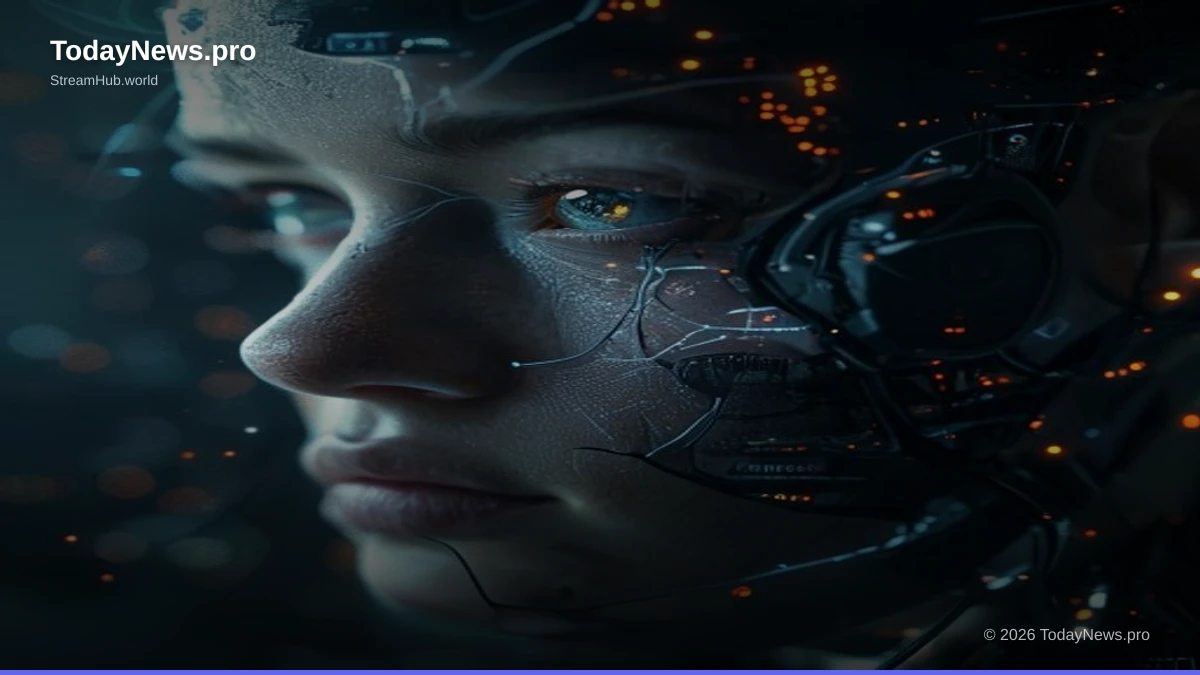
By the end of 2023, over 90% of the world's population will be exposed to at least one piece of AI-generated misinformation or deepfake content, according to a recent internal projection by a leading cybersecurity firm, underscoring the urgent need to understand and combat this rapidly evolving digital threat.
The Dawn of Synthetic Reality: Defining the AI Media Landscape
We are officially living in the age of synthetic reality. The lines between genuine human creation and sophisticated artificial intelligence output have become increasingly blurred, presenting unprecedented challenges to our perception of truth. This new era is characterized by the proliferation of AI-generated media, a vast and evolving landscape encompassing everything from hyper-realistic fake videos and audio to entirely fabricated news articles and digital art. Understanding this phenomenon is no longer a niche concern for technologists or cybersecurity experts; it is a fundamental requirement for every engaged citizen in the 21st century.
The underlying technologies driving this revolution are complex, but their impact is strikingly simple: they empower the creation of content that is indistinguishable from reality, often for nefarious purposes. Machine learning algorithms, particularly deep learning neural networks, are trained on massive datasets of real-world media. This allows them to learn patterns, styles, and nuances, enabling them to generate entirely new content that mimics or even surpasses human capabilities in certain aspects. The accessibility of these tools is also rapidly increasing, moving them from the realm of specialized research labs to readily available software and online platforms.
The Evolution of AI Media Generation
The journey from rudimentary image manipulation to sophisticated deepfakes has been swift. Early forms of AI-generated content were often easily detectable due to their glitches and unnatural artifacts. However, advancements in generative adversarial networks (GANs) and transformer models have led to a dramatic improvement in the quality and realism of synthetic media. These advancements mean that what was once a technological curiosity is now a potent tool capable of widespread deception.
The initial focus was largely on visual media, with deepfake videos becoming the most widely discussed manifestation. These videos can convincingly place individuals in situations they never experienced or make them say things they never uttered. But the technology has expanded far beyond just video. Audio deepfakes, or voice cloning, can replicate a person's voice with startling accuracy, making it possible to impersonate individuals over the phone or in audio recordings. Similarly, AI can now generate entire articles, social media posts, and even musical compositions that are difficult to attribute to a non-human origin.
This rapid evolution necessitates a constant re-evaluation of our digital information ecosystem. What we see and hear online can no longer be automatically trusted. The tools that democratize creativity also democratize the ability to deceive on a massive scale. This paradigm shift demands a proactive approach from individuals, platforms, and governments alike.
The Deepfake Dilemma: A Growing Threat to Truth and Trust
Deepfakes represent the most sensationalized, yet perhaps most indicative, aspect of the synthetic reality age. These AI-generated videos, which convincingly swap one person's likeness onto another's body, or create entirely new video footage of individuals saying or doing things they never did, pose a multifaceted threat. The implications range from personal reputational damage and blackmail to broader societal destabilization and the erosion of public trust in institutions and information sources.
The ease with which deepfakes can be created has exploded in recent years. While initially requiring significant technical expertise and computational power, advancements in accessible software and online services have lowered the barrier to entry considerably. This democratization of deepfake technology means that individuals with malicious intent, ranging from pranksters and disgruntled ex-partners to organized criminal groups and state-sponsored actors, can now produce and disseminate deceptive content with relative ease.
Personal and Reputational Harm
On an individual level, deepfakes can inflict devastating harm. Non-consensual pornography, a particularly pernicious application of deepfake technology, has targeted countless individuals, disproportionately women, causing severe psychological distress, social stigma, and career damage. Beyond explicit content, deepfakes can be used to fabricate incriminating evidence, spread false rumors, or create embarrassing scenarios designed to ruin personal or professional reputations. The speed at which such content can spread on social media makes it incredibly difficult to contain or retract once released.
The psychological toll on victims can be profound, leading to anxiety, depression, and even suicidal ideation. The digital permanence of online content means that the damage can persist long after the initial dissemination, making recovery a long and arduous process. Reclaiming one's narrative and reputation in the face of convincingly fabricated evidence is an uphill battle.
Political and Societal Destabilization
The impact of deepfakes extends far beyond individual harm, posing significant risks to democratic processes and societal stability. Imagine a fabricated video of a political leader making inflammatory statements just days before an election, or a false report of a military conflict escalating. Such content, if widely believed, could sway public opinion, incite violence, or even trigger international incidents. The ability to sow discord and distrust through realistic, fabricated media is a powerful weapon in the arsenal of those seeking to undermine democratic institutions or sow chaos.
The challenge is exacerbated by the fact that even if a deepfake is eventually debunked, the initial impact and the lingering doubt can be sufficient to achieve its intended objective. The "liar's dividend" phenomenon, where the mere existence of deepfakes makes it easier for bad actors to dismiss genuine but inconvenient evidence as fake, further complicates efforts to maintain a shared understanding of reality.
The deepfake dilemma is not merely a technological problem; it is a crisis of trust. Rebuilding and maintaining trust in our information sources requires a concerted effort to understand the threat and develop robust countermeasures.
Navigating the Digital Minefield: Strategies for Media Literacy
In an era saturated with synthetic media, the most potent defense is an informed and critically thinking populace. Media literacy, once a valuable skill, has now become an essential survival tool for navigating the digital landscape. It equips individuals with the knowledge and critical faculties to discern genuine information from fabricated content, thereby mitigating the impact of deepfakes and other AI-generated misinformation.
The core of media literacy in the age of synthetic reality lies in cultivating a healthy skepticism and developing a systematic approach to consuming information. This involves questioning the source, examining the context, and cross-referencing information across multiple reputable outlets. It’s about shifting from passive consumption to active interrogation of the media we encounter daily.
Developing a Critical Eye: The First Line of Defense
The first step in combating the spread of synthetic media is to cultivate a habit of critical evaluation. This means pausing before sharing or accepting information at face value. Ask yourself: Who created this content? What is their motive? Is this information corroborated by other credible sources? Does the content seem unusually sensational or designed to provoke a strong emotional reaction?
Pay close attention to the details. In videos, look for subtle inconsistencies in lighting, shadows, or facial expressions. Listen for unnatural speech patterns, background noise that doesn't match the visual, or abrupt changes in tone. In text, scrutinize grammar, spelling, and the overall tone; AI-generated text can sometimes be unnervingly perfect or subtly awkward. Understanding common propaganda techniques, such as emotional appeals, logical fallacies, and the creation of a false sense of urgency, is also crucial.
Fact-Checking and Verification Tools
Leveraging fact-checking resources and verification tools is paramount. Reputable fact-checking organizations, such as Reuters Fact Check, Snopes, and AP Fact Check, dedicate themselves to debunking misinformation and explaining how specific claims or pieces of media have been manipulated. Familiarizing yourself with these sites and their methodologies can significantly enhance your ability to identify fake content.
Reverse image search tools, available through platforms like Google Images or TinEye, can help determine the origin and previous use of an image, revealing if it has been taken out of context or digitally altered. Similarly, for audio and video, specialized forensic tools are emerging, though their accessibility for the average user is still limited. The key is to not rely on a single source but to triangulate information from multiple, diverse, and credible outlets.
The Role of Education and Awareness
Formal education plays a vital role in equipping future generations with the necessary skills. Integrating digital media literacy into school curricula, from primary to tertiary education, is essential. This includes teaching students about the capabilities of AI, the methods used to create synthetic media, and the ethical considerations surrounding its use. Awareness campaigns targeting the general public can also help disseminate knowledge about the prevalence and dangers of deepfakes and AI-generated content.
Ultimately, navigating the digital minefield requires a shift in our information consumption habits. It’s about being an active participant in the information ecosystem, not a passive recipient. By developing a critical eye and utilizing available verification tools, we can all become more resilient to the deceptive power of synthetic media.
The Technological Arms Race: Detection and Countermeasures
As AI-generated media, particularly deepfakes, becomes more sophisticated, a parallel technological arms race has emerged between content creators and those developing detection methods. The rapid advancement of generative AI necessitates equally rapid innovation in identifying and flagging synthetic content. This is a dynamic field, with new detection techniques constantly being developed to stay ahead of evolving adversarial methods.
The goal of these countermeasures is not necessarily to eliminate all synthetic content, which may have legitimate artistic or satirical uses, but to provide tools and signals that allow users and platforms to distinguish between authentic and fabricated media, and to flag malicious or deceptive content effectively.
AI-Powered Detection Systems
The most promising solutions lie in leveraging AI itself to detect AI-generated content. Researchers are developing algorithms that can identify subtle patterns and anomalies inherent in synthetic media, which often differ from those found in authentic recordings. These can include inconsistencies in pixel-level details, unusual blinking patterns in videos, unnatural head movements, or audio artifacts that a human ear might miss.
Several research institutions and private companies are actively working on these detection systems. Some focus on analyzing the underlying algorithms used to generate the media, looking for tell-tale digital fingerprints. Others focus on the output itself, training AI models to recognize the statistical deviations characteristic of synthesized content. However, the adversarial nature of deepfake generation means that as detection methods improve, so too do the methods for evading detection.
Watermarking and Provenance Technologies
Another critical area of development involves establishing content provenance and using digital watermarking techniques. Provenance refers to the origin and history of a piece of media. Technologies like blockchain are being explored to create immutable records of when and where content was created, and by whom. This could help establish a verifiable chain of custody for digital assets.
Digital watermarking involves embedding invisible or imperceptible signals within media files that can later be used to authenticate their origin or detect tampering. This could be a crucial tool for news organizations and content creators to assure the authenticity of their reporting. However, the effectiveness of watermarking depends on its robustness against manipulation and its widespread adoption by content creators and platforms.
| Detection Method | Description | Current Effectiveness | Challenges |
|---|---|---|---|
| AI-Based Anomaly Detection | Identifies subtle statistical deviations and inconsistencies in synthetic media. | Moderate to High for known generation techniques. | Evolves rapidly with new AI models; susceptible to adversarial attacks. |
| Digital Watermarking | Embeds imperceptible signals to authenticate content origin. | Varies based on robustness and implementation; can be fragile. | Requires widespread adoption; can be removed or degraded by compression/editing. |
| Metadata and Provenance Tracking | Records the origin and history of digital assets (e.g., using blockchain). | Potentially High for verifiable origins. | Relies on accurate initial recording; can be spoofed if not robustly implemented. |
| Biometric Signature Analysis | Analyzes unique biological traits (e.g., voiceprints, facial micro-expressions) for authenticity. | Promising, but often requires controlled environments or advanced analysis. | Can be computationally intensive; susceptible to sophisticated mimicry. |
The development and deployment of these detection and verification technologies are not solely the responsibility of tech companies. Collaboration between researchers, governments, media organizations, and the public is essential to create a resilient ecosystem that can effectively counter the threats posed by synthetic media.
Ethical and Societal Implications: Shaping the Future of Information
The advent of synthetic reality presents profound ethical and societal implications that extend far beyond the immediate technical challenges of detection. As AI becomes more adept at generating realistic media, we are forced to confront fundamental questions about truth, trust, identity, and the very fabric of our shared reality. These implications demand careful consideration and proactive societal engagement to ensure that technological progress serves humanity rather than undermining it.
One of the most significant ethical quandaries revolves around intent and consent. While AI-generated content can be used for creative expression, satire, or education, it can also be weaponized for malicious purposes. The lack of clear ethical guidelines and regulatory frameworks for AI-generated media creates a fertile ground for abuse, leading to a growing need for responsible innovation and governance.
The Erosion of Trust and the Rise of Disinformation Campaigns
The widespread proliferation of highly convincing synthetic media has the potential to dramatically erode public trust in all forms of information, including traditional news media, official statements, and even personal testimonies. When any video, audio recording, or image can be convincingly faked, the default assumption can shift from believing what we see and hear to doubting it. This "liar's dividend" can be exploited by those who wish to spread disinformation, as they can dismiss genuine evidence as fake, further muddying the waters.
This erosion of trust has tangible consequences for democratic societies. It can undermine the legitimacy of elections, sow discord among populations, and make it harder to reach consensus on critical issues. The ability to generate hyper-personalized disinformation at scale also presents a new frontier for manipulation, targeting individuals with tailored content designed to exploit their biases and fears.
Identity, Consent, and Digital Rights
Synthetic media raises complex questions about personal identity and digital rights. When AI can convincingly mimic someone's likeness and voice, it blurs the lines of who has control over their digital representation. The creation of deepfakes without consent, particularly in the context of non-consensual pornography, represents a severe violation of privacy and human dignity. Establishing clear legal frameworks that protect individuals from the misuse of their digital likeness is crucial.
Furthermore, the concept of digital consent needs to evolve. As AI tools become more integrated into our lives, understanding how our data is used to train these models and how our digital personas can be replicated becomes increasingly important. Ensuring individuals have agency over their digital representations is a fundamental aspect of digital rights in the age of synthetic reality.
Addressing these ethical and societal implications requires a multi-pronged approach. It involves robust public education, the development of clear ethical guidelines for AI developers, and the implementation of appropriate legal and regulatory frameworks. Without such measures, the promise of AI could be overshadowed by its potential to destabilize societies and erode the foundations of trust upon which they are built.
Beyond Deepfakes: The Broader Spectrum of AI-Generated Content
While deepfakes often capture the headlines due to their sensational nature, they represent only one facet of the rapidly expanding domain of AI-generated media. The capabilities of artificial intelligence in content creation extend far beyond manipulating existing footage to encompass the generation of entirely novel forms of media. Understanding this broader spectrum is crucial for grasping the full scope of the synthetic reality we are entering.
From hyper-realistic images and generative art to entire narratives and synthetic datasets, AI is becoming a prolific creator. This democratization of content creation has the potential to unlock new avenues for creativity and innovation, but it also introduces new challenges related to authenticity, intellectual property, and the future of human creativity.
Generative Art and Synthetic Imagery
AI models like Midjourney, DALL-E 2, and Stable Diffusion have revolutionized the creation of digital art and imagery. Users can generate stunningly detailed and imaginative images simply by providing text prompts. This has democratized visual creation, allowing individuals without traditional artistic skills to bring their visions to life. However, it also raises questions about authorship, copyright, and the economic impact on human artists.
The ease of generating realistic or stylized images means that synthetic imagery can be used to create convincing but entirely fictional scenarios, illustrations for articles, or even advertisements. Distinguishing between AI-generated and human-created art is becoming increasingly difficult, and the legal frameworks surrounding AI-generated intellectual property are still in their nascent stages. As noted by the World Intellectual Property Organization (WIPO), questions about inventorship and ownership of AI-generated works are complex and evolving.
AI-Generated Text and Narrative Creation
Large language models (LLMs) like GPT-3 and its successors are capable of generating human-quality text for a wide range of applications, from writing emails and articles to composing poetry and code. These models can be trained on vast amounts of text data, enabling them to mimic various writing styles and tones. This has significant implications for content marketing, journalism, and even creative writing.
While LLMs can be powerful tools for drafting and ideation, their output requires careful scrutiny. They can inadvertently generate biased or inaccurate information, and their creative output may lack the depth, nuance, or emotional resonance of human-authored works. The potential for LLMs to generate spam, fake reviews, or mass propaganda on an unprecedented scale is a serious concern. The ability to automate content creation also impacts industries where writing is a primary skill.
Synthetic Data and AI Training
Beyond media consumed by humans, AI is also being used to generate synthetic data for training other AI models. This synthetic data can mimic real-world datasets but is entirely fabricated. It offers advantages in situations where real-world data is scarce, sensitive (e.g., medical records), or expensive to collect. For example, self-driving car AI can be trained on simulated driving scenarios generated by AI.
While synthetic data can accelerate AI development, it also carries risks. If the synthetic data does not accurately reflect the complexities and nuances of the real world, it can lead to AI models that perform poorly or exhibit unintended biases when deployed in real-world scenarios. Ensuring the fidelity and representativeness of synthetic training data is a critical challenge.
The broad spectrum of AI-generated content underscores a fundamental shift in our relationship with information and creation. As these technologies mature, navigating this landscape will require a nuanced understanding of their capabilities, limitations, and the ethical considerations they present. The conversation must move beyond just deepfakes to encompass the entire, rapidly evolving, realm of synthetic media.
Preparing for the Inevitable: A Call to Action for Individuals and Institutions
The age of synthetic reality is not a distant future; it is our present. The proliferation of deepfakes and AI-generated media is an ongoing phenomenon that will only accelerate. To navigate this complex and often deceptive landscape effectively, a proactive and multi-faceted approach is required from individuals, technology platforms, governments, and educational institutions alike. This is not a problem that can be solved by a single entity; it demands collective action and a shared commitment to safeguarding truth and trust in the digital age.
The challenges are significant, but they are not insurmountable. By embracing critical thinking, demanding transparency, and fostering a collaborative environment for developing solutions, we can build a more resilient information ecosystem. The future of our shared understanding of reality depends on our willingness to adapt and act now.
Individual Responsibility and Digital Citizenship
Every individual has a role to play in combating the spread of misinformation and the misuse of synthetic media. This begins with a personal commitment to digital citizenship. Practice the media literacy skills discussed earlier: question everything, verify before sharing, and be mindful of your own biases. Understand that the emotional manipulation of content is a common tactic of disinformation campaigns.
Actively report suspicious content on social media platforms. Engage in constructive dialogue with others about the challenges of synthetic media, fostering a shared understanding of the risks. Educate yourselves and your families about the evolving capabilities of AI. The more informed and vigilant individuals are, the less effective deceptive content will be.
Platform Accountability and Regulatory Frameworks
Technology platforms, as the primary conduits for information, bear a significant responsibility. They must invest heavily in robust detection mechanisms for synthetic media and implement clear, transparent policies for labeling or removing deceptive content. This includes not only deepfakes but also AI-generated text that is presented as factual news and other forms of manipulated media.
Governments also have a crucial role in establishing appropriate regulatory frameworks. These regulations should aim to balance the protection of free speech with the need to prevent malicious deception and harm. This could include mandating transparency for AI-generated content, establishing clear penalties for the creation and dissemination of harmful deepfakes, and supporting research into detection technologies. International cooperation will be vital, as disinformation knows no borders.
Education and Research Initiatives
A sustained investment in education and research is fundamental. Educational institutions must integrate comprehensive digital literacy programs into their curricula at all levels. This includes teaching about AI, synthetic media, critical thinking, and responsible online behavior. Universities and research centers need continued funding to develop advanced detection and verification tools, as well as to study the societal impacts of synthetic media.
Public-private partnerships can accelerate progress in these areas. Collaboration between academic researchers, tech companies, media organizations, and government agencies can foster a more holistic approach to tackling the challenges posed by the age of synthetic reality. By working together, we can build the tools, knowledge, and societal resilience needed to navigate this new frontier and ensure that technology serves to inform and empower, rather than deceive and divide.