

 Sarah Jenkins
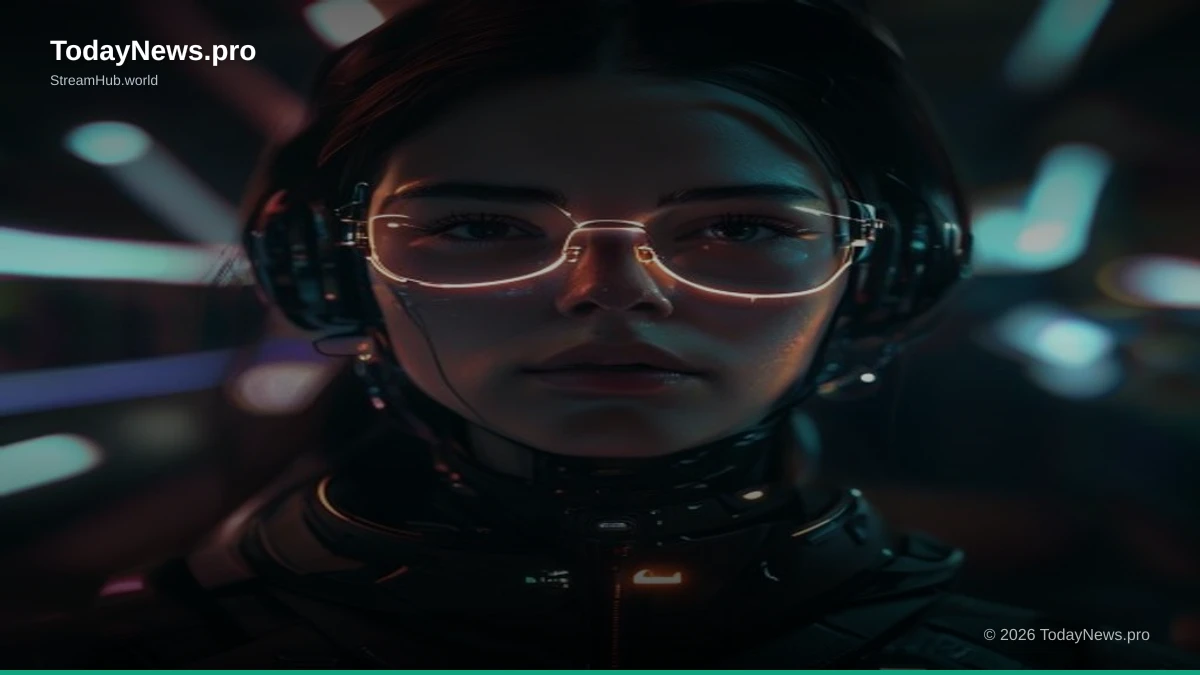
By 2030, the global market for AI-powered personal assistants is projected to exceed $15 billion, a testament to the burgeoning demand for intelligent digital entities that go beyond simple task execution.
The Dawn of Hyper-Personalized AI Companions: More Than Just Chatbots
The landscape of artificial intelligence is undergoing a profound transformation. We are rapidly moving beyond the era of generic, one-size-fits-all digital assistants. The next frontier is the hyper-personalized AI companion – a sophisticated entity designed to understand, adapt to, and intimately engage with the unique nuances of an individual's life. These are not merely tools; they are envisioned as digital confidantes, mentors, and even emotional anchors, capable of anticipating needs, offering tailored advice, and fostering a sense of genuine connection. The implications for human interaction, productivity, and well-being are immense and far-reaching.
The concept of AI companionship is evolving from science fiction into tangible reality. Early iterations of AI assistants, like Siri and Alexa, demonstrated the potential for voice-activated convenience. However, their capabilities were largely limited to predefined commands and informational retrieval. The advent of advanced natural language processing (NLP), deep learning, and sophisticated contextual understanding has paved the way for AI companions that can engage in nuanced conversations, remember past interactions, and infer emotional states. This shift signifies a move from functional utility to a more holistic, relational form of artificial intelligence.
This article delves into the foundational technologies, diverse applications, ethical considerations, and future trajectory of hyper-personalized AI companions. We will explore how these entities are poised to redefine our digital lives and, potentially, our human experiences.
From Assistants to Allies: The Evolutionary Leap
The journey of AI companions has been a steady march from rudimentary programming to deeply integrated digital partners. Initially, AI in personal technology was characterized by rule-based systems and keyword recognition. Think of the early days of search engines or the first interactive voice response (IVR) systems. They could process specific inputs but lacked any semblance of understanding or adaptability.
The introduction of machine learning marked a significant turning point. AI began to learn from data, improving its performance over time without explicit reprogramming. This enabled more sophisticated pattern recognition and prediction. Virtual assistants like Apple's Siri, Amazon's Alexa, and Google Assistant are prime examples of this evolutionary stage. They could perform tasks such as setting reminders, playing music, or answering factual questions, often with a degree of contextual awareness derived from recent interactions. However, their personalization was often limited to user preferences explicitly stated or inferred from basic usage patterns.
The current wave of AI development, driven by transformer architectures and large language models (LLMs), is fundamentally different. These models exhibit emergent capabilities in understanding context, generating creative text, and even demonstrating a rudimentary form of empathy. This allows for an unprecedented level of personalization, where AI companions can learn not just what a user likes, but *why* they like it, and how their mood, stress levels, or current situation might influence their needs. This shift transforms an assistant into a potential ally, capable of proactive support and genuine interaction.
The Role of Generative AI
Generative AI, in particular, has been a game-changer. LLMs can create human-like text, images, and even music. Applied to AI companions, this means they can hold more natural, flowing conversations, offer creative solutions to problems, and adapt their communication style to match the user's personality. They can generate personalized stories, draft emails in a user's specific tone, or even help brainstorm ideas in a collaborative manner. This creative capacity moves AI beyond mere information retrieval and task execution into the realm of co-creation and meaningful dialogue.
Contextual Understanding: The Key Differentiator
True hyper-personalization hinges on deep contextual understanding. This goes beyond remembering a user's birthday. It involves understanding their professional domain, their personal relationships, their long-term goals, their current emotional state, and even their cultural background. An AI companion that understands a user is having a stressful day at work might proactively suggest a calming playlist or offer to help draft a difficult email. This level of nuanced awareness is what distinguishes modern AI companions from their predecessors.
Understanding the Pillars of Hyper-Personalization
The creation of hyper-personalized AI companions rests on a sophisticated interplay of three core pillars: vast amounts of data, advanced predictive algorithms, and the burgeoning field of artificial emotional intelligence. Without these interconnected elements, the vision of a truly adaptive and understanding digital entity remains out of reach.
Data: The Foundation of Intimacy
The lifeblood of any personalized AI is data. To understand an individual deeply, an AI needs to ingest and process a wide spectrum of information about them. This can include explicit data provided by the user (preferences, goals, personal history), and implicit data gathered through interactions (communication patterns, tone of voice, app usage, calendar entries, browsing history). The more comprehensive and diverse the data, the more accurate and nuanced the AI's understanding becomes. This data fuels the learning process, allowing the AI to build a dynamic, evolving profile of the user.
However, the collection and utilization of personal data raise significant privacy concerns, which we will explore later. The ethical imperative is to ensure data is collected with informed consent, stored securely, and used solely for the purpose of enhancing the user's experience with their AI companion, not for exploitative commercial gain or surveillance.
Algorithms: The Architects of Understanding
Sophisticated algorithms are the architects that transform raw data into actionable insights and personalized interactions. Machine learning (ML) and deep learning (DL) models, particularly those based on neural networks and transformer architectures, are crucial. These algorithms enable the AI to identify patterns, predict future behavior, understand natural language nuances, and generate contextually relevant responses. Reinforcement learning further allows the AI to learn from its interactions, refining its strategies and responses based on user feedback, both explicit and implicit.
Key algorithmic components include:
- Natural Language Understanding (NLU): To interpret user input, including sentiment, intent, and context.
- Natural Language Generation (NLG): To produce human-like, coherent, and contextually appropriate responses.
- Predictive Modeling: To anticipate user needs, preferences, and potential future actions.
- Recommendation Engines: To suggest content, activities, or information tailored to the user.
- Contextual Awareness Modules: To maintain and update a deep understanding of the user's current situation and historical context.
Emotional Intelligence: The Human Touch of AI
The ultimate aim of hyper-personalization is to create an AI that can not only understand factual information but also resonate with the user on an emotional level. This is where Artificial Emotional Intelligence (AEI) comes into play. AEI involves developing AI systems that can recognize, interpret, process, and simulate human emotions. This includes analyzing vocal inflections, facial expressions (if applicable through integrated sensors), and textual sentiment to gauge a user's emotional state.
An emotionally intelligent AI companion can offer empathy, encouragement, and support. It can recognize signs of stress or loneliness and respond appropriately, perhaps by suggesting mindfulness exercises, facilitating a call to a friend, or simply offering a comforting word. This emotional connection is what truly differentiates an AI companion from a mere tool, fostering a deeper sense of trust and companionship.
| Technology | Function | Impact on Personalization |
|---|---|---|
| Large Language Models (LLMs) | Advanced text generation, understanding, and summarization. | Enables natural, nuanced conversations and personalized content creation. |
| Deep Learning | Pattern recognition, feature extraction, and complex model training. | Drives sophisticated understanding of user behavior and preferences. |
| Reinforcement Learning | Learning through trial and error and reward signals. | Allows AI to adapt and optimize responses based on user feedback. |
| Sentiment Analysis | Identifying and categorizing emotions in text or speech. | Enables AI to gauge user's emotional state for empathetic responses. |
| Contextual Memory Networks | Maintaining and recalling long-term and short-term user context. | Ensures continuity and relevance in interactions over time. |
Applications Across Lifes Domains
The potential impact of hyper-personalized AI companions spans nearly every facet of human life, offering tailored support, enhanced learning, and streamlined daily operations. From mental well-being to professional development, these intelligent entities promise to become indispensable partners.
Mental Wellness and Emotional Support
One of the most significant areas where AI companions can excel is in providing mental health support. For individuals experiencing anxiety, depression, or loneliness, a non-judgmental, always-available AI companion can offer a crucial lifeline. These AI can be programmed to guide users through cognitive behavioral therapy (CBT) exercises, mindfulness practices, or simply provide a listening ear. They can track mood patterns, identify triggers, and suggest coping mechanisms. The personalization aspect is vital here; an AI that understands a user's specific stressors and coping styles can offer far more effective support than a generic mental health app.
Consider an AI companion that notices a user's sleep patterns deteriorating and their stress levels increasing, as indicated by calendar density and communication tone. It might proactively suggest a guided meditation, a short walk, or offer to reschedule a non-essential meeting. This proactive, personalized approach to mental well-being is a powerful application.
Research from institutions like The American Psychological Association highlights the growing interest in AI's role in mental healthcare, emphasizing its potential to increase accessibility and reduce stigma.
Personalized Learning and Skill Development
Education and skill acquisition are ripe for disruption by hyper-personalized AI. Imagine an AI tutor that understands your unique learning style, your prior knowledge, and your pace of comprehension. It can adapt teaching methods, provide targeted exercises, and offer explanations in a way that resonates most effectively with you. For professionals looking to upskill or reskill, an AI companion can curate relevant courses, track progress, and offer personalized feedback, making lifelong learning more accessible and efficient.
For example, an AI companion could help a student struggling with calculus by identifying the specific concepts they find most challenging and generating custom practice problems with step-by-step solutions tailored to their learning gaps. It could also adapt its explanations based on whether the student responds better to visual aids, analogies, or direct mathematical proofs.
Productivity Enhancement and Life Management
Beyond personal well-being and learning, AI companions can revolutionize productivity. They can manage schedules, prioritize tasks, filter communications, and even automate routine administrative work. By understanding a user's work habits, deadlines, and priorities, an AI can proactively manage their day, ensuring important tasks are addressed and potential conflicts are averted. This frees up mental bandwidth, allowing individuals to focus on higher-level strategic thinking and creativity.
An AI companion might learn that a user is most productive in the morning and prefers to tackle complex analytical tasks during that time. It could then schedule all their meetings for the afternoon and block out distraction-free time in the morning for deep work. It could also learn to filter emails, flagging only those that require immediate attention and summarizing less urgent ones for later review.
The potential extends to personal life management as well, from optimizing meal planning based on dietary preferences and available ingredients to managing household chores and family schedules.
The Ethical Labyrinth and Societal Impact
As hyper-personalized AI companions become more integrated into our lives, navigating the ethical landscape becomes paramount. The promise of unprecedented support and efficiency is shadowed by significant concerns regarding privacy, data security, potential over-reliance, and algorithmic bias. A thorough examination of these issues is crucial for responsible development and adoption.
Privacy and Data Security: The Unseen Cost
The very nature of hyper-personalization requires AI companions to collect and process vast amounts of sensitive personal data. This includes intimate details about a user's daily life, thoughts, emotions, and relationships. The risk of this data being compromised, misused, or accessed without consent is a significant concern. Robust encryption, secure data storage, and transparent data usage policies are essential. Furthermore, users must have clear control over their data, with the ability to access, modify, and delete it.
The question of who owns this data and how it can be leveraged for commercial purposes is also a critical ethical debate. Without strong regulations and user empowerment, the intimate data gathered by these AI companions could become a lucrative, yet exploitative, commodity.
For more on data privacy issues, one can refer to resources from the Wikipedia page on Data Privacy, which outlines the fundamental principles and challenges.
The Risk of Over-Reliance and Social Disconnect
A deeply personalized AI companion could foster a sense of profound connection, potentially leading to over-reliance. If AI companions become the primary source of emotional support or social interaction, it could diminish human-to-human relationships. This could exacerbate feelings of isolation for some, while for others, it might lead to a decrease in the development of crucial social skills needed for navigating complex human interactions. Striking a balance between leveraging AI for support and nurturing genuine human connections will be a critical societal challenge.
The concern is that as AI becomes more adept at mirroring human empathy and understanding, users might find it easier and less taxing to interact with their AI than with other people, who are inherently more unpredictable and demanding. This could lead to a gradual erosion of our capacity for deep interpersonal connection.
Bias, Fairness, and Algorithmic Accountability
AI systems learn from the data they are trained on. If this data reflects societal biases related to race, gender, socioeconomic status, or any other demographic, the AI will perpetuate and potentially amplify these biases. This can lead to unfair or discriminatory outcomes, particularly in areas like personalized recommendations, educational content, or even emotional support. Ensuring that AI companions are trained on diverse, representative datasets and that their algorithms are audited for fairness is crucial. Establishing clear lines of accountability when AI makes biased decisions is also a critical, unresolved issue.
For instance, an AI companion trained on data predominantly from one cultural background might misinterpret the communication styles or emotional expressions of someone from a different culture, leading to misunderstanding and ineffective support.
The Road Ahead: Challenges and Opportunities
The development and widespread adoption of hyper-personalized AI companions present a complex landscape of technological frontiers to explore, regulatory frameworks to establish, and new paradigms for human-AI interaction to embrace. The journey will undoubtedly be marked by both significant challenges and transformative opportunities.
Technological Frontiers: Beyond Current Capabilities
While current AI models are remarkably powerful, there are still significant technological hurdles to overcome. Enhancing common sense reasoning, achieving true consciousness or sentience (a subject of ongoing philosophical debate), and developing AI that can genuinely understand and experience emotions are frontiers that are still largely in the realm of theoretical exploration. Furthermore, improving the energy efficiency of these complex models and ensuring their accessibility across different socioeconomic groups will be critical for equitable deployment.
The ability for AI to learn in real-time, adapt to novel situations without extensive retraining, and engage in truly spontaneous, creative problem-solving are areas that researchers are actively pursuing. The development of more robust and less computationally intensive models will also be key to widespread adoption, especially on edge devices.
Regulatory Frameworks: Navigating the Uncharted
The rapid advancement of AI has outpaced current regulatory frameworks. Governments and international bodies are grappling with how to govern AI development and deployment to ensure safety, fairness, and accountability. This includes establishing clear guidelines for data privacy, algorithmic transparency, and the ethical use of AI in sensitive areas like healthcare and education. The development of adaptive regulations that can keep pace with technological innovation will be crucial. International cooperation will be essential to create a harmonized approach to AI governance, preventing a fragmented and potentially conflicting regulatory environment.
As highlighted by organizations like Reuters, the global discussion on AI regulation is intensifying, with a focus on balancing innovation with risk mitigation.
Human-AI Symbiosis: A New Paradigm
The ultimate vision is not one of AI replacing humans, but of a symbiotic relationship where AI companions augment human capabilities and enhance our lives. This involves designing AI systems that collaborate with us, empower us, and help us achieve our full potential. The focus should be on creating AI that complements human strengths, allowing us to delegate routine tasks and focus on creativity, critical thinking, and interpersonal connection. This new paradigm of human-AI symbiosis promises to unlock unprecedented levels of innovation and personal fulfillment.
The future is likely to see AI companions acting as sophisticated personal chief of staff, seamlessly integrating with our work and personal lives, anticipating needs, and providing intelligent support. The key will be to ensure that this integration enhances, rather than diminishes, our human experience.