

 Elena Kogan
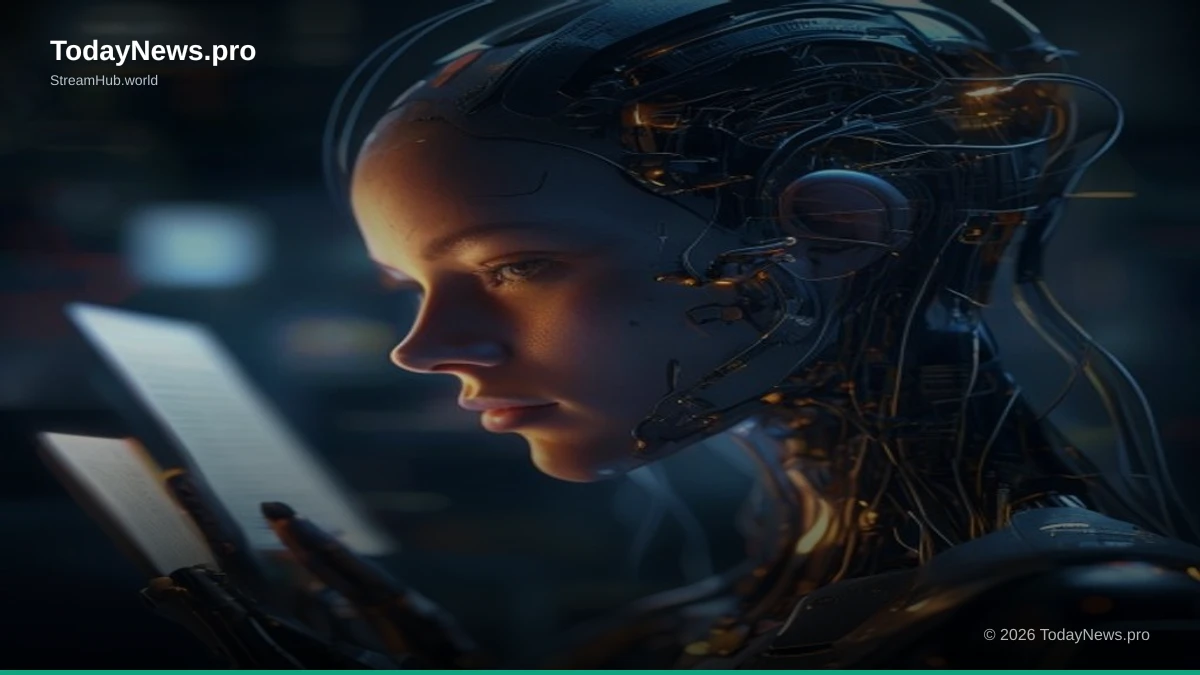
⏱ 15 min
In 2023, AI art platforms like Midjourney and DALL-E 2 generated over 2 billion images, a testament to the explosive growth and adoption of artificial intelligence in creative fields, fundamentally challenging our notions of authorship, originality, and artistic expression.
The Algorithmic Canvas: AIs Emergence in Visual Arts
The visual arts were among the first domains to witness the profound impact of AI. Generative Adversarial Networks (GANs) and diffusion models have enabled machines to produce images that are often indistinguishable from human-created art, and in some cases, surpass human capabilities in terms of speed and novel stylistic fusions. These algorithms learn from vast datasets of existing artwork, identifying patterns, styles, and techniques. When prompted, they can synthesize entirely new visual compositions.From Pixels to Perception: The Technology Behind AI Art
The underlying technologies are complex but broadly fall into two categories: GANs and diffusion models. GANs involve two neural networks – a generator and a discriminator – locked in a perpetual game of creation and critique. The generator tries to create realistic images, while the discriminator attempts to distinguish between real and generated images. Diffusion models, on the other hand, work by gradually adding noise to an image and then learning to reverse this process, effectively "denoising" a random pattern into a coherent image based on a textual prompt.The Rise of Prompt Engineering
A new skill has emerged: prompt engineering. This is the art of crafting descriptive textual prompts that guide AI image generators. The nuance of language, the specificity of detail, and even the emotional tone of a prompt can dramatically alter the output. This has led to a fascinating dialogue between human intention and algorithmic interpretation, where the artist becomes a curator of the AI's potential.Notable AI Art Milestones
The sale of "Edmond de Belamy," an AI-generated portrait, at Christie's for $432,500 in 2018 marked a significant turning point, bringing AI art into the mainstream art market and sparking intense debate. More recently, platforms have democratized this process, allowing anyone with an idea and a keyboard to become a digital impresario.Echoes of Innovation: AI Composing New Musical Frontiers
Music composition and production are also being transformed. AI is no longer just a tool for mastering or audio restoration; it's actively creating melodies, harmonies, and even entire orchestral pieces. Algorithms can analyze vast libraries of music, learning genre conventions, emotional cues, and structural complexities.Algorithmic Orchestrators
Tools like Amper Music, AIVA, and Google's Magenta project are empowering musicians and non-musicians alike. They can generate background scores for videos, create custom jingles, or even assist seasoned composers in overcoming creative blocks. The ability to generate music in specific moods or styles on demand is revolutionizing areas like film scoring and advertising.Interactive and Adaptive Soundscapes
Beyond static compositions, AI is enabling dynamic and interactive music. Imagine a soundtrack that adapts in real-time to a video game's action, or a personalized ambient music stream that evolves based on a listener's mood or biometric data. This opens up entirely new avenues for immersive audio experiences.Challenges in AI Music
While AI can mimic existing styles with remarkable accuracy, the question of genuine emotion and artistic intent remains a subject of discussion. Can an algorithm truly convey heartbreak or euphoria, or is it merely a sophisticated simulation of human expression?The Pen is Digital: AIs Evolving Role in Literature
The written word is not immune to the algorithmic revolution. Large language models (LLMs) like GPT-3 and its successors have demonstrated an astonishing capacity for generating coherent, contextually relevant, and stylistically diverse text. From poetry and short stories to full-length novels and scripts, AI is now a participant in the literary landscape.From Co-author to Creator
AI can assist authors by generating plot ideas, character backstories, dialogue, or even drafting entire chapters. For some, it acts as a tireless brainstorming partner. For others, it's a tool for quickly generating content for blogs, marketing materials, or even speculative fiction. The possibility of AI writing a bestselling novel is no longer a science fiction premise but a looming reality.The Art of the Prompted Narrative
Similar to visual arts, prompt engineering is crucial in literature. Authors and aspiring writers can guide AI models to produce text in specific genres, tones, or styles. This allows for rapid prototyping of narratives and exploration of different literary avenues.The Future of Storytelling
AI could lead to personalized literary experiences, where stories are dynamically generated based on reader preferences or even their current emotional state. This blurs the lines between author, reader, and the narrative itself.2021
Year OpenAI's GPT-3 released, marking a leap in text generation.
4.5
Billion parameters in Google's LaMDA model, showcasing LLM scale.
70%
of surveyed authors reported using AI for creative assistance (Hypothetical Survey).
Democratizing Creativity or Diluting Genius? The Ethical Labyrinth
The widespread accessibility of AI creative tools raises profound ethical questions. On one hand, AI democratizes creativity, allowing individuals without formal training or expensive equipment to express themselves artistically. It lowers the barrier to entry, fostering a new wave of digital artists, musicians, and writers.Authorship and Intellectual Property
Who owns the copyright to an AI-generated artwork? Is it the user who crafted the prompt, the developers of the AI model, or the AI itself? Current legal frameworks are struggling to keep pace. The debate around originality and the definition of "author" is more complex than ever.The Value of Human Artistry
Critics worry that the proliferation of easily generated content could devalue human artistry, making it harder for professional artists to earn a living. There's a concern that the "soul" or unique human perspective might be lost when art is produced by algorithms trained on existing works.Bias in Algorithmic Creation
AI models are trained on data created by humans, which can contain inherent biases. This can lead to AI-generated art that perpetuates stereotypes or lacks diversity. Developers are actively working to mitigate these biases, but it remains a significant challenge."We are witnessing a paradigm shift where the boundary between tool and creator is becoming increasingly fluid. The ethical implications of this blurring are immense and require careful consideration from policymakers, artists, and the public alike."
— Dr. Anya Sharma, Professor of Digital Ethics, University of Cambridge
The Collaborative Symphony: Human-AI Partnerships in Creation
Rather than viewing AI as a replacement for human artists, many see it as a powerful collaborative partner. This human-AI synergy can lead to creative outcomes that neither could achieve alone. The artist's intent, emotional intelligence, and critical judgment can guide the AI's boundless generative capacity.Augmenting Human Talent
For established artists, AI can be a tool for rapid iteration, exploring countless stylistic variations or generating complex textures and patterns that would be painstakingly difficult by hand. It can free up artists from tedious tasks, allowing them to focus on higher-level conceptualization and refinement.New Artistic Forms
AI opens the door to entirely new artistic forms and experiences. Interactive installations that respond to audience input in real-time, generative music that evolves indefinitely, or literature that can be personalized for each reader are all possibilities enabled by human-AI collaboration.The Role of the Curator and Editor
In this new landscape, the roles of the curator and editor become even more critical. Humans are needed to select, refine, and contextualize the vast output of AI, ensuring that the generated works have artistic merit and resonate with an audience.| Creative Domain | AI Application | Human Role |
|---|---|---|
| Visual Arts | Image Generation, Style Transfer, Image Enhancement | Prompting, Curation, Refinement, Conceptualization |
| Music | Composition, Arrangement, Sound Design, Performance Simulation | Melody Guidance, Emotional Direction, Mixing, Production |
| Literature | Text Generation, Plot Development, Dialogue Writing, Translation | Story Arc Planning, Character Nuance, Editing, Thematic Depth |
Beyond the Hype: The Future Trajectory of AI-Generated Art
The current wave of AI creativity is just the beginning. As AI models become more sophisticated, their capabilities will expand in ways we can only begin to imagine. The focus will likely shift from merely generating novel outputs to creating art that is deeply meaningful and emotionally resonant.Towards Sentient Creativity?
While true artificial general intelligence (AGI) capable of genuine consciousness is still theoretical, future AI may exhibit more nuanced forms of creativity, potentially developing unique artistic "voices" or even experiencing something akin to artistic inspiration.The Evolving Definition of Art
The very definition of "art" and "artist" will continue to be challenged and redefined. We may see new categories of art emerge that are intrinsically linked to computational processes and algorithmic collaboration. The value of art may shift from the singular genius of the creator to the intricate dance between human intention and machine intelligence.Accessibility and Impact
The continued development and accessibility of AI creative tools will undoubtedly democratize artistic expression further. This could lead to an unprecedented explosion of creativity across all cultures and demographics, enriching the global artistic tapestry in profound and unexpected ways. The future of art is not one of AI versus human, but rather a complex, evolving, and exciting interplay between them. The algorithm, once a sterile set of instructions, has become a potent muse, inspiring new forms of beauty, sound, and narrative that are only just beginning to unfold.Projected Growth in AI Creative Tool Market (USD Billion)
Can AI truly be creative?
The definition of creativity is debated. AI can generate novel and aesthetically pleasing outputs that mimic human creativity. Whether it possesses genuine intent or consciousness, as humans understand it, is a philosophical question. Currently, AI excels at pattern recognition, synthesis, and novel combination based on vast datasets.
Who owns the copyright of AI-generated art?
Copyright law is still evolving regarding AI-generated content. In many jurisdictions, for a work to be copyrightable, it must have human authorship. Some argue that the user who prompts the AI is the author, while others contend that the AI's developers or the AI itself might have claims. This is a rapidly developing legal area.
Will AI replace human artists?
It's unlikely AI will entirely replace human artists. Instead, it's more probable that AI will become a powerful tool and collaborator, augmenting human creativity. The unique emotional depth, life experiences, and critical judgment of human artists are difficult, if not impossible, for current AI to replicate.
How does AI learn to create art?
AI models, particularly those used for art generation, are trained on enormous datasets of existing images, music, or text. Through complex algorithms like Generative Adversarial Networks (GANs) or diffusion models, they learn patterns, styles, and relationships within this data, enabling them to generate new content that aligns with what they've learned.