

 Marcus Thorne
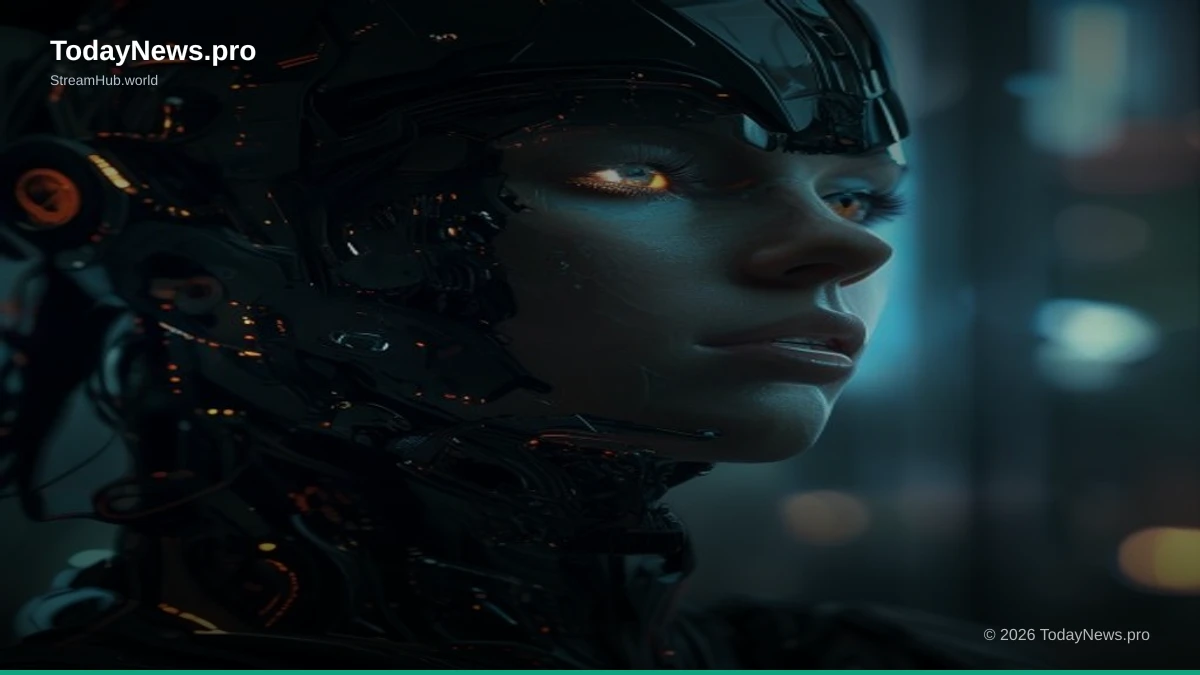
The global market for generative AI is projected to reach $110.8 billion by 2030, signaling a dramatic shift in creative industries as algorithms move from tools to collaborators.
The Dawn of the Algorithmic Artist
For centuries, art, music, and storytelling have been the exclusive domain of human intellect and emotion. The creative process, often perceived as mystical and deeply personal, involved inspiration, skill, and countless hours of dedicated practice. However, the advent of sophisticated Artificial Intelligence, particularly generative AI, is fundamentally challenging these traditional notions. These powerful algorithms are no longer just analytical tools; they are becoming active participants, capable of generating original content across various artistic mediums. This transformation is not a distant future concept but a present reality, reshaping how we conceive of, create, and consume art, music, and narratives.
Generative AI models, trained on vast datasets of existing human creations, learn patterns, styles, and structures. They can then synthesize this knowledge to produce novel outputs that mimic, adapt, or even innovate upon these learned characteristics. This capability has opened up unprecedented possibilities, democratizing access to creative tools and simultaneously raising profound questions about the nature of authorship, originality, and the very definition of art itself. The 'AI muse' is here, and its influence is growing exponentially.
Generative AI in Visual Arts: Beyond the Brushstroke
The visual arts have perhaps been the most immediately and dramatically impacted by generative AI. Tools like Midjourney, DALL-E 2, and Stable Diffusion have captured public imagination, allowing individuals with no formal artistic training to generate stunningly detailed and imaginative images from simple text prompts. These platforms operate by translating natural language descriptions into visual representations, effectively democratizing image creation. A user can describe a scene – "a surrealist landscape with floating islands and bioluminescent flora, in the style of Van Gogh" – and the AI can render it within seconds.
This has profound implications for graphic designers, illustrators, and concept artists. While some view these tools with apprehension, fearing job displacement, others embrace them as powerful assistants. They can be used for rapid ideation, generating mood boards, creating preliminary sketches, or even producing final assets for commercial use. The speed at which an AI can iterate through visual concepts is far beyond human capacity, allowing for exploration of a much wider creative space.
The Evolution of Styles and Techniques
Generative AI is not limited to mimicking existing styles. Researchers and artists are pushing the boundaries, experimenting with novel aesthetic combinations and entirely new visual languages. AI models can blend disparate artistic movements, fuse historical periods, or even generate imagery that is intentionally alien and abstract. This leads to unique visual outputs that might never have been conceived by a human artist working alone. The AI's ability to process and combine information from its training data in unexpected ways can lead to genuine creative breakthroughs.
Furthermore, AI is being integrated into traditional art forms. For instance, AI can analyze an artist's existing work and generate variations or extensions in their style, acting as a digital apprentice. This collaborative approach allows artists to explore their own creative tendencies further, producing more art than they could independently. The AI becomes an extension of the artist's mind, amplifying their creative output and potentially revealing new directions for their artistic expression.
AI-Generated Art in the Marketplace
The rise of AI-generated art has also led to new paradigms in art sales and exhibitions. Platforms dedicated to showcasing and selling AI art have emerged, and auctions have featured AI-generated pieces, some fetching significant sums. This raises complex questions about value, ownership, and what constitutes 'authentic' art. Is the value in the prompt engineer's skill, the AI's algorithm, or the final output itself? The art market is grappling with these new realities, and the definition of an 'artist' is expanding to include those who skillfully guide and curate AI outputs.
One notable example was the sale of "Edmond de Belamy," created by the AI collective Obvious, at Christie's in 2018, which sold for $432,500. While controversial, it marked a significant moment in the acceptance of AI-generated art in the high-art market.
| Platform | Estimated Monthly Active Users | Primary Focus |
|---|---|---|
| Midjourney | > 15 million | Artistic image generation, stylistic exploration |
| DALL-E 3 (via ChatGPT/Bing) | > 100 million (across platforms) | Versatile image generation from text prompts |
| Stable Diffusion | > 5 million (direct use/API) | Open-source, highly customizable image generation |
| Adobe Firefly | Integrated into Adobe Creative Cloud | Commercial-grade image generation, generative fill |
Composing New Harmonies: AIs Role in Music Creation
The realm of music is also experiencing a profound AI-driven renaissance. Generative AI is being used to compose entirely new melodies, harmonies, and even full musical arrangements. Tools like Amper Music, AIVA, and Google's Magenta project are empowering musicians, producers, and hobbyists alike. These AI systems can generate music in various genres, moods, and complexities, often tailored to specific applications such as soundtracks for videos, background music for games, or even as a starting point for a human composer's work.
The creative process in music often involves a deep understanding of theory, instrumentation, and emotional expression. AI models, trained on vast libraries of musical pieces, can learn these complex relationships. They can generate music that is technically sound, emotionally resonant, and stylistically coherent. This allows for rapid prototyping of musical ideas, providing composers with a wealth of material to draw from or refine, significantly accelerating the creative workflow.
AI as a Collaborative Bandmate
Beyond generating complete pieces, AI can act as a sophisticated collaborator for human musicians. Imagine a composer struggling with a bridge section of a song. They could feed the existing melody and chord progression into an AI, which then offers several potential bridge ideas, each with a different harmonic flavor or rhythmic pattern. This iterative process can break through creative blocks and introduce unexpected musical directions.
AI can also be used for tasks like harmonizing a melody, suggesting counter-melodies, generating drum beats, or even synthesizing realistic instrument sounds. This frees up human musicians to focus on higher-level creative decisions, such as the overall song structure, lyrical themes, and the emotional arc of the piece. The AI becomes a tireless assistant, capable of handling the more repetitive or technically demanding aspects of composition and arrangement.
Personalized and Adaptive Soundscapes
One of the most exciting applications of AI in music is the creation of personalized and adaptive soundscapes. AI can generate music that dynamically changes based on a listener's mood, activity, or even biometric data. For example, a fitness app could use AI to create a workout playlist that adjusts its tempo and intensity to match the user's heart rate. Similarly, AI could compose ambient music for relaxation that evolves based on a user's stress levels.
This has the potential to revolutionize how we experience music, moving beyond static playlists to truly immersive and responsive auditory environments. It also opens doors for new forms of interactive musical experiences where the listener is an active participant in shaping the sound.
Weaving Worlds: AI as a Storytelling Partner
Storytelling, the oldest art form, is also being profoundly influenced by generative AI. Large Language Models (LLMs) like GPT-4 are capable of generating coherent and compelling narratives, from short stories and poems to screenplays and even entire novels. These models can adopt different tones, styles, and character voices, making them versatile tools for writers and content creators.
For authors, AI can serve as a powerful brainstorming partner. It can generate plot ideas, character backstories, dialogue, or descriptive passages. Writers can use AI to overcome writer's block, explore alternative plotlines, or quickly generate drafts of scenes that they can then refine. The ability to generate variations on a theme or to explore different narrative paths rapidly can significantly speed up the writing process.
AI in Scriptwriting and Game Development
The film and gaming industries are particularly keen on leveraging AI for storytelling. AI can assist in generating dialogue for non-player characters (NPCs) in video games, creating branching narratives, or even drafting preliminary scripts for movies and television shows. The sheer volume of content required for large-scale game development, for example, makes AI an invaluable asset for generating vast amounts of text and narrative elements.
AI can also be used to analyze existing scripts and identify patterns, suggest improvements, or even predict potential audience reception based on narrative structures. This data-driven approach to storytelling can help creators optimize their work for maximum impact. The potential for AI to generate personalized stories, where the narrative adapts to the reader's or player's choices in real-time, is also a groundbreaking development.
The Art of Prompt Engineering
Just as visual artists must learn to guide AI image generators, writers are developing the skill of "prompt engineering" for LLMs. Crafting effective prompts is crucial for eliciting the desired output from the AI. This involves understanding how to structure requests, specify desired styles, and provide context to guide the AI's creative process. A well-crafted prompt can lead to a highly tailored and imaginative story, while a vague one might result in generic or uninspired text.
This shift transforms the role of the writer from solely being a creator of words to also being a curator and conductor of AI-generated text. The human touch remains essential for shaping the narrative's emotional depth, thematic coherence, and unique voice, but the AI can handle much of the heavy lifting in terms of initial generation and exploration.
The Ethical Canvas: Copyright, Authenticity, and Bias
The rapid integration of generative AI into creative fields is not without its significant ethical and legal challenges. Chief among these are questions surrounding copyright. When an AI generates a piece of art, music, or text, who owns the copyright? Is it the developer of the AI, the user who prompted it, or the AI itself? Current copyright laws are largely designed for human creators and struggle to accommodate AI-generated works.
The US Copyright Office, for instance, has stated that it will not register works created solely by AI without human authorship. However, the line between AI-assisted and AI-generated work is increasingly blurred, leading to complex legal battles and a need for new legislative frameworks. The reliance of these AI models on vast datasets of existing human works also raises concerns about potential infringement and the fair use of copyrighted material in training data.
Authenticity and the Soul of Art
Beyond legalities, there's a philosophical debate about authenticity. Can art created by an algorithm possess the same emotional depth, intent, and "soul" as art created by a human? Many argue that true art stems from lived experience, personal struggle, and unique consciousness – qualities that AI, by its nature, lacks. Others contend that the impact of art is in the eye of the beholder and that if AI-generated work evokes emotion and provokes thought, it is art, regardless of its origin.
This debate impacts how we value creative output. If AI can produce technically perfect and aesthetically pleasing works at an unprecedented scale and speed, how do we maintain the perceived value and prestige of human craftsmanship and individual artistic vision? The concept of "authorship" itself is being redefined, moving towards a model of curation, collaboration, and intelligent prompting.
The Specter of Bias in AI Creations
Generative AI models are trained on data that reflects existing societal biases. If the training data contains prejudices related to race, gender, socioeconomic status, or any other demographic, the AI is likely to perpetuate and even amplify these biases in its outputs. This can manifest as stereotypical depictions in generated images, biased language in generated text, or even prejudiced musical compositions.
For example, early image generators often struggled to accurately represent diverse skin tones or produced stereotypical portrayals of certain professions based on gender. Addressing this requires careful curation of training data, rigorous testing, and ongoing efforts to de-bias AI algorithms. Ensuring that AI-generated content is inclusive and representative is a critical challenge for its ethical development and deployment across all creative domains.
The Human Element: Collaboration and the Future of Creativity
Despite the impressive capabilities of generative AI, the consensus among many creatives is that the human element remains indispensable. AI is best viewed not as a replacement for human artists, musicians, and writers, but as a powerful collaborative tool. The future of creativity likely lies in synergistic partnerships between humans and AI, where each contributes its unique strengths.
Human creativity brings context, emotion, lived experience, intent, and critical judgment to the table. AI brings speed, scalability, pattern recognition, and the ability to explore vast possibility spaces. A musician might use AI to generate chord progressions, but a human composer will infuse them with emotional nuance and structural intention. A writer might use AI to draft scenes, but a human author will imbue them with authentic voice and thematic depth. An artist might use AI to generate initial concepts, but a human will refine them with personal vision and aesthetic judgment.
Augmenting Human Capabilities
Generative AI has the potential to democratize creative expression by lowering the barrier to entry for many aspiring creators. Individuals who may lack the technical skills in traditional art forms can now bring their visions to life through AI. This can lead to a surge in new voices and perspectives contributing to the cultural landscape. For professionals, AI acts as an augmentative technology, allowing them to achieve more in less time and to push the boundaries of what is artistically possible.
The role of the creative professional is evolving. Instead of mastering every technical aspect of a craft, they may increasingly focus on conceptualization, curation, prompt engineering, and the ethical application of AI tools. The emphasis shifts towards creative direction and the ability to guide AI towards meaningful and impactful outputs.
The Emergence of New Creative Roles
The rise of AI in creative industries is also fostering the emergence of entirely new job roles. "Prompt Engineers" are becoming essential for extracting the best results from AI models. "AI Art Curators" are needed to sift through vast quantities of AI-generated content to find the most compelling and original pieces. "AI Ethics Consultants" are becoming crucial to ensure responsible development and deployment of AI in creative contexts. These roles highlight a future where human expertise is focused on directing and refining AI's creative potential.
The ability to understand and effectively communicate with AI systems will become a valuable skill across many creative disciplines. This doesn't diminish the importance of traditional artistic skills but rather adds a new layer of technological fluency to the creative toolkit.
Looking Ahead: The Evolving AI Muse
The trajectory of generative AI in art, music, and storytelling is one of rapid acceleration. As models become more sophisticated, their capabilities will expand, leading to even more nuanced and powerful creative outputs. We can anticipate AI systems that possess a deeper understanding of human emotion, cultural context, and artistic intent, enabling more profound collaborations.
The ethical and legal frameworks surrounding AI-generated content will continue to evolve. We will likely see new copyright laws specifically addressing AI, and greater emphasis on transparency regarding AI's role in content creation. The debate over authenticity and the definition of art will persist, driving a deeper understanding of what makes human creativity unique and valuable.
Ultimately, the AI muse is not a monolithic entity but a constantly developing set of tools and capabilities. Its impact on creative industries will be transformative, challenging existing paradigms, democratizing access, and pushing the boundaries of human imagination. The most exciting prospect is not a future where AI replaces human creators, but one where humans and AI, working in concert, unlock new realms of artistic possibility.
As AI technology continues to advance, it will undoubtedly inspire new art forms, musical genres, and narrative structures that we cannot yet envision. The relationship between human creativity and artificial intelligence is forging a dynamic and evolving partnership, promising a future where the scope of artistic expression is vastly expanded.