

 Kenji Sato
⏱ 25 min
The global film industry, a multi-billion dollar enterprise driven by creativity and innovation, is on the precipice of a profound transformation, with artificial intelligence poised to become its new guiding force. Experts predict that AI integration could slash production costs by as much as 30% within the next five years, fundamentally altering how stories are conceived, crafted, and consumed.
The AI Director: Orchestrating the Future of Film
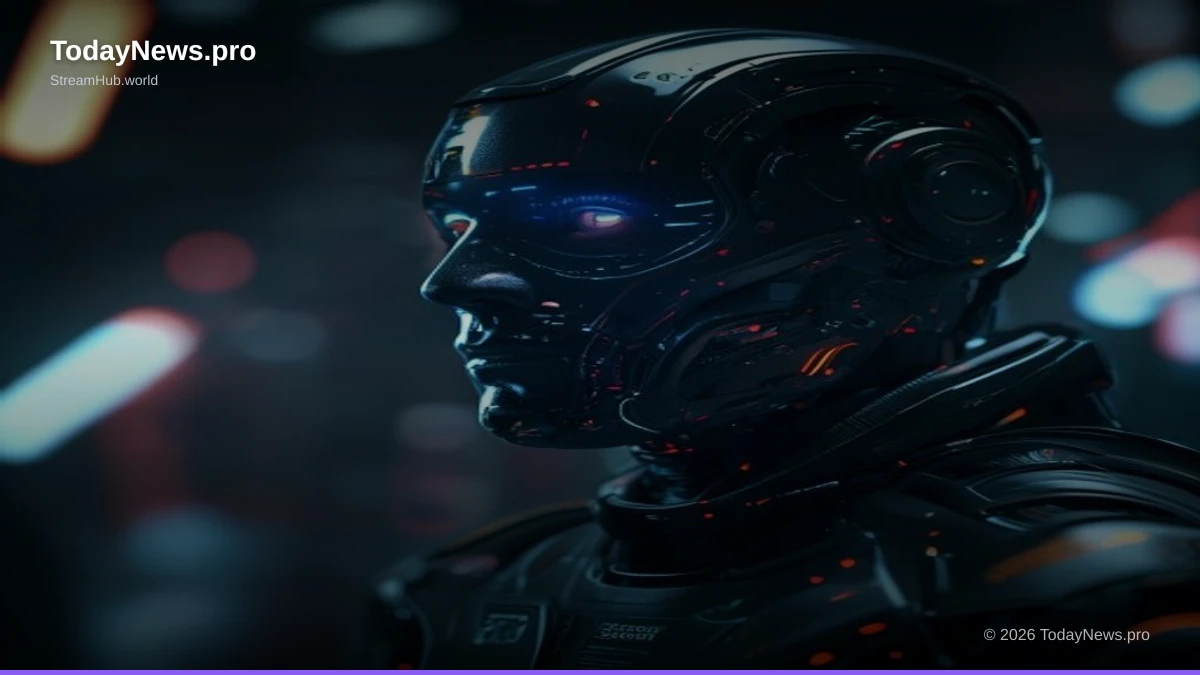
The notion of an "AI Director" might sound like science fiction, yet the reality is that artificial intelligence is steadily moving from a supporting role to a potentially central one in the filmmaking process. AI is not merely a tool for automation; it's evolving into a creative partner, capable of generating novel ideas, analyzing audience preferences, and even influencing directorial decisions. This shift is driven by algorithms that can process vast amounts of data, learning from successful films, audience demographics, and narrative structures. The ultimate goal for many in the industry is not to replace human creativity but to augment it, unlocking new possibilities and efficiencies previously unimaginable. The AI director, in its nascent form, is a sophisticated system that can assist human directors, or in some specialized cases, autonomously generate elements of a film.Generative AI for Content Creation
The most visible impact of AI is in generative tools. Large Language Models (LLMs) like GPT-4 are now capable of writing scripts, generating storyboards, and even composing musical scores. These systems can take a simple prompt, such as "a heartwarming story about a lost dog finding its way home," and produce a full screenplay, complete with character dialogues, scene descriptions, and pacing suggestions. This significantly accelerates the ideation phase, allowing writers and directors to explore multiple narrative avenues with unprecedented speed. Furthermore, AI can analyze existing scripts for potential plot holes, pacing issues, or cliché usage, offering constructive feedback to refine the narrative.Predictive Analytics for Audience Engagement
Beyond creation, AI is becoming indispensable for understanding and predicting audience behavior. By analyzing data from streaming platforms, social media trends, and box office performance, AI algorithms can identify what types of stories, characters, and genres resonate most with specific demographics. This information can guide decision-making from the very outset of a project, helping producers greenlight films with a higher probability of commercial success. It’s a move away from gut feeling and towards data-driven production, a trend that is both exciting and, for some, a cause for concern regarding artistic homogenization.Personalized Storytelling Experiences
The future of filmmaking, enhanced by AI, might also involve deeply personalized viewing experiences. Imagine a film where the narrative subtly adapts to viewer preferences, or where character arcs are shaped by individual engagement metrics. While still in its experimental stages, this form of adaptive storytelling could revolutionize how audiences interact with content, leading to more immersive and engaging cinematic journeys. This could range from minor adjustments in dialogue to significant branching narratives, all managed by an AI engine analyzing viewer interaction in real-time.From Script to Screen: AIs Role in Pre-Production
The pre-production phase, often the most time-consuming and resource-intensive part of filmmaking, is ripe for AI-driven optimization. From script development and casting to storyboarding and budgeting, AI is proving to be a powerful ally for filmmakers.Script Analysis and Enhancement
AI-powered script analysis tools can go beyond simple grammar and spell-checking. They can identify character arcs, analyze dialogue patterns, predict emotional beats, and even forecast potential audience reception. For example, an AI could highlight scenes that might be perceived as too slow, suggest alternative dialogue that better fits a character's established voice, or flag instances where a plot point might be unclear. This allows screenwriters and script doctors to refine their work with greater precision and efficiency.AI-Assisted Casting and Character Development
Casting has traditionally relied on human intuition and extensive casting calls. AI, however, can analyze an actor's past performances, their perceived on-screen chemistry with other actors, and even their social media presence to suggest ideal candidates for roles. Furthermore, AI can assist in developing more nuanced characters by analyzing archetypes, motivations, and backstories from a vast library of literary and cinematic history, ensuring greater depth and consistency.Budgeting and Scheduling Optimization
Creating realistic budgets and efficient shooting schedules is a complex logistical challenge. AI can process historical production data, talent availability, location scouting information, and even weather forecasts to generate optimized schedules and budgets. This can help production managers mitigate risks, reduce overruns, and ensure that resources are allocated most effectively, leading to significant cost savings.| Area | AI Impact (Percentage Reduction) |
|---|---|
| Script Writing & Analysis | 15-25% |
| Casting & Talent Scouting | 10-20% |
| Budgeting & Scheduling | 20-30% |
| Storyboarding & Pre-visualization | 25-35% |
The AI Actor and Virtual Performers
One of the most disruptive and debated aspects of AI in filmmaking is the emergence of AI-generated actors and virtual performers. While the idea of an entirely artificial lead actor remains a distant prospect for mainstream cinema, AI is already being used to enhance performances and create digital doubles.Digital Doubles and De-aging
AI is revolutionizing the creation of digital doubles. Previously, creating a convincing digital replica of an actor for stunts or complex scenes was a laborious process. AI can now generate highly realistic digital twins, allowing for intricate stunts without risking actor safety. Furthermore, AI-powered de-aging and re-aging technologies have become remarkably sophisticated, enabling actors to convincingly portray younger or older versions of themselves without the need for extensive prosthetics or makeup. This technology was notably used in films like "The Irishman" and "Captain America: Civil War."Performance Synthesis and Enhancement
AI algorithms can analyze an actor's performance and then synthesize new performances based on that data. This can be used to subtly enhance an actor's expressions, correct minor errors in dialogue delivery, or even generate entirely new dialogue in the actor's voice. While this raises ethical questions about artistic authenticity and control, it offers a powerful tool for directors to fine-tune performances to their exact vision.Ethical Considerations of Virtual Actors
The rise of AI performers brings a host of ethical dilemmas. Questions surrounding intellectual property, likeness rights, and the potential displacement of human actors are paramount. Who owns the rights to a performance generated by AI based on an actor's likeness? Can an AI actor be copyrighted? These are complex legal and philosophical issues that the industry is only beginning to grapple with. The Screen Actors Guild (SAG-AFTRA) has been actively negotiating for protections against the unchecked use of AI in performances."The advent of AI-generated performances presents both unprecedented creative opportunities and significant ethical challenges. We must ensure that these powerful tools are used responsibly, respecting the rights and contributions of human artists."
— Dr. Anya Sharma, Professor of Digital Media Ethics, Oxford University
Revolutionizing Cinematography and Visual Effects
The visual realm of filmmaking is perhaps where AI's impact is most immediately apparent and transformative. From generating realistic environments to automating complex visual effects, AI is pushing the boundaries of what is visually possible on screen.AI-Powered Visual Effects (VFX)
The VFX industry, already heavily reliant on technology, is being fundamentally reshaped by AI. AI algorithms can now automate tedious tasks such as rotoscoping, motion tracking, and background plate generation, freeing up VFX artists to focus on more creative aspects. Generative AI is also being used to create entirely new visual elements, from fantastical creatures and environments to complex weather effects, with a speed and fidelity previously unattainable. Tools like RunwayML and NVIDIA's GauGAN are showcasing the potential for AI to generate photorealistic imagery from text prompts.Procedural Generation of Assets
Creating detailed 3D environments, props, and characters is incredibly time-consuming. AI can leverage procedural generation techniques to create vast, intricate, and unique assets automatically. This means that filmmakers can populate entire worlds with realistic detail without manually modeling every element, significantly reducing production time and cost for large-scale projects, especially in science fiction and fantasy genres.Intelligent Camera Movement and Composition
AI is also beginning to influence the camera itself. Algorithms can analyze scene content and predict optimal camera angles, movements, and framing to enhance narrative impact and visual storytelling. While a human director will always guide the overarching vision, AI can offer suggestions for shot composition, particularly in complex action sequences or when shooting with limited crew. This could lead to more dynamic and visually engaging cinematography, even in lower-budget productions.AI in Visual Effects: Key Applications
AI in the Editing Bay: Streamlining Post-Production
The editing process, crucial for shaping the rhythm and emotional arc of a film, is also undergoing a significant AI-driven metamorphosis. AI tools are assisting editors by automating repetitive tasks, suggesting edits, and even helping to craft the final narrative flow.Automated Rough Cuts and Scene Assembly
AI can analyze raw footage and automatically assemble rough cuts based on script cues, audio transcriptions, or predefined editing rules. This can drastically reduce the time editors spend on the laborious initial assembly of scenes, allowing them to focus on the more nuanced aspects of pacing, tone, and emotional impact. For example, an AI could identify all takes of a specific dialogue scene and arrange them in a logical sequence, providing a starting point for the editor.Intelligent Color Correction and Grading
Achieving a consistent and aesthetically pleasing color grade is essential for a film's visual appeal. AI algorithms can analyze footage and suggest color correction settings, automatically match colors between shots, and even apply stylistic grading based on reference images or genre conventions. This saves editors significant time and ensures a more polished final look.Sound Design and Music Generation
AI is also making inroads into sound design and music composition. AI can generate realistic sound effects, mix dialogue and ambient sounds, and even compose original musical scores tailored to the mood and pacing of a scene. This can provide filmmakers with a vast library of audio assets and musical themes, often at a fraction of the cost of traditional methods. Companies like Amper Music and Jukebox by OpenAI are pioneering AI-driven music creation.75%
Reduction in manual editing time
50%
Faster color grading workflows
40%
Cost savings on sound design
The Ethical Landscape and Future of AI Filmmaking
As AI becomes more integrated into filmmaking, the ethical considerations surrounding its use are growing in prominence. These issues range from intellectual property and copyright to the potential for job displacement and the very definition of authorship.Copyright and Authorship in AI-Generated Content
A significant legal and philosophical debate revolves around copyright. If an AI generates a script or a visual element, who owns the copyright? Current copyright laws are largely designed for human creators. Courts and legislators are struggling to define ownership in a landscape where creative output can be entirely machine-generated. This uncertainty could have profound implications for the film industry's intellectual property framework. A recent Reuters report highlighted the US Copyright Office's stance that AI-generated works cannot be copyrighted.Job Displacement and the Evolving Workforce
The automation of certain tasks by AI inevitably raises concerns about job displacement for human professionals, including editors, VFX artists, and even some directorial roles. The industry is at a crossroads: will AI lead to mass unemployment, or will it create new roles and opportunities? The prevailing sentiment among many futurists is that AI will augment, rather than replace, human talent, leading to a shift in skill requirements and the creation of new specialized roles focused on managing and directing AI systems.Maintaining Artistic Integrity and Human Touch
Perhaps the most profound question is whether AI can truly replicate human creativity, emotion, and artistic intent. While AI can mimic styles and generate novel combinations, the subjective experience of human consciousness and lived experience remains a unique source of artistic depth. The challenge for filmmakers will be to harness AI's power without sacrificing the authentic human voice that makes storytelling resonate so deeply with audiences. Maintaining a balance between technological efficiency and artistic soul will be crucial for the future of cinema.The concept of authorship is also being challenged. Can a film be attributed to a director when a significant portion of its creation was handled by an AI? This questions the very essence of artistic vision and control. For more on the history and impact of technology on film, consult Wikipedia's entry on the history of film.
Case Studies: AI in Action
While the full potential of AI in filmmaking is still unfolding, several projects and studios are already experimenting with and integrating AI into their workflows, offering glimpses into the future.AI-Assisted Screenwriting Experiments
Companies like Scriptbook have developed AI platforms that analyze scripts to predict their commercial viability. By examining plot structure, character dynamics, and audience appeal, these AI tools provide data-driven insights to screenwriters and producers, helping them refine their stories before committing significant resources. While not writing entire scripts from scratch, these tools act as sophisticated co-pilots in the creative process.Deepfake Technology and its Applications
Deepfake technology, powered by AI, has seen a surge in both commercial and controversial applications. In filmmaking, it has been used for de-aging actors, creating digital resurrection of deceased actors for cameo roles, and even for dubbing films into different languages with synchronized lip movements. While ethically fraught, its technical capabilities are undeniable and are being explored by studios for various narrative purposes.The Future of AI-Powered Studios
Some forward-thinking studios are investing heavily in AI research and development, envisioning a future where AI plays an integral role in every stage of production. This could lead to more efficient, cost-effective, and experimental filmmaking. The ability to rapidly prototype ideas, generate assets on demand, and personalize content for different audiences could fundamentally alter the economics and creative landscape of the film industry."AI is not a replacement for human creativity; it's an amplifier. It liberates artists from mundane tasks, allowing them to focus on what truly matters: the story, the emotion, and the human connection."
— Ben Carter, Chief Technology Officer, Nova Pictures
Will AI replace human actors entirely?
It is highly unlikely that AI will replace human actors entirely in the foreseeable future. While AI can create convincing digital performances and enhance existing ones, the nuanced emotional depth, improvisation, and unique presence of a human performer are difficult, if not impossible, to replicate. AI is more likely to serve as a tool to augment human performances or create specific digital characters.
How will AI affect the job market for filmmakers?
AI will undoubtedly change the job market. Some roles that involve repetitive or data-intensive tasks may see reduced demand. However, new roles focused on AI management, ethical oversight, prompt engineering for creative AI, and advanced AI integration will emerge. The industry will likely see a shift towards higher-skilled creative and technical roles.
Can AI truly be creative?
The definition of "creativity" is complex. AI can generate novel combinations of existing data, produce unexpected outcomes, and mimic artistic styles with remarkable accuracy. However, it lacks consciousness, lived experience, and the subjective emotional intent that is often considered the hallmark of human creativity. AI's "creativity" is currently rooted in pattern recognition and sophisticated algorithmic generation.
What are the biggest ethical concerns with AI in filmmaking?
The biggest ethical concerns include copyright ownership of AI-generated content, the potential for job displacement, the misuse of deepfake technology, issues of likeness rights for AI-generated actors, and the risk of artistic homogenization if AI is used to purely optimize for commercial appeal.