

 Roger Evans
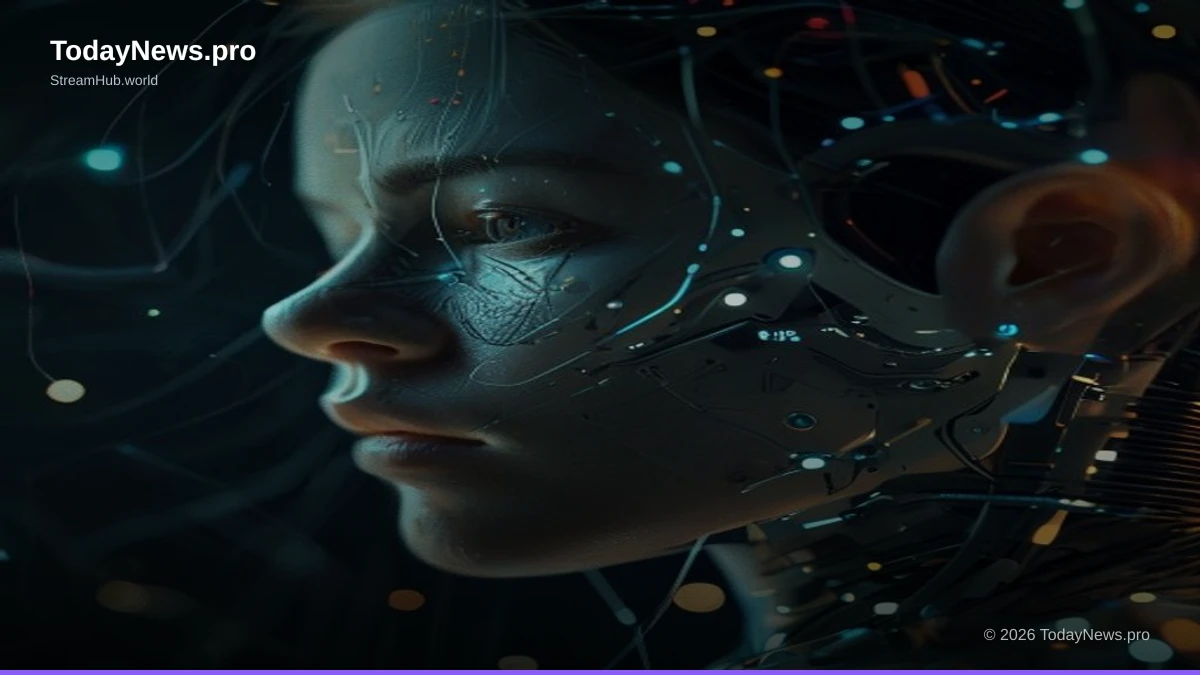
⏱ 15 min
A recent study by Cisco predicts that by 2022, global IP traffic would be 4.7 zettabytes per month. By 2026, it's projected to reach 14.1 zettabytes per month, a nearly threefold increase from 2021. A significant portion of this growth is fueled by the burgeoning field of synthetic media, transforming how we create, consume, and even perceive digital content. The Dawn of Synthetic Realities: Understanding Synthetic Media
Synthetic media refers to any form of media – audio, video, text, or images – that has been generated or manipulated using artificial intelligence and machine learning algorithms. This encompasses a wide spectrum, from subtle alterations to entirely fabricated realities. At its core, synthetic media leverages AI models, particularly deep learning techniques like Generative Adversarial Networks (GANs) and diffusion models, to create content that is often indistinguishable from human-created original media. The rapid advancement in computational power and the availability of vast datasets have accelerated the development and accessibility of these technologies, moving them from niche research labs to mainstream applications.The Algorithmic Engine Room
The engines driving synthetic media are sophisticated AI algorithms. GANs, for instance, consist of two neural networks: a generator that creates new data samples, and a discriminator that evaluates their authenticity. Through continuous adversarial training, the generator becomes adept at producing increasingly realistic outputs. Diffusion models, another prominent technique, work by progressively adding noise to an image and then learning to reverse this process, effectively generating new images from random noise. These methods, combined with natural language processing (NLP) for text generation and speech synthesis, form the bedrock of contemporary synthetic media.A Spectrum of Creation
The range of synthetic media is broad. At one end, we have subtle enhancements like image upscaling or noise reduction, often used in professional photography and videography. Moving along the spectrum, we find AI-powered text generators that can draft emails, articles, or even creative writing. On the more advanced end are deepfakes, which can swap faces in videos or generate entirely new, photorealistic individuals, and AI art generators that produce novel visual compositions from textual prompts. The sophistication and realism of these outputs are improving at an exponential rate.Deepfakes: The Double-Edged Sword of Digital Impersonation
Deepfakes, a portmanteau of "deep learning" and "fake," represent one of the most discussed and controversial aspects of synthetic media. These AI-generated videos or images can convincingly depict individuals saying or doing things they never actually did. While the technology holds potential for creative applications in entertainment and education, its misuse poses significant threats to individuals, institutions, and societal trust.The Mechanics of Deception
Creating a deepfake typically involves training a deep learning model on a large dataset of images or videos of the target individual. The AI then learns to map facial features and expressions, allowing it to superimpose the target's likeness onto another person's body or to generate entirely new facial movements and speech. The quality of the output depends heavily on the quality and quantity of the training data, as well as the sophistication of the algorithms employed. Early deepfakes were often crude, but current iterations can be remarkably convincing to the untrained eye.Applications: From Hollywood to Hoaxes
In the realm of entertainment, deepfakes offer exciting possibilities. Filmmakers can de-age actors, bring historical figures to life, or even create digital doubles for stunts. Virtual influencers, powered by deepfake technology, have already gained traction on social media platforms. However, the dark side of deepfakes is their capacity for malicious use. They can be employed to create non-consensual pornography, spread disinformation, defame individuals, or even influence political discourse through fabricated statements from public figures. The ease with which deepfakes can be created and disseminated poses a formidable challenge for verification and trust.The Growing Threat Landscape
The proliferation of deepfake technology raises alarms about its potential to erode public trust. Imagine a world where it becomes increasingly difficult to discern genuine video evidence from fabricated content. This has profound implications for journalism, the legal system, and democratic processes. The "liar's dividend," a concept where even genuine content can be dismissed as fake, becomes a more tangible threat.85%
of online videos are expected to be fake by 2025. (Forbes)
40%
of people believe they have already encountered a deepfake. (Pew Research)
75%
increase in deepfake detection software development from 2020-2023. (Industry Report)
AI Art: Democratizing Creativity or Devaluing Human Expression?
The advent of AI art generators, such as DALL-E 2, Midjourney, and Stable Diffusion, has unleashed a new wave of visual creativity. Users can generate stunning, complex, and often surreal images simply by typing descriptive text prompts. This has democratized art creation, making it accessible to individuals who may lack traditional artistic skills. However, it also sparks a debate about the nature of art, authorship, and the future role of human artists.From Prompt to Masterpiece
The process is remarkably intuitive. Users input text descriptions – known as "prompts" – detailing their desired image. These prompts can be as simple as "a cat wearing a hat" or as elaborate as "a majestic dragon soaring over a futuristic cityscape in the style of Van Gogh, with dramatic lighting and ethereal mist." The AI then interprets these prompts and generates corresponding images, often offering multiple variations for the user to choose from. The underlying models are trained on massive datasets of images and their associated text captions, allowing them to understand the relationships between words and visual concepts.The Democratization of Creation
The most significant impact of AI art is its ability to lower the barrier to entry for creative expression. Individuals who have always had artistic visions but lacked the technical skills can now bring their ideas to life. This empowers a new generation of creators and can lead to novel forms of visual storytelling. It also provides powerful tools for designers, marketers, and educators to quickly visualize concepts and generate assets.Authorship and Authenticity in Question
The rise of AI art also brings complex questions to the forefront. Who is the author of an AI-generated image? Is it the user who crafted the prompt, the developers who created the AI, or the AI itself? Furthermore, concerns have been raised about the ethical implications of training AI models on existing artwork without explicit permission from the original artists, potentially leading to copyright disputes and the devaluation of human artistic labor. The debate over whether AI-generated art can be considered "true" art, imbued with human emotion and intent, continues to be a passionate one.| Platform | Q1 2023 Users (Millions) | Q1 2024 Users (Millions) | Percentage Growth |
|---|---|---|---|
| Midjourney | 2.5 | 10.0 | 300% |
| Stable Diffusion (API & Interfaces) | 5.0 | 18.0 | 260% |
| DALL-E 2/3 | 1.8 | 7.5 | 317% |
| DreamStudio | 0.9 | 3.2 | 256% |
The Shifting Landscape of Content Creation
Synthetic media is not just a novelty; it's fundamentally reshaping the industries that rely on content creation. From marketing and advertising to journalism and entertainment, businesses and individuals are exploring and integrating these AI-powered tools to streamline workflows, enhance creativity, and reach audiences in new ways.Marketing and Advertising Revolutionized
In the marketing and advertising world, synthetic media offers unprecedented efficiency and personalization. AI can generate ad copy tailored to specific demographics, create product mockups in various settings, and even produce personalized video advertisements featuring virtual spokespeople. This allows for highly targeted campaigns and rapid iteration of creative assets, leading to potentially higher engagement rates and reduced production costs. The ability to quickly generate diverse visual assets for A/B testing also accelerates campaign optimization.Transforming Entertainment and Media
The entertainment industry is embracing synthetic media for its transformative potential in production and post-production. Virtual actors, AI-generated special effects, and automated content summarization are becoming increasingly common. The ability to create realistic digital characters opens up new narrative possibilities, while AI-powered tools can assist in scriptwriting, storyboarding, and even composing soundtracks. For news organizations, AI can help generate data visualizations, summarize lengthy reports, and even draft basic news articles, freeing up journalists to focus on more in-depth investigative work.The Rise of Synthetic Influencers and Virtual Personalities
A fascinating development is the rise of synthetic influencers and virtual personalities. These AI-generated characters have amassed significant followings on social media, engaging with audiences and promoting brands. While they offer a controlled and predictable presence, they also blur the lines between authenticity and artificiality in the influencer marketing space. Their existence raises questions about parasocial relationships and the nature of online celebrity.Ethical Minefields and the Quest for Regulation
The rapid advancement of synthetic media has outpaced the development of ethical guidelines and regulatory frameworks. Navigating this complex terrain requires a multi-faceted approach involving technological solutions, legal interventions, and public awareness campaigns.The Challenge of Detection and Provenance
One of the primary challenges is the difficulty in reliably detecting synthetic media, especially as it becomes more sophisticated. Researchers are developing advanced detection algorithms, but this often leads to an "arms race" between creators and detectors. Establishing the provenance of digital content – its origin and history – is crucial. Technologies like blockchain are being explored to create immutable records of media creation and modification, offering a potential solution for verifying authenticity.Legal and Policy Frameworks Under Development
Governments and international bodies are beginning to grapple with the legal implications of synthetic media. New legislation is being considered or enacted to address issues like non-consensual deepfakes, copyright infringement by AI, and the spread of disinformation. However, the global nature of the internet and the rapid evolution of AI technologies make enforcement a significant hurdle. Striking a balance between fostering innovation and protecting individuals from harm is a delicate act. "The democratization of content creation is a powerful force, but it comes with immense responsibility. We need robust mechanisms for provenance and detection, coupled with clear legal deterrents against malicious use. The future hinges on our ability to build trust in the digital realm."
— Dr. Anya Sharma, AI Ethics Researcher, FutureTech Institute
The Role of Public Education and Media Literacy
Beyond technological and legal solutions, empowering the public with critical media literacy skills is paramount. Educating individuals on how to identify potential synthetic media, understand the underlying technologies, and critically evaluate online content is a vital defense. Media organizations and educational institutions have a crucial role to play in fostering this digital discernment.The Future is Synthetic: Implications for Industries and Society
The trajectory of synthetic media points towards an increasingly integrated future where AI-generated content plays a pervasive role. This evolution will have profound and far-reaching implications across various sectors and for society as a whole.Enhanced Personalization and Immersive Experiences
The future will likely see hyper-personalized content delivered at scale. Imagine educational materials that adapt to an individual's learning pace, or entertainment experiences that dynamically adjust based on viewer preferences. Virtual and augmented reality will become more compelling with the integration of realistic AI-generated environments and characters, creating truly immersive experiences.Evolution of Work and Skill Demands
The nature of creative work will undoubtedly evolve. While some roles may be automated, new opportunities will emerge for AI prompt engineers, synthetic media editors, AI ethicists, and content verifiers. The demand for skills in critical thinking, creative problem-solving, and understanding AI systems will likely increase. Lifelong learning and adaptability will be key for professionals across all industries.Societal Impact: Trust, Truth, and Digital Identity
The societal implications are perhaps the most significant. The ability to generate highly convincing synthetic content challenges our perception of reality and truth. Navigating this landscape will require a constant vigilance and a robust societal commitment to verifying information. The concept of digital identity may also evolve, with individuals potentially having AI-generated personas or digital twins. As exemplified by the ongoing discussions around AI's impact on various sectors, the need for careful consideration is evident.2030
Projected year for AI-generated content to dominate online media. (Consulting Firm Forecast)
$1.2 Trillion
Estimated market value of synthetic media by 2030. (Industry Analysis)
90%
of all content could be AI-generated within the decade. (Expert Prediction)
Navigating the Synthetic Era: A Call to Action
The rise of synthetic media presents both unprecedented opportunities and significant challenges. As consumers, creators, policymakers, and technologists, we all have a role to play in shaping its future responsibly. Proactive engagement and thoughtful consideration are not merely advisable; they are imperative for harnessing the positive potential of these transformative technologies while mitigating their risks.Embrace Innovation with Caution
Organizations and individuals should explore the creative and efficiency gains offered by synthetic media tools. However, this exploration must be tempered with a strong ethical compass. Understanding the limitations and potential misuses of these technologies is crucial before widespread adoption. For instance, while AI can assist in content creation, understanding the nuances of human emotion and intent remains a uniquely human capability.Advocate for Responsible Development and Regulation
Technologists and developers bear a responsibility to build safeguards into their AI systems, prioritizing ethical considerations and user safety. Policymakers must engage in informed dialogue to develop agile and effective regulations that protect against harm without stifling innovation. This includes fostering international cooperation to address the borderless nature of digital content. For example, the European Union's AI Act is a significant step in this direction, aiming to classify AI systems by risk level.Cultivate Digital Literacy and Critical Thinking
Ultimately, the most powerful defense against the misuse of synthetic media lies within an informed and discerning public. Investing in digital literacy education, promoting critical thinking skills, and encouraging a healthy skepticism towards online content are essential. By understanding how synthetic media is created and how to evaluate its authenticity, individuals can become more resilient to disinformation and manipulation. Learning to question the source and context of information is a fundamental skill for the digital age. The journey into the era of synthetic media is just beginning. By fostering collaboration, promoting ethical frameworks, and empowering individuals with knowledge, we can navigate this transformative period and ensure that synthetic media serves as a tool for progress, creativity, and understanding.What is the difference between synthetic media and manipulated media?
Synthetic media is generated or created using AI, meaning it did not exist in its current form naturally. Manipulated media, while altered, often starts with an existing piece of content and undergoes changes that may or may not involve AI. The key distinction lies in the generative nature of AI in synthetic media.
Can deepfakes be detected?
Yes, deepfakes can be detected, but it's an ongoing challenge. As deepfake technology improves, so do the detection methods. Researchers are constantly developing new algorithms to identify subtle artifacts, inconsistencies in facial movements, or digital fingerprints left by AI generation. However, highly sophisticated deepfakes can still evade detection.
Is AI art considered real art?
This is a philosophical and ongoing debate. Some argue that art requires human intent, emotion, and lived experience, which AI lacks. Others believe that the creative process, even when facilitated by AI, and the resulting aesthetic output can be considered art. The definition of art is continually evolving with technological advancements.
What are the main ethical concerns surrounding synthetic media?
The primary ethical concerns include the spread of disinformation and fake news, the creation of non-consensual pornography, defamation of character, copyright infringement, and the potential erosion of public trust in digital media. There are also concerns about the impact on artists' livelihoods and the authenticity of digital identities.
How can I protect myself from deepfakes and synthetic media manipulation?
Develop strong media literacy skills: be critical of online content, cross-reference information from multiple reputable sources, and be aware of the potential for AI-generated content. Look for signs of manipulation, and use trusted verification tools or services when available. Support the development and adoption of provenance technologies.