

 David Chen
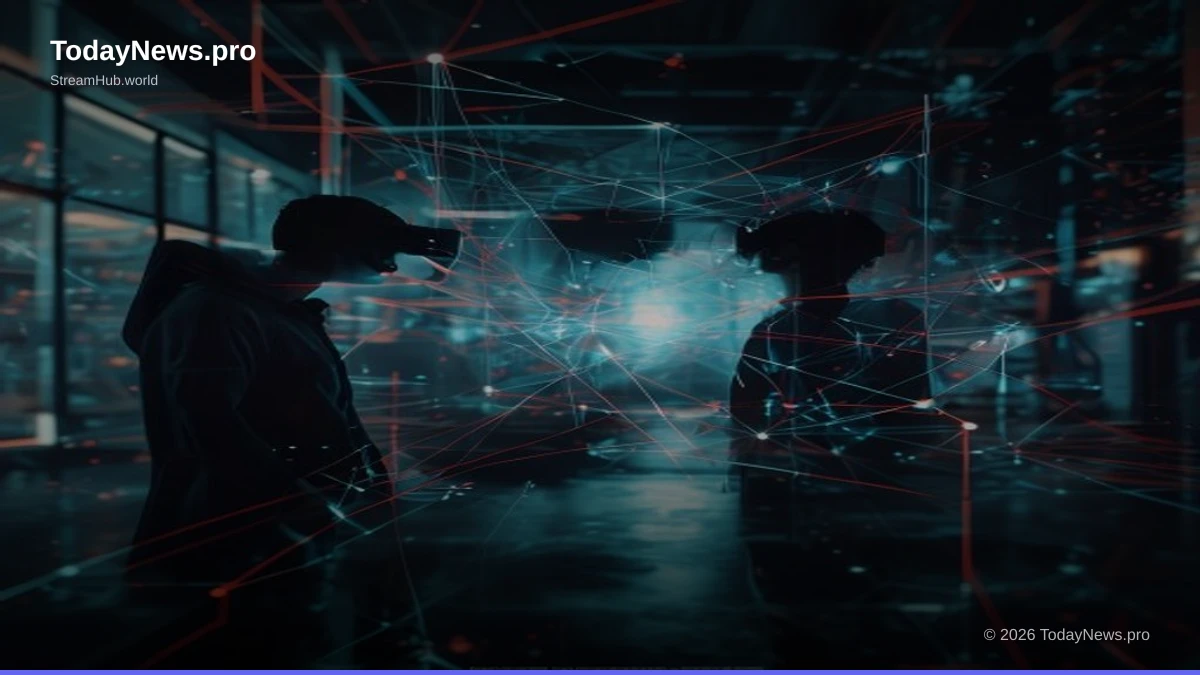
⏱ 12 min
In 2023, the global augmented reality (AR) and virtual reality (VR) market was valued at approximately $35 billion, with projections indicating a surge to over $300 billion by 2027, signifying a fundamental shift in how we interact with digital information and the physical world.
The Dawn of the Spatial Web: Beyond Flat Screens
For decades, our digital lives have been confined to the two-dimensional plane of screens. From desktop monitors to smartphone displays, information has been presented as text, images, and videos viewed through a glass pane. This paradigm, while revolutionary in its time, is about to undergo a profound transformation. We are entering the era of the Spatial Web, a three-dimensional, persistent, and interconnected digital universe that blends seamlessly with our physical surroundings. This new frontier is powered by the convergence of Augmented Reality (AR) and Virtual Reality (VR) technologies, promising to redefine everything from how we work and learn to how we socialize and entertain ourselves. The Spatial Web isn't just about consuming content; it's about experiencing it, interacting with it, and embedding it within the fabric of our reality.AR and VR: Defining the Core Technologies
At the heart of the Spatial Web lie two distinct yet complementary technologies: Augmented Reality (AR) and Virtual Reality (VR). While often used interchangeably, they represent different approaches to digital immersion.Augmented Reality (AR)
AR overlays digital information onto the real world. Think of your smartphone camera showing you Pokémon in your local park, or a furniture app allowing you to visualize a new sofa in your living room. AR typically uses devices like smartphones, tablets, or AR glasses to superimpose computer-generated images, sounds, and other sensory data onto a user's view of the real world. The goal is to enhance, not replace, our physical environment, providing contextual information and interactive elements where and when we need them. This can range from navigation aids that project directions onto the street ahead to real-time translation of signs.Virtual Reality (VR)
VR, on the other hand, fully immerses the user in a completely artificial, computer-generated environment. Through a VR headset, users are transported to a different reality, often for gaming, simulations, or virtual tours. VR headsets block out the real world, creating a sense of presence within the digital space. This technology offers a powerful tool for experiencing places and scenarios that are inaccessible or impractical in the physical world. The fidelity of VR experiences is rapidly improving, with advancements in visual resolution, haptic feedback, and spatial audio creating increasingly believable and engaging worlds. The distinction is crucial: AR enhances our existing reality, while VR creates new ones. Both, however, are key pillars in building the Spatial Web.Transforming Industries: A New Frontier
The impact of AR and VR extends far beyond gaming and entertainment. These technologies are poised to revolutionize numerous industries, creating unprecedented efficiencies, new business models, and entirely novel user experiences.Retail and E-commerce: Immersive Shopping Experiences
The traditional online shopping experience, while convenient, often lacks the tactile and visual depth of in-store browsing. AR and VR are set to change this dramatically. Imagine trying on clothes virtually from the comfort of your home, seeing how a designer outfit fits your avatar or even a 3D scan of yourself. Retailers can create virtual showrooms where customers can explore products in detail, interact with them, and even get personalized recommendations based on their preferences. A"The ability to virtually 'try before you buy' will significantly reduce returns and boost consumer confidence, fundamentally altering the e-commerce landscape."
This also applies to larger purchases, like furniture or automobiles. AR apps allow consumers to place virtual furniture in their homes to assess fit and style, or to explore a car's interior and exterior features without visiting a dealership. This not only enhances the customer journey but also provides valuable data to retailers about consumer behavior and preferences.
— Dr. Anya Sharma, Lead Futurist, TechNova Insights
Healthcare: Revolutionizing Training and Treatment
The medical field stands to gain immensely from spatial computing. VR is already being used for surgical training, allowing aspiring surgeons to practice complex procedures in a risk-free virtual environment. This can lead to improved patient outcomes and reduced training costs. AR can assist surgeons during operations by overlaying patient data, such as MRI scans or vital signs, directly onto their field of vision, providing real-time guidance. Furthermore, VR offers therapeutic applications. It can be used for pain management, exposure therapy for phobias, and rehabilitation exercises. For example, patients recovering from strokes can engage in gamified physical therapy sessions in VR, making the recovery process more engaging and effective.Education: Interactive and Engaging Learning
The traditional classroom model is ripe for disruption. VR can transport students to ancient Rome, the surface of Mars, or inside the human body, offering an unparalleled level of engagement and understanding. Textbooks can become interactive portals, with 3D models and simulations bringing complex subjects to life. AR can augment physical classrooms, allowing students to interact with 3D models of molecules, historical artifacts, or geographical landscapes simply by pointing their device. This hands-on, experiential learning fosters deeper comprehension and retention.| Educational Application | AR/VR Impact | Key Benefits |
|---|---|---|
| Medical Simulation | VR | Risk-free surgical practice, improved skill acquisition |
| Historical Immersion | VR | Engaging, memorable learning experiences, deeper context |
| Science Visualization | AR/VR | Interactive exploration of complex concepts (e.g., atomic structures) |
| Remote Field Trips | VR | Access to global locations and environments |
| Interactive Textbooks | AR | Bringing static content to life with 3D models and animations |
The Societal Shift: Redefining Human Interaction
Beyond industry-specific applications, the Spatial Web will fundamentally alter how we interact with each other and with information in our daily lives.Work and Collaboration: The Virtual Office
The pandemic accelerated the adoption of remote work, and spatial computing promises to make virtual collaboration even more effective and immersive. Instead of staring at flat video feeds, colleagues can meet in shared virtual spaces, represented by avatars. This can foster a greater sense of presence and camaraderie, enabling more natural interactions, spontaneous discussions, and even virtual whiteboarding sessions. Imagine walking into a virtual conference room, seeing your colleagues' avatars, and collaborating on a 3D model together. This "metaverse at work" could bridge geographical divides and enhance team cohesion.Entertainment and Socializing: New Dimensions of Fun
Gaming is already a significant driver for VR adoption, but the possibilities extend much further. Concerts can be attended virtually, offering front-row seats from anywhere in the world. Social gatherings can take place in custom-designed virtual environments, allowing friends to connect and interact in novel ways. The lines between the digital and physical will blur further. AR can enhance live events, overlaying real-time information or special effects onto the physical world. Imagine attending a sports game and seeing player statistics or replays appear in your field of vision through AR glasses.Challenges and Hurdles: Navigating the Transition
Despite the immense potential, the widespread adoption of the Spatial Web faces several significant challenges.Accessibility and Affordability
Currently, high-quality VR headsets and advanced AR devices can be expensive, making them inaccessible to a large segment of the population. For the Spatial Web to truly become ubiquitous, hardware costs need to decrease significantly, and user-friendly interfaces must be developed. Furthermore, ensuring that these technologies are accessible to individuals with disabilities is paramount.Privacy and Security Concerns
As we spend more time in virtual environments and as AR devices collect more data about our physical surroundings, concerns about privacy and security will intensify. Who owns the data generated by our interactions in the Spatial Web? How will it be protected from misuse or breaches? Robust regulations and ethical guidelines will be crucial to building trust. The collection of biometric data through VR headsets and the potential for constant surveillance through AR glasses raise serious questions. Users need to be assured that their digital and physical lives are protected. For more on data privacy, consult Reuters' technology privacy section.Ethical Considerations and Digital Etiquette
The development of new social norms and etiquette for the Spatial Web is essential. How do we navigate virtual spaces respectfully? What are the implications of avatar representation and digital identity? Issues like cyberbullying, harassment, and the spread of misinformation will need to be addressed in these new immersive environments. The creation of persistent digital worlds raises questions about digital ownership, intellectual property, and the very nature of reality. Understanding the ethical frameworks that govern human interaction is vital as we build these new digital societies.The Future Outlook: A Glimpse into Tomorrow
The trajectory of AR and VR development suggests a future where the boundaries between the digital and physical worlds become increasingly fluid. We can anticipate lighter, more comfortable AR glasses that can be worn all day, seamlessly blending digital information with our perception of reality. VR experiences will become more photorealistic and sensorially rich, offering deeper immersion. The development of the metaverse, a persistent, interconnected set of virtual spaces, is a key component of this future. While still in its nascent stages, the metaverse has the potential to become a parallel digital universe where we work, play, shop, and socialize.500+ million
Active AR/VR users projected by 2025
80%
Of enterprises expected to use AR/VR by 2026
2030
Target year for widespread AR glasses adoption
The Spatial Web Economy: New Opportunities and Value Chains
The rise of the Spatial Web will spawn entirely new economic ecosystems and job markets. We're already seeing the emergence of digital architects, virtual world designers, avatar fashion creators, and metaverse event planners. The demand for developers skilled in AR/VR platforms, 3D modeling, and spatial computing will soar. Businesses will need to rethink their digital strategies, investing in virtual storefronts, immersive marketing campaigns, and augmented customer support. The creation and monetization of digital assets, from virtual land to digital art and collectibles, will form a significant part of this new economy. The ability to build, own, and trade these assets in decentralized virtual worlds could redefine our understanding of value and ownership."The Spatial Web represents not just a technological evolution, but an economic revolution. It will unlock new forms of value creation and consumption that we are only beginning to comprehend."
— Kai Zhang, Chief Economist, Global Digital Futures Institute
Conclusion: Embracing the Immersive Future
The Spatial Web era is not a distant science fiction concept; it is unfolding before our eyes. The convergence of AR, VR, and AI is creating a new dimension of human experience, one that is deeply integrated with our physical reality. While challenges related to accessibility, privacy, and ethics remain, the transformative potential of this shift is undeniable. From revolutionizing industries to redefining social interactions, the Spatial Web promises a future that is more immersive, interactive, and interconnected than ever before. As we move forward, embracing this new frontier with thoughtful consideration and innovation will be key to unlocking its full potential for the benefit of all.What is the difference between AR and VR?
Augmented Reality (AR) overlays digital information onto the real world, enhancing your existing environment. Virtual Reality (VR) completely immerses you in a fully artificial, computer-generated environment, blocking out the real world.
When will AR glasses become mainstream?
While AR technology is advancing rapidly, widespread mainstream adoption of lightweight, stylish AR glasses is still several years away, with many experts predicting significant penetration by the end of the decade, around 2030.
What are the main privacy concerns with AR/VR?
Privacy concerns include the collection of vast amounts of personal data (biometric, environmental, behavioral), potential for constant surveillance, data security breaches, and the ownership and use of this sensitive information.
How will the Spatial Web impact jobs?
The Spatial Web is expected to create new job categories such as virtual world designers, AR/VR developers, 3D modelers, and metaverse event planners, while also transforming existing roles in fields like retail, healthcare, and education.