

 David Chen
⏱ 25 min
The global market for spatial computing is projected to reach $277.86 billion by 2030, signaling a dramatic shift in how we interact with digital information and the physical world. The Immersive Horizon: Spatial Computings Genesis
Spatial computing, a term that is rapidly gaining traction, represents the next evolutionary leap in human-computer interaction. It's not merely about experiencing digital content in three dimensions; it’s about seamlessly blending the digital and physical realms into a unified, interactive environment. Unlike traditional computing that relies on flat screens and two-dimensional interfaces, spatial computing allows users to interact with data and applications as if they were physical objects in their real-world space. This paradigm shift is powered by a confluence of advanced technologies, including artificial intelligence, computer vision, sensors, and sophisticated display technologies. The foundational concepts of spatial computing have been brewing for decades, drawing inspiration from early virtual reality experiments and augmented reality research. However, recent advancements in processing power, miniaturization of components, and the development of more intuitive input methods have finally brought this futuristic vision into tangible reach. The core principle is to make computing feel less like an external tool and more like an integrated extension of our senses and environment.Early Visions and Technological Underpinnings
The dream of interacting with computers in a three-dimensional, spatially aware manner predates even the widespread adoption of personal computers. Early pioneers envisioned interactive holographic displays and interfaces that responded to gesture and voice. The development of sensors capable of tracking movement and orientation, such as accelerometers and gyroscopes, laid the groundwork for motion-controlled interfaces. Computer vision algorithms, which enable machines to "see" and interpret the world, are crucial for understanding the user's environment and hand gestures. Machine learning, particularly deep learning, plays a vital role in processing complex sensor data, recognizing objects, and predicting user intent. The convergence of these disparate technological is what is now enabling the sophisticated spatial computing experiences we are beginning to witness.Defining the Spatial Computing Landscape
At its heart, spatial computing is about understanding and manipulating information within a three-dimensional context. This involves mapping the physical environment, tracking the user's position and orientation within it, and rendering digital information that is anchored to real-world objects or locations. This creates an immersive experience where digital elements can appear to coexist with physical ones, responding to the user’s movements and interactions in a natural and intuitive way. It’s a move away from the "desktop metaphor" to an "environment metaphor," where our surroundings become the canvas for digital interaction.Demystifying Mixed Reality: Beyond Virtual Walls
Mixed Reality (MR) is a pivotal component of the spatial computing ecosystem, often used interchangeably with Augmented Reality (AR) and Virtual Reality (VR), though distinct in its capabilities. While VR fully immerses a user in a digital world, shutting out the real one, and AR overlays digital information onto the real world, MR takes this a step further. It enables digital and physical objects to interact with each other in real-time. Imagine a digital chess piece that can be knocked over by a physical hand, or a virtual assistant that can point to a physical object in your room to provide information. This level of interaction is what defines true mixed reality and is a cornerstone of advanced spatial computing.The Spectrum of Reality: VR, AR, and MR
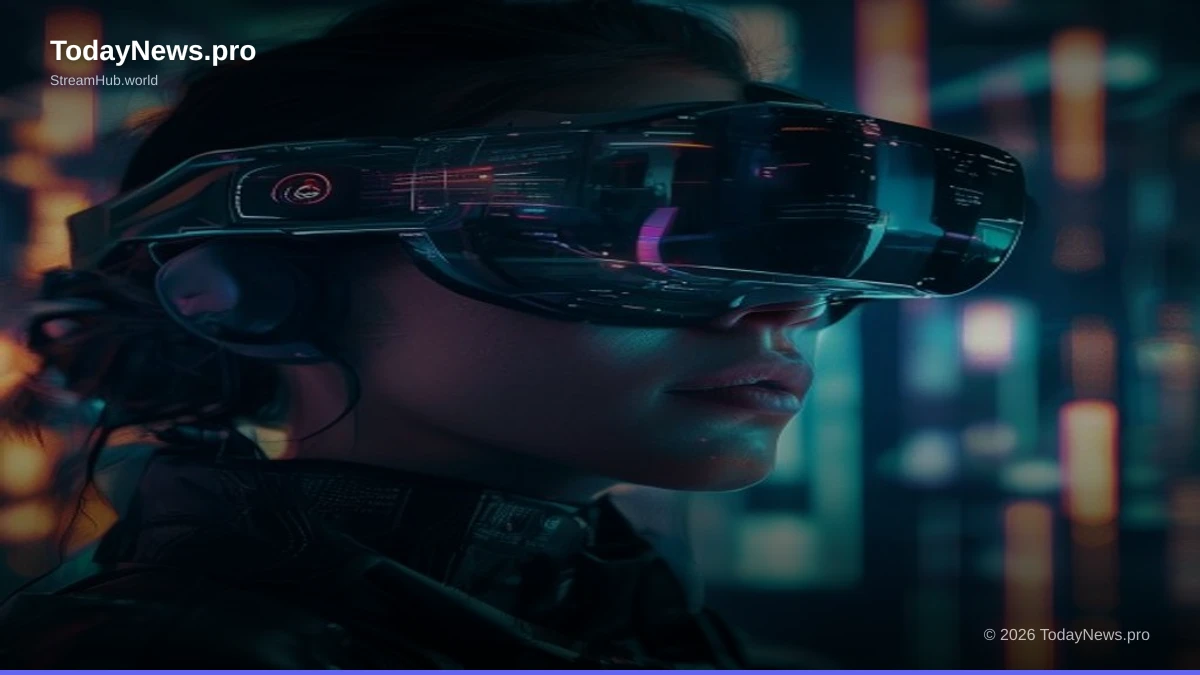
It's important to delineate the subtle yet crucial differences between these immersive technologies. Virtual Reality (VR) completely replaces the user's real-world view with a simulated digital environment. This is typically achieved through a VR headset that blocks out all external visual and auditory input. Augmented Reality (AR), on the other hand, overlays digital information onto the user's view of the real world. This can be done through smartphone screens or specialized AR glasses. Mixed Reality (MR) builds upon AR by allowing digital elements to not only be overlaid but also to interact dynamically with the real-world environment and its users. This is where digital objects can cast shadows on real surfaces or be occluded by physical objects, creating a much more believable and integrated experience.Key Enabling Technologies for Mixed Reality
The sophistication of MR experiences is directly tied to the advancement of several key technologies. High-resolution displays, often with a wide field of view, are essential for creating a convincing sense of presence. Advanced sensor arrays, including cameras, depth sensors, and inertial measurement units (IMUs), are critical for mapping the environment, tracking user movements, and understanding spatial relationships. Powerful processors, both on-device and in the cloud, are needed to render complex 3D graphics and run sophisticated AI algorithms in real-time. Furthermore, intuitive input methods, such as hand tracking, eye tracking, and voice commands, are paramount for natural interaction within these blended realities.Transforming the Everyday: Practical Applications Unveiled
The theoretical underpinnings of spatial computing and mixed reality are rapidly translating into tangible applications that are poised to reshape numerous facets of our daily lives. From enhancing our professional workflows to revolutionizing how we learn and entertain ourselves, the impact is far-reaching and only just beginning to be understood. These technologies are moving beyond niche gaming and entertainment applications to address real-world problems and create new efficiencies.Enhanced Productivity and Collaboration
In the professional sphere, spatial computing promises to unlock unprecedented levels of productivity and collaboration. Imagine a team of engineers collaborating on a 3D design model, able to manipulate and inspect it together in a shared virtual space, regardless of their physical locations. Architects can walk clients through virtual representations of buildings before they are constructed, making design iterations more efficient and understandable. For remote workers, MR can bring virtual colleagues into their physical office space, fostering a greater sense of presence and facilitating more natural interactions than traditional video conferencing. Tools that can project schematics or instructions directly onto physical equipment during maintenance or assembly tasks can reduce errors and speed up processes.| Industry | 2023 | 2028 | CAGR (2023-2028) |
|---|---|---|---|
| Manufacturing | 3.5 | 15.2 | 34.2% |
| Healthcare | 2.1 | 10.8 | 38.5% |
| Architecture, Engineering, Construction (AEC) | 1.8 | 9.5 | 39.1% |
| Retail & E-commerce | 1.2 | 7.1 | 42.3% |
| Education | 0.9 | 5.5 | 43.8% |
Revolutionizing Education and Training
The educational sector stands to gain immensely from the immersive capabilities of spatial computing. Complex subjects that are difficult to visualize on a 2D screen can be brought to life. Medical students could practice intricate surgical procedures on virtual patients, learning anatomy and surgical techniques in a safe, risk-free environment. History lessons could involve virtual tours of ancient civilizations, allowing students to explore historical sites as if they were there. Vocational training can be significantly enhanced, with trainees able to practice operating heavy machinery or performing complex repairs in a simulated, yet realistic, environment before working with actual equipment. This experiential learning approach can lead to deeper understanding and better retention of knowledge.75%
Faster skill acquisition in MR training simulations.
30%
Reduction in training costs through virtual simulations.
90%
Improvement in retention of complex information.
Redefining Entertainment and Social Interaction
While gaming has long been a driver for immersive technologies, spatial computing is poised to elevate entertainment and social interaction to entirely new dimensions. Imagine attending a live concert where you can experience the performance from the stage, or joining friends in a virtual world that feels as real as a physical gathering. Social media platforms could evolve into immersive 3D spaces where users can interact with each other as avatars, sharing experiences and content in a more engaging way. Even passive entertainment, like watching a movie, could be transformed, with the viewing environment becoming an interactive part of the narrative. The potential for creating shared, visceral experiences, regardless of geographical distance, is immense.The Hardware Ecosystem: Devices Shaping the Future
The realization of spatial computing hinges on the continuous innovation and refinement of hardware. The devices that enable these experiences are becoming more sophisticated, powerful, and, crucially, more accessible. From headsets that offer unparalleled immersion to lighter, more discreet smart glasses, the hardware ecosystem is diverse and rapidly evolving.The Evolution of Headsets and Glasses
Virtual Reality headsets, such as those from Meta (Oculus/Quest) and Sony (PlayStation VR), have paved the way, offering high levels of immersion for gaming and entertainment. However, the future of spatial computing is increasingly leaning towards Mixed Reality headsets that can seamlessly transition between virtual and augmented modes. Devices like Apple's Vision Pro and Meta's Quest Pro are pushing the boundaries of visual fidelity, processing power, and intuitive user interfaces, incorporating advanced eye-tracking and hand-tracking capabilities. Simultaneously, the development of lighter, more stylish AR glasses, aimed at everyday use, is progressing. These devices aim to provide contextual information and augmented reality overlays without the complete immersion of VR, making them more practical for a wider range of applications.Projected Market Share of XR Device Types (2025)
Input Methods and User Interaction
The way we interact with spatial computing environments is as critical as the visual experience itself. Traditional input methods like keyboards and mice are ill-suited for 3D, immersive environments. Therefore, advancements in hand tracking, eye tracking, and voice control are paramount. Hand tracking allows users to manipulate virtual objects with their bare hands, mimicking real-world interactions. Eye tracking enables foveated rendering (where only the area the user is looking at is rendered in full detail, saving processing power) and allows for selection and interaction based on gaze. Voice commands provide a hands-free method of control, further enhancing the naturalness of the experience. The goal is to make interaction so intuitive that it becomes second nature, minimizing cognitive load.The Role of 5G and Edge Computing
The bandwidth and low latency requirements of sophisticated spatial computing applications necessitate robust network infrastructure. The widespread deployment of 5G technology is a critical enabler, allowing for seamless streaming of high-fidelity digital content and real-time data exchange between devices and the cloud. Edge computing also plays a significant role, processing data closer to the user's device, which reduces latency and improves responsiveness. This distributed computing model is essential for delivering smooth, lag-free spatial experiences, particularly for complex simulations and interactive applications. For more information on 5G's impact, see Reuters' coverage.Challenges and Ethical Considerations on the Path Forward
Despite the immense promise of spatial computing, its widespread adoption is not without its hurdles. Technical limitations, the cost of hardware, and crucially, the ethical implications of deeply integrated digital realities, present significant challenges that must be addressed proactively.Technical Hurdles and Accessibility
One of the primary technical challenges is achieving photorealistic rendering and seamless environmental mapping at scale. Creating digital twins of our world that are accurate enough for complex interactions requires significant computational power and advanced algorithms. Battery life for portable devices remains a concern, limiting the duration of immersive experiences. Furthermore, the cost of high-end spatial computing hardware, such as advanced MR headsets, remains a barrier to mass adoption. For the technology to truly become ubiquitous, it needs to become more affordable and accessible to a broader segment of the population. Accessibility for individuals with disabilities also requires careful consideration in design and implementation.Privacy, Data Security, and Digital Wellbeing
As spatial computing devices become more sophisticated and integrated into our lives, concerns around privacy and data security escalate. These devices collect vast amounts of personal data, including environmental mapping, user behavior, and biometric information. Ensuring this data is protected and used ethically is paramount. The potential for addiction and the blurring lines between the physical and digital worlds also raise questions about digital wellbeing and mental health. Striking a balance between the benefits of immersive technology and the need to maintain a healthy connection with the physical world will be crucial. The ethical frameworks surrounding data ownership and usage in these new realities are still being developed. Understanding the history of technology and its societal impact can provide valuable context; see Wikipedia's article on the history of computing.The Future of Work and Societal Impact
The transformative potential of spatial computing raises profound questions about the future of work and its broader societal impact. Automation powered by advanced AI and spatial interfaces could lead to significant shifts in the job market. The digital divide could widen if access to these technologies is not equitable. Furthermore, the creation of persistent, shared virtual worlds raises questions about digital ownership, governance, and the potential for escapism. Thoughtful policy-making and continuous societal dialogue will be essential to navigate these changes responsibly. "We are on the cusp of a fundamental redefinition of how humans interact with information and each other. The challenge lies not just in building the technology, but in ensuring it serves humanity, fostering connection and understanding rather than isolation."
— Dr. Anya Sharma, Lead Researcher, Immersive Technologies Lab
The Future is Now: Predictions and the Road Ahead
The trajectory of spatial computing is clear: it is no longer a concept confined to science fiction but a rapidly emerging reality. While the exact timeline for widespread adoption remains a subject of debate, the foundational technologies are in place, and innovation is accelerating at an unprecedented pace.Accelerated Innovation and Market Growth
Industry analysts widely predict a period of accelerated innovation in spatial computing hardware and software. We can expect to see increasingly sophisticated and affordable devices, more intuitive user interfaces, and a proliferation of applications across all sectors. The market is poised for exponential growth, driven by both consumer demand for new forms of entertainment and productivity tools, and enterprise adoption aimed at optimizing operations and enhancing collaboration. The development of open standards and platforms will be crucial for fostering a healthy ecosystem and driving interoperability. "The next decade will see spatial computing transition from a novel curiosity to an indispensable tool. The convergence of hardware, software, and network infrastructure is creating a fertile ground for innovations that will reshape our daily lives in ways we are only beginning to imagine."
— Ben Carter, Chief Technology Officer, InnovateXR
The Metaverse and Persistent Digital Realities
The concept of the metaverse, a persistent, interconnected set of virtual spaces, is intrinsically linked to the advancement of spatial computing. As these technologies mature, the lines between our physical and digital lives will continue to blur. We are moving towards a future where digital avatars interact in shared virtual environments, where digital assets have tangible value, and where our online and offline identities become increasingly intertwined. The development of these persistent digital realities will require robust infrastructure, sophisticated AI, and careful consideration of societal implications.Human-Centric Design and Ethical Imperatives
Ultimately, the success and societal acceptance of spatial computing will depend on its ability to enhance human experience, not detract from it. A focus on human-centric design principles, ensuring that these technologies are intuitive, accessible, and promote wellbeing, will be critical. Proactive engagement with ethical considerations, including privacy, security, and the equitable distribution of benefits, will be essential for building trust and ensuring a positive future for spatial computing. The journey beyond the screen has begun, and it promises to be one of the most transformative technological advancements of our generation.What is the primary difference between AR and MR?
Augmented Reality (AR) overlays digital information onto the real world. Mixed Reality (MR) goes a step further by enabling digital and physical objects to interact with each other in real-time, creating a more integrated and believable experience.
When will spatial computing become mainstream?
While there is no definitive timeline, many experts believe that widespread consumer adoption of more advanced spatial computing devices could begin within the next 5-10 years, driven by falling hardware costs and an increasing number of compelling applications.
What are the biggest ethical concerns with spatial computing?
The primary ethical concerns include data privacy and security, potential for addiction and negative impacts on mental wellbeing, the widening of the digital divide, and questions around digital ownership and governance in persistent virtual worlds.
Will spatial computing replace traditional screens?
It is unlikely to completely replace traditional screens in the near future. Instead, spatial computing is expected to complement existing technologies, offering new ways to interact with digital information that are more immersive and intuitive for specific tasks and experiences.