

 David Chen
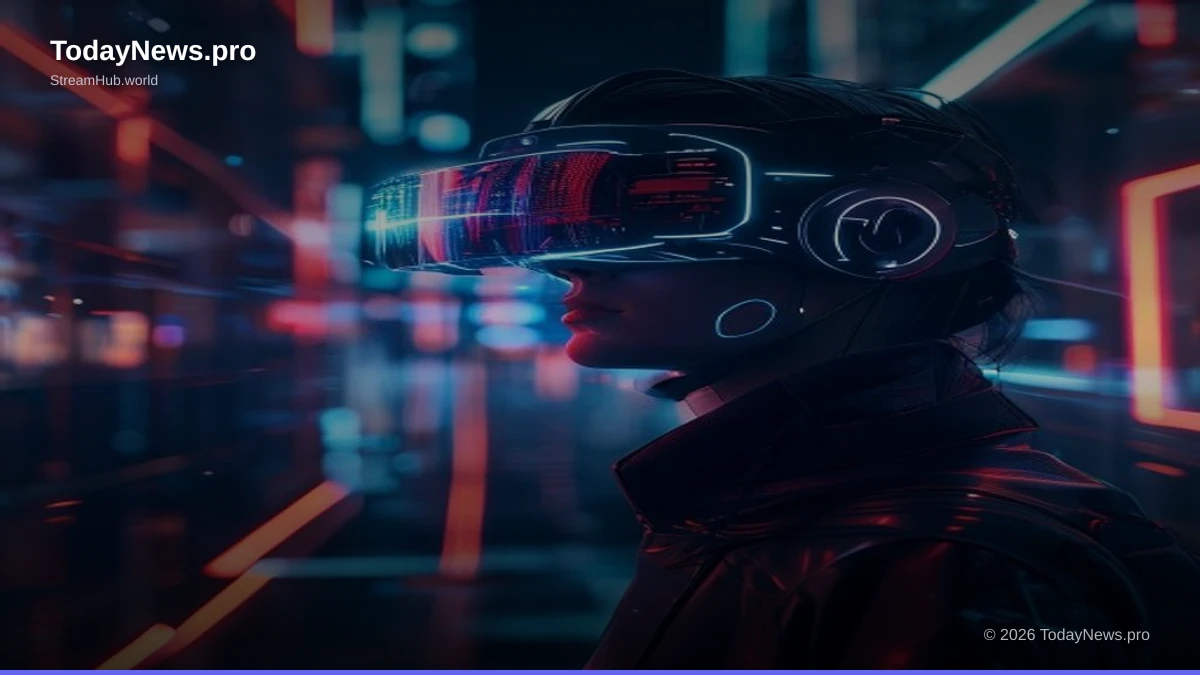
By the end of 2024, the global market for augmented reality (AR) and virtual reality (VR) combined is projected to exceed $13.1 billion, a figure that underscores the rapidly accelerating adoption and economic significance of immersive technologies, with AR poised for widespread integration into daily life.
Beyond the Hype: The Rise of Spatial Computing and Augmented Realitys Everyday Revolution
The term "spatial computing" is no longer confined to the esoteric discussions of tech futurists. It represents a paradigm shift in how humans interact with digital information and the physical world, moving beyond flat screens to a more intuitive, three-dimensional experience. At the heart of this evolution lies augmented reality (AR), a technology that overlays digital elements onto our real-world view, promising to subtly yet profoundly reshape our daily routines, professional lives, and entertainment. While VR immerses users in entirely digital environments, AR augments our existing reality, making it the more immediate candidate for widespread, everyday adoption. This isn't about replacing our current devices but about enhancing them, weaving digital intelligence seamlessly into our physical surroundings.Defining Spatial Computing: More Than Just Gadgets
Spatial computing refers to a new generation of computing where the computer is not an object separate from us and our environment, but is integrated into our surroundings and our senses. It’s about creating a blended reality where digital content is not confined to a screen but exists and interacts within three-dimensional space. This encompasses a range of technologies, including AR, VR, and mixed reality (MR), all aiming to create a more natural and intuitive interface between humans and machines. Instead of typing commands or tapping icons on a flat surface, users can interact with digital information through gestures, voice commands, and eye tracking, as if they were manipulating physical objects. This fundamental shift moves us from a task-centric computing model to a space-centric one, where the digital world understands and responds to our physical environment. The goal is to make technology feel less like a tool and more like an extension of our own perception and capabilities.The Core Components of Spatial Computing
At its foundation, spatial computing relies on several key technological pillars. Advanced sensors, including cameras, LiDAR, and accelerometers, are crucial for capturing and understanding the physical environment. Sophisticated algorithms process this sensor data to create a real-time 3D map of the surroundings, enabling digital objects to be anchored and interact realistically. Powerful processors, often incorporating specialized AI chips, are required to render complex digital content and respond to user inputs instantaneously. Finally, intuitive input methods, such as hand tracking, eye tracking, and voice recognition, are essential for enabling seamless, natural interaction within the spatial environment. These components work in concert to create experiences that feel less like using a computer and more like engaging with a richer, more informed reality.
Distinguishing AR, VR, and MR
While often grouped under the umbrella of spatial computing, AR, VR, and MR have distinct characteristics. Virtual Reality (VR) completely immerses the user in a simulated digital environment, blocking out the real world. Think of wearing a headset that transports you to a different planet or a historical reenactment. Augmented Reality (AR), on the other hand, overlays digital information onto the user's view of the real world. This can be as simple as a Pokémon appearing on your street through your smartphone camera or as complex as an architect seeing a 3D model of a building superimposed on an empty lot. Mixed Reality (MR) bridges the gap, allowing digital objects to interact with and be manipulated within the real world. For example, a virtual piece of furniture placed in your living room via an MR headset could cast a shadow and be viewed from different angles as if it were physically present. AR, due to its less intrusive nature and reliance on existing devices like smartphones, is seen as the most likely candidate for immediate, broad consumer adoption.
The AR Renaissance: From Gimmick to Utility
For years, AR was often relegated to novelty applications – filters on social media or simple games like Pokémon GO. However, a significant renaissance is underway, driven by advancements in hardware, software, and a growing understanding of AR's practical utility. The technology is maturing beyond its early experimental phases, demonstrating tangible benefits across various sectors. This shift from a perceived gimmick to a valuable tool is fundamental to its integration into everyday life. The focus is now on practical applications that solve real problems, enhance productivity, and offer new forms of engagement, moving AR from the realm of digital toys to essential digital companions.Bridging the Digital and Physical
AR's core strength lies in its ability to seamlessly bridge the gap between the digital and physical worlds. Unlike VR, which creates an entirely separate digital space, AR enhances our perception of the real world. Imagine looking at a piece of furniture in a store and instantly seeing how it would look in your living room, complete with accurate dimensions and color matching. Or consider a mechanic using AR glasses to see repair manuals and diagnostic information overlaid directly onto an engine they are working on. This direct overlay of relevant digital information onto our physical context dramatically improves comprehension, decision-making, and efficiency. It transforms passive observation into active, informed interaction, making the digital world a more tangible and accessible part of our physical existence. This ability to contextualize information precisely where and when it's needed is a game-changer.
Democratizing Access: The Mobile AR Advantage
A key driver of AR's burgeoning everyday revolution is the widespread accessibility of the technology through smartphones and tablets. These devices, already ubiquitous in pockets and purses worldwide, are powerful AR platforms. Developers can leverage existing hardware, including advanced cameras and increasingly sophisticated AR development kits (ARKit for iOS and ARCore for Android), to create immersive AR experiences without requiring users to purchase expensive, specialized hardware. This "mobile AR" advantage has democratized access, allowing billions of people to experiment with and benefit from AR applications. From interactive educational content to virtual try-ons for clothing and makeup, the smartphone has become the primary gateway to augmented reality for most consumers, paving the way for broader adoption and a deeper integration into daily habits.
Transforming Industries: Spatial Computing in Action
The impact of spatial computing, particularly through AR, is not limited to consumer applications; it is actively transforming how industries operate. From the factory floor to the operating room, these technologies are driving efficiency, precision, and innovation. The ability to visualize complex data, overlay instructions, and interact with digital models in a real-world context offers unprecedented advantages. These are not futuristic scenarios; these are current applications that are reshaping professional workflows and improving outcomes. The adoption in enterprise settings is often more rapid due to clear ROI and productivity gains, acting as a catalyst for broader market development.Manufacturing and Design: Visualizing the Improbable
In manufacturing and design, spatial computing is enabling a new era of product development and production. Engineers can use AR to visualize and interact with 3D CAD models on the factory floor, identifying potential design flaws or assembly issues before they arise. This drastically reduces prototyping costs and speeds up time-to-market. Workers can receive step-by-step assembly instructions overlaid directly onto machinery, minimizing errors and improving training efficiency. For instance, a complex assembly process can be guided by holographic overlays that highlight exactly where each component goes and how it should be fitted. This "digital twin" concept, where a virtual replica of a physical asset exists and can be manipulated and analyzed in real-time, is a powerful application of spatial computing in industrial settings. The ability to "see" the invisible, such as stress points in a design or the internal workings of a machine, is invaluable.
Healthcare: Precision and Patient Care
The healthcare sector is witnessing significant advancements driven by spatial computing. Surgeons can use AR to overlay patient scans, such as CT or MRI data, directly onto the patient's body during surgery, providing an enhanced view of internal anatomy and critical structures. This can lead to greater precision and reduced invasiveness. Medical students can benefit from AR-powered anatomical models that are interactive and explorable in 3D, offering a more engaging and effective learning experience than traditional textbooks or cadavers. Furthermore, AR is being explored for remote patient monitoring, allowing healthcare professionals to guide patients through exercises or self-care routines with visual cues and instructions projected into their home environment. The potential for improving diagnostic accuracy, surgical outcomes, and patient education is immense.
Retail and E-commerce: Enhanced Shopping Experiences
The retail industry is rapidly embracing AR to create more engaging and informative shopping experiences. Consumers can use AR apps to virtually try on clothing and accessories, place furniture in their homes to see how it fits and matches their decor, or visualize car configurations. This reduces the friction associated with online shopping, leading to higher conversion rates and reduced returns. For brick-and-mortar stores, AR can provide interactive product information, virtual assistants, or even transform store layouts with digital overlays. Imagine walking down an aisle and having product reviews and ingredient lists appear as you look at items. This creates a more personalized and informed shopping journey, blurring the lines between online convenience and physical retail interaction.
The Consumer Frontier: Everyday Applications Unfolding
While enterprise applications are driving significant investment and development, the true "everyday revolution" will hinge on consumer adoption. This is where AR begins to weave itself into the fabric of our daily lives, often in subtle yet impactful ways. From navigating our cities to connecting with loved ones, the potential for AR to enhance personal experiences is vast and only beginning to be explored. The key to this widespread adoption lies in creating applications that are intuitive, useful, and seamlessly integrated into existing routines, rather than demanding a complete overhaul of how we interact with technology.Enhanced Navigation and Information Overlay
One of the most immediate and practical applications of AR for consumers is in navigation. Imagine walking through an unfamiliar city and seeing navigational arrows and points of interest overlaid directly onto your view of the streets. Instead of constantly glancing at a phone screen, your path is intuitively guided by the real world. Beyond navigation, AR can provide contextual information about your surroundings. Looking at a restaurant? An AR overlay could show its menu, reviews, and opening hours. Pointing your phone at a historical landmark could bring up its history and significant events. This ability to access relevant information without breaking your immersion in the physical world is a powerful enhancement to everyday exploration and discovery. This is a direct evolution of the GPS and information lookup functions we already use, made more intuitive and integrated.
Immersive Entertainment and Social Interaction
Entertainment is another significant area where AR is poised to make a splash. Beyond AR games that blend digital characters with the real world, AR can enhance live events, concerts, and sporting matches with overlaid statistics, replays, or interactive visual effects. Social media platforms are increasingly incorporating AR filters and experiences, allowing for more creative and engaging ways to communicate and share moments. Imagine having a virtual avatar of a friend appear in your living room for a chat, or collaborating on a digital art project that exists in a shared physical space. These applications leverage AR's ability to bring digital elements into our social interactions, making them more dynamic and participatory. The metaverse, often discussed in conjunction with VR, can also be accessed and experienced through AR, allowing for persistent digital layers within our physical reality.
Education and Learning Made Engaging
AR offers revolutionary potential for education and lifelong learning. Textbooks can come alive with 3D models of historical figures, scientific concepts, or geographical features. Students can explore the human body in intricate detail, dissect a virtual frog without a lab, or experience historical events as if they were present. For younger learners, AR can transform educational games into interactive adventures that make learning fun and memorable. This hands-on, visual approach caters to diverse learning styles and can significantly improve comprehension and retention. Imagine a child learning about dinosaurs by having a T-Rex walk across their bedroom floor. The ability to interact with and visualize complex subjects in a tangible way is a significant advantage over traditional static learning materials.
Challenges and the Path Forward
Despite the rapid advancements and exciting potential, the widespread adoption of spatial computing and AR faces several hurdles. Overcoming these challenges will be crucial for AR to fulfill its promise of an everyday revolution. These obstacles range from the practical limitations of current hardware to the need for a robust ecosystem of applications and compelling user experiences. Addressing these will require continued innovation and strategic investment from both technology providers and content creators.Hardware Evolution and Affordability
While smartphones provide a gateway, the full potential of AR is often realized through dedicated AR glasses or headsets. Current offerings, while improving, can still be bulky, expensive, and limited in battery life and field of view. Achieving mass-market adoption will require the development of sleek, lightweight, and affordable devices that can be worn comfortably for extended periods. The technology needs to become less conspicuous and more integrated into everyday fashion and functionality. The ongoing miniaturization of components, improvements in battery efficiency, and advancements in display technology are all critical factors in making AR hardware as commonplace as smartphones are today. The cost barrier remains significant for many potential consumers, limiting initial adoption to early adopters and enterprise users.
User Experience and Content Creation
Creating intuitive and engaging AR experiences is paramount. Users need to be able to interact with digital content naturally and effortlessly, without a steep learning curve. This requires thoughtful user interface (UI) and user experience (UX) design specifically tailored for spatial environments. Furthermore, a rich ecosystem of high-quality AR content is essential to keep users engaged. Developing this content requires new tools, workflows, and a skilled workforce. The transition from 2D screen-based design to 3D spatial design presents a significant challenge for developers and content creators. Simplifying these creation tools and fostering a vibrant developer community will be key to unlocking the full potential of AR applications.
Privacy and Ethical Considerations
As AR devices become more integrated into our lives, capturing and processing vast amounts of data about our environment and ourselves, privacy and ethical concerns come to the forefront. How will personal data be collected, stored, and used? Who has access to this information? The potential for pervasive surveillance, unintended data collection, and the blurring of lines between public and private spaces necessitates robust privacy frameworks and ethical guidelines. Building trust with consumers will depend on transparent data handling practices and clear policies that protect user privacy. The societal implications of technology that constantly perceives and records our surroundings are significant and require careful consideration and regulation.
The Economic Landscape of Spatial Computing
The economic impact of spatial computing is already substantial and projected to grow exponentially. Investment is pouring into the sector from major tech giants and venture capital firms alike, signaling strong confidence in its future. This investment is driving rapid innovation across hardware, software, and application development. The market encompasses not only the devices themselves but also the software platforms, content creation tools, and a burgeoning services industry. As AR technologies mature and become more accessible, they are expected to create new markets, jobs, and economic opportunities.This growth is fueled by increasing demand from both enterprise and consumer sectors. Companies are investing in AR for training, remote assistance, design visualization, and customer engagement, recognizing its potential for significant ROI. On the consumer side, the increasing capability of smartphones and the anticipation of more advanced wearable devices are driving interest in AR entertainment, social experiences, and utility applications. The development of standardized platforms and robust developer tools is further accelerating market expansion by lowering the barrier to entry for content creation.
| Year | AR/VR Market Revenue (USD Billions) | Year-over-Year Growth |
|---|---|---|
| 2023 | 11.0 | - |
| 2024 | 13.1 | 19.1% |
| 2025 | 17.2 | 31.3% |
| 2026 | 23.5 | 36.6% |
| 2027 | 32.1 | 36.6% |
| 2028 | 43.5 | 35.5% |
The projected figures illustrate a robust and accelerating growth trajectory for the AR/VR market. This expansion is not merely about increased device sales but also encompasses the entire ecosystem, including software, content, and services. The increasing maturity of the technology, coupled with growing consumer and enterprise adoption, underpins these optimistic forecasts. For more detailed market analysis, industry reports from sources like Statista provide comprehensive data and projections. The underlying trend points towards a future where spatial computing is an integral part of our digital lives.