

 Maria Curry
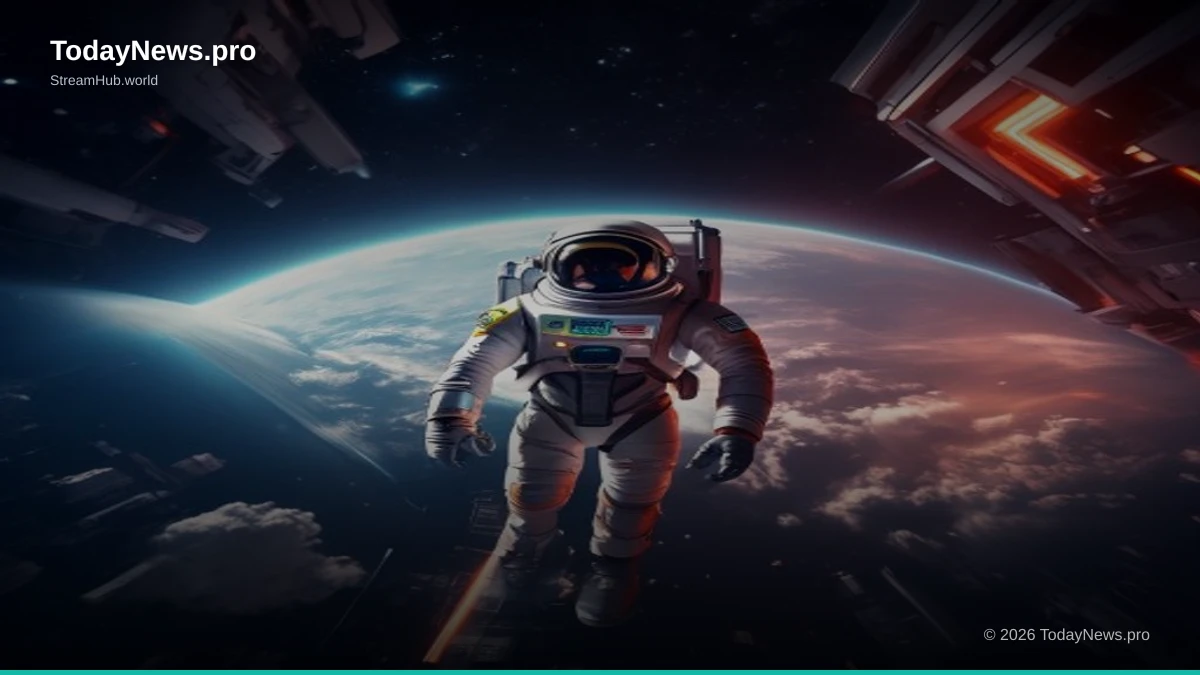
⏱ 45 min
In 2023, the global space economy was valued at an estimated $550 billion, with projections indicating significant growth, driven in part by the burgeoning space tourism sector. The Dawn of the Commercial Space Age
For decades, space remained the exclusive domain of national governments and their ambitious space agencies. The immense costs, technological complexities, and inherent risks confined journeys beyond Earth's atmosphere to highly trained astronauts. However, a paradigm shift began in the late 20th and early 21st centuries, spurred by private investment and innovative engineering. This marked the nascent stages of what is now unequivocally the commercial space age. The vision was no longer solely about scientific discovery or national prestige; it was about unlocking space as a potential frontier for commerce, exploration, and, remarkably, leisure. This fundamental reorientation of space exploration's purpose laid the groundwork for the seemingly fantastical idea of space tourism to transform from a whisper in scientific circles to a tangible, albeit still exclusive, reality. The early pioneers of private spaceflight, often dubbed the "new space" companies, faced skepticism and formidable technical hurdles. Yet, their persistence and willingness to challenge established norms proved instrumental. They demonstrated that private enterprise could not only participate in space activities but could also innovate and drive down costs in ways that governmental agencies, bound by different mandates and bureaucratic structures, might not have been able to achieve as rapidly. This era was characterized by a focus on reusable rocket technology, a critical factor in making space access more economical. The success of these early ventures, such as SpaceX's Falcon 9, which dramatically reduced the cost per kilogram to orbit, became a powerful testament to the viability of a commercial space ecosystem. This ecosystem, in turn, provided the essential infrastructure and confidence for the concept of space tourism to take flight. The economic underpinnings of this transformation are profound. By leveraging private capital and a more agile approach to development, these companies have been able to iterate and improve technologies at an unprecedented pace. This has not only benefited satellite deployment and scientific missions but has also directly enabled the ambition of bringing ordinary citizens into space. The spirit of entrepreneurship, coupled with a genuine human desire to experience the cosmos, has converged to create a dynamic new industry. This industry is not just about launching rockets; it's about creating entirely new markets and experiences, fundamentally altering our relationship with the final frontier.The Role of Government in Private Innovation
While the private sector has been the engine of this revolution, governmental agencies have played a crucial, albeit evolving, role. Agencies like NASA, through its Commercial Crew Program, provided vital early support and validation for private companies developing human-rated spacecraft. This collaboration fostered a symbiotic relationship, where government needs for reliable and cost-effective access to space aligned with private companies' aspirations to build sustainable businesses. This partnership model has been instrumental in de-risking private investment and accelerating the development of safety-critical systems necessary for human spaceflight. Furthermore, regulatory frameworks are gradually adapting to accommodate the growing commercial space sector. Organizations like the Federal Aviation Administration (FAA) in the United States are responsible for licensing and overseeing commercial space launches and reentries, ensuring public safety while not unduly stifling innovation. The ongoing dialogue between industry and regulators is essential for establishing clear guidelines that promote responsible growth and manage the unique challenges of operating in the aerospace domain. The evolving landscape of space law and policy will continue to shape the trajectory of space tourism, influencing everything from passenger liability to environmental considerations.From Sci-Fi Dreams to Suborbital Thrills
The concept of civilians traveling to space has long been a staple of science fiction, from Jules Verne's "From the Earth to the Moon" to the starships of Star Trek. These narratives, while fantastical, tapped into a deep-seated human curiosity and yearning to explore beyond our terrestrial confines. For generations, this remained purely in the realm of imagination, a distant aspiration fueled by the exploits of a select few. The technological barriers were immense, and the cost prohibitive, placing such journeys beyond the reach of all but the most determined and privileged. However, as the 21st century dawned, these once-impossible dreams began to materialize. Advances in materials science, rocketry, and computational fluid dynamics, largely driven by the commercial space sector, started to make the idea of space tourism a tangible possibility. Companies began to explore different approaches to achieving this goal, focusing on both suborbital and orbital flights. Suborbital flights, which reach the edge of space and offer a few minutes of weightlessness before returning to Earth, became the initial proving ground for commercial space tourism due to their relatively lower complexity and cost compared to orbital missions. The initial forays into suborbital space tourism have been characterized by groundbreaking flights that captivated global attention. These experiences, while brief, offer a profound perspective shift. Passengers ascend rapidly, experiencing G-forces akin to roller coasters, followed by the surreal sensation of weightlessness. The view of Earth from above – a mesmerizing blue marble against the black expanse of space – is often described as life-altering. This initial accessibility, though still at a significant price point, has opened the door for a broader demographic to consider space travel as a future possibility, moving it from pure fantasy to an aspirational goal.The Suborbital Experience Explained
Suborbital space tourism typically involves a rocket-powered ascent to an altitude exceeding 100 kilometers (62 miles), the internationally recognized boundary of space known as the Kármán line. The journey lasts approximately 10-15 minutes from launch to landing. During the apex of the flight, passengers experience several minutes of microgravity, allowing them to float freely within the cabin. This is often accompanied by spectacular panoramic views of the Earth's curvature and the blackness of space. The technology behind these flights varies. Some companies utilize vertical takeoff and landing rockets that launch passengers directly into space. Others employ air-launch systems, where a carrier aircraft takes a spaceplane to high altitude before releasing it for its rocket-powered ascent. Regardless of the method, the focus is on providing a safe, thrilling, and visually stunning experience that encapsulates the essence of space travel without the extended duration and complexity of orbital missions.Orbital Tourism: The Next Frontier
While suborbital flights offer a taste of space, orbital tourism represents the ultimate goal for many aspiring space travelers. These missions involve reaching Earth orbit, allowing passengers to circle the planet multiple times, experiencing prolonged periods of weightlessness and witnessing multiple sunrises and sunsets from space. These journeys are significantly more complex and expensive, requiring sophisticated spacecraft capable of sustained orbital maneuvers and life support for extended durations. The development of reusable orbital spacecraft, like SpaceX's Crew Dragon, has been a critical enabler for this segment of space tourism. These vehicles can ferry private citizens to the International Space Station (ISS) or to future private space stations. While the cost remains exceptionally high, the prospect of spending days or even weeks in orbit, conducting experiments, or simply enjoying the unparalleled views, represents the pinnacle of commercial space travel for the foreseeable future.The Players: Who is Taking Us to the Stars?
The landscape of space tourism is populated by a diverse array of ambitious companies, each with its unique technological approach and target market. These entities, ranging from well-funded startups to established aerospace giants, are collectively pushing the boundaries of what is possible in civilian spaceflight. Their innovations and competitive spirit are accelerating the development and accessibility of space travel, transforming it from a government-led endeavor to a burgeoning commercial industry. Understanding these key players is crucial to grasping the current state and future trajectory of space tourism. At the forefront of suborbital tourism are companies like Virgin Galactic and Blue Origin. Virgin Galactic, founded by Sir Richard Branson, utilizes a unique air-launch system. A carrier aircraft, the WhiteKnightTwo, carries their spaceplane, SpaceShipTwo, to high altitudes before releasing it. The spaceplane then ignites its rocket engine, ascending to the edge of space. Passengers experience several minutes of weightlessness and breathtaking views before gliding back to Earth. Blue Origin, founded by Jeff Bezos, employs a vertically launched rocket, New Shepard, designed specifically for suborbital passenger flights. Their system offers a similar experience of reaching space and enjoying microgravity, with a focus on safety and robust engineering.2004
Virgin Galactic Founded
2010
Blue Origin Founded
~$450,000
Virgin Galactic Ticket Price
Undisclosed
Blue Origin Ticket Price
Suborbital Contenders
The competition in the suborbital space tourism market is fierce, driving innovation and raising public awareness. Virgin Galactic and Blue Origin are the most visible entities, but others are also exploring this segment. The focus here is on relatively short flights, offering a significant taste of space without the complexities of orbital mechanics. The development of these suborbital vehicles has been a testament to private ingenuity. They are designed for rapid turnaround and high flight frequency, a crucial factor for commercial viability. The passenger experience is paramount, with cabins designed for comfort and excellent viewing opportunities. Safety protocols are incredibly stringent, drawing on decades of aerospace engineering expertise.Orbital Pioneers
Orbital tourism is the next evolutionary step, offering a more profound and extended experience. SpaceX's leadership in this area is undeniable, having demonstrated consistent success with human orbital missions. Their reusable Falcon 9 rocket and Crew Dragon spacecraft have drastically reduced the cost and increased the reliability of reaching orbit. The prospect of private space stations further broadens the appeal of orbital tourism. These stations could serve as exclusive resorts in orbit, offering unique accommodations and activities. The development of such infrastructure will be key to unlocking the full potential of civilian orbital travel, moving it beyond single, albeit extraordinary, missions.The Price of Admission: Accessibility and Affordability
One of the most significant barriers to the widespread adoption of space tourism remains its exorbitant cost. Currently, a ticket for even a brief suborbital flight can run into hundreds of thousands of dollars, while orbital missions command prices in the tens of millions. This places space travel firmly in the realm of the ultra-wealthy, limiting its accessibility to a very small segment of the global population. The dream of "infinity and beyond" is, for now, a luxury accessible only to a select few. This high price point is a direct consequence of the immense research and development costs, sophisticated engineering, stringent safety requirements, and the inherent inefficiencies of a nascent industry. Launching anything into space is an incredibly complex and energy-intensive undertaking. The materials used, the precision manufacturing, the rigorous testing, and the highly skilled personnel all contribute to the substantial cost of each mission. Furthermore, insurance for human spaceflight is a significant expense.| Provider | Destination | Approximate Cost (USD) | Duration |
|---|---|---|---|
| Virgin Galactic | Suborbital | 450,000 | ~10-15 minutes |
| Blue Origin | Suborbital | Undisclosed (Estimated > 200,000) | ~10-15 minutes |
| SpaceX (Axiom Missions) | Low Earth Orbit (ISS) | 55,000,000 | ~10 days |
The Ultra-Wealthy Early Adopters
The first wave of space tourists comprises individuals with extraordinary financial resources. These pioneers are not just consumers; they are also ambassadors for the industry, their journeys providing invaluable data and publicity. Their willingness to invest significant sums helps fund the research and development that will eventually make space travel more accessible to a wider audience. These early adopters often seek not just a thrill but a profound, transformative experience. The perspective gained from viewing Earth from space, known as the "Overview Effect," is frequently cited as a life-changing event. For them, the cost is secondary to the unique opportunity to witness humanity's home from a vantage point few have ever known.The Path Towards Broader Accessibility
The key to democratizing space tourism lies in sustained innovation and increased competition, leading to cost reductions. Reusable rocket technology is paramount. Companies are investing heavily in making their launch systems more efficient and capable of frequent flights. The more times a rocket can be flown, the lower the amortized cost per launch becomes. Economies of scale will also play a significant role. As the number of space tourists increases, so will the demand for spacecraft, launch facilities, and supporting infrastructure. This increased demand can lead to more efficient production processes and, consequently, lower prices. The development of new technologies, such as advanced propulsion systems or more efficient life support, could also contribute to cost savings.Projected Decline in Per-Kilogram Launch Costs (Hypothetical)
Beyond the View: What Awaits the Space Tourist?
While the unparalleled view of Earth and the sensation of weightlessness are undoubtedly the primary draws of space tourism, the experience is evolving to offer much more. As the industry matures, providers are looking to enhance the journey with unique activities, educational components, and a focus on the holistic experience of being in space. The aim is to transform a brief excursion into a meaningful and memorable adventure. For suborbital flights, the experience, though short, is intensely visceral. Passengers undergo rigorous training beforehand, learning about spacecraft operations, emergency procedures, and the physiological effects of spaceflight. Upon reaching space, they have a few minutes to marvel at the Earth's curvature, observe the blackness of space, and float weightlessly, often performing simple acrobatics or playing with objects in zero-G. The return journey is equally thrilling, with a controlled reentry and landing."The Overview Effect is profound. Seeing Earth as a fragile, interconnected system, devoid of borders, changes your perspective on everything. It’s not just a view; it’s a fundamental shift in consciousness."
Orbital tourism offers a vastly different, more extended experience. Passengers on missions to the ISS, for example, become temporary crew members. They participate in daily routines, which include scientific experiments, system maintenance, and communal living in a microgravity environment. The prolonged exposure to weightlessness allows for more complex scientific observation and personal exploration. Furthermore, the opportunity to interact with professional astronauts provides a unique insight into life and work in space. Looking ahead, private space stations are poised to offer even more diverse experiences. These could include specialized research facilities, luxurious orbital hotels, or even entertainment venues. Imagine dining in a zero-gravity restaurant with panoramic views of Earth or participating in microgravity sports. The possibilities are limited only by imagination and technological capability. Educational programs are also becoming integral, allowing tourists to learn about astronomy, physics, and the challenges of space exploration directly from experts. — Dr. Anya Sharma, Space Ethicist
Training and Preparation
Before any space journey, aspiring tourists undergo comprehensive training. This is crucial for ensuring safety and maximizing the enjoyment of the experience. For suborbital flights, training typically involves understanding spacecraft systems, practicing safety procedures, and becoming familiar with the effects of G-forces and microgravity. This might include centrifuge training or parabolic flights (often called "vomit comets") to simulate weightlessness. Orbital mission training is far more extensive. Astronauts-in-training spend weeks or months learning about spacecraft operations, emergency protocols, and the intricacies of living and working on a space station. They learn to perform scientific experiments, conduct spacewalks (if applicable), and manage their health in a microgravity environment. This rigorous preparation ensures that tourists are not only safe but also prepared to make the most of their extraordinary journey.The Future of Space-Based Activities
As the commercial space sector expands, so too will the array of activities available to space tourists. The development of dedicated commercial space stations, such as Axiom Station, opens up possibilities for a wider range of experiences. These stations could cater to different interests, from scientific research and space manufacturing to advanced tourism and entertainment. Consider the potential for space-based observatories accessible to the public, allowing tourists to conduct astronomical research or simply gaze at the cosmos with unprecedented clarity. Or imagine zero-gravity laboratories where tourists can participate in unique experiments, perhaps related to material science, biology, or even art. The integration of virtual and augmented reality could further enhance these experiences, providing educational context or overlaying data onto real-time observations.Challenges and the Path Forward
Despite the exhilarating progress, the democratization of space tourism faces significant hurdles. Safety remains the paramount concern, as any accident could have devastating consequences for the industry's public perception and investor confidence. The immense cost, as previously discussed, is another major challenge, limiting access to a select few. Furthermore, the environmental impact of frequent rocket launches, from carbon emissions to space debris, is an emerging area of concern that requires careful consideration and innovative solutions."The biggest challenge is not just technological, but societal and ethical. We must ensure that the benefits of space exploration are shared broadly and that we do not create a new frontier of inequality. Responsible stewardship of space is paramount."
The regulatory landscape is also still evolving. Governments worldwide are grappling with how to effectively regulate a rapidly advancing private space industry, balancing safety, security, and commercial interests. Establishing clear international guidelines for space traffic management, debris mitigation, and resource utilization will be critical as more entities venture beyond Earth. The path forward for space tourism involves a multi-pronged approach. Continued investment in research and development is essential to drive down costs and improve safety. This includes advancements in reusable launch systems, more efficient propulsion technologies, and robust life support systems. Public-private partnerships will likely remain crucial, leveraging governmental expertise and infrastructure alongside private sector innovation and capital. — Dr. Evelyn Reed, Astrophysicist and Space Policy Advisor
Ensuring Safety and Reliability
The very nature of spaceflight entails inherent risks. For space tourism to thrive, the industry must demonstrate an unwavering commitment to safety. This involves meticulous design, rigorous testing, comprehensive training, and robust emergency protocols. Each flight must be treated with the utmost seriousness, and transparency regarding risks and safety measures is vital for building public trust. The development of redundant systems, fail-safe mechanisms, and advanced monitoring capabilities will be critical. Furthermore, a culture of safety that permeates every level of a space tourism company, from engineers to mission control, is indispensable. Lessons learned from past aerospace incidents, both governmental and commercial, must be continuously integrated into safety practices.Addressing Environmental Concerns
The environmental impact of frequent rocket launches is a growing area of focus. Rocket exhaust can release greenhouse gases and other pollutants into the atmosphere. While the current number of launches is relatively small compared to global aviation, a significant increase in space tourism and commercial launches could exacerbate these concerns. The industry is actively exploring cleaner propellants and more efficient engine designs to minimize environmental impact. Strategies for space debris mitigation, such as deorbiting spent rocket stages and satellites, are also critical to preserving the orbital environment for future generations. International cooperation on these issues will be essential to ensure sustainable space activities.Navigating the Regulatory Maze
The regulatory framework for space tourism is still in its nascent stages. Agencies like the FAA are working to develop guidelines for commercial human spaceflight, focusing on passenger safety and operational oversight. However, as space activities become more complex and international, there is a growing need for comprehensive and harmonized international regulations. This includes establishing clear protocols for space traffic management to prevent collisions, defining liability in case of accidents, and addressing issues related to resource utilization in space. The development of a robust and adaptable legal framework is essential to foster responsible growth and ensure the long-term viability of the space tourism industry.The Ethical and Societal Implications
The advent of space tourism raises profound ethical and societal questions that extend beyond the technical and economic challenges. As more individuals gain the ability to travel to space, we must consider the implications for equality, resource allocation, and our collective understanding of humanity's place in the universe. The democratization of space, while aspirational, also brings with it the potential for new forms of stratification and ethical dilemmas. One of the most immediate ethical concerns is the stark contrast between the vast resources poured into space tourism and the pressing global issues on Earth, such as poverty, climate change, and disease. Critics argue that the money spent on a few individuals' brief excursions into space could be more effectively used to address these critical human needs. This raises questions about societal priorities and the justification of investing in luxury space travel when significant terrestrial problems remain unsolved.100+
Potential Private Space Stations Planned
10-15
Minutes of Weightlessness (Suborbital)
3-7
Days in Orbit (Typical Orbital Tourist Mission)
What is the difference between suborbital and orbital space tourism?
Suborbital space tourism involves reaching the edge of space (above 100 km altitude) for a brief period, experiencing a few minutes of weightlessness and seeing Earth from above before returning. Orbital space tourism involves reaching Earth orbit, allowing for longer durations in space, multiple orbits around the planet, and extended periods of weightlessness.
How much does space tourism cost?
Currently, suborbital flights typically cost between $450,000 and $600,000. Orbital missions, such as those to the International Space Station, can cost upwards of $55 million. Prices are expected to decrease over time as the industry matures.
What are the main companies involved in space tourism?
Key players include Virgin Galactic and Blue Origin for suborbital flights, and SpaceX (in partnership with companies like Axiom Space) for orbital flights. Many other companies are developing technologies and infrastructure for future space tourism ventures.
What are the risks associated with space tourism?
Space tourism, like all spaceflight, carries inherent risks including launch failures, reentry anomalies, and the physiological effects of spaceflight. Companies invest heavily in safety protocols and training to mitigate these risks, but they cannot be entirely eliminated.
Will space tourism ever become affordable for the average person?
While current costs are very high, the long-term goal of the industry is to reduce prices through technological advancements, reusability, and economies of scale, similar to how air travel evolved. It is anticipated that prices will decrease significantly over decades, but when it will be affordable for the average person remains speculative.