

 William Nye
⏱ 18 min
In 2023, the global space tourism market was valued at approximately $1.5 billion, with projections indicating a compound annual growth rate (CAGR) of over 15% for the next decade.
Space Tourism: A Glimpse of the Near Future
The dream of venturing beyond Earth's atmosphere, once confined to science fiction and the realm of national space agencies, is rapidly transforming into a tangible reality for a select few. Space tourism, encompassing experiences from suborbital hops to extended stays in orbit, is no longer a distant fantasy but a burgeoning industry. While still in its nascent stages, the progress made in recent years by private companies has dramatically accelerated accessibility and public imagination. The allure of weightlessness, breathtaking views of our planet, and the sheer adventure of space travel is captivating a new generation of explorers and investors. This burgeoning sector promises to democratize space in an unprecedented way, albeit with significant caveats regarding cost and accessibility that will define its trajectory over the next ten years.The Dream Takes Flight
For decades, space was the exclusive domain of highly trained astronauts employed by government entities like NASA or Roscosmos. The advent of private spaceflight companies has fundamentally altered this paradigm. Virgin Galactic, Blue Origin, and SpaceX are at the forefront, each with a distinct approach to offering space experiences. These pioneers are not just launching rockets; they are building entire ecosystems designed to support commercial space travel, from specialized launch sites to passenger training facilities. The successful completion of numerous test flights and the first few commercial missions have validated the technical feasibility of these ventures, paving the way for increased regularity and sophistication. The next decade will be crucial in determining whether these early successes can translate into a sustainable and scalable industry.Defining the Experience
Space tourism is not a monolithic concept. It encompasses a spectrum of experiences, each with its own technological requirements, cost implications, and target audience. Suborbital flights offer a few minutes of weightlessness and unparalleled views of Earth's curvature, typically lasting less than an hour from launch to landing. Orbital tourism, on the other hand, involves spending days or even weeks aboard a space station, offering a more immersive and extended experience of living in space. Further down the line, though less likely within the immediate next decade for typical tourists, are lunar flybys and potential surface missions. Understanding these distinctions is vital for appreciating the varied challenges and opportunities within the space tourism landscape.The Dawn of Suborbital Flight
Suborbital space tourism represents the most immediate and accessible form of commercial space travel. Companies like Virgin Galactic and Blue Origin are actively engaged in offering flights that ascend to the edge of space, allowing passengers to experience weightlessness and witness the Earth from an altitude of approximately 100 kilometers (62 miles). These flights are designed to be relatively short, with the actual experience of weightlessness lasting only a few minutes. However, the journey itself, from pre-flight training to landing, can span several hours. The primary appeal lies in the profound visual and sensory experience, offering a profound perspective shift without the extensive training or duration associated with orbital missions.Virgin Galactics Path
Virgin Galactic's SpaceShipTwo vehicle, launched from a carrier aircraft, has successfully completed several crewed test flights and is moving towards commercial operations. Their approach emphasizes a smooth, high-altitude ascent followed by a period of freefall, allowing passengers to float within the cabin. The company aims to conduct regular flights from Spaceport America in New Mexico, targeting individuals with significant financial resources. The operational cadence and safety record of these flights will be critical indicators of the sector's maturity.Blue Origins New Shepard
Blue Origin, founded by Jeff Bezos, operates the New Shepard rocket system, which launches vertically and lands vertically. This system also provides suborbital journeys, offering passengers views of Earth and several minutes of microgravity. Blue Origin has conducted numerous uncrewed and crewed test flights, demonstrating a robust and reliable platform. Their strategy also focuses on high-net-worth individuals and has seen celebrities and private citizens alike take to the skies.| Company | Vehicle | Typical Altitude | Duration of Weightlessness | Estimated Ticket Price (USD) | Status |
|---|---|---|---|---|---|
| Virgin Galactic | SpaceShipTwo | ~80-90 km | ~4-6 minutes | $450,000+ | Active Commercial Flights |
| Blue Origin | New Shepard | ~100 km | ~3-4 minutes | Undisclosed (Auctioned up to $28 million for first seat) | Active Commercial Flights |
| Space Perspective | Spaceship Neptune (Balloon) | ~30 km (Stratosphere) | N/A (Extended views) | $125,000 | Pre-commercial, developing |
Orbital Adventures: The Next Frontier
While suborbital flights offer a taste of space, orbital tourism promises a more profound and extended experience. This involves reaching Earth orbit, where spacecraft can circle the planet for days or even weeks. The International Space Station (ISS) has historically been the primary destination for such endeavors, facilitated by companies like Axiom Space in partnership with NASA and Roscosmos. These missions require more rigorous training and present greater physiological challenges but offer the unparalleled opportunity to live and work in orbit, conducting scientific experiments or simply marveling at the vastness of space.The Axiom Space Model
Axiom Space has been a key player in enabling private astronaut missions to the ISS. They have successfully sent private crews to the station, demonstrating the viability of commercial orbital tourism. These missions are meticulously planned, involving extensive pre-flight training and ongoing support from mission control. The cost of these missions is substantial, typically running into tens of millions of dollars per seat, reflecting the complexity and resources required for orbital operations. Axiom is also developing its own commercial space station modules, which will eventually provide dedicated habitats for private astronauts.Future Orbital Destinations
Beyond the ISS, the development of commercial space stations is a significant aspect of the future of orbital tourism. Companies like Sierra Space with its Orbital Reef concept and Nanoracks with its Starlab are working on building independent platforms in orbit. These stations are envisioned to host research, manufacturing, and, crucially, tourism. Within the next decade, we could see the first dedicated commercial space hotels or research outposts open their doors to paying guests, expanding the possibilities for extended stays in space.3+
Private Missions to ISS (as of 2023)
7-14
Days for typical private orbital mission
$55 million+
Estimated cost per seat for ISS missions
Beyond Earth: The Ambitious Vision of Colonization
While space tourism focuses on temporary visits, the concept of space colonization represents a far more ambitious and long-term endeavor: establishing permanent human settlements beyond Earth. This vision, championed by figures like Elon Musk, involves creating self-sustaining outposts on the Moon or Mars. The rationale behind colonization ranges from ensuring the long-term survival of humanity to unlocking new frontiers for exploration and resource utilization. This is a multi-generational project, with the next decade serving as a critical foundational period for technological development, infrastructure deployment, and initial crewed missions.Mars: The Ultimate Frontier
Mars remains the primary target for many colonization proponents due to its relative proximity and the presence of water ice, a crucial resource. Establishing a presence on Mars would require overcoming immense challenges, including the harsh Martian environment, the long duration of the journey, and the need for robust life support systems. SpaceX's Starship program is explicitly designed with Mars colonization in mind, aiming to develop a fully reusable super heavy-lift launch system capable of transporting large payloads and hundreds of people.Lunar Outposts
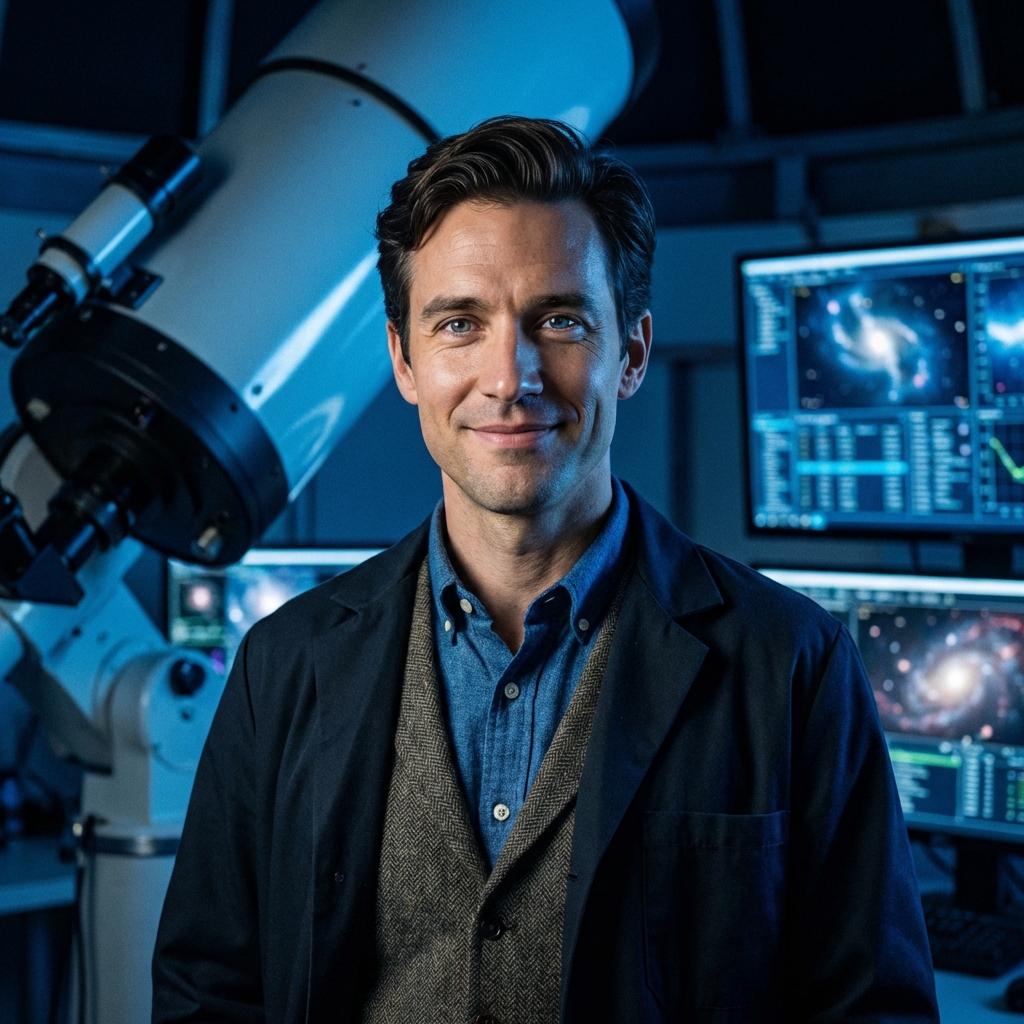
The Moon, being closer and more accessible than Mars, is also a significant stepping stone for off-world habitation. NASA's Artemis program, in collaboration with international partners and private companies, aims to establish a sustainable human presence on the Moon, including a lunar base. This would not only provide invaluable experience in off-world living and resource utilization but also serve as a potential staging ground for deeper space missions. The next decade will likely see significant progress in lunar infrastructure and initial human landings."The journey to becoming a multi-planetary species is not one of easy steps. It requires relentless innovation, unwavering dedication, and a willingness to confront existential challenges head-on. The next ten years are about proving that the foundational technologies and the human will are indeed present."
— Dr. Aris Thorne, Astrophysicist and Space Policy Analyst
Technological Hurdles and Innovations
The realization of both space tourism and colonization hinges on overcoming significant technological hurdles. Safety remains paramount, requiring robust and redundant systems for launch, in-orbit operations, and re-entry. Life support systems must be reliable and efficient, especially for extended missions. Propulsion technology needs to advance to reduce transit times and payload costs. Furthermore, in-situ resource utilization (ISRU) – the ability to use local resources like water ice for fuel and breathable air – is critical for long-term sustainability on other celestial bodies.Propulsion and Reusability
The development of fully reusable launch vehicles, pioneered by SpaceX with its Falcon 9 and Falcon Heavy rockets and being scaled up with Starship, is a game-changer for reducing the cost of access to space. Continued innovation in propulsion systems, including more efficient chemical rockets, electric propulsion, and potentially nuclear thermal propulsion, will be vital for making interplanetary travel more feasible and affordable.Life Support and Habitation
For orbital tourism and colonization, advanced life support systems are non-negotiable. These systems must reliably provide breathable air, potable water, and manage waste with minimal resupply from Earth. The development of closed-loop systems that recycle resources efficiently is a key area of research. Habitation modules need to be robust, radiation-shielded, and psychologically conducive to long-duration stays in space.Robotics and Automation
Robotics and artificial intelligence will play an increasingly crucial role, from automated pre-flight checks and in-orbit maintenance to the construction of habitats and resource extraction on other planets. These technologies can reduce the risk to human astronauts and increase efficiency, paving the way for more ambitious missions.Projected Growth in Space Tourism Revenue (USD Billions)
Economic Realities and Accessibility
The most significant barrier to widespread space tourism and colonization is, undoubtedly, cost. Currently, space travel remains prohibitively expensive, accessible only to the ultra-wealthy. The ticket prices for suborbital flights, while lower than orbital missions, are still in the hundreds of thousands of dollars. Orbital missions can cost tens of millions. For colonization, the investment required in infrastructure and transportation is on a scale of trillions of dollars. The next decade will be a test of whether technological advancements and economies of scale can bring these costs down to a point where space becomes accessible to a broader segment of the population, or if it remains an exclusive playground for the elite.The Price of Admission
The current high prices are a direct result of the nascent stage of the industry, high research and development costs, and the limited number of flights. As companies achieve higher flight frequencies, optimize their operations, and develop more efficient technologies, ticket prices are expected to decrease. However, a significant reduction in cost that would make space tourism broadly accessible is unlikely within the next ten years. We will likely see a gradual expansion of the market, with prices slowly drifting downwards for suborbital and potentially some orbital experiences.Investment and Funding
The space sector is attracting substantial private investment, alongside government funding for exploration and research. Venture capital, corporate investment, and even crowdfunding are playing roles in enabling new ventures. The success of these companies in generating revenue from tourism and other commercial activities will be critical for their long-term sustainability and their ability to fund more ambitious colonization projects.Broader Economic Impact
While direct tourism revenue is a focus, the development of space infrastructure, satellite technology, and related industries creates jobs and stimulates economic growth. The pursuit of space colonization could also drive innovation in areas like advanced materials, energy, and life support, with potential terrestrial applications.Ethical and Regulatory Considerations
As humanity ventures further into space, a complex web of ethical and regulatory questions arises. These include issues of space debris, environmental impact, the governance of celestial bodies, and the potential for resource disputes. Establishing clear international frameworks and regulations will be crucial for ensuring responsible development and preventing conflicts.Space Debris and Environmental Impact
The increasing number of launches and satellites raises concerns about space debris, which poses a threat to operational spacecraft. Companies and international bodies are working on strategies for debris mitigation and removal. The environmental impact of rocket launches, while currently considered minor compared to other industries, will also require careful monitoring and management as launch frequency increases.Governance of Space Resources
The Outer Space Treaty of 1967 prohibits national appropriation of outer space, but it does not clearly define the ownership or exploitation of space resources. As missions to the Moon and Mars progress, agreements on resource utilization, mining rights, and property claims will become increasingly important to avoid international friction.Inclusivity and Equity
The high cost of space access raises questions of equity. As space becomes more accessible, ensuring that its benefits are shared broadly and that diverse voices are represented in its exploration and development will be a significant ethical challenge."The legal and ethical frameworks governing space are still largely in their infancy, designed for a time when only a few nations were capable of reaching orbit. As private enterprise takes a more prominent role, we urgently need to update these regulations to address issues of resource rights, environmental protection, and the very definition of sovereignty beyond Earth."
— Professor Anya Sharma, International Space Law Specialist
The Next Decade: A Pragmatic Outlook
The next decade will be a period of significant advancement and crucial consolidation for space tourism and colonization. We can expect to see: * **Regular Suborbital Flights:** Increased flight cadence and potentially slightly lower prices for suborbital experiences, making them accessible to a growing, though still affluent, market. * **Growth in Orbital Tourism:** More private missions to the ISS and the potential emergence of early commercial space station modules offering short orbital stays. * **Lunar Activity:** Significant progress in establishing a sustained human presence on the Moon, driven by NASA's Artemis program and international collaborations. This will involve infrastructure development and potentially early scientific outposts. * **Mars Preparations:** Continued development and testing of heavy-lift launch systems like Starship, with the goal of demonstrating their capability for large-scale cargo and eventual human missions to Mars. The first uncrewed cargo missions to Mars are plausible within this timeframe. * **Technological Maturation:** Continued breakthroughs in propulsion, life support, and in-situ resource utilization, laying the groundwork for more ambitious future endeavors. * **Increased Regulation:** The development of more comprehensive international regulations to govern space activities. While the grand vision of widespread colonization may be a multi-generational undertaking, the next ten years will undeniably set the stage. The challenges are immense, but the pace of innovation and the growing commercial interest suggest that humanity's presence beyond Earth will expand in ways previously only imagined. The reality check for the next decade is that while space tourism will become a niche reality, and the foundations for colonization will be firmly laid, reaching a point of mass accessibility or independent off-world settlements remains a longer-term prospect.Will space tourism become affordable for the average person in the next decade?
It is highly unlikely that space tourism will become affordable for the average person within the next decade. While prices are expected to decrease gradually with increased operational cadence and technological advancements, they will likely remain in the tens of thousands to hundreds of thousands of dollars for suborbital flights and significantly more for orbital experiences.
What are the biggest challenges to Mars colonization in the next 10 years?
The biggest challenges to Mars colonization in the next 10 years include developing fully reliable and reusable heavy-lift launch systems capable of transporting large payloads and significant numbers of people, creating robust and efficient life support systems for long-duration missions and surface habitation, mitigating the physiological and psychological effects of deep space travel on humans, and establishing in-situ resource utilization capabilities to reduce reliance on Earth-based resupply.
How will space tourism impact Earth's environment?
The environmental impact of space tourism is a growing concern. Rocket launches consume significant amounts of fuel and release emissions into the atmosphere. While the current number of launches is relatively low compared to other industries, an increase in flight frequency could lead to more pronounced atmospheric effects. Additionally, the management of space debris generated by increased activity is crucial to prevent hazards in orbit.
Are there any ethical concerns about claiming territory on other planets?
Yes, there are significant ethical concerns about claiming territory on other planets. The Outer Space Treaty of 1967 prohibits national appropriation of celestial bodies. As private companies and nations explore resource utilization and potential settlement, there is a need for international consensus on governance, ownership, and equitable access to space resources to prevent conflict and ensure responsible exploration.