

 Marcus Thorne
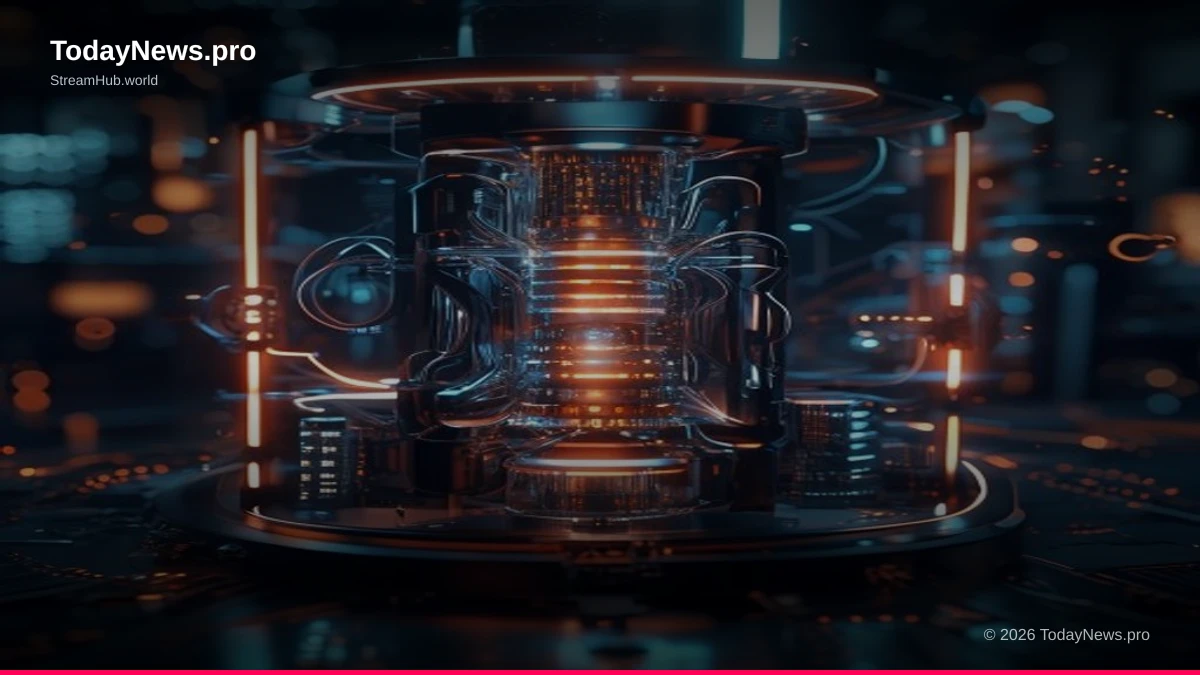
By 2030, the global quantum computing market is projected to reach over $1.5 billion, a staggering increase from its nascent stage, signaling a profound shift in computational capabilities.
Quantum Computing Explained: The Next Frontier in Processing Power
Quantum computing represents a paradigm shift in how we process information, moving beyond the classical binary system of 0s and 1s. Instead, it harnesses the peculiar principles of quantum mechanics to perform calculations that are currently intractable for even the most powerful supercomputers. This revolutionary technology holds the potential to unlock solutions to some of the world's most complex problems, from discovering new medicines and materials to breaking modern encryption and optimizing global logistics.
Unlike classical computers, which store information as bits representing either a 0 or a 1, quantum computers utilize quantum bits, or qubits. The fundamental difference lies in the ability of qubits to exist in a state of superposition, meaning they can represent both 0 and 1 simultaneously, and to become entangled, where their states are intrinsically linked regardless of the distance separating them. These quantum phenomena are the bedrock upon which the immense processing power of quantum computers is built.
The journey into quantum computing is not merely an evolutionary step; it is a fundamental re-imagining of computation itself. It promises to accelerate scientific discovery, enhance artificial intelligence, and redefine the boundaries of what is computationally possible. As researchers and companies worldwide race to develop stable and scalable quantum systems, the prospect of quantum supremacy—where quantum computers outperform classical ones on specific tasks—draws nearer, ushering in an era of unprecedented innovation.
Beyond Bits: The Quantum Leap in Information
The core difference between classical and quantum computing lies in their fundamental units of information. Classical computers operate on bits, which can only represent one of two states: 0 or 1. This binary nature forms the basis of all digital computations we rely on today, from browsing the web to running complex simulations. However, the limitations of bits become apparent when dealing with problems that involve an exponentially growing number of variables.
Quantum computers, on the other hand, leverage qubits. A qubit, thanks to the principle of superposition, can represent 0, 1, or a combination of both states simultaneously. This means that a system of just a few qubits can represent an exponentially larger number of states compared to an equivalent number of classical bits. For instance, two classical bits can represent four possible states (00, 01, 10, 11), but two qubits in superposition can represent all four of those states at once.
This ability to explore multiple possibilities concurrently is what gives quantum computers their potential for massive speedups. As the number of qubits increases, the computational space they can explore grows exponentially. This is particularly impactful for problems that require exploring a vast number of potential solutions, such as optimization problems or simulations of complex molecular interactions. The quantum leap is not just about speed; it's about a fundamentally different approach to encoding and manipulating information.
The Power of Superposition
Superposition is a cornerstone of quantum mechanics, allowing a quantum system to be in multiple states at the same time. For a qubit, this means it can be in a state of '0', '1', or any combination in between. Imagine a coin spinning in the air before it lands; it's neither heads nor tails, but a probabilistic blend of both. This ability to represent multiple states simultaneously is crucial for quantum algorithms, enabling them to explore a vast problem space in parallel.
The Mystery of Entanglement
Entanglement is another counter-intuitive quantum phenomenon where two or more qubits become linked in such a way that they share the same fate, regardless of the physical distance separating them. If you measure the state of one entangled qubit, you instantly know the state of the other, even if it's light-years away. This interconnectedness allows for complex correlations to be established and exploited within quantum algorithms, further enhancing their computational power.
The Pillars of Quantum Mechanics: Qubits, Superposition, and Entanglement
At the heart of quantum computing are the principles borrowed directly from quantum mechanics. Understanding these principles is key to grasping the revolutionary potential of this new computing paradigm. The primary building blocks are qubits, and their unique properties of superposition and entanglement are what set quantum computers apart from their classical counterparts.
A classical bit is like a light switch: it's either on (1) or off (0). A qubit, however, is more akin to a dimmer switch, capable of being at any point between fully on and fully off, and even in a probabilistic combination of both states. This is the essence of superposition. When multiple qubits are involved, the number of possible states they can represent grows exponentially. For example, two qubits can represent 4 states simultaneously, three qubits can represent 8, and so on. This parallel processing capability is a significant advantage for certain types of problems.
Entanglement, often described by Einstein as "spooky action at a distance," is the phenomenon where qubits become correlated. When qubits are entangled, their states are linked in such a way that measuring the state of one instantaneously influences the state of the other, no matter how far apart they are. This interconnectedness allows quantum computers to perform complex computations by manipulating these linked states, enabling powerful correlations that classical computers cannot replicate.
Qubits: The Quantum Bit
The qubit is the fundamental unit of quantum information. Unlike classical bits that are limited to either 0 or 1, a qubit can exist in a superposition of both states simultaneously. This is often represented as a vector in a two-dimensional complex vector space, with the basis states |0⟩ and |1⟩ corresponding to the classical 0 and 1. The ability to represent a continuum of states allows for a far richer encoding of information and a greater potential for parallel computation.
Superposition: Existing in Multiple States
Superposition is the quantum mechanical principle that allows a quantum system, such as a qubit, to be in multiple states at once. Mathematically, a qubit's state can be described as a linear combination of its basis states: |ψ⟩ = α|0⟩ + β|1⟩, where α and β are complex numbers such that |α|² + |β|² = 1. When measured, the qubit collapses into either the |0⟩ or |1⟩ state with probabilities |α|² and |β|², respectively. This probabilistic nature, combined with the ability to hold multiple possibilities, is key to quantum speedups.
Entanglement: Spooky Correlation
Entanglement is a quantum phenomenon where the quantum states of two or more objects are linked in such a way that they must be described in reference to each other, even though the individual objects may be spatially separated. For example, two entangled qubits might be in a Bell state, such as (|00⟩ + |11⟩)/√2. If one qubit is measured to be |0⟩, the other is instantly known to be |0⟩; if one is |1⟩, the other is |1⟩. This correlation is non-classical and is a crucial resource for many quantum algorithms, enabling them to perform computations that are impossible classically.
Navigating the Quantum Landscape: Hardware and Approaches
Building a functional quantum computer is an immense engineering challenge. Unlike classical computers, which have largely standardized on silicon-based transistors, the development of quantum hardware is a diverse and rapidly evolving field. Researchers are exploring various physical systems to create and control qubits, each with its own set of advantages and drawbacks.
One of the most prominent approaches involves using superconducting circuits. These circuits, cooled to near absolute zero, can exhibit quantum mechanical properties that allow them to function as qubits. Companies like IBM and Google have made significant strides in this area, building increasingly powerful quantum processors with hundreds of qubits. Another promising avenue is trapped ions, where individual atoms are suspended in place using electromagnetic fields and manipulated with lasers to act as qubits.
Other technologies being explored include topological qubits, photonic qubits, and neutral atoms. Each of these approaches faces unique hurdles related to qubit stability, error correction, and scalability. The quest for a fault-tolerant quantum computer—one that can reliably perform complex computations despite environmental noise—is a major focus of research. The diversity in hardware approaches reflects the nascent stage of the field and the ongoing effort to find the most viable path to scalable quantum computation.
Superconducting Qubits
Superconducting qubits are fabricated from superconducting materials and operate at cryogenic temperatures. They leverage quantum phenomena in superconducting circuits, such as Josephson junctions, to create qubits. This approach has seen significant progress, with companies like IBM and Google developing processors with increasing qubit counts. However, maintaining their quantum states requires extreme cooling and shielding from environmental noise.
Trapped Ions
In the trapped-ion approach, individual atoms are ionized and then held in place by electromagnetic fields. Lasers are used to manipulate the electronic states of these ions, which then act as qubits. Trapped ions offer long coherence times and high-fidelity operations, but scaling up the number of trapped ions while maintaining control can be challenging.
Other Promising Technologies
Beyond superconducting qubits and trapped ions, several other technologies are being actively researched. Photonic qubits use photons as their quantum carriers, offering potential for room-temperature operation and easy integration with existing fiber optic infrastructure. Topological qubits, based on exotic quantum states, promise inherent robustness against errors. Neutral atom arrays, manipulated by optical tweezers, are also emerging as a scalable platform. Each of these presents unique engineering challenges and opportunities.
| Hardware Approach | Key Advantages | Key Challenges | Notable Developers |
|---|---|---|---|
| Superconducting Qubits | Fast gate speeds, scalable fabrication | Requires cryogenic temperatures, sensitive to noise | IBM, Google, Rigetti |
| Trapped Ions | Long coherence times, high fidelity | Slower gate speeds, scaling complexity | IonQ, Honeywell (now Quantinuum) |
| Photonic Qubits | Room-temperature operation, easy integration | Low photon interaction, loss in transmission | Xanadu, PsiQuantum |
| Neutral Atoms | Scalability, flexible connectivity | Coherence times can be shorter, precise control | Pasqal, QuEra |
The Promise: Revolutionizing Industries and Science
The potential applications of quantum computing are vast and span across numerous sectors, promising to solve problems that are currently intractable. One of the most anticipated areas is drug discovery and materials science, where quantum computers could simulate molecular interactions with unprecedented accuracy. This could lead to the development of new pharmaceuticals, more efficient catalysts, and novel materials with tailored properties.
In the realm of finance, quantum computing could revolutionize portfolio optimization, risk analysis, and fraud detection. The ability to process vast datasets and explore complex correlations could lead to more sophisticated financial models and more secure financial systems. Furthermore, quantum algorithms could break current encryption methods, necessitating the development of quantum-resistant cryptography.
Artificial intelligence and machine learning are also poised for significant advancements. Quantum computers could accelerate the training of machine learning models, enabling more powerful AI systems capable of solving complex pattern recognition and optimization problems. Logistics and supply chain management could also see dramatic improvements through quantum-powered optimization of routes and resource allocation.
Accelerating Scientific Discovery
Quantum computers are expected to revolutionize scientific research by enabling highly accurate simulations of complex systems. In chemistry, this means designing new molecules for drugs or advanced materials. In physics, it could unlock new understandings of fundamental particles and the universe. The ability to model quantum systems directly using quantum computers offers a natural advantage.
Transforming Finance and Security
The financial sector stands to gain immensely from quantum computing. Complex optimization problems like portfolio management and risk assessment can be tackled with greater efficiency. However, the advent of powerful quantum computers also poses a significant threat to current encryption standards, necessitating the development of quantum-safe cryptographic algorithms to protect sensitive data.
Enhancing Artificial Intelligence
Quantum machine learning is an emerging field that aims to leverage quantum computation to enhance artificial intelligence. Quantum algorithms could accelerate the training of machine learning models, improve their ability to recognize complex patterns, and enable new forms of AI that are currently impossible. This could lead to breakthroughs in areas like natural language processing and computer vision.
The Hurdles: Challenges on the Path to Quantum Supremacy
Despite the immense promise, quantum computing faces significant challenges that must be overcome before its full potential can be realized. One of the most critical issues is decoherence. Qubits are extremely sensitive to their environment; even the slightest disturbance—a stray vibration, a temperature fluctuation, or electromagnetic interference—can cause them to lose their quantum state, a phenomenon known as decoherence. This leads to errors in computation.
Building stable and scalable quantum hardware is another major hurdle. Current quantum processors have a limited number of qubits, and increasing this number while maintaining coherence and controllability is a complex engineering feat. The development of robust error correction mechanisms is also paramount. Unlike classical computers, where errors can be detected and corrected with relative ease, correcting errors in quantum computations is far more challenging due to the nature of quantum states.
Furthermore, developing quantum algorithms that can effectively leverage the power of quantum computers is an ongoing area of research. While some algorithms, like Shor's algorithm for factoring and Grover's algorithm for searching, have shown immense potential, many real-world problems require new, problem-specific quantum algorithms. The talent gap in quantum computing expertise also poses a challenge, with a high demand for skilled physicists, engineers, and computer scientists.
Decoherence and Noise
Decoherence is the loss of quantum information due to interactions with the environment. Qubits are fragile and can easily transition from their delicate quantum states to classical states, introducing errors into computations. Maintaining coherence for long enough to perform complex calculations is one of the primary challenges in quantum computing. This requires extreme isolation, low temperatures, and advanced shielding techniques.
Scalability and Error Correction
Building quantum computers with a large number of high-quality, interconnected qubits is essential for tackling complex problems. However, current quantum processors are limited in size. Moreover, quantum computations are prone to errors. Developing effective quantum error correction codes—which are significantly more complex than classical error correction—is crucial for achieving fault-tolerant quantum computing, where calculations can be performed reliably.
Algorithm Development and Talent Shortage
While foundational quantum algorithms exist, the development of new algorithms tailored to specific industry problems is an active area of research. Many real-world applications require novel approaches to harness quantum power. Additionally, there is a significant shortage of skilled professionals—quantum physicists, engineers, and computer scientists—needed to design, build, and operate these advanced systems.
The Future is Quantum: What to Expect Next
The field of quantum computing is advancing at an extraordinary pace. While a universal, fault-tolerant quantum computer capable of solving any problem might still be decades away, we are already witnessing the emergence of specialized quantum devices that can outperform classical computers on specific tasks. This era, often referred to as the Noisy Intermediate-Scale Quantum (NISQ) era, is characterized by quantum computers with tens to a few hundred qubits that are susceptible to noise and errors.
In the coming years, we can expect to see continued improvements in qubit quality, coherence times, and the number of qubits in quantum processors. Hybrid quantum-classical algorithms, which combine the strengths of both quantum and classical computing, are likely to become more prevalent, allowing us to tackle problems that are beyond the reach of purely classical or current quantum methods. Investment in quantum computing research and development is surging from both governments and private enterprises, signaling a strong belief in its transformative potential.
The development of quantum-resistant cryptography will become increasingly important as quantum computers mature, ensuring the security of sensitive data in the future. Educational institutions are also ramping up their quantum computing programs to train the next generation of quantum scientists and engineers. The journey towards a quantum-powered future is complex and challenging, but the potential rewards—from groundbreaking scientific discoveries to revolutionary technological advancements—make it one of the most exciting frontiers in human innovation. For more information on the fundamental principles, the Wikipedia entry on Quantum Computing provides a comprehensive overview.
The ongoing race in quantum hardware development is driving innovation. For instance, breakthroughs in qubit stability are critical. Global investment in quantum technologies, as reported by entities like Reuters, indicates a strong confidence in the future of this field.
The NISQ Era and Hybrid Approaches
We are currently in the NISQ era, where quantum computers have a limited number of noisy qubits. During this phase, hybrid algorithms that combine quantum processors for specific tasks with classical computers for overall control and optimization are crucial. These hybrid approaches aim to extract value from current noisy quantum devices while researchers work towards more robust, fault-tolerant systems.
Quantum-Resistant Cryptography
As quantum computers become more powerful, they pose a threat to current encryption methods, particularly those based on factoring large numbers (like RSA). The development and deployment of quantum-resistant cryptography, also known as post-quantum cryptography, are becoming a critical priority to ensure the security of digital communications and sensitive data in the quantum era.
Education and Talent Development
The rapid growth of quantum computing necessitates a robust pipeline of skilled professionals. Universities and research institutions are increasingly offering specialized programs in quantum information science, quantum computing, and related fields. This focus on education and talent development is vital for sustaining the pace of innovation and translating theoretical advancements into practical applications.