

 William Nye
⏱ 15 min
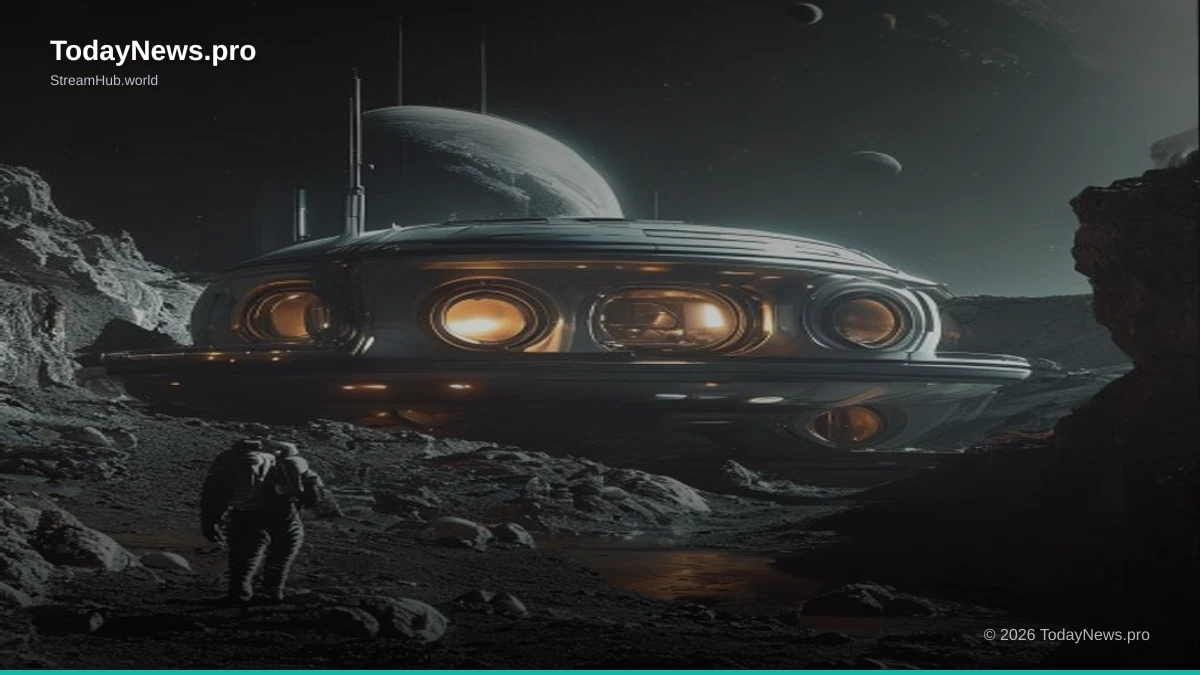
While the dream of humanity becoming a multi-planetary species is captivating, the sheer logistical and technological hurdles are immense. The estimated cost to establish a self-sustaining lunar base alone could exceed $100 billion USD, a testament to the scale of engineering and resource investment required.
The Grand Vision: Why Beyond Earth?
Humanity's expansion beyond Earth is driven by a complex interplay of factors, ranging from existential risk mitigation to scientific curiosity and economic opportunity. The long-term survival of our species is a recurring theme, with concerns about asteroid impacts, global pandemics, climate change, and potential nuclear conflicts serving as potent motivators. Establishing off-world colonies provides a crucial insurance policy, diversifying our presence across celestial bodies. Beyond survival, the pursuit of knowledge is a fundamental human endeavor. Exploring the cosmos offers unparalleled opportunities to understand the universe's origins, the potential for extraterrestrial life, and the fundamental laws of physics. Moreover, the prospect of unlocking new resources and developing novel technologies for space habitation could spur unprecedented economic growth and innovation. The allure of the unknown, the spirit of exploration that has defined human history, continues to beckon us towards the stars.Risk Mitigation: A Cosmic Insurance Policy
The fragility of life on a single planet is starkly evident. A single catastrophic event, from a massive asteroid impact to a runaway global plague, could theoretically end human civilization. Off-world habitats, particularly on Mars or the Moon, offer a decentralized approach to species preservation. This "backup" strategy is not a sign of defeatism but a pragmatic acknowledgment of cosmic realities. Establishing multiple, independent human settlements across different celestial bodies significantly increases the odds of long-term human survival.The Lure of Discovery and Knowledge
The scientific potential of off-world exploration is staggering. Studying the geology of Mars could unlock secrets about planetary formation and evolution, potentially shedding light on Earth's own past. The search for microbial life on other worlds, whether the subsurface oceans of Europa or the ancient riverbeds of Mars, would be one of the most profound discoveries in human history. Furthermore, observing the universe from the vantage point of space, free from atmospheric distortion, offers unparalleled insights into cosmology, astrophysics, and the very nature of reality.Economic Opportunities and Technological Spinoffs
The development of off-world infrastructure necessitates groundbreaking technological advancements. These innovations often have significant "spinoff" applications that benefit life on Earth, from advanced materials and medical technologies to improved energy efficiency and communication systems. The mining of resources from asteroids or other planets, such as rare earth elements or water ice, could create entirely new economies and reduce reliance on finite terrestrial resources.Engineering the Impossible: Structures and Materials
The construction of habitats beyond Earth presents a formidable set of engineering challenges. Unlike terrestrial construction, off-world environments are characterized by extreme temperatures, vacuum or thin atmospheres, high radiation levels, and low gravity. Materials must be incredibly durable, lightweight for transport, and capable of withstanding these harsh conditions. The concept of in-situ resource utilization (ISRU) – using local materials for construction – is paramount to reducing the massive cost of launching everything from Earth.Lunar Habitats: Adapting to the Moons Surface
For lunar bases, regolith (lunar soil) is a prime candidate for construction. Techniques like 3D printing with regolith can create robust structures that offer protection from radiation and micrometeoroids. Inflatable modules, deployed and then covered with regolith, are another promising approach for rapid deployment. The low gravity of the Moon (about one-sixth of Earth's) presents unique structural design considerations, potentially allowing for larger spans and lighter construction.Martian Dwellings: Shielding Against the Red Planet
Mars, with its thin atmosphere and higher radiation levels, demands even more robust shielding. Habitats might be partially or fully buried underground to leverage the natural protective qualities of Martian soil. Alternatively, advanced composite materials and radiation-blocking layers will be essential for surface structures. The dust storms on Mars, which can last for weeks or months, also pose significant challenges for solar power generation and external equipment.| Environmental Factor | Earth (Average) | Moon (Equatorial) | Mars (Equatorial) |
|---|---|---|---|
| Surface Gravity | 1 g (9.8 m/s²) | 0.165 g (1.62 m/s²) | 0.38 g (3.71 m/s²) |
| Atmospheric Pressure | 1 atm (101 kPa) | < 10⁻¹² atm (near vacuum) | ~0.006 atm (0.6 kPa) |
| Average Surface Temperature | 15°C (59°F) | -23°C (-9°F) [day: 127°C, night: -173°C] | -63°C (-81°F) [day: 20°C, night: -153°C] |
| Solar Radiation | Low (due to atmosphere) | High | High |
| Micrometeoroid Impact Risk | Low (burn up in atmosphere) | High | High |
Advanced Materials: The Building Blocks of Space Habitats
The development of new materials is crucial for off-world construction. Self-healing composites that can repair minor damage autonomously, lightweight but incredibly strong alloys, and advanced polymers resistant to extreme temperatures and radiation are all areas of active research. The ability to manufacture materials on-site using ISRU, such as extracting metals from Martian regolith or producing concrete-like substances, will dramatically reduce launch mass and costs.Life Support Systems: The Breath of a New World
The most fundamental challenge for any off-world habitat is providing a safe and sustainable environment for human life. This encompasses breathable air, potable water, stable temperatures, and protection from harmful radiation. Closed-loop life support systems, which recycle resources with maximum efficiency, are essential for long-duration missions and self-sufficiency.Atmosphere Generation and Regulation
Maintaining a breathable atmosphere requires complex systems to generate oxygen, remove carbon dioxide, and control humidity and pressure. On Mars, where the atmosphere is primarily carbon dioxide, technologies like the MOXIE instrument on the Perseverance rover have demonstrated the ability to produce oxygen from CO2. Water electrolysis, splitting water molecules into hydrogen and oxygen, is another key method.1.5-2 L
Daily water consumption per person
0.84 kg
Daily food consumption per person
530 L
Daily oxygen consumption per person
1 kg
Daily CO2 production per person
Water and Waste Management: The Circular Economy of Survival
Water is a precious resource, and its recycling is a top priority. Urine, sweat, and atmospheric moisture can all be reclaimed and purified. Waste management is equally critical, with systems designed to process solid waste, potentially for fertilizer production or energy generation. The goal is to create highly efficient, regenerative life support systems that minimize reliance on resupply missions from Earth.Food Production: Cultivating Sustenance in Alien Soil
Long-term habitats will require sustainable food sources. Hydroponic and aeroponic systems, which grow plants without soil, are well-suited for controlled environments. Research into cultivating crops in simulated Martian or lunar regolith, with appropriate nutrient supplements, is ongoing. The development of efficient and space-saving agricultural technologies, including artificial lighting and nutrient delivery, is vital for feeding future off-world populations."The greatest engineering challenge is not building the structure, but sustaining the life within it. We must master the art of recycling every molecule, every joule of energy, to achieve true autonomy."
— Dr. Aris Thorne, Lead Systems Engineer, Lunar Habitation Initiative
Psychological and Social Fabric: The Human Element
Beyond the engineering marvels, the success of off-world habitats hinges on the well-being of their human inhabitants. The psychological and social challenges of living in isolated, confined, and high-stress environments are profound. Maintaining morale, fostering effective teamwork, and ensuring mental health are as critical as any life support system.Isolation, Confinement, and Stress
Living millions of miles from Earth, with limited communication delays, can lead to feelings of isolation and disconnect. The confined living spaces of spacecraft and early habitats can exacerbate these issues. The constant awareness of risk and the pressure of mission objectives can also contribute to significant stress. Strategies to mitigate these effects include robust psychological screening, intensive team-building exercises, and carefully designed living environments that promote comfort and connection.Team Dynamics and Interpersonal Relationships
In a small, isolated community, interpersonal conflicts can quickly escalate and have serious consequences. The selection of crew members with compatible personalities and strong communication skills is essential. Training in conflict resolution, effective communication, and team cohesion is paramount. Fostering a sense of shared purpose and mutual respect among crew members is vital for maintaining a harmonious and productive living environment.Maintaining Morale and Purpose
Long-duration missions can lead to boredom and a sense of monotony. Providing opportunities for recreation, personal development, and meaningful work is crucial for maintaining morale. Regular communication with loved ones on Earth, though delayed, is also important for psychological well-being. The overarching mission itself, the exploration and settlement of new frontiers, provides a powerful source of purpose and motivation.Factors Affecting Psychological Well-being in Space Missions
Resource Management: Sustaining Life Off-World
The economic viability and sustainability of off-world habitats are intrinsically linked to their ability to manage resources effectively. This involves not only minimizing consumption but also identifying and exploiting local resources. The concept of a circular economy, where waste is minimized and resources are reused, is central to long-term survival.In-Situ Resource Utilization (ISRU): The Key to Self-Sufficiency
ISRU is the cornerstone of sustainable off-world living. On the Moon, water ice found in permanently shadowed craters can be a source of water and rocket fuel. Lunar regolith can be processed to extract oxygen, metals, and materials for construction. On Mars, water ice is also abundant, and the atmosphere provides carbon dioxide for oxygen production. The ability to extract and process these local resources dramatically reduces the need for expensive and lengthy resupply missions from Earth.Energy Generation: Powering the Frontier
Reliable and abundant energy is essential for all aspects of off-world life, from life support and agriculture to communication and exploration. Solar power is a primary candidate, especially on the Moon and Mars, though dust accumulation on solar panels and the duration of Martian nights pose challenges. Nuclear power, particularly small modular reactors, offers a consistent and high-output energy source, independent of sunlight. Geothermal energy might also be a possibility on some celestial bodies.Water and Atmosphere Recycling: The Closed-Loop Imperative
As mentioned earlier, closed-loop life support systems are vital. These systems aim to recycle nearly 100% of water and oxygen. This involves sophisticated filtration and purification processes to reclaim water from urine, sweat, and atmospheric humidity. Carbon dioxide scrubbers remove CO2 from the air, and technologies like Sabatier reactors can convert CO2 and hydrogen into water and methane, further closing the loop."The economic model for off-world settlements must shift from a reliance on Earth-based supply chains to one of resource independence. ISRU is not just a buzzword; it's the fundamental enabler of our future beyond Earth."
— Dr. Evelyn Reed, Director, Institute for Extraterrestrial Resource Studies
Economic and Ethical Frontiers
Establishing a human presence beyond Earth raises complex economic and ethical questions. Who owns the resources extracted from space? How will these nascent economies be governed? What are our responsibilities to potential extraterrestrial life, however simple? These are not merely academic discussions but critical issues that will shape the future of space exploration and settlement.The Economics of Space Colonization
The initial investment in establishing off-world habitats will be astronomical, requiring significant public and private funding. The development of viable economic models is essential for long-term sustainability. This could involve resource extraction (mining asteroids for precious metals, for example), space tourism, scientific research outposts, or even manufacturing in microgravity. The question of how to make these ventures profitable and self-sustaining remains a significant hurdle. Wikipedia details the historical context of space law and its evolving nature: Space Law - Wikipedia.Governance and Legal Frameworks
As humanity expands, so too must our legal and governance structures. The Outer Space Treaty of 1967 provides a foundational framework, stating that outer space is free for exploration and use by all states and is not subject to national appropriation. However, as commercial interests grow and settlements become more permanent, new treaties and agreements will be needed to address issues like property rights, resource allocation, and dispute resolution. Reuters has reported on the increasing complexity of these issues: Space economy boom raises questions about governance.Ethical Considerations: Our Cosmic Responsibility
The ethical implications of colonizing other worlds are profound. If microbial life is discovered, what are our obligations to protect it? Should we terraform planets, fundamentally altering their natural state? The ethical framework for off-world habitation needs to be carefully considered, ensuring that our expansion is conducted responsibly and sustainably, respecting the intrinsic value of any life we might encounter.Future Outlook and Emerging Technologies
The vision of off-world habitats is not a distant fantasy but an actively developing reality. Ongoing research and technological advancements are steadily bringing these possibilities closer. From more efficient propulsion systems to advanced robotics and AI, the tools are being forged for humanity's future among the stars.Advanced Propulsion Systems
Current chemical rockets, while effective, are slow and inefficient for deep space travel. Future habitats will benefit from advancements in propulsion technologies such as nuclear-electric propulsion, ion drives, and potentially even more speculative concepts like warp drives. These technologies will drastically reduce travel times, making interstellar journeys more feasible.Robotics and Artificial Intelligence
Robotics and AI will play an indispensable role in building and maintaining off-world habitats. Autonomous robots will be crucial for performing dangerous construction tasks, mining resources, and conducting scientific surveys. AI will be vital for managing complex life support systems, optimizing resource allocation, and assisting human crews with decision-making.Biotechnology and Genetic Engineering
Biotechnology will be instrumental in adapting human biology to different environments and ensuring food security. This could include developing genetically modified crops that thrive in low-light or nutrient-poor conditions, or even exploring ways to enhance human resilience to radiation and low gravity.What is the most immediate challenge for building an off-world habitat?
The most immediate challenge is the cost and logistical complexity of transporting materials and personnel to an off-world location. Developing in-situ resource utilization (ISRU) technologies is critical to reducing this burden.
Will off-world habitats be independent of Earth?
Initial off-world habitats will require significant resupply from Earth. However, the long-term goal is to achieve a high degree of self-sufficiency through ISRU, closed-loop life support systems, and local food production. True independence will take decades, if not centuries, to achieve.
What are the primary radiation risks in space habitats?
The primary radiation risks come from Galactic Cosmic Rays (GCRs) and Solar Particle Events (SPEs). These can damage DNA, increase cancer risk, and cause acute radiation sickness. Habitats require significant shielding, such as thick layers of regolith, water, or advanced composite materials.