

 James Holloway
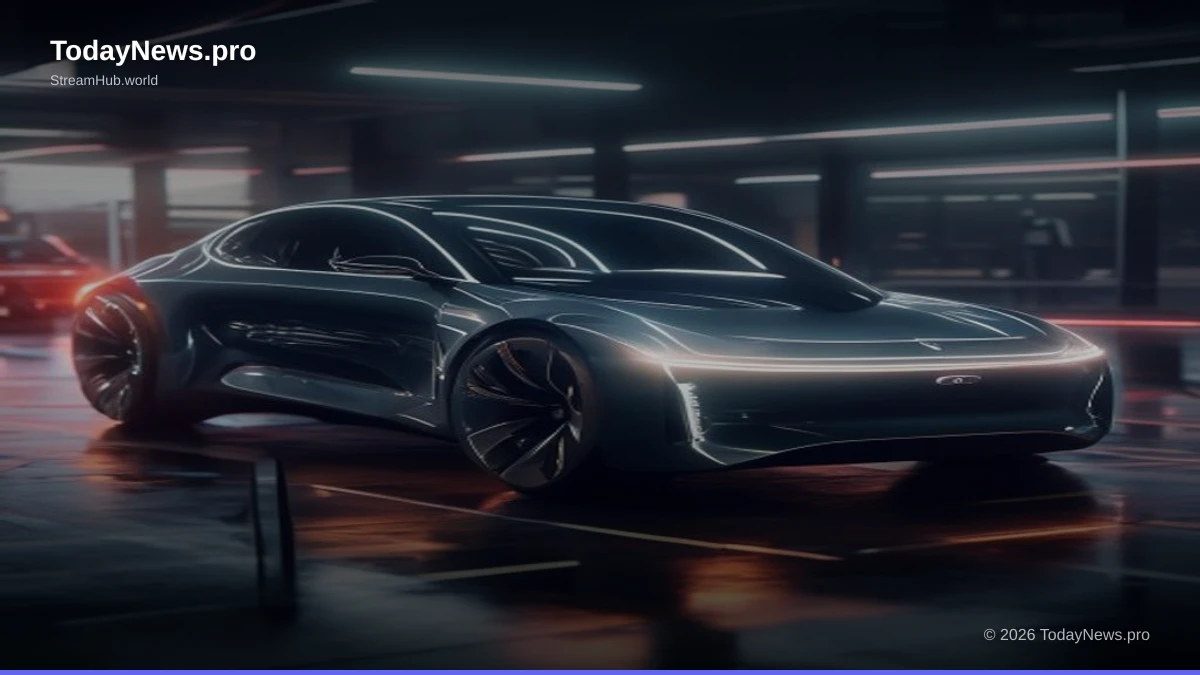
The Electric Evolution: Beyond the Powertrain
The initial wave of electric vehicles primarily focused on replacing the internal combustion engine with a battery-electric powertrain. While crucial, this was merely the foundation. Today's leading manufacturers and agile startups are now treating the EV platform as a canvas for innovation across an entire spectrum of technologies. The vehicle itself is becoming a sentient, connected entity, capable of interacting with its environment and its occupants in ways previously confined to science fiction. This holistic approach moves the conversation from "zero emissions" to "intelligent mobility." The architectural advantages of EVs, such as the skateboard chassis that houses batteries and motors, provide greater design flexibility. This allows for more spacious interiors, innovative storage solutions, and the seamless integration of advanced electronic systems. Carmakers are no longer just building cars; they are building sophisticated mobile computing platforms.Software-Defined Vehicles
The concept of the "software-defined vehicle" (SDV) is central to this next generation. Unlike traditional cars where hardware dictates functionality, SDVs are designed with software as the primary driver of features, performance, and user experience. Updates can be delivered over-the-air (OTA), allowing vehicles to improve their capabilities, fix bugs, and even gain new functionalities long after they've left the dealership. This continuous improvement cycle mirrors that of smartphones and personal computers, fundamentally changing the ownership model. This shift necessitates a complete rethinking of automotive engineering, placing software developers and data scientists on par with mechanical engineers. The value proposition of an EV will increasingly be tied to its software ecosystem, its ability to learn, adapt, and personalize the driving and riding experience.The Battery Frontier: Density, Durability, and Discovery
While the focus has broadened, the battery remains the heart of the EV. However, the research and development in this domain are relentless, pushing the boundaries of what was once considered theoretical. The quest is not just for more energy density, but also for faster charging, longer lifespan, enhanced safety, and reduced environmental impact in manufacturing and disposal. The current lithium-ion technology, while dominant, is being challenged by emerging chemistries. Solid-state batteries, for instance, promise higher energy density, faster charging, and improved safety by replacing the liquid electrolyte with a solid material. This could lead to vehicles with significantly longer ranges and drastically reduced charging times, potentially making range anxiety a relic of the past.Next-Generation Chemistries
Beyond solid-state, research is exploring sodium-ion, lithium-sulfur, and even advanced lithium-metal chemistries. Each offers potential advantages in cost, material availability, or performance characteristics. For example, sodium-ion batteries, while currently having lower energy density, utilize abundant and inexpensive materials, making them an attractive option for entry-level EVs and energy storage applications.| Battery Chemistry | Estimated Energy Density (Wh/kg) | Key Advantages | Current Status |
|---|---|---|---|
| Lithium-ion (NMC/NCA) | 250-300 | Established technology, good performance | Dominant in current EVs |
| Solid-State Lithium | 400-500+ | Higher density, faster charging, improved safety | Early commercialization, significant R&D |
| Sodium-ion | 100-160 | Low cost, abundant materials, good low-temperature performance | Emerging, niche applications |
| Lithium-Sulfur | 500-600+ | High theoretical density, low cost materials | Research and development phase |
Battery Management Systems (BMS) and Longevity
The lifespan and performance of EV batteries are heavily influenced by their Battery Management Systems (BMS). Advanced BMS algorithms not only optimize charging and discharging cycles to extend battery life but also actively monitor battery health, predict potential failures, and ensure optimal thermal management. This sophisticated software plays a crucial role in making batteries last longer, reducing the total cost of ownership and improving their sustainability profile.The Autonomous Awakening: Sensors, Software, and Situational Awareness
The integration of autonomous driving capabilities is perhaps the most profound shift in the next generation of EVs. Moving beyond basic driver-assistance systems (ADAS), automakers are striving for higher levels of autonomy, aiming to free drivers from the task of piloting the vehicle in certain conditions. This involves an intricate symphony of sensors, processing power, and sophisticated algorithms. Lidar, radar, ultrasonic sensors, and high-definition cameras form the sensory suite, creating a 360-degree perception of the vehicle's surroundings. This data is fed into powerful onboard computers that use artificial intelligence and machine learning to interpret the environment, predict the behavior of other road users, and make real-time driving decisions.Levels of Autonomy
The Society of Automotive Engineers (SAE) defines six levels of driving automation, ranging from Level 0 (no automation) to Level 5 (full automation in all conditions). Current advanced systems in production vehicles generally fall into Level 2 or Level 3, offering features like adaptive cruise control, lane centering, and automated parking. The next generation will push towards Level 4 (high automation, where the vehicle can handle all driving tasks in specific environments or conditions) and eventually Level 5.The Role of AI and Machine Learning
Artificial intelligence (AI) and machine learning (ML) are the brains behind autonomous driving. These systems are trained on vast datasets of driving scenarios, enabling them to recognize patterns, make complex decisions, and continuously improve their performance. Deep learning algorithms are particularly crucial for tasks like object detection, lane keeping, and path planning. The challenge lies in ensuring the safety and reliability of these AI systems. Rigorous testing, validation, and ongoing software updates are paramount to building public trust and achieving regulatory approval for higher levels of autonomy.The Integrated Ecosystem: Connectivity and the Smart Grid
The next-generation EV is not an island; it's a node within a larger, interconnected ecosystem. Vehicle-to-Everything (V2X) communication is becoming increasingly vital, allowing vehicles to communicate with other vehicles (V2V), infrastructure (V2I), pedestrians (V2P), and the network (V2N). This interconnectedness promises significant improvements in safety, traffic flow, and overall efficiency. V2X technology can warn drivers of hazards ahead, such as sudden braking or traffic jams, even before they are visible. It can also enable intelligent traffic management systems that optimize signal timing to reduce congestion and emissions. For autonomous vehicles, V2X is a critical enabler, providing them with a more comprehensive understanding of their operational environment.Vehicle-to-Grid (V2G) Technology
A particularly exciting development is Vehicle-to-Grid (V2G) technology. V2G allows EVs to not only draw power from the grid but also to feed power back into it. This can help stabilize the grid by acting as a distributed energy storage system, absorbing excess renewable energy during peak production times and releasing it during peak demand. This capability can also offer financial benefits to EV owners, allowing them to earn revenue by selling electricity back to the grid. As EV adoption grows, V2G could play a crucial role in managing grid load and accelerating the transition to renewable energy sources.Over-the-Air (OTA) Updates
The ubiquity of connectivity also enables Over-the-Air (OTA) updates for both software and, in some cases, vehicle firmware. This means that vehicles can receive critical safety updates, performance enhancements, and new features remotely, without requiring a visit to a service center. This constant evolution transforms the car into a dynamic, always-improving product.The User Experience Revolution: In-Car as a Digital Hub
The interior of the next-generation EV is evolving from a mere cabin into a sophisticated digital lounge and mobile office. With the driver potentially freed from the constant task of driving, the focus shifts to occupant comfort, entertainment, productivity, and personalization. Large, high-resolution displays, advanced voice assistants, and seamless integration with personal devices are becoming standard. The infotainment system is no longer an add-on but a core component of the vehicle's identity, offering personalized content, streaming services, and even the ability to control smart home devices.Personalization and Biometrics
Biometric sensors, such as facial recognition and fingerprint scanners, are being integrated to personalize the in-car experience. These can automatically adjust seating positions, climate control, music preferences, and even unlock the vehicle. The car learns the habits and preferences of its occupants, creating a truly tailored environment. This personalization extends to the driving experience itself, with vehicles capable of adapting their driving dynamics based on driver input or pre-set profiles. For example, a "comfort" mode might prioritize a smooth ride, while a "sport" mode would enhance responsiveness.The concept of the car as a "third space" – distinct from home and work – is gaining traction. Manufacturers are exploring how to leverage the extended downtime offered by autonomous driving for activities like working, relaxing, or consuming media, blurring the lines between personal devices and vehicle functionality.
The Infrastructure Imperative: Charging, Communication, and Convenience
The widespread adoption of next-generation EVs is intrinsically linked to the development of robust and convenient charging infrastructure. While home charging remains a primary solution, public charging networks need to expand significantly in terms of both availability and speed. Ultra-fast charging stations, capable of adding hundreds of miles of range in minutes, are becoming increasingly common. These are crucial for long-distance travel and for reducing the perceived inconvenience of charging compared to refueling a gasoline car. Wireless charging technology is also emerging, offering a convenient, cable-free charging experience.Smart Charging and Grid Integration
Beyond raw speed, "smart charging" will become a critical feature. This allows EVs to communicate with the grid and charging stations to optimize charging times based on electricity prices, grid load, and renewable energy availability. This not only benefits the owner through potential cost savings but also helps to balance the electrical grid. The integration of charging infrastructure with V2G capabilities creates a powerful synergy. Imagine returning home and your EV not only charges itself but also contributes to powering your home or selling excess energy back to the utility during peak demand hours.Collaboration between automakers, energy companies, and governments is essential to build out the necessary charging infrastructure. Standards for charging connectors, communication protocols, and payment systems are vital for a seamless user experience across different charging networks.
For more on the future of electric infrastructure, see this analysis from Reuters.
Challenges and Opportunities: Navigating the Road Ahead
Despite the rapid advancements, the transition to the next generation of EVs is not without its hurdles. The high initial cost of advanced EVs, battery production and recycling challenges, cybersecurity concerns for connected and autonomous vehicles, and the need for regulatory frameworks that can keep pace with technological innovation are all significant considerations. However, the opportunities far outweigh the challenges. The next generation of EVs promises cleaner transportation, reduced reliance on fossil fuels, enhanced safety through autonomous systems, and a fundamentally new, more connected, and personalized mobility experience.The Circular Economy for Batteries
A key area of focus is the development of a robust circular economy for EV batteries. This involves not only efficient recycling processes to recover valuable materials like lithium, cobalt, and nickel but also exploring second-life applications for batteries that are no longer suitable for automotive use, such as stationary energy storage. The responsible sourcing of raw materials and ethical manufacturing practices are also becoming increasingly important for consumers and regulators alike. Transparency in the supply chain will be a critical differentiator for automakers.The journey from electric to autonomous, from a simple vehicle to a connected mobility platform, is well underway. The next decade will witness a transformation in personal transportation that will redefine our relationship with our cars and our cities.