

 Eric Mason
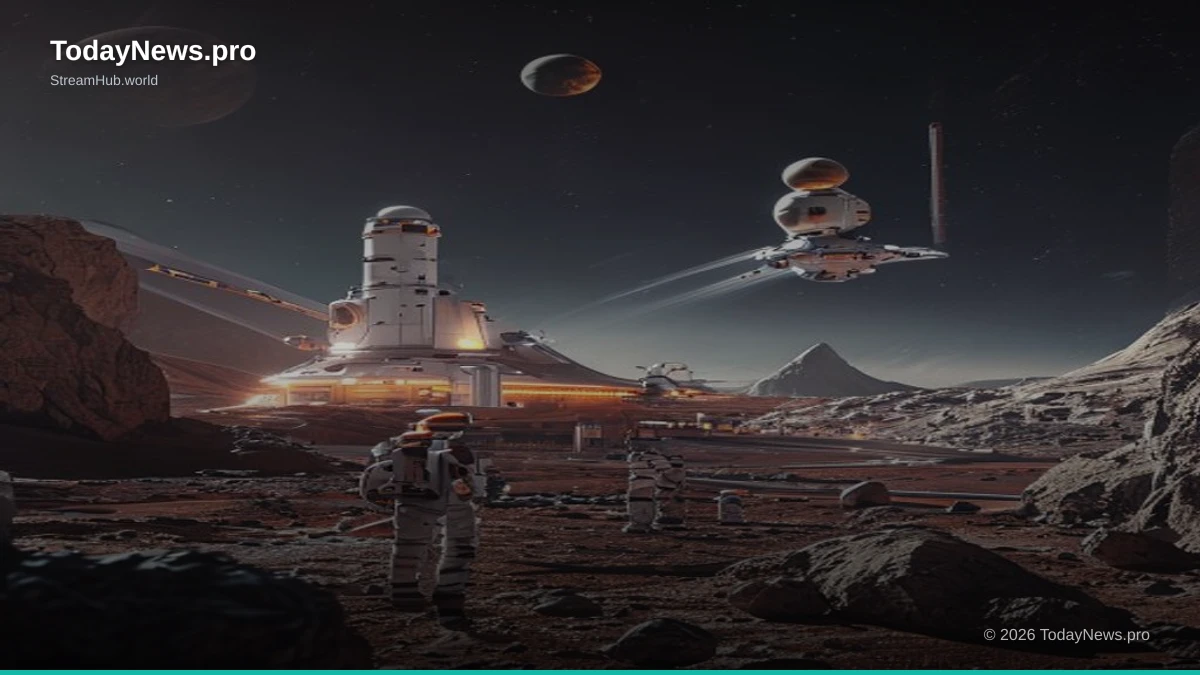
In 2023, the total global space economy was valued at an estimated $547 billion, a figure projected to grow exponentially as private entities increasingly dictate the pace of celestial exploration and exploitation. This surge in private capital and ambition marks a dramatic shift from the government-led space programs of the 20th century, ushering in an era where private ventures are not just participating, but leading the charge towards ambitious goals like Martian colonies and the lucrative prospect of asteroid mining, all within reach by the decade's end.
The Dawn of a New Space Age: Private Ambitions Fueling Humanitys Cosmic Leap
The narrative of space exploration has irrevocably changed. Gone are the days when only national governments possessed the vast resources and political will to venture beyond Earth's atmosphere. Today, a vibrant ecosystem of private companies, driven by profit, innovation, and an unyielding vision, is rewriting the script. This new space race is characterized by bold objectives, rapid technological advancement, and an unprecedented level of investment. The ambition is no longer just about planting a flag; it's about establishing a sustainable human presence, tapping into extraterrestrial resources, and forging new economic frontiers.
This paradigm shift is largely attributable to a confluence of factors: decreasing launch costs due to reusable rocket technology, advancements in miniaturization and computing power, and a growing understanding of the immense economic potential of space. The space industry, once the exclusive domain of defense contractors and national space agencies, has democratized, allowing agile startups and visionary billionaires to challenge the status quo and set audacious timelines.
From Orbital Tourism to Lunar Bases
The immediate impacts of this private-sector dynamism are already being felt. Orbital tourism, once a far-fetched dream, is becoming a reality for the ultra-wealthy, with companies like Virgin Galactic and Blue Origin offering sub-orbital flights. Beyond low-Earth orbit, ambitious plans for lunar bases are gaining momentum. These outposts are envisioned not just as scientific outposts but as stepping stones for deeper space exploration, logistical hubs, and potential sites for resource extraction. The Artemis program, while government-led, heavily relies on private sector partnerships for critical components like landers and lunar transportation systems, underscoring the collaborative nature of this new era.
The Investor Frenzy
Venture capital has been pouring into space startups at an unprecedented rate. Investors are drawn to the transformative potential of space technologies, from satellite constellations providing global internet access to advanced propulsion systems and in-space manufacturing. This influx of capital provides the financial fuel necessary for the high-risk, high-reward ventures that define the new space race. The promise of future resource wealth, whether it be water ice on the Moon or rare metals in asteroids, is a significant driver for this investment.
Mars: The Red Frontier Beckons, From Robotic Scouts to Human Footprints
Mars, the enigmatic red planet, has long captured the human imagination. Now, it stands as the primary objective for many private space ventures aiming to establish humanity as a multi-planetary species. The dream of sending humans to Mars and, critically, enabling them to live and thrive there, is moving from science fiction to actionable engineering blueprints. By 2030, the groundwork for sustained human presence, and potentially the first rudimentary Martian colonies, is a tangible goal.
The challenges are immense, ranging from the harsh Martian environment with its thin atmosphere and radiation to the sheer logistical complexity of transporting humans and supplies across millions of miles. However, the determination of key players is unwavering. Companies are developing advanced life support systems, in-situ resource utilization (ISRU) technologies to harness local Martian resources like water ice for propellant and breathable air, and robust spacecraft capable of long-duration deep space travel.
The Roadmap to a Martian Colony
The envisioned path to a Martian colony often involves a phased approach. Initially, robotic missions will continue to scout for optimal landing sites, analyze geological conditions, and test ISRU technologies. Following successful robotic reconnaissance, uncrewed cargo missions will deliver essential infrastructure, habitats, and supplies. The first human missions will then focus on establishing a temporary base, conducting scientific research, and proving the viability of long-term survival. Subsequent missions will expand the base, increase self-sufficiency through ISRU, and eventually pave the way for permanent settlements.
Life Support and ISRU: The Pillars of Martian Survival
The critical challenge for any Martian colony is sustainability. Relying solely on resupply missions from Earth is economically and logistically prohibitive. Therefore, a heavy emphasis is placed on In-Situ Resource Utilization (ISRU). This involves leveraging local Martian resources. Water ice, abundant in the polar regions and subsurface, can be harvested for drinking water, oxygen production for breathing, and crucial rocket propellant (hydrogen and oxygen). The Martian atmosphere, primarily carbon dioxide, can be used to generate methane and oxygen for fuel. Furthermore, local regolith (Martian soil) can be used for construction materials, providing shielding against radiation.
Asteroid Mining: Unearthing Celestial Riches and Fueling Off-World Economies
Beyond the allure of planetary colonization lies the potentially even more lucrative prospect of asteroid mining. These celestial bodies, remnants of the early solar system, are thought to contain vast quantities of valuable resources, including platinum-group metals, rare earth elements, and water. Tapping into this extraterrestrial wealth could not only fuel Earth-based industries but also provide the raw materials necessary for in-space construction, fuel depots, and the expansion of space infrastructure, effectively creating an off-world economy.
The economic case for asteroid mining is compelling. While the initial investment in developing the necessary technologies and launching missions is substantial, the potential return on investment, given the scarcity and high value of these materials on Earth, is astronomical. Moreover, the ability to extract resources in space reduces the need to launch heavy materials from Earth, significantly lowering the cost of future space endeavors.
The Resource Payload of Near-Earth Objects
Near-Earth Objects (NEOs) are particularly attractive targets for early asteroid mining missions. These asteroids have orbits that bring them relatively close to Earth, making them more accessible. Scientific surveys have identified numerous NEOs with compositions that indicate significant concentrations of valuable minerals. For instance, certain C-type asteroids are rich in water and carbonaceous compounds, while M-type asteroids are believed to be metallic, containing iron, nickel, and platinum-group elements.
| Element/Resource | Estimated Earth Market Value (per kg) | Potential Asteroid Abundance (Hypothetical) | Primary Use in Space |
|---|---|---|---|
| Platinum Group Metals (e.g., Platinum, Palladium) | $30,000 - $70,000 | High | Catalysts, Electronics, Construction |
| Rare Earth Elements (e.g., Neodymium, Dysprosium) | $50 - $2,000 | Moderate | Magnets, Electronics, Advanced Materials |
| Iron | $0.10 - $0.50 | Very High | Structural Components, Construction |
| Nickel | $2 - $5 | High | Alloys, Batteries, Construction |
| Water (as ice) | N/A (Earth-based extraction) | Very High | Life Support, Rocket Propellant |
The technological challenges for asteroid mining are significant. These include developing autonomous robotic systems capable of navigating and operating in the microgravity environment of an asteroid, sophisticated excavation and collection mechanisms, and efficient methods for refining and processing extracted materials. Furthermore, the legal and ethical frameworks for claiming and utilizing extraterrestrial resources are still in their nascent stages, requiring international consensus and robust governance.
The Rise of the Megacorporations: SpaceX, Blue Origin, and the New Space Pantheon
The landscape of space exploration and commerce is now dominated by a handful of visionary companies, often led by iconic figures. These "megacorporations" are not merely participants; they are architects of the new space age, setting ambitious goals and pushing the boundaries of what is technically and economically feasible. Their influence extends from revolutionizing launch capabilities to planning audacious interplanetary missions.
SpaceX, founded by Elon Musk, has been a transformative force. Its development of reusable rockets, particularly the Falcon 9 and the forthcoming Starship, has dramatically reduced launch costs. Starship, designed for full reusability and carrying massive payloads, is central to Musk's vision of colonizing Mars. The company's Starlink satellite constellation also represents a significant commercial venture, aiming to provide global internet access.
SpaceX: The Pacesetter
SpaceX's achievements are numerous: first private company to send a spacecraft to the ISS, first to land an orbital rocket booster, and the ongoing development of Starship, which is intended for both orbital refueling and Mars missions. The company's vertically integrated approach, from design and manufacturing to launch and operations, gives it a unique agility. Their ambitious timelines, often met with skepticism, have a track record of pushing the industry forward.
Blue Origin: The Long-Term Visionary
Founded by Jeff Bezos, Blue Origin shares a similar ambition for human spaceflight and off-world habitation. Their focus on developing reusable rocket technology, exemplified by the New Shepard sub-orbital vehicle and the upcoming New Glenn heavy-lift rocket, aims to lower access costs. Blue Origin's long-term vision includes establishing a permanent human presence in space and eventually enabling millions to live and work in orbit. They are also a key partner in NASA's Artemis program, developing a lunar lander.
Other Key Players and Emerging Ventures
While SpaceX and Blue Origin often dominate headlines, a diverse array of companies are contributing to the new space race. Rocket Lab, for instance, has carved a niche in launching small satellites with its Electron rocket. Sierra Space is developing its Dream Chaser spaceplane for cargo and crew missions. Axiom Space is building private space stations, aiming to commercialize orbital activities. These companies, along with many others in areas like satellite manufacturing, data analytics, and in-space servicing, form a critical part of the burgeoning space economy.
Technological Hurdles and Innovations: The Engineering Backbone of the New Space Race
The ambitious goals of Martian colonies and asteroid mining are underpinned by a relentless pursuit of technological innovation. Overcoming the challenges of deep space travel, extraterrestrial resource utilization, and long-term human survival requires breakthroughs across a wide spectrum of engineering disciplines. The pace of innovation in this sector is astonishing, driven by the urgency of private timelines and the immense potential rewards.
Key areas of technological development include advanced propulsion systems, reliable life support, robust radiation shielding, efficient ISRU technologies, and sophisticated AI for autonomous operations. The ability to manufacture in space and to perform complex repairs and maintenance will also be critical for sustained off-world presence.
Propulsion Systems: The Engine of Exploration
The current reliance on chemical rockets, while effective for Earth launch, is less efficient for the vast distances of interplanetary travel. Research into more advanced propulsion systems is crucial. Electric propulsion, such as ion drives, offers higher specific impulse, meaning they can achieve greater changes in velocity for a given amount of propellant. Nuclear thermal propulsion is another area of intense interest, promising significantly faster transit times to Mars. The development of Starship's Raptor engines and the ongoing advancements in hypergolic and cryogenic fuels are pushing the envelope of chemical propulsion.
Life Support and Radiation Shielding: Ensuring Human Survival
Maintaining a habitable environment for humans in space for extended periods is a monumental challenge. Advanced closed-loop life support systems that recycle air and water with near-perfect efficiency are essential. For Martian colonies, these systems must be robust and capable of operating with minimal external resupply. Radiation is another major threat. Galactic cosmic rays and solar particle events can pose significant health risks to astronauts. Developing effective shielding, whether through advanced materials, water, or even utilizing Martian regolith for habitat construction, is paramount.
In-Space Manufacturing and Servicing
The ability to build and repair components in space will be a game-changer for long-term space presence. In-space manufacturing, using 3D printing with materials sourced from asteroids or manufactured in orbit, can reduce the need to launch heavy components from Earth. Similarly, in-space servicing capabilities, allowing for the repair, refueling, and upgrading of satellites and spacecraft, will extend their operational lifetimes and reduce space debris.
Economic Imperatives and Global Implications: Why Space is the Next Big Frontier
The pursuit of space is no longer solely a matter of scientific curiosity or national prestige; it is increasingly driven by profound economic imperatives. The vast, untapped resources and the potential for new industries in space represent the next great economic frontier, with the potential to reshape global markets and economies. By 2030, the economic impact of private space ventures will be significantly more tangible than ever before.
The development of a robust space economy has far-reaching implications. It promises new avenues for wealth creation, the development of cutting-edge technologies with terrestrial applications, and the potential to address resource scarcity on Earth. The competition and collaboration inherent in this new space race will foster innovation and create jobs, both in the space sector and in supporting industries.
The Space Resource Economy
The extraction and utilization of resources from asteroids and other celestial bodies could fundamentally alter global commodity markets. Platinum-group metals, vital for electronics and catalytic converters, are significantly more abundant in certain asteroids than on Earth. Rare earth elements, critical for modern technology, are also present. Water ice, essential for life support and rocket propellant, can be a game-changer for enabling further exploration and operations in space, reducing the reliance on costly Earth-based resupply.
New Industries and Job Creation
The expansion into space will spawn entirely new industries. In-space manufacturing, asteroid mining, space tourism, orbital servicing, and the development of off-world habitats are just a few examples. These ventures will create high-skilled jobs in fields ranging from aerospace engineering and robotics to material science and astrobiology. Furthermore, the technologies developed for space often find terrestrial applications, leading to advancements in areas like telecommunications, medicine, and renewable energy.
The geopolitical implications are also significant. Nations and private entities that lead in space development could gain substantial economic and strategic advantages. This could lead to new forms of international cooperation, as well as potential competition and territorial disputes. Establishing clear legal and regulatory frameworks for space activities will be crucial to ensure peaceful and equitable development.
Challenges and Ethical Considerations: Navigating the Complexities of Off-World Expansion
While the technological and economic prospects of the new space race are exhilarating, they are not without their significant challenges and ethical considerations. The expansion of human activity beyond Earth raises profound questions about governance, resource allocation, environmental impact, and the very definition of humanity's place in the cosmos.
These challenges span from the immediate technical hurdles of survival in harsh environments to the long-term philosophical debates about planetary protection and the potential for extraterrestrial contamination. Addressing these issues proactively will be vital for the responsible and sustainable development of space.
Governance and Legal Frameworks
The Outer Space Treaty of 1967 established fundamental principles for space exploration, including the non-appropriation of celestial bodies. However, as private entities and nations increasingly eye resource extraction and settlement, these principles face new interpretations and potential challenges. Developing robust international legal frameworks for property rights, resource ownership, and dispute resolution in space is paramount to avoid conflict and ensure equitable access. The establishment of a governing body or clear protocols for off-world settlements is a pressing concern.
Planetary Protection and Contamination
The principle of planetary protection aims to prevent the biological contamination of other celestial bodies by Earth life, and vice versa. As we send humans and complex machinery to Mars and beyond, the risk of introducing terrestrial microbes increases. Conversely, if life exists on other planets, there is a concern about bringing extraterrestrial organisms back to Earth. Strict sterilization protocols and careful mission planning are essential to safeguard both Earth's biosphere and any potential extraterrestrial life.
Will there be a "winner" in the new space race by 2030?
What are the biggest risks to establishing a Martian colony?
Can asteroid mining be profitable by 2030?
Who owns the resources mined from asteroids or the Moon?
Space Debris and Environmental Stewardship
The increasing number of satellites and spacecraft in orbit, coupled with the challenges of debris removal, poses a growing environmental concern. A robust debris mitigation strategy, including responsible satellite de-orbiting and the development of active debris removal technologies, is crucial to ensure the long-term sustainability of space operations. As we expand to other celestial bodies, similar considerations regarding environmental stewardship will apply.