

 Eric Mason
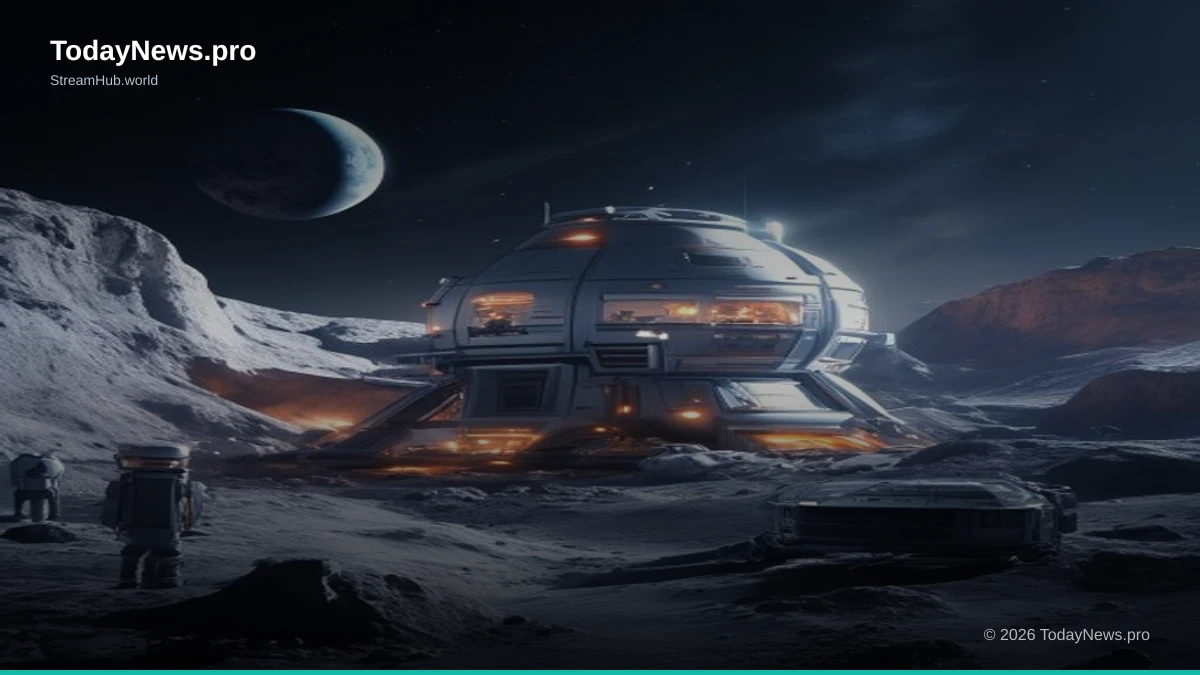
The global space economy is projected to reach over $2 trillion by 2040, a significant leap fueled by burgeoning private sector involvement and ambitious long-term goals, including the establishment of permanent human settlements on the Moon.
The Dawn of a New Lunar Era: Beyond Earths Orbit
For decades, the Moon has been a symbol of human aspiration, a celestial body visited by a select few. Now, it’s poised to become humanity's next stepping stone, not just for scientific exploration but for sustained human presence. The narrative has shifted dramatically from temporary missions to the ambitious vision of permanent lunar bases by the end of this decade. This isn't science fiction; it's the tangible objective driving a new generation of space entrepreneurs and engineers. The "new space race" is less about national prestige and more about private companies vying for market share in what could be the next trillion-dollar industry.
The Artemis program, spearheaded by NASA, has laid significant groundwork by fostering international collaboration and providing a framework for lunar exploration. However, the true acceleration of lunar base development comes from the increasing capabilities and investment from private entities. These companies are not merely contractors; they are envisioning, designing, and building the infrastructure necessary for life beyond Earth. From habitats to resource utilization, the blueprints for lunar living are rapidly taking shape.
The Shift from Exploration to Settlement
The transition from fleeting visits to sustained habitation marks a paradigm shift. Early lunar missions were characterized by their brevity and purely scientific objectives. Today, the focus is on creating self-sustaining ecosystems and robust infrastructure that can support human life for extended periods, potentially indefinitely. This involves developing technologies for in-situ resource utilization (ISRU), such as extracting water ice and minerals from the lunar regolith, which are crucial for life support, propellant production, and construction.
The establishment of lunar bases by 2030 is an audacious goal, but one that many private companies are actively pursuing. This requires not only technological innovation but also a robust economic model to justify the immense investment. The potential for lunar resources, coupled with the unique scientific opportunities and the prospect of lunar tourism, presents a powerful economic incentive.
The Players: A Constellation of Private Ambition
The landscape of the new space race is populated by a diverse array of private companies, each with its own niche and strategic approach. These are not monolithic state-run entities but agile, often venture-backed firms pushing the boundaries of what's possible. From established aerospace giants to nimble startups, the collective ambition is to reach the Moon and build a future there.
Companies like SpaceX, with its Starship program, are developing reusable heavy-lift launch vehicles capable of transporting significant cargo and personnel to the lunar surface. Blue Origin, founded by Jeff Bezos, is also developing lunar lander technology and has ambitions for lunar infrastructure. Beyond these giants, a host of specialized companies are focusing on critical components of lunar settlement, including habitat modules, power systems, robotics, and resource extraction technologies. The interplay between these companies, sometimes collaborative and sometimes competitive, is shaping the trajectory of lunar development.
Key Industry Players and Their Contributions
SpaceX's Starship is arguably the most transformative element. Its envisioned payload capacity and reusability aim to dramatically reduce the cost of lunar access, making ambitious projects more feasible. Blue Origin's contributions are focused on developing lunar landers, such as their Blue Moon lander, and exploring commercial opportunities for lunar infrastructure. Axiom Space is renowned for its work on commercial space stations and is extending its expertise to lunar habitats. Companies like Intuitive Machines and Astrobotic Technology are focused on robotic lunar landers, crucial for initial cargo delivery and site surveying. These robotic missions are the vanguard, paving the way for human footprints.
Other players include companies like Lunar Outpost, which aims to deploy a robotic rover to the Moon's south pole to scout for resources, and Off-World, developing 3D-printed structures using lunar regolith simulants. The ecosystem is expanding rapidly, with new ventures emerging to address specific needs, from life support systems to power generation.
The Role of Government Partnerships
While the new space race is driven by private enterprise, government partnerships remain indispensable. NASA's Commercial Lunar Payload Services (CLPS) initiative, for example, contracts with private companies to deliver scientific instruments and technology demonstrations to the Moon. This provides crucial funding and validation for commercial lunar capabilities. Furthermore, international collaborations, such as those under the Artemis Accords, are essential for establishing norms and regulations for lunar activities, fostering responsible development.
These partnerships create a symbiotic relationship where government agencies provide foundational requirements and early-stage funding, while private companies bring innovation, efficiency, and scale. The Artemis program, in particular, acts as a catalyst, encouraging private investment by demonstrating a clear governmental commitment to returning humans to the Moon and establishing a sustainable presence.
Why Now? The Converging Forces Driving Lunar Colonization
The renewed interest in lunar bases is not a sudden phenomenon but the result of a confluence of factors that have matured over the past decade. Technological advancements, shifting economic landscapes, and evolving geopolitical dynamics have created a perfect storm of opportunity and impetus for lunar colonization.
The dramatic reduction in launch costs, primarily driven by reusable rocket technology, is perhaps the most significant enabler. For decades, the prohibitive cost of reaching orbit and beyond was the primary barrier to ambitious space endeavors. Now, with rockets that can be reused multiple times, the economic calculus for lunar missions has fundamentally changed. This cost reduction opens the door for commercial ventures to operate at a profit, not just on government contracts.
Technological Maturation and Breakthroughs
Beyond launch capabilities, several other critical technologies have reached a point of maturity. Advanced robotics, artificial intelligence, and improved life support systems are now robust enough to be considered for off-world applications. The development of 3D printing, especially for in-situ manufacturing using local materials, promises to revolutionize construction and logistics on the Moon, reducing reliance on Earth-based supply chains. Power generation technologies, including advanced solar arrays and potential small-scale nuclear reactors, are also advancing, addressing the critical need for sustained energy on the lunar surface.
The progress in material science has led to the development of lighter, stronger, and more radiation-resistant materials suitable for spacecraft and habitats. Furthermore, advancements in closed-loop life support systems, which recycle air and water, are essential for creating truly sustainable lunar environments. These integrated technological advancements are creating a fertile ground for establishing a permanent human presence.
Economic Incentives and Resource Potential
The Moon holds immense potential for resource exploitation. Water ice, discovered in permanently shadowed craters near the poles, is a game-changer. It can be used for drinking water, oxygen for breathing, and, critically, as a propellant for rockets. This ability to "live off the land" dramatically reduces the cost and complexity of lunar operations and could even enable refueling depots for missions to Mars and beyond. Helium-3, a rare isotope on Earth, is abundant on the Moon and is considered a potential fuel for future fusion power reactors, though this remains a long-term prospect.
Beyond raw materials, the unique environment of the Moon offers scientific research opportunities unmatched on Earth. The low gravity, vacuum, and lack of atmosphere make it an ideal location for certain types of astronomical observation, materials science experiments, and biological research. The potential for lunar tourism, while still nascent, represents another significant economic driver, offering unique experiences that could attract significant investment and revenue.
Shifting Geopolitical Priorities
The renewed focus on lunar bases is also influenced by a shift in global priorities. While the initial space race was a for Cold War competition, the current push is more multifaceted. The Artemis program, with its emphasis on international cooperation, aims to establish a peaceful and sustainable lunar presence. However, the growing capabilities of nations like China, which also has ambitious lunar exploration plans, add a layer of geopolitical consideration. The race is on to secure a foothold, not necessarily for military dominance, but for strategic positioning in the burgeoning space economy and for the potential of resource access.
The establishment of international frameworks like the Artemis Accords is an attempt to preemptively address potential conflicts and ensure responsible resource utilization. As more actors enter the lunar domain, clear governance and adherence to international law will become increasingly critical to avoid disputes and foster collaboration.
Technological Hurdles: Engineering the Future of Lunar Habitation
The dream of lunar bases is impressive, but the engineering challenges involved are monumental. Translating concepts into functional, sustainable habitats requires overcoming numerous obstacles inherent to the lunar environment. These challenges span everything from radiation protection to power generation and robust life support systems.
The Moon's lack of a significant atmosphere means it is bombarded by cosmic rays and solar flares, posing a serious health risk to humans. Effective shielding is paramount for any long-term habitation. Furthermore, the extreme temperature fluctuations, the abrasive and pervasive lunar dust (regolith), and the low gravity all present unique engineering problems that must be solved for the survival and comfort of inhabitants.
Habitat Design and Construction
Designing habitats that can withstand the harsh lunar environment is a primary concern. Early bases are likely to be modular, prefabricated structures launched from Earth. However, to achieve true sustainability and scalability, the ability to utilize lunar resources for construction is essential. Companies are exploring 3D printing using simulated lunar regolith as a building material. This could allow for the creation of robust, radiation-shielded structures that are much larger and more complex than anything that could be launched from Earth. The regolith itself, when sintered or mixed with binders, can form a strong building material.
Challenges include developing reliable 3D printing technology that can operate in a vacuum and in extreme temperatures, as well as ensuring the structural integrity of printed materials. The design must also account for dust mitigation, as lunar dust is highly abrasive and can infiltrate seals and mechanisms, causing wear and tear. Advanced dust-repellent coatings and sealed airlocks are crucial.
Power Generation and Energy Storage
A constant and reliable power supply is the lifeblood of any lunar base. Solar power is the most readily available option, but the Moon experiences long lunar nights (approximately 14 Earth days), and polar regions can have extended periods of darkness. This necessitates efficient energy storage solutions, such as advanced battery technologies or fuel cells. The development of small, robust, and safe nuclear fission reactors is also being explored as a way to provide consistent power, especially for bases located in permanently shadowed regions.
The efficiency of solar panels in the lunar environment, which can be affected by dust accumulation and radiation, is another consideration. Regular cleaning and maintenance of solar arrays will be necessary. The development of advanced thermal management systems is also critical to deal with the extreme temperature swings between lunar day and night.
Life Support and In-Situ Resource Utilization (ISRU)
Creating closed-loop life support systems that can recycle air, water, and waste with minimal resupply from Earth is fundamental for long-term sustainability. These systems must be highly reliable and efficient. The extraction and processing of water ice from lunar polar craters is a key ISRU capability. This water can be electrolyzed to produce oxygen for breathing and hydrogen for rocket propellant. The ability to produce oxygen and water on-site dramatically reduces the cost and complexity of lunar missions.
Other ISRU applications include extracting metals and minerals from regolith for manufacturing and construction. The development of robust robotic systems capable of prospecting, extracting, and processing lunar resources is therefore a critical area of research and development. The challenges lie in developing autonomous systems that can operate reliably in the harsh lunar environment and in processing materials efficiently and cost-effectively.
The Economic Equation: Monetizing the Moon
The ambitious lunar base projects are not driven by altruism alone; a robust economic case is being built to justify the immense investments required. The Moon offers a spectrum of potential revenue streams, from resource extraction to scientific research and even tourism. The companies leading this charge are keenly aware that sustainability depends on profitability.
The most tangible economic prospect is the extraction of valuable resources. Water ice, as previously mentioned, is critical for propellant production, a cornerstone of future space commerce. Imagine lunar refueling stations that enable spacecraft to embark on longer journeys with less fuel mass launched from Earth. This dramatically alters the economics of space travel.
Resource Extraction and Utilization
The potential for mining Helium-3 for fusion power remains a long-term, speculative prospect but holds significant future value. Other potential resources include rare earth elements and metals, which are crucial for advanced manufacturing and electronics. The development of autonomous mining robots and efficient processing facilities on the Moon will be key to unlocking these resources. The cost of extraction and processing will need to be competitive with terrestrial sources, or the resources must be uniquely valuable in space applications.
This resource-driven economy could foster a self-sufficient lunar industrial base, reducing dependence on Earth and creating new markets for lunar products. The development of infrastructure, such as landing pads, power grids, and communication networks, will also create economic opportunities for companies specializing in these areas.
Lunar Tourism and Scientific Research
The allure of visiting another celestial body is a powerful draw for tourism. Companies are envisioning luxury hotels and unique experiences on the Moon, catering to a high-net-worth clientele initially, with the potential to become more accessible over time. The novelty and exclusivity of lunar tourism could generate substantial revenue. The views of Earth from the Moon, the low-gravity excursions, and the sheer experience of being on another world are powerful selling points.
Scientific research conducted at lunar bases also presents an economic opportunity. Research institutions and universities can lease facilities or sponsor missions, contributing to the funding of lunar operations. The unique scientific environment of the Moon—its vacuum, low gravity, and lack of atmosphere—is ideal for experiments in physics, biology, astronomy, and materials science that cannot be replicated on Earth. This can lead to discoveries with profound implications for science and technology, creating intellectual property and further economic value.
The Tragedy of the Commons and Regulatory Frameworks
As commercial activity on the Moon increases, the question of governance and regulation becomes paramount. The Outer Space Treaty of 1967 prohibits national appropriation of celestial bodies but is less clear on private exploitation. There is a risk of a "tragedy of the commons" if resource extraction is unregulated, leading to environmental damage or disputes between entities. Establishing clear legal frameworks and international agreements for resource ownership, extraction rights, and environmental protection is crucial for sustainable lunar development.
The Artemis Accords are a significant step in this direction, providing a set of principles for responsible space exploration and resource utilization. However, broader international consensus and robust enforcement mechanisms will be necessary as more nations and private companies engage in lunar activities. The economic viability of lunar ventures hinges on a stable and predictable regulatory environment.
| Potential Lunar Revenue Stream | Estimated Market Size (by 2040) | Key Technologies/Enablers |
|---|---|---|
| Resource Extraction (Water/Propellant) | $150 Billion+ | ISRU technologies, advanced robotics, refining |
| Lunar Tourism | $75 Billion+ | Habitat construction, life support, launch systems |
| Scientific Research & Data | $20 Billion+ | Specialized equipment, communication infrastructure |
| Manufacturing & 3D Printing | $10 Billion+ | In-situ construction, material processing |
Geopolitical Undercurrents: The Moon as a New Frontier
While the narrative of the new space race is dominated by private innovation, geopolitical considerations remain a significant driving force. The Moon, once a symbolic battleground of the Cold War, is emerging as a frontier with strategic implications for global influence and economic advantage.
The growing capabilities of nations like China, which has outlined its own ambitious lunar exploration roadmap, including plans for a lunar research station, add a competitive edge to the current activities. This is not a direct replay of the US-Soviet rivalry, but rather a multifaceted competition for technological leadership, resource access, and strategic positioning in space. The establishment of a permanent presence on the Moon could confer significant advantages in terms of scientific discovery, technological development, and potentially, the future exploration of the solar system.
The Artemis Accords and International Cooperation
NASA's Artemis program, with its accompanying Artemis Accords, represents a significant effort to foster international cooperation and establish norms for lunar activities. The Accords, signed by numerous nations, outline principles for peaceful exploration, transparency, interoperability, and responsible resource utilization. They aim to prevent conflicts and ensure that lunar activities benefit all of humanity.
However, the interpretation and adherence to these Accords can vary, and not all major spacefaring nations have signed them. The balance between cooperation and competition will continue to shape the geopolitical landscape of lunar development. The success of these accords in preventing future disputes will be a critical factor in the peaceful development of the Moon.
Emerging Lunar Powers and Their Ambitions
Beyond the United States and its allies, China has become a formidable player in space exploration. Its Chang'e lunar program has achieved significant milestones, including sample return missions and plans for a crewed landing. Russia, though facing economic challenges, maintains a significant space program and has expressed interest in lunar collaboration. India has also demonstrated growing capabilities with its Chandrayaan missions.
These emerging powers are not just pursuing scientific goals; they are also seeking to enhance their technological prowess, inspire their populations, and secure a stake in the future space economy. The Moon serves as a testing ground for advanced technologies and a platform for projecting national influence. The interplay between these various national ambitions will define the future of lunar governance and accessibility.
The Moon as a Strategic Resource Hub
The potential economic value of lunar resources, particularly water ice, makes the Moon a strategic asset. Control or significant access to these resources could provide a substantial advantage in the broader space economy, enabling more ambitious missions to Mars and beyond at a reduced cost. This has led to discussions about the potential for a "lunar resource race," where nations and companies vie for access to key resource deposits.
The establishment of lunar bases by private companies, often with government backing or partnerships, is thus intertwined with national strategic interests. The ability to establish a sustained presence and develop resource utilization capabilities could translate into long-term economic and geopolitical influence in space. This underscores the importance of international dialogue and the development of robust regulatory frameworks to ensure equitable access and prevent conflict.
Challenges and Ethical Considerations: Navigating the Unknown
The pursuit of lunar bases by 2030, while exciting, is not without its significant challenges and profound ethical considerations. Beyond the technological and economic hurdles, we must grapple with the implications of establishing a permanent human presence on another celestial body.
The primary ethical concern revolves around the responsible stewardship of the lunar environment. The Moon, though seemingly barren, is a pristine environment that holds clues to the formation of our solar system. Unregulated development and resource extraction could lead to irreversible damage. Ensuring that human activities are sustainable and minimize environmental impact is paramount.
Environmental Impact and Lunar Heritage
The lunar regolith, while a valuable resource, is also a potential pollutant. The fine, abrasive dust can damage equipment, pose health risks to astronauts, and potentially contaminate pristine areas. Careful planning and the development of effective dust mitigation strategies are essential. Furthermore, areas of scientific interest, such as potential sites of past volcanic activity or unique geological formations, need to be protected from industrial development. The preservation of "lunar heritage" sites, including Apollo landing sites, is also a consideration.
The question of who owns lunar resources, and how their exploitation should be managed, is another complex ethical and legal issue. The Outer Space Treaty prohibits national appropriation, but the framework for private ownership and utilization remains largely undefined. Establishing a clear and equitable system of governance is crucial to prevent disputes and ensure that the benefits of lunar development are shared broadly.
The Health and Psychological Well-being of Lunar Inhabitants
Living in a low-gravity, isolated, and resource-limited environment poses significant challenges to human health and psychological well-being. The long-term effects of reduced gravity on the human body, including bone density loss and muscle atrophy, are still not fully understood. Astronauts will need robust exercise regimes and potentially medical countermeasures. Protection from radiation, as mentioned earlier, is also a critical health concern.
The psychological impact of isolation, confinement, and being millions of miles from Earth cannot be underestimated. Maintaining crew cohesion, providing adequate mental health support, and fostering a sense of purpose will be vital for the success of any lunar settlement. The design of habitats must consider not only functionality but also habitability and the psychological needs of their inhabitants. Creating a sense of community and connection to Earth will be important.
The Future of Humanity and Space Settlement
The establishment of lunar bases is often viewed as a stepping stone to humanity's expansion into the solar system, particularly Mars. It offers a valuable opportunity to learn, develop technologies, and gain experience in off-world living. The success of lunar bases will pave the way for more ambitious endeavors, potentially ensuring the long-term survival of the human species by diversifying our presence beyond Earth.
However, this ambition also raises questions about the nature of human civilization in space. Will lunar settlements be extensions of Earthly nations, or will they develop their own unique cultures and governance? The decisions made today regarding the development of lunar bases will have profound implications for the future of humanity and its place in the cosmos. The ethical considerations we address now will shape the legacy of our expansion beyond Earth.