

 Maria Curry
⏱ 15 min
In the past decade, private investment in space exploration has surged by over 300%, signaling a profound shift from government-led initiatives to a dynamic, competition-driven ecosystem that promises to reshape humanity's future among the stars. The Dawn of a New Cosmic Era: Private Enterprise Takes the Helm
The narrative of space exploration has irrevocably changed. For decades, the domain of stars was primarily the preserve of national space agencies like NASA and Roscosmos. However, the 21st century has ushered in a paradigm shift, characterized by the ascendance of private companies that are not merely contractors but ambitious pioneers charting their own course. Companies like SpaceX, Blue Origin, and Virgin Galactic, once considered fringe players, are now at the forefront, driving innovation and dramatically reducing the cost of access to space. This infusion of private capital and entrepreneurial spirit has ignited a fervor unseen since the Apollo era, often referred to as the "New Space Race."The Rise of the Billionaire Space Barons
The primary architects of this transformation are often billionaire visionaries who have leveraged their fortunes from terrestrial industries to fund audacious extraterrestrial endeavors. Elon Musk's SpaceX, with its reusable rocket technology and ambitious Starship program, aims to make humanity a multi-planetary species. Jeff Bezos's Blue Origin is concurrently developing heavy-lift rockets and a lunar lander, envisioning a future where millions live and work in space. Richard Branson's Virgin Galactic has focused on suborbital tourism, democratizing the experience of spaceflight for a wider audience.Commercialization and Accessibility
Beyond these titans, a constellation of smaller, agile companies is emerging, specializing in everything from satellite manufacturing and data analytics to asteroid mining and in-space refueling. This burgeoning commercial ecosystem is not only fostering competition but also driving down launch costs, making space more accessible for scientific research, commercial ventures, and even individual exploration. The satellite internet constellation Starlink, also a SpaceX project, exemplifies this trend, aiming to bring global broadband connectivity from orbit.Lunar Ambitions: Establishing a Permanent Human Presence
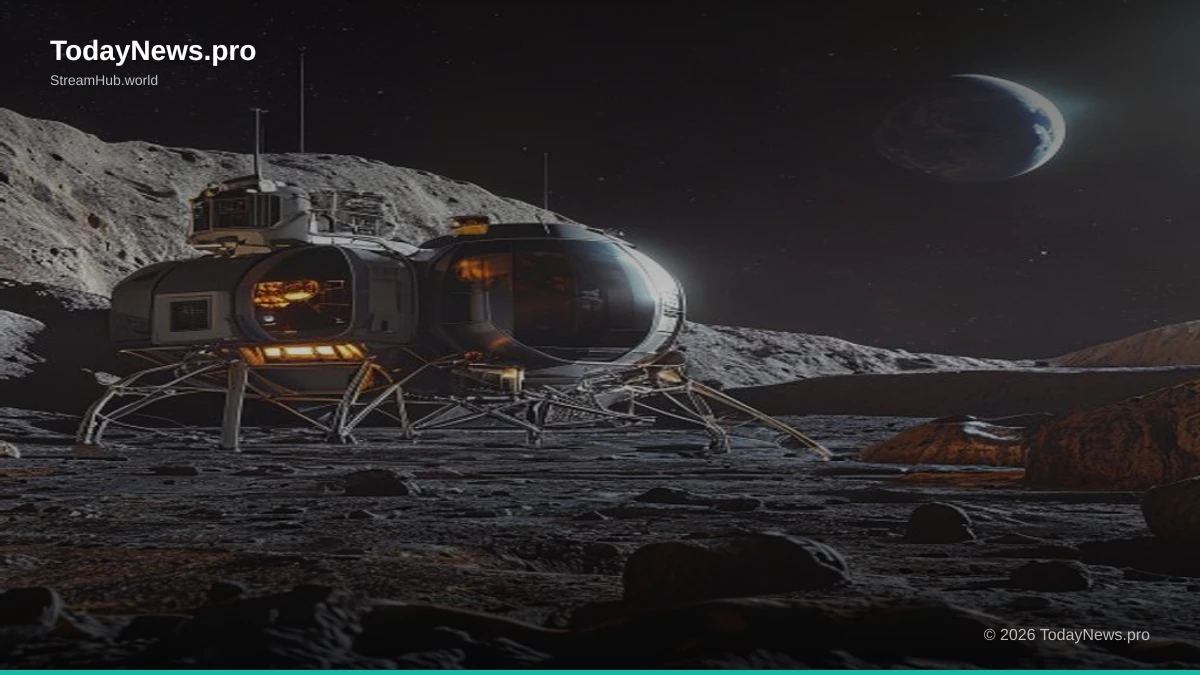
The Moon, Earth's closest celestial neighbor, is once again the focus of intense interest, serving as a crucial stepping stone for more ambitious interplanetary goals. The Artemis program, led by NASA with significant international and commercial partnerships, aims to return humans to the lunar surface and establish a sustainable presence. This isn't just about planting flags; it's about building infrastructure, conducting science, and testing technologies necessary for future missions to Mars.The Artemis Program: A Global Effort
NASA's Artemis program is a multi-faceted initiative that includes the Space Launch System (SLS) rocket, the Orion spacecraft, and the Lunar Gateway, a planned space station in lunar orbit. The program has garnered support from over a dozen countries, highlighting the collaborative nature of this new era. The Gateway will serve as a staging point for lunar surface missions and a research laboratory, enabling long-duration stays for astronauts.Commercial Lunar Payload Services (CLPS)
A significant aspect of the Artemis strategy is the Commercial Lunar Payload Services (CLPS) initiative. NASA is contracting with private companies to deliver scientific instruments and technology demonstrations to the lunar surface. This approach leverages commercial innovation and reduces costs for the agency, fostering a robust lunar economy. Companies like Intuitive Machines and Astrobotic Technology have already been awarded contracts for lunar delivery missions.The Quest for Lunar Resources
The potential for in-situ resource utilization (ISRU) is a major driver of lunar exploration. Water ice, found in permanently shadowed craters at the Moon's poles, could be a game-changer, providing a source of breathable air, drinking water, and rocket propellant. The ability to extract and utilize these resources would drastically reduce the cost and complexity of sustained lunar operations and future Mars missions.The Red Frontier: Mars Colonization by 2030 – A Bold Leap
While the Moon offers a nearer horizon, Mars remains the ultimate prize for many in the New Space Race. Elon Musk's stated goal of establishing a self-sustaining city on Mars by 2050, with initial human landings potentially occurring much sooner, has captured the public imagination. Achieving this by 2030, though highly ambitious, is the target for some of the most aggressive private ventures.SpaceXs Starship: A Mars-Bound Behemoth
The linchpin of SpaceX's Mars strategy is its Starship program. This fully reusable super heavy-lift launch vehicle is designed to carry large payloads and a significant number of passengers to Mars. Development is proceeding at a rapid pace, with regular test flights of prototypes at the Starbase facility in Texas. The vision is to eventually deploy thousands of Starships, transporting millions of tons of cargo and people to establish a Martian colony.Terraforming and Long-Term Habitation
The challenges of colonizing Mars are immense, extending far beyond simply reaching the planet. The thin atmosphere, extreme temperatures, and lack of a global magnetic field present significant hurdles for human survival. Companies and researchers are exploring various approaches, from building underground habitats to protect against radiation to the long-term, speculative concept of terraforming the planet to make it more Earth-like.Private Sector Investment and Risk
Achieving a Mars presence by 2030 would require an unprecedented level of private investment and technological development, likely surpassing even the most optimistic projections. While the bold targets are inspiring, the realities of radiation shielding, life support, psychological well-being of colonists, and sustainable resource generation on Mars are formidable.| Category | 2020 | 2025 (Projected) | 2030 (Projected) |
|---|---|---|---|
| Launch Services | 12.5 | 25.0 | 45.0 |
| Satellite Manufacturing & Operations | 30.0 | 55.0 | 90.0 |
| Space Tourism & Human Spaceflight | 1.5 | 7.0 | 25.0 |
| In-Space Infrastructure & Resources | 0.5 | 3.0 | 15.0 |
| Total | 44.5 | 90.0 | 175.0 |
Technological Hurdles and Innovations Fueling the Race
The ambitious goals of lunar bases and Mars colonies are intrinsically linked to overcoming significant technological challenges. The innovations being pursued are not only paving the way for off-world habitation but also have profound implications for terrestrial applications. Reusability, advanced propulsion systems, and robust life support are just a few of the critical areas of development.Reusable Rocket Technology
The game-changer in making space more affordable has been the development of reusable rockets. SpaceX's Falcon 9 and its ongoing development of Starship have proven that landing and reusing orbital-class rockets is not only possible but economically viable. This dramatically reduces the cost per kilogram to orbit, enabling more frequent and larger missions.Advanced Propulsion Systems
For journeys to Mars and beyond, faster and more efficient propulsion systems are essential. While chemical rockets remain the workhorse, research is ongoing into advanced concepts such as nuclear thermal propulsion, electric propulsion, and even more speculative technologies like fusion rockets. These could significantly reduce transit times, mitigating astronaut exposure to radiation and the psychological toll of long voyages.Life Support and ISRU Technologies
Establishing self-sustaining colonies requires closed-loop life support systems that can recycle air, water, and waste with near-perfect efficiency. Furthermore, the ability to utilize local resources on the Moon and Mars – In-Situ Resource Utilization (ISRU) – is paramount. This includes extracting water ice for drinking, oxygen, and rocket fuel, as well as using regolith (lunar or Martian soil) for construction.Key Technological Focus Areas for Mars Colonization
Economic Imperatives: The Business Case for Off-World Expansion
The allure of space is no longer solely driven by scientific curiosity or national prestige. A robust economic case is rapidly emerging, positioning space as the next frontier for industry and investment. From resource extraction to novel manufacturing and tourism, the commercial potential is vast.Asteroid Mining and Lunar Resources
The prospect of mining asteroids for precious metals and rare earth elements, or extracting water ice and helium-3 from the Moon, represents a potential economic windfall. While technically challenging, the value of these resources could far outweigh the cost of extraction, fueling future space-based industries and even benefiting Earth's economy. Several companies are actively exploring these possibilities.Space-Based Manufacturing
The unique environment of microgravity and vacuum offers opportunities for manufacturing materials and products that are impossible to create on Earth. This could include advanced pharmaceuticals, perfect crystals, or novel alloys. Establishing manufacturing facilities in orbit or on the Moon could create high-value industries and supply chains independent of Earth.Space Tourism and Entertainment
The nascent space tourism industry, pioneered by companies like Virgin Galactic and Blue Origin, is just the beginning. As costs decrease, suborbital and orbital flights, and eventually stays in space hotels, could become a significant sector of the luxury travel market. Furthermore, the concept of space-based entertainment and media production is also being explored.$1.5 Trillion
Projected Global Space Economy by 2040
300%
Increase in Private Space Investment (2010-2020)
10,000+
Jobs Created in the New Space Sector
"The economic potential of space is staggering. We are moving beyond exploration to exploitation, and those who invest wisely now will reap immense rewards. It's about creating new markets and resources, not just for space, but for Earth as well."
— Dr. Aris Thorne, Chief Futurist, Stellar Economics Group
Geopolitical Ripples and the Future of Space Governance
As private entities increasingly dominate the space landscape, traditional geopolitical dynamics are being reshaped. The absence of a comprehensive, universally adopted legal framework for off-world activities poses significant challenges, raising questions about resource ownership, traffic management, and conflict prevention.The Outer Space Treaty and Its Limitations
The cornerstone of space law is the 1967 Outer Space Treaty, which prohibits national appropriation of celestial bodies and mandates that space exploration be for the benefit of all humankind. However, its provisions are broad and do not explicitly address the nuances of private commercial activities, resource extraction, or the establishment of permanent settlements.Emerging National Space Policies
Several nations are developing their own space policies and bilateral agreements to facilitate commercial space activities, particularly concerning lunar resource utilization. The Artemis Accords, spearheaded by the United States, provide a set of principles for responsible space exploration and the use of space resources. These unilateral efforts, while aiming to promote order, could lead to fragmentation if not harmonized globally.The Role of International Collaboration vs. Competition
The New Space Race presents a duality: the potential for unprecedented international collaboration, as seen in the Artemis program, and the risk of heightened competition and potential conflict as nations and corporations vie for strategic advantage and resources. Balancing these forces will be crucial for ensuring peaceful and sustainable expansion into space. A Wikipedia search for the Outer Space Treaty offers further details.Challenges and Ethical Considerations in the New Space Race
Beyond the technical and economic hurdles, the ambitious drive towards lunar bases and Mars colonization is fraught with ethical dilemmas and profound questions about humanity's role in the cosmos. The long-term implications of our actions in space will shape future generations and our relationship with other celestial bodies.Planetary Protection and Contamination
A critical concern is planetary protection – ensuring that Earth does not contaminate other celestial bodies with terrestrial life, and vice-versa. The potential for microbial contamination of pristine environments like Mars could irreversibly compromise scientific study and the search for indigenous life. Stringent protocols are in place, but their effectiveness in the context of large-scale colonization remains a subject of debate.The Ethics of Colonization and Resource Ownership
The very concept of "colonization" carries historical baggage. Questions arise about the rights of potential future Martian or lunar inhabitants, and who truly "owns" celestial resources. Establishing equitable governance structures and ensuring that the benefits of space exploration are shared broadly, rather than concentrated among a few wealthy nations or corporations, is a significant ethical challenge. Reuters often covers these developing stories: Reuters Space News.Long-Term Human Health and Psychological Well-being
The physiological and psychological toll of extended space travel and living in isolated, extreme environments is a profound concern. The effects of prolonged microgravity on bone density and muscle mass, the impact of radiation exposure on cancer risk, and the psychological challenges of confinement and separation from Earth require extensive research and innovative solutions before large-scale, long-term habitation can be safely achieved.When will humans first land on Mars?
While ambitious private companies aim for landings in the late 2020s or early 2030s, NASA's Artemis program is focused on lunar missions first, with Mars as a longer-term goal. Most experts predict human missions to Mars will realistically occur in the 2030s or 2040s.
What are the main challenges for Mars colonization?
Key challenges include radiation shielding, developing closed-loop life support systems, finding and utilizing resources (ISRU), psychological well-being of colonists, transportation costs, and the long transit times.
How much does it cost to send a mission to Mars?
Current uncrewed missions cost hundreds of millions to billions of dollars. A crewed mission would be significantly more expensive, likely in the tens or even hundreds of billions of dollars, due to the complexity and safety requirements. Private sector reusability aims to drastically reduce these costs over time.
Will asteroid mining be profitable?
The potential profitability of asteroid mining is high, with estimates suggesting trillions of dollars in valuable resources. However, the technological and financial risks are also substantial. Companies are developing technologies to assess feasibility and reduce upfront investment.