

 William Nye
⏱ 15 min
The global space economy is projected to reach $1.5 trillion by 2040, a significant leap driven not just by Earth-orbit services but by ambitious off-world settlement and resource utilization plans. While Mars has long captured the public imagination, a more immediate and pragmatic race is unfolding: the colonization of the Moon and the exploitation of near-Earth asteroids. These celestial bodies offer proximity, accessible resources, and strategic stepping stones for deeper space exploration, fundamentally reshaping humanity's future beyond our home planet. Beyond Mars: The Lunar & Asteroid Colonization Push
The allure of Mars as a second home for humanity is undeniable, fueled by science fiction and bold scientific proposals. However, the immense distance, harsh environment, and considerable logistical challenges of reaching and sustaining a Martian colony have led many experts and space agencies to re-evaluate priorities. The Moon, a mere three-day journey away, presents a far more attainable and immediate target for establishing a permanent human presence. Similarly, the vast, untapped mineral wealth of near-Earth asteroids is becoming an increasingly compelling prospect, promising to revolutionize industries and fuel further space endeavors. This shift in focus is not a abandonment of Mars, but rather a strategic recalibration, with lunar bases and asteroid mining operations serving as vital precursors and support systems for eventual Martian settlements. The race is on, not just between nations, but between public space agencies and private enterprises, each vying to stake a claim, develop critical technologies, and unlock the economic and scientific potential of these extraterrestrial frontiers. From the Artemis program's lunar ambitions to the burgeoning private ventures targeting asteroid mining, the next few decades promise a dramatic acceleration in humanity's outward expansion.The Moon: Humanitys Next Door Neighbor
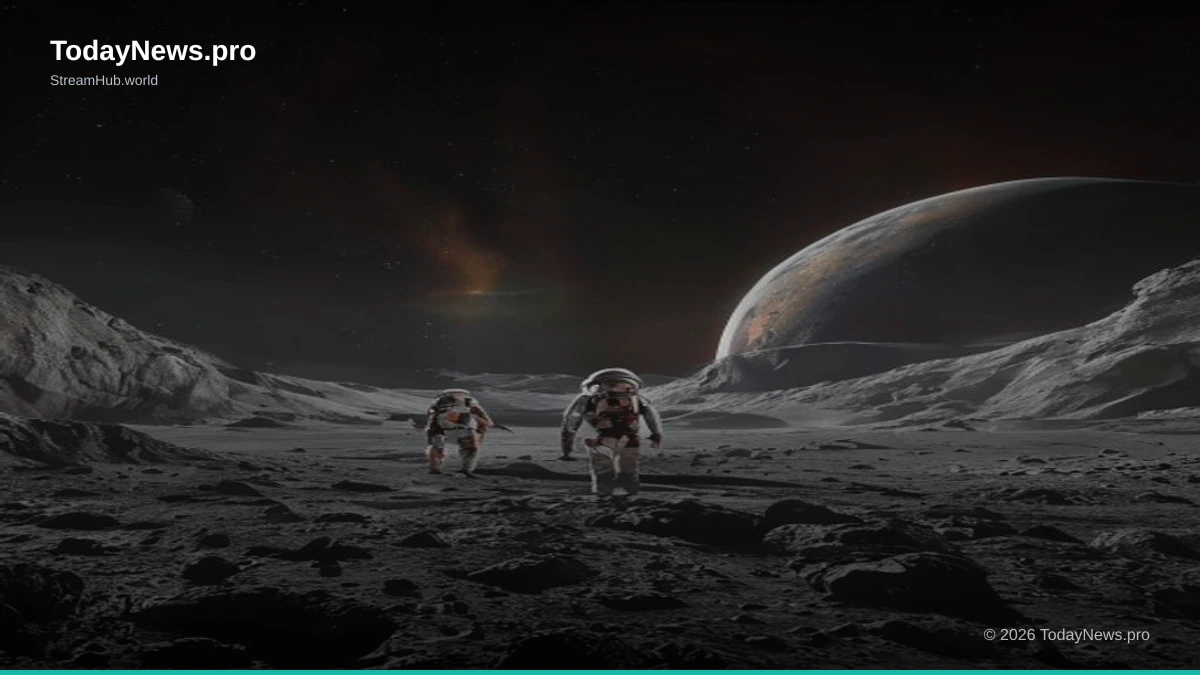
For centuries, the Moon has been a silent observer of human history, a celestial body of poetic inspiration and scientific curiosity. Now, it is transforming into humanity's most accessible outpost in space. The proximity of the Moon, offering relatively swift transit times and robust communication links, makes it an ideal testing ground for technologies and strategies required for more distant missions. Establishing a permanent lunar base is not just about planting a flag; it's about creating a sustainable infrastructure for scientific research, resource utilization, and as a vital staging point for future deep space exploration. Several nations and private entities are actively pursuing lunar colonization goals. NASA's Artemis program aims to establish a sustained human presence on the Moon, including a lunar base camp near the south pole. This program is designed to be a collaborative international effort, fostering partnerships and sharing the significant costs and challenges involved. Other countries, such as China, are also investing heavily in lunar exploration and potential settlement, highlighting a growing global interest in lunar dominion. ### Key Lunar Targets and Objectives The lunar south pole is a focal point for many current and planned missions. This region is believed to harbor significant reserves of water ice in permanently shadowed craters. Water is a critical resource, not only for life support but also for producing rocket propellant, a game-changer for the economics of space travel. Other objectives include studying lunar geology to understand the formation of the Earth-Moon system, utilizing the Moon as an astronomical observatory with unparalleled clarity, and testing advanced life support systems in an extraterrestrial environment. ### Challenges of Lunar Habitation Despite its proximity, establishing a permanent human presence on the Moon is fraught with challenges. The lunar surface is bombarded by solar and cosmic radiation, necessitating robust shielding for habitats. The extreme temperature variations between lunar day and night, coupled with the fine, abrasive lunar dust (regolith), pose significant engineering hurdles for equipment and human health. Furthermore, the psychological impact of long-duration isolation in a stark, alien environment needs careful consideration and mitigation strategies.Lunar Resources: Fueling the Future
The true game-changer for lunar colonization is the potential to live off the land – utilizing in-situ resource utilization (ISRU). Water ice, primarily found in the permanently shadowed regions near the poles, is the most sought-after resource. Once extracted and purified, it can be electrolyzed into hydrogen and oxygen, the very components that power most rockets. This capability would drastically reduce the cost of launching missions from Earth, as propellant could be manufactured and stored on the Moon, ready for use. ### Helium-3: A Fusion Power Dream Beyond water, the lunar regolith contains significant amounts of Helium-3, a rare isotope on Earth but relatively abundant on the Moon due to solar wind deposition over billions of years. Helium-3 is a potential fuel for future nuclear fusion reactors, which promise clean, virtually limitless energy. While fusion power remains an aspirational technology, the potential abundance of Helium-3 on the Moon makes it a powerful long-term economic incentive for lunar resource extraction and a key driver for sustained lunar presence. ### Other Potential Lunar Resources The Moon also holds promise for other valuable materials. Rare earth elements, crucial for modern electronics, and metals like titanium, aluminum, and silicon are present in the lunar regolith. While the extraction and processing of these materials present significant technological and economic challenges, their potential to reduce Earth's reliance on terrestrial mining and create new space-based industries is immense.| Resource | Estimated Abundance | Primary Location | Key Application |
|---|---|---|---|
| Water Ice | Billions of metric tons | Permanently shadowed craters (poles) | Life support, rocket propellant |
| Helium-3 | Millions of metric tons | Lunar regolith (surface layer) | Fusion energy fuel |
| Rare Earth Elements | Significant deposits | Various geological formations | Electronics, advanced materials |
| Titanium | High concentrations | Ilmenite deposits | Aerospace, construction |
Asteroids: The Cosmic Gold Rush
While the Moon offers a tangible stepping stone, asteroids represent a vast and largely unexploited frontier of immense economic potential. These celestial bodies, remnants from the formation of the solar system, are essentially cosmic treasure troves, rich in precious metals, rare earth elements, and water. The concept of asteroid mining, once confined to science fiction, is rapidly becoming a serious industrial prospect. ### Types of Asteroids and Their Value Near-Earth asteroids (NEAs) are of particular interest due to their relatively accessible orbits. They can be broadly categorized by their composition: * C-type (Carbonaceous) asteroids: These are the most common, making up about 75% of known asteroids. They are rich in carbon, water, and organic compounds, and also contain platinum-group metals like platinum, palladium, and rhodium. * S-type (Silicaceous) asteroids: These account for about 17% of asteroids and are composed of silicate materials and nickel-iron. They are a good source of iron and nickel, as well as platinum metals. * M-type (Metallic) asteroids: These are less common but are rich in nickel-iron, making them exceptionally valuable for their metal content, including significant amounts of platinum-group metals. ### The Economic Incentive The potential economic returns from asteroid mining are staggering. A single asteroid of moderate size could contain resources worth hundreds of billions, even trillions, of dollars. Imagine a future where platinum, used in catalytic converters and jewelry, is mined not from terrestrial mines but from space. The availability of vast quantities of metals could dramatically lower their cost on Earth, revolutionizing manufacturing and enabling new technologies. Furthermore, water ice found on asteroids can be processed into propellant, supporting a robust cis-lunar economy and enabling long-duration space missions without the prohibitive cost of launching all fuel from Earth.100,000
Estimated NEAs > 1 km
10^16
Approximate USD in platinum group metals (one large asteroid)
50
Years until asteroid mining might be economically viable (expert estimates)
10^12
Estimated USD value of asteroid resources (total potential)
"The economic potential of asteroids is almost incalculable. It's not just about precious metals; it's about water, which is the lifeblood of space exploration. Asteroid mining could fundamentally alter our approach to space, making it a self-sustaining frontier."
— Dr. Anya Sharma, Senior Astrophysicist, Kepler Institute
Technological Hurdles and Innovations
The ambitious goals of lunar and asteroid colonization are inextricably linked to a suite of advanced technologies that are either in development or require significant scaling. The challenges are multifaceted, encompassing propulsion, life support, robotics, materials science, and energy generation. ### Advanced Propulsion Systems Reaching celestial bodies efficiently and economically requires sophisticated propulsion. While chemical rockets remain the workhorse, advancements in electric propulsion (ion thrusters, Hall-effect thrusters) offer higher specific impulse, meaning more thrust per unit of propellant mass, making them ideal for long-duration missions and asteroid rendezvous. Nuclear thermal propulsion and even more speculative concepts like fusion propulsion could drastically cut transit times for future missions. ### In-Situ Resource Utilization (ISRU) As previously discussed, ISRU is paramount. Developing reliable and scalable methods for extracting water ice from the Moon and asteroids, processing lunar regolith for construction materials, and potentially synthesizing propellants and breathable air from local resources are critical areas of research and development. This includes innovations in drilling, excavation, chemical processing, and 3D printing with extraterrestrial materials. ### Robotics and Automation Given the harsh environments and the need for efficient, repetitive tasks, advanced robotics and automation are indispensable. Autonomous rovers, robotic arms, and intelligent systems will be essential for prospecting, construction, resource extraction, and maintenance, minimizing the need for human extravehicular activities (EVAs) in hazardous conditions. ### Life Support Systems Creating closed-loop life support systems that can reliably provide breathable air, clean water, and food for extended periods is a monumental challenge. Innovations in bioregenerative life support, recycling systems, and controlled environment agriculture (CEA) are crucial for long-term human survival off-world.Projected Funding for Lunar & Asteroid Technologies (USD Billion)
The Geopolitical Landscape of Space Colonization
The prospect of establishing permanent settlements and exploiting resources beyond Earth inevitably introduces complex geopolitical considerations. While international cooperation has been a hallmark of early space exploration, the increasing commercial and strategic value of off-world assets is creating new dynamics. ### National Ambitions and Competition Nations are increasingly viewing lunar and asteroid capabilities as crucial for national prestige, economic security, and strategic advantage. The "space race" of the 20th century may be evolving into a more multifaceted competition for extraterrestrial resources and strategic locations. This can manifest in dual-use technologies, where civilian space programs have clear military applications, and in the race to establish the first significant off-world infrastructure. ### International Treaties and Legal Frameworks Existing international space law, primarily governed by the Outer Space Treaty of 1967, prohibits national appropriation of celestial bodies by claim of sovereignty. However, the treaty is silent on the specifics of resource extraction and private property rights in space. This ambiguity is a growing concern as private companies and national agencies push the boundaries of what's possible. New legal frameworks and agreements will be necessary to govern resource rights, prevent conflict, and ensure equitable access to space resources."The current international legal framework is woefully inadequate for the challenges of space colonization and resource utilization. We need a robust, updated legal regime that balances national interests with the shared heritage of humankind and promotes responsible, sustainable exploration."
### The Role of Private Enterprise Private companies are playing an increasingly dominant role in space exploration, bringing innovation, investment, and a profit motive. Companies like SpaceX, Blue Origin, and numerous asteroid mining startups are not only developing critical technologies but are also pushing the envelope of what is achievable. Their activities add another layer of complexity to geopolitical considerations, as they operate under the auspices of national jurisdictions while pursuing global ambitions. — Professor Jian Li, International Space Law Expert, Beijing University
Economic Imperatives and Potential Returns
The economic drivers behind lunar and asteroid colonization are becoming increasingly compelling, moving beyond pure scientific curiosity to tangible profit motives. The potential for resource extraction, new industries, and the establishment of a robust space economy is a powerful incentive. ### The Cis-Lunar Economy The Moon, being so close, is the natural focal point for the development of a "cis-lunar" economy – an economy operating in the space between Earth and the Moon. This economy could be built around refueling stations, manufacturing hubs, scientific outposts, and even space tourism. The ability to produce propellant on the Moon, for instance, could drastically reduce the cost of reaching Mars and other destinations, unlocking new economic possibilities. ### Terrestrial Economic Benefits The technologies developed for space colonization often have significant spin-off benefits for Earth. Innovations in materials science, robotics, life support, and energy production can lead to new products and industries on our home planet. Furthermore, accessing resources like rare earth elements or platinum group metals from asteroids could alleviate pressure on terrestrial mining, reduce environmental impact, and stabilize global supply chains. ### Investment and Funding Models The immense cost of establishing off-world bases and mining operations necessitates significant investment. This is being driven by a combination of government funding for national programs, private venture capital for ambitious startups, and the development of novel financial instruments and public-private partnerships. The long-term nature of these investments requires a clear vision and sustained commitment from both public and private sectors.| Sector | Focus Area | Primary Investors | Projected Growth |
|---|---|---|---|
| Resource Extraction | Asteroid mining, lunar water ice | Venture Capital, Private Equity | High, but long-term |
| In-Situ Resource Utilization (ISRU) | Propellant production, construction materials | Government Agencies, Aerospace Companies | Medium to High |
| Space Logistics & Infrastructure | Orbital refueling, transportation | Commercial Space Companies, Logistics Firms | High |
| Space Tourism & Habitation | Lunar resorts, orbital hotels | High Net Worth Individuals, Tourism Operators | Speculative, but potentially very High |
| Advanced Manufacturing | 3D printing in space, orbital assembly | Industrial Conglomerates, Tech Companies | Medium |
Challenges and Ethical Considerations
Beyond the technological and economic hurdles, the colonization of the Moon and asteroids raises profound ethical and philosophical questions that humanity must confront. ### Environmental Impact While the direct environmental impact on Earth might be reduced by mining asteroids, we must consider the potential for contaminating celestial bodies with terrestrial microbes or altering their natural state. The principle of planetary protection, designed to prevent biological contamination of other worlds, will become even more critical as human activities expand. ### Equity and Access Who benefits from these new frontiers? Ensuring that the vast resources and opportunities of space are not monopolized by a few wealthy nations or corporations is a significant ethical challenge. The development of equitable access frameworks and benefit-sharing mechanisms will be crucial to prevent the exacerbation of existing global inequalities. ### The Future of Humanity The very act of becoming a multi-planetary species raises fundamental questions about what it means to be human. As we establish off-world settlements, we will confront new societal structures, potential evolutionary pressures, and the psychological impact of living permanently away from Earth. These are questions that science and philosophy will grapple with for generations.When will humans first establish a permanent base on the Moon?
Current projections for NASA's Artemis program aim to establish a sustained human presence on the Moon by the mid-to-late 2020s, with a long-term base camp envisioned shortly thereafter. Other nations and private entities have their own timelines, with some aiming for similar or slightly later dates.
Is asteroid mining economically feasible right now?
Currently, asteroid mining is not economically feasible due to the high cost of missions, the complexity of extraction and processing, and the lack of established infrastructure in space. However, rapid technological advancements and decreasing launch costs are making it an increasingly plausible prospect for the coming decades.
What are the biggest risks of lunar colonization?
The biggest risks include exposure to radiation, the abrasive and potentially harmful lunar dust (regolith), extreme temperature variations, and the psychological challenges of long-term isolation. Engineering and life support systems must be incredibly robust to mitigate these threats.
Can we legally own resources extracted from asteroids or the Moon?
Current international law, particularly the Outer Space Treaty, prohibits national appropriation of celestial bodies. However, there is no clear international consensus on the ownership of resources extracted from them. This ambiguity is a significant legal challenge that needs to be addressed as asteroid mining and lunar resource utilization become more advanced.