

 Robert Stark
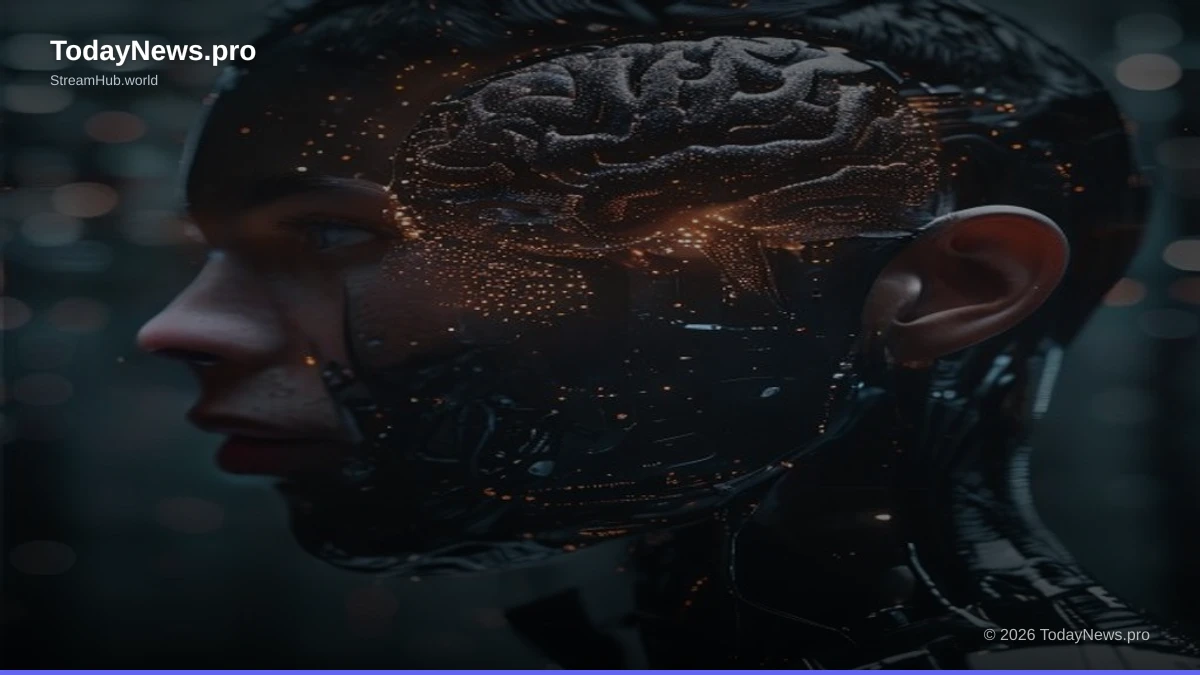
The global market for brain-computer interface (BCI) devices is projected to reach $6.8 billion by 2027, indicating a significant surge in investment and development within this nascent field.
The Neural Frontier: A New Era of Human-Machine Synergy
We stand at the precipice of a profound transformation, one where the long-held boundaries between human cognition and artificial intelligence begin to blur. Brain-Computer Interfaces (BCIs), once relegated to the realm of science fiction, are rapidly evolving into tangible technologies with the potential to revolutionize human capabilities. This dawn of practical BCIs and neuro-augmentation heralds a new era, promising unprecedented advancements in healthcare, communication, and even our fundamental understanding of consciousness itself. The ability to directly interface with the human brain, to translate neural signals into commands for external devices, opens a Pandora's Box of possibilities and challenges.
For decades, the dream of controlling machines with our thoughts remained just that—a dream. Yet, driven by relentless scientific inquiry and technological innovation, this dream is now materializing. The implications stretch far beyond mere convenience; they touch upon restoring lost functions for individuals with severe disabilities, enhancing cognitive performance, and potentially forging entirely new modes of interaction with the digital world. As we delve deeper into the intricacies of the human brain, the potential for synergy between mind and machine becomes increasingly apparent, ushering in a paradigm shift in how we perceive and interact with technology.
From Sci-Fi Dreams to Clinical Reality: The Evolution of BCIs
The concept of mind-controlled devices has captivated the human imagination for generations. Early explorations often featured in speculative fiction, depicting individuals effortlessly manipulating their environment with sheer willpower. However, the scientific journey to achieve this was long and arduous. Initial research in the mid-20th century focused on understanding brainwave patterns and their correlation with mental states. Pioneers like Dr. Jacques Vidal coined the term "Brain-Computer Interface" in 1973, laying the theoretical groundwork for direct neural communication.
The subsequent decades saw a steady progression from theoretical frameworks to experimental prototypes. Early BCIs were often cumbersome and limited in their functionality, primarily serving as research tools. Yet, these foundational efforts were crucial in developing the underlying algorithms and understanding the complex signal processing required to decode neural activity. Breakthroughs in neuroscience, coupled with advancements in sensor technology and computational power, have accelerated this evolution exponentially in recent years, moving BCIs from the laboratory bench to clinical trials and early commercial applications.
Decoding the Brain: The Science Behind Brain-Computer Interfaces
At its core, a BCI operates by detecting, analyzing, and translating neural signals into commands that can control external devices. This complex process involves several key stages: signal acquisition, signal processing, feature extraction, and device output. The brain generates a myriad of electrical and chemical signals as neurons communicate. BCIs aim to capture these signals, filter out noise, and identify meaningful patterns that correspond to a user's intended actions or thoughts.
The sophistication of BCI technology lies in its ability to decipher these neural signatures. Different mental tasks, such as imagining movement or focusing attention, elicit distinct patterns of brain activity. Machine learning algorithms play a pivotal role in learning these patterns and associating them with specific commands. As the technology matures, the accuracy and speed of these translations are improving dramatically, making BCIs increasingly practical for a wider range of applications.
Electrophysiological Signatures: EEG, MEG, and ECoG
The primary methods for acquiring neural signals for BCIs fall into distinct categories, each with its own advantages and limitations. Electroencephalography (EEG) is the most common non-invasive technique, utilizing electrodes placed on the scalp to detect electrical activity generated by the brain. It offers good temporal resolution, meaning it can capture rapid changes in brain activity, but its spatial resolution is relatively poor, making it difficult to pinpoint the exact source of the signals.
Magnetoencephalography (MEG) measures the magnetic fields produced by electrical currents in the brain. While also non-invasive, MEG offers better spatial resolution than EEG and is less susceptible to skull and scalp distortions. However, MEG equipment is expensive and requires a shielded environment. Electrocorticography (ECoG), on the other hand, is an invasive technique that involves placing electrodes directly on the surface of the brain, typically during neurosurgery. ECoG provides significantly higher signal quality and spatial resolution compared to non-invasive methods, but its invasiveness limits its use to specific clinical scenarios.
The Invasive vs. Non-Invasive Debate
The choice between invasive and non-invasive BCI technologies is a critical consideration, dictated by the desired application and acceptable risk profile. Non-invasive BCIs, primarily EEG-based, are easily accessible, relatively inexpensive, and pose no surgical risk, making them ideal for consumer-level applications and broad accessibility. Their limitations lie in the lower signal-to-noise ratio and potential for artifacts from muscle movements or environmental interference.
Invasive BCIs, such as those employing ECoG or even implanted microelectrode arrays, offer superior signal fidelity and precision. This allows for more complex and nuanced control, crucial for restoring fine motor skills or highly detailed communication for individuals with severe paralysis. However, the inherent risks associated with surgery, including infection and tissue damage, mean these technologies are currently reserved for severe medical conditions. The ongoing research aims to bridge this gap, seeking to improve non-invasive techniques to approach the performance of their invasive counterparts.
Applications: Revolutionizing Healthcare and Beyond
The most immediate and impactful applications of BCIs are found within the medical field, offering renewed hope and functionality to individuals living with debilitating neurological conditions. For those who have lost the ability to move or speak due to conditions like amyotrophic lateral sclerosis (ALS), spinal cord injuries, or stroke, BCIs represent a lifeline, restoring a degree of autonomy and connection to the world.
Beyond direct therapeutic applications, BCIs are also being explored for their potential to enhance cognitive functions, improve mental well-being, and even aid in the rehabilitation process. The ability to monitor and influence brain activity opens up new avenues for treating conditions like depression, anxiety, and ADHD, as well as for optimizing learning and performance. The reach of BCI technology is steadily expanding, promising to touch many aspects of human life.
Restoring Mobility and Communication
One of the most profound achievements in BCI research has been the restoration of motor control and communication. Patients with severe paralysis can now use BCIs to control prosthetic limbs, robotic arms, or even cursors on a computer screen, enabling them to interact with their environment and express themselves. For individuals who are locked-in, unable to move or speak, BCIs can translate their thoughts into text or synthesized speech, allowing them to communicate with loved ones and participate in society.
For instance, researchers have demonstrated that individuals can learn to control a robotic arm to grasp objects or feed themselves using only their thoughts. Similarly, BCIs have enabled people with complete paralysis to type out messages at speeds that, while not yet matching natural human typing, are significantly faster than previously available assistive technologies. These advancements are not merely technological marvels; they represent a fundamental restoration of human dignity and agency.
Cognitive Augmentation and Mental Well-being
The promise of BCIs extends beyond restoring lost function to actively enhancing existing human capabilities. Neurofeedback, a type of BCI where individuals learn to regulate their own brain activity, is already being used to manage conditions like ADHD and anxiety. By providing real-time feedback on brainwave patterns, individuals can train themselves to achieve desired mental states, such as increased focus or relaxation.
Further research is exploring the potential for BCIs to augment cognitive functions like memory, attention, and decision-making. While still in its early stages, this area holds the promise of "cognitive enhancement" for healthy individuals, potentially leading to improved learning, increased productivity, and even novel forms of creative expression. The ethical implications of such augmentation, however, are significant and require careful consideration.
| Application Area | Primary Technology | Current Status | Potential Impact |
|---|---|---|---|
| Restoring Motor Function (Prosthetics, Wheelchairs) | Invasive (ECoG, Implants), Non-Invasive (EEG) | Clinical Trials, Early Commercialization | High: Restores independence, mobility |
| Restoring Communication (Speech, Text) | Invasive (ECoG, Implants), Non-Invasive (EEG) | Clinical Trials, Emerging Commercialization | High: Re-establishes social interaction, self-expression |
| Neurofeedback for Mental Health (ADHD, Anxiety) | Non-Invasive (EEG) | Established Clinical Use, Ongoing Research | Moderate to High: Improves symptom management, well-being |
| Cognitive Augmentation (Memory, Attention) | Non-Invasive (EEG), Emerging Invasive | Research & Development | Potentially High: Enhances learning, productivity |
| Rehabilitation after Stroke/Injury | Non-Invasive (EEG) | Clinical Trials, Emerging Use | Moderate: Accelerates recovery, improves motor control |
The Neuro-Augmentation Landscape: Enhancing Human Capabilities
While BCIs are often discussed in the context of restoring lost functions, the parallel field of neuro-augmentation focuses on enhancing existing human abilities, both cognitive and physical. This encompasses a wide spectrum of technologies, from sophisticated neurofeedback systems to experimental brain-to-brain interfaces. The goal is not merely to compensate for deficiencies but to push the boundaries of human potential.
The concept of augmenting human intelligence and senses has long been a staple of science fiction, but the rapid advancements in neuroscience and artificial intelligence are bringing these ideas closer to reality. Neuro-augmentation promises to unlock new levels of creativity, problem-solving, and sensory perception, potentially leading to a future where human capabilities are significantly amplified by direct integration with technology.
Cognitive Enhancement Tools
Beyond therapeutic neurofeedback, researchers are developing more direct methods for cognitive enhancement. This includes technologies that aim to improve memory recall, boost learning speed, and enhance focus. Some approaches involve stimulating specific brain regions with non-invasive techniques like transcranial magnetic stimulation (TMS) or transcranial direct current stimulation (tDCS), while others rely on sophisticated algorithms that guide users to optimize their mental states for specific tasks.
The potential for enhanced learning is particularly exciting. Imagine being able to absorb complex information faster, retain it more effectively, or develop new skills with unprecedented speed. While still largely in the experimental phase, these cognitive enhancement tools represent a significant frontier in the quest to optimize human performance and unlock latent intellectual capacities. The ethical considerations surrounding equitable access and the definition of "normal" human cognition are paramount here.
Sensory Augmentation
Another fascinating area of neuro-augmentation involves expanding or altering human sensory perception. This could range from enhancing existing senses, such as improving vision or hearing beyond biological limits, to providing entirely new sensory modalities. For example, researchers are exploring ways to allow humans to "see" infrared light or "hear" ultrasonic frequencies by translating these signals into patterns the brain can interpret.
This type of augmentation could have profound implications for fields like exploration, scientific research, and even artistic expression. Imagine an archaeologist being able to "sense" buried artifacts, or a musician composing entirely new forms of sonic art. While the technology is still in its infancy, the prospect of transcending our natural sensory limitations opens up a universe of new experiences and understanding. The Wikipedia entry on sensory augmentation provides further insight into these possibilities.
Ethical and Societal Implications: Navigating the Unknown
As BCIs and neuro-augmentation move from theoretical possibilities to practical realities, a host of complex ethical and societal questions arise. The intimate nature of brain-computer interaction raises concerns about privacy, data security, and the potential for misuse. Who owns our thoughts? How can we ensure that neural data is protected from unauthorized access or exploitation?
Furthermore, the prospect of enhancing human capabilities through technology raises fundamental questions about equity, fairness, and the very definition of what it means to be human. If certain individuals gain enhanced cognitive abilities or sensory perceptions through technological means, what are the implications for societal structures and the concept of human equality? These are not abstract philosophical debates; they are urgent considerations that must be addressed proactively as the technology matures.
Privacy and Data Security
Neural data is arguably the most sensitive form of personal information. It can reveal not only our intentions and desires but also our emotional states, cognitive processes, and even subconscious biases. The collection and analysis of such data by BCI systems necessitate robust privacy protections and stringent data security measures. The potential for "brain hacking" or the surreptitious monitoring of thoughts is a significant concern that requires careful regulatory oversight and technological safeguards.
The development of ethical guidelines for BCI data usage is paramount. This includes ensuring informed consent, transparent data collection policies, and secure storage and transmission of neural information. Without these safeguards, the widespread adoption of BCIs could lead to unprecedented invasions of privacy and a chilling effect on cognitive freedom. Organizations like Reuters often cover the evolving legal and ethical landscape of emerging technologies.
Equity and Accessibility
The promise of BCIs and neuro-augmentation must be accessible to all, not just a privileged few. The high cost of advanced BCI systems and augmentation technologies could create a new form of digital divide, exacerbating existing societal inequalities. Ensuring equitable access to these transformative technologies is crucial to prevent the creation of a bifurcated society, where enhanced individuals possess significant advantages over their un-augmented counterparts.
Addressing this requires proactive policy decisions and a commitment to developing affordable and accessible BCI solutions. Furthermore, societal discussions about the ethical implications of enhancement need to be inclusive, involving diverse perspectives to ensure that the development of these technologies aligns with shared human values. The debate over fairness and access is critical as we stand on the cusp of a new era of human potential.
The Future Trajectory: Predictions and Possibilities
The field of BCIs and neuro-augmentation is evolving at an astonishing pace. Looking ahead, we can anticipate continued improvements in signal acquisition, processing, and decoding, leading to more intuitive and responsive interfaces. Non-invasive technologies are likely to become more sophisticated, approaching the performance of invasive systems without the associated risks.
We may see the emergence of "closed-loop" BCIs, where the system not only reads brain activity but also provides targeted stimulation to modulate neural function, leading to more effective therapeutic interventions and cognitive enhancement. Furthermore, the integration of BCIs with other emerging technologies, such as artificial intelligence and virtual reality, will unlock entirely new applications and experiences, blurring the lines between the physical and digital realms even further. The journey ahead is filled with both immense promise and significant challenges, demanding a thoughtful and responsible approach to harnessing the power of the human mind.