

 Maria Gonzalez
⏱ 18 min
The global metaverse market is projected to reach over $1.6 trillion by 2030, a staggering leap from its current valuation, signaling a profound shift beyond a nascent technological trend into a pervasive force reshaping numerous industries.
The Metaverse: More Than Just VR Headsets
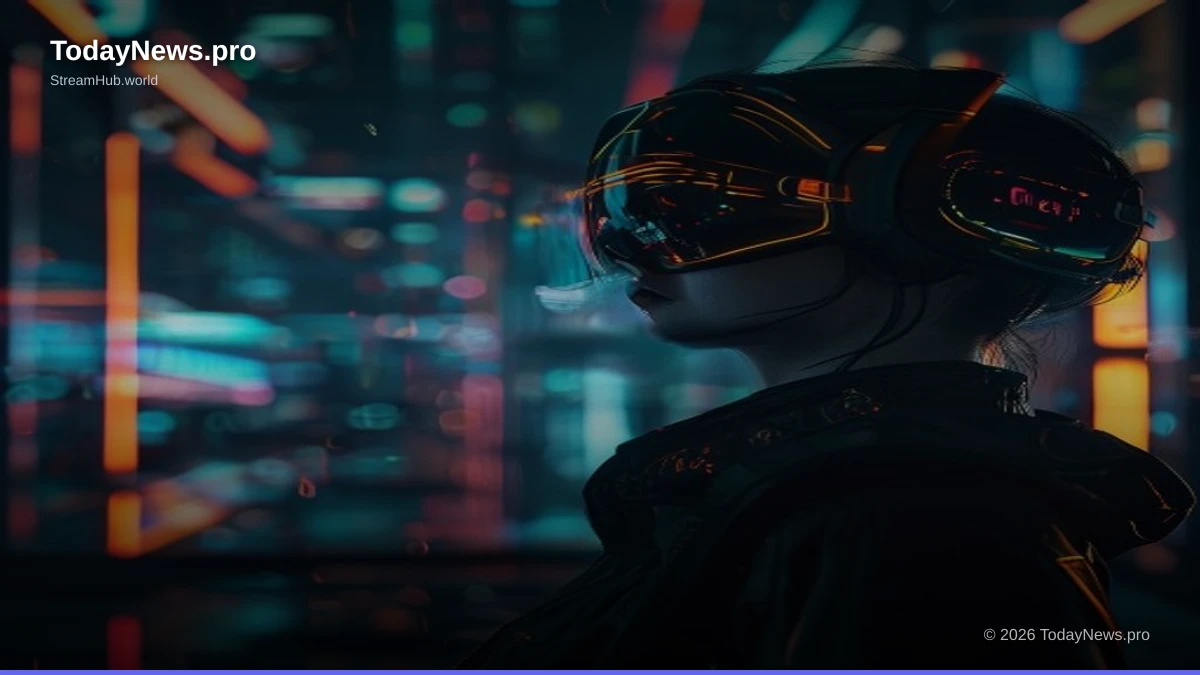
The term "metaverse" often conjures images of individuals donning bulky VR headsets, engaging in fantastical digital worlds. While virtual reality is a crucial component, it represents only one facet of a much larger, more interconnected digital ecosystem. At its core, the metaverse is a persistent, interconnected set of virtual spaces where users can interact with each other, digital objects, and AI-driven entities in real-time. This concept extends far beyond gaming and entertainment, promising to integrate into the very fabric of our professional and personal lives. By 2030, this convergence will be less about escaping reality and more about augmenting it.Defining the Extended Metaverse
Unlike the internet, which is largely accessed through flat screens, the metaverse aims to be an immersive, 3D experience. It's characterized by its persistence, meaning it doesn't reset or pause when you log off. It's also interoperable, allowing for the seamless transfer of digital assets and identities across different virtual environments. This ambition is fueled by advancements in augmented reality (AR), mixed reality (MR), artificial intelligence (AI), blockchain technology, and high-speed networking.The Interplay of Technologies
The development of the metaverse is not a singular endeavor but a confluence of multiple technological streams. VR provides the deep immersion, while AR overlays digital information onto the physical world, bridging the gap between the two. Blockchain underpins digital ownership, security, and decentralized economies within these virtual spaces. AI powers intelligent agents, personalized experiences, and the creation of dynamic, responsive environments. These technologies, working in concert, are laying the groundwork for a metaverse that is not just a novelty but a functional extension of our existing reality.Industry Transformation: A Deeper Dive
The impact of the metaverse will not be uniform; rather, it will manifest as a spectrum of integration and innovation across diverse sectors. From manufacturing floors to boardrooms, virtual spaces will become arenas for collaboration, simulation, and customer engagement that were previously unimaginable or prohibitively expensive. The key differentiator by 2030 will be the maturity and scalability of these metaverse applications.From Prototypes to Production
Early adoption of metaverse technologies is already visible in areas like product design and virtual prototyping. Companies are using 3D modeling and simulation environments to test designs, identify flaws, and optimize manufacturing processes before committing to physical production. This significantly reduces costs, time-to-market, and waste. By the end of the decade, these simulations will be so sophisticated that they will offer near-perfect replicas of real-world scenarios, allowing for extensive testing of everything from factory layouts to complex machinery operation.The Rise of Digital Twins
A critical application emerging from this trend is the concept of "digital twins." These are virtual replicas of physical assets, processes, or systems that are updated in real-time with data from their real-world counterparts. In manufacturing, a digital twin of a factory can be used to monitor performance, predict maintenance needs, and optimize operations. In urban planning, a digital twin of a city can help simulate traffic flow, energy consumption, and the impact of new infrastructure. This predictive and proactive approach to management is a hallmark of metaverse-driven industrial evolution.75%
of large enterprises expected to have adopted metaverse technologies in some capacity by 2027, according to Gartner.
2x
faster product development cycles observed in early adopters leveraging virtual prototyping.
$500B
estimated annual economic impact of digital twins by 2025.
The Future of Work: Remote Collaboration Reimagined
The pandemic irrevocably altered our perception of remote work. The metaverse promises to elevate this experience from flat video calls to truly collaborative, immersive environments. By 2030, the distinction between working physically in an office and working in a sophisticated virtual workspace will blur significantly.Beyond Zoom Fatigue
Current remote work tools, while functional, often fall short in replicating the spontaneous interactions, non-verbal cues, and sense of presence that define in-person collaboration. The metaverse offers a solution through persistent virtual offices, shared digital whiteboards, 3D model manipulation, and avatar-based interactions. These environments can foster a stronger sense of team cohesion and facilitate more natural, intuitive communication.Training and Onboarding in the Metaverse
Onboarding new employees and providing ongoing training can be transformed by metaverse technologies. Instead of reading manuals or watching videos, trainees can engage in hands-on simulations. For example, a new manufacturing technician could practice operating complex machinery in a risk-free virtual environment. Medical professionals could rehearse surgical procedures on virtual patients. This experiential learning leads to deeper understanding, better retention, and reduced errors."The metaverse isn't about replacing human connection; it's about augmenting it. By 2030, we'll see virtual collaboration spaces that feel as natural and productive as any physical office, especially for distributed teams."
— Anya Sharma, Chief Innovation Officer, Synergistic Digital
| Industry Sector | Metaverse Application | Projected Impact by 2030 |
|---|---|---|
| Manufacturing | Virtual Prototyping, Digital Twins, Remote Assistance | Reduced R&D costs, optimized operations, predictive maintenance |
| Architecture & Real Estate | Virtual Property Tours, Immersive Design Visualization | Enhanced client engagement, reduced physical site visits, faster design iterations |
| Automotive | Virtual Showrooms, Design Collaboration, Driver Training Sims | Increased customer reach, accelerated design cycles, improved safety training |
| Retail | Virtual Stores, Personalized Shopping Experiences | New revenue streams, enhanced brand loyalty, data-driven insights |
Retail and E-commerce: Immersive Shopping Experiences
The retail sector is poised for a radical transformation as brands leverage the metaverse to create engaging, interactive, and personalized shopping journeys that transcend the limitations of traditional online stores. By 2030, the metaverse will be a significant channel for commerce.Virtual Showrooms and Brand Worlds
Imagine walking through a meticulously crafted virtual store, browsing products in 3D, and interacting with them as if you were physically present. Brands can build entire "brand worlds" – immersive environments that reflect their identity and ethos, offering not just products but experiences. Customers can try on virtual clothing with realistic avatars, customize virtual furniture for their digital homes, or even attend virtual product launch events.Personalized Shopping and AI Companions
The metaverse allows for unprecedented levels of personalization. AI-powered virtual assistants can guide shoppers, offer tailored recommendations based on their preferences and past behavior, and provide instant customer support. These AI companions can learn and adapt, becoming increasingly valuable to the shopper. This not only enhances the shopping experience but also provides retailers with rich data insights into consumer behavior.The Rise of the Phygital Model
The metaverse doesn't necessarily replace physical retail; it complements it. We will see a rise in "phygital" models, where online and offline experiences are seamlessly integrated. A customer might design a custom product in a virtual showroom and then pick it up at a physical store, or vice-versa. Loyalty programs and exclusive metaverse-based rewards will further incentivize engagement.Education and Training: Experiential Learning Takes Center Stage
The traditional classroom model, often reliant on passive learning, is set to be augmented, and in some cases, transformed by metaverse technologies. By 2030, immersive and experiential learning will be a cornerstone of educational and professional development.Democratizing Access to Experiential Learning
Imagine biology students dissecting a virtual frog without harming an animal, or history students walking through ancient Rome. The metaverse can provide access to experiences that are otherwise impossible, prohibitively expensive, or geographically inaccessible. This democratizes high-quality, hands-on learning for students worldwide. Universities and educational institutions are already exploring VR labs and virtual field trips.Skills Training for the Future Workforce
The demand for skilled workers in rapidly evolving fields is immense. The metaverse offers an ideal platform for rapid, effective upskilling and reskilling. Complex technical skills, from piloting drones to performing intricate surgical procedures, can be taught and practiced in realistic, safe virtual environments. This agility in training is crucial for keeping pace with industry demands.Personalized Learning Paths
AI within metaverse environments can adapt learning experiences to individual student needs and paces. Students struggling with a concept can receive additional virtual support and practice, while those who grasp it quickly can be presented with more advanced challenges. This personalized approach, driven by data analytics within the virtual learning space, promises to improve educational outcomes significantly."The metaverse represents a paradigm shift in education. We're moving from learning *about* things to learning *by doing* them, which is exponentially more effective for knowledge retention and skill development."
— Dr. Kenji Tanaka, Professor of Educational Technology, Global University Alliance
Healthcare and Wellness: Virtual Therapies and Diagnostics
The healthcare sector, often perceived as slow to adopt new technologies, is a prime candidate for disruptive innovation through the metaverse. By 2030, virtual environments will play a vital role in patient care, medical training, and mental wellness.Therapeutic Applications
Mental health treatment is a significant area of metaverse potential. Virtual reality therapy (VRT) is already showing promise in treating phobias, PTSD, and anxiety by exposing patients to controlled, therapeutic simulations. By 2030, these therapies will be more sophisticated, accessible, and personalized, potentially delivered remotely through immersive platforms. Pain management is another area where VR can provide distraction and immersion to reduce patient discomfort.Medical Training and Surgical Simulation
As mentioned earlier, medical professionals can benefit immensely from metaverse training. Surgeons can practice complex procedures repeatedly on hyper-realistic virtual models, improving dexterity and decision-making before operating on real patients. This reduces surgical risks and improves patient outcomes. Furthermore, medical students can explore human anatomy in 3D, gaining a deeper understanding than with traditional methods.Remote Diagnostics and Patient Monitoring
While direct physical examination remains crucial, the metaverse can enhance remote diagnostics. Patients could interact with virtual medical avatars that guide them through symptom reporting, and advanced sensors could collect physiological data within the virtual interaction. This could streamline initial consultations and improve the efficiency of remote patient monitoring for chronic conditions, allowing healthcare providers to intervene proactively. Reuters: Metaverse in Healthcare Wikipedia: MetaverseChallenges and Opportunities on the Horizon
Despite the immense potential, the widespread adoption of the metaverse by 2030 faces significant hurdles. However, overcoming these challenges will unlock unparalleled opportunities for innovation and economic growth.Technical and Infrastructure Challenges
The metaverse requires robust, high-speed internet connectivity, significant computing power, and advanced hardware. Ensuring equitable access to these resources globally is a major challenge. Developing interoperable standards so that different metaverse platforms can communicate with each other is also critical for a truly seamless experience. Privacy and security concerns, including data protection and the potential for malicious actors, must be addressed proactively.Societal and Ethical Considerations
As virtual worlds become more integrated into our lives, questions arise about digital identity, ownership, and the potential for addiction or escapism. Establishing ethical guidelines for AI behavior within the metaverse, ensuring digital equity, and preventing the exacerbation of existing societal inequalities will be paramount. Regulatory frameworks will need to evolve to encompass these new digital frontiers.The Evolving Landscape of Opportunity
The growth of the metaverse will spawn entirely new job roles and industries. From metaverse architects and virtual world designers to digital asset managers and AI ethicists, the demand for specialized skills will skyrocket. Businesses that embrace this shift early will gain a competitive advantage, fostering innovation, expanding market reach, and creating more engaging customer and employee experiences. The metaverse isn't a future destination; it's a transformative process that is already underway, and its impact by 2030 will be profound.Will the metaverse replace the real world?
No, the metaverse is generally envisioned as an extension or augmentation of the real world, not a replacement. It aims to enhance our experiences, productivity, and social interactions rather than supersede our physical reality.
What kind of hardware will I need for the metaverse?
While VR headsets offer the most immersive experience, access to the metaverse will also be possible through AR devices, PCs, and even mobile phones, albeit with varying degrees of immersion and interactivity. By 2030, hardware will likely be more affordable, comfortable, and powerful.
Is the metaverse just for gaming?
While gaming is a significant early application, the metaverse's potential extends far beyond entertainment. It is being developed for education, work, social interaction, commerce, healthcare, and many other sectors.
Who owns the metaverse?
The metaverse is not a single entity owned by one company. It's envisioned as a decentralized network of interconnected virtual spaces, with different platforms and experiences developed by various companies and communities. Blockchain technology plays a key role in enabling decentralized ownership of digital assets.