

 Linda Wu
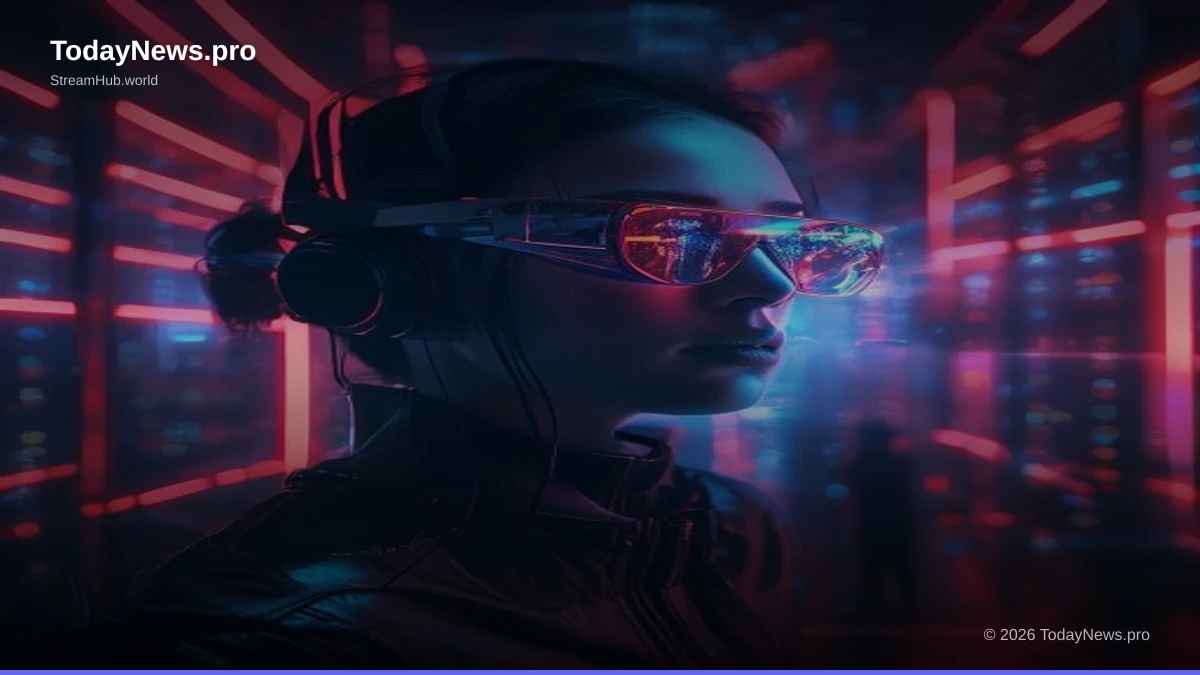
⏱ 30 min
It's estimated that the global metaverse market size could reach over $1.6 trillion by 2030, a significant leap from its nascent stages.
The Metaverse: A Shift from Hype to Tangible Value
For years, the term "metaverse" has been synonymous with speculative investments, fantastical virtual worlds, and a vague promise of the internet's next evolution. Early portrayals often depicted sprawling digital landscapes populated by avatars engaged in endless gaming or abstract social interactions. This initial wave of enthusiasm, fueled by bold pronouncements and a frenzy of venture capital, led many to dismiss the metaverse as an overhyped fad. However, beneath the surface of the initial buzz, a more pragmatic and grounded approach has begun to take shape. Today, the conversation is shifting from what the metaverse *could* be to what it *is* becoming: a powerful platform for tangible applications, enhanced human connection, and significant economic opportunities. This evolution is driven by advancements in underlying technologies and a clearer understanding of user needs. The current phase of metaverse development is characterized by a focus on utility, accessibility, and interoperability. Instead of solely pursuing elaborate, self-contained virtual realities, developers and businesses are concentrating on building practical tools and experiences that solve real-world problems. This includes leveraging existing infrastructure, like enhanced augmented reality (AR) and virtual reality (VR) hardware, alongside sophisticated software platforms. The aim is to create immersive environments that augment our physical lives, rather than entirely replace them. This pragmatic approach is crucial for widespread adoption and for moving beyond the speculative bubbles that have previously defined the metaverse narrative. The focus is now firmly on delivering demonstrable value. The transition from hype to utility is not merely a marketing pivot; it represents a fundamental maturation of the concept. Early visions were often grand and unconstrained by current technological limitations or user adoption realities. The current landscape, however, sees a more measured and strategic development, where innovation is directly tied to solving existing pain points and creating new efficiencies. This is evident in the growing number of enterprise solutions, educational platforms, and specialized training modules that are beginning to emerge, all leveraging the unique capabilities of immersive technologies. The metaverse, reimagined, is about extending our capabilities and deepening our connections in ways that are both innovative and profoundly human.Demystifying the Metaverse: Core Components and Technologies
At its heart, the metaverse is not a single entity but rather a complex ecosystem built upon several foundational technological pillars. Understanding these components is key to grasping its potential and limitations. These technologies work in concert to create persistent, interconnected, and interactive digital spaces. ### Extended Reality (XR) Extended Reality, an umbrella term encompassing Virtual Reality (VR), Augmented Reality (AR), and Mixed Reality (MR), is the primary interface for many metaverse experiences. VR immerses users completely in a digital environment, typically through head-mounted displays (HMDs). AR overlays digital information onto the real world, visible through devices like smartphones or AR glasses. MR blends the digital and physical worlds, allowing virtual objects to interact with real-world environments. These technologies provide the sensory input and interaction methods that make metaverse environments feel real and engaging. The evolution of XR hardware is crucial for the metaverse's growth. Lighter, more powerful, and more affordable HMDs, alongside improved haptic feedback systems, are continuously enhancing the sense of presence and immersion. Similarly, advancements in AR glasses are paving the way for seamless integration of digital content into our daily lives, moving beyond the screen to a more intuitive, spatial computing experience. ### Blockchain and Decentralization While not universally adopted, blockchain technology plays a significant role in many current metaverse visions, particularly concerning digital ownership, identity, and economic systems. Non-Fungible Tokens (NFTs) enable verifiable ownership of digital assets, from virtual land and collectibles to unique in-game items. Decentralized autonomous organizations (DAOs) offer new models for governance and community management within virtual worlds. This emphasis on decentralization aims to prevent single entities from controlling vast swathes of the metaverse, fostering a more open and equitable digital frontier. The promise of a decentralized metaverse is one where users have greater control over their data, assets, and digital identities. This contrasts with the current internet model, where large corporations often hold significant power. Blockchain infrastructure, therefore, is seen as a critical enabler for a truly user-centric metaverse, where value created by users can be directly owned and traded. ### Artificial Intelligence (AI) and Machine Learning (ML) AI and ML are instrumental in populating metaverse environments with intelligent agents, generating dynamic content, personalizing user experiences, and enabling natural language interactions. AI-powered NPCs (Non-Player Characters) can make virtual worlds feel more alive and responsive. ML algorithms can analyze user behavior to tailor experiences, optimize performance, and even help in the creation of new virtual assets or environments. AI is also crucial for moderating complex virtual spaces and ensuring safety and ethical conduct. The integration of AI allows for the creation of more sophisticated and adaptive virtual environments. Imagine AI-driven tutors that personalize learning paths or AI assistants that help navigate complex virtual workplaces. This level of intelligence is what will elevate the metaverse from a static digital space to a dynamic and evolving universe. ### High-Speed Networking and Cloud Computing The metaverse, by its nature, requires robust and low-latency networking infrastructure to support real-time interactions among potentially millions of users. Technologies like 5G and future iterations of wireless communication are vital for delivering the seamless, high-fidelity experiences envisioned for the metaverse. Cloud computing provides the scalable processing power and storage necessary to host these persistent, data-intensive virtual worlds. The ability to render complex 3D environments and handle massive amounts of data in real-time is dependent on advancements in networking and cloud infrastructure. Without these foundational elements, the immersive and interconnected nature of the metaverse would remain an unattainable dream.Beyond Gaming: Practical Applications Across Industries
While gaming and entertainment were the initial strongholds of immersive technologies, the metaverse's potential extends far beyond these realms. Its ability to create realistic simulations, facilitate remote collaboration, and provide immersive learning experiences is unlocking transformative applications across a diverse range of industries.Enterprise and Collaboration
The most immediate and impactful applications of the metaverse are emerging within the enterprise sector. Companies are recognizing the power of virtual collaboration spaces to overcome the limitations of traditional remote work. Imagine holding team meetings not just on a video call, but within a shared virtual office, where participants can interact with 3D models, whiteboard ideas in a spatial manner, and feel a stronger sense of presence and connection with their colleagues, regardless of their physical location. Virtual training simulations are revolutionizing how employees are onboarded and upskilled. For instance, complex surgical procedures can be practiced repeatedly in a risk-free virtual environment, allowing trainees to hone their skills before operating on actual patients. Similarly, hazardous industrial operations can be simulated, providing invaluable hands-on experience without the associated dangers or costs.| Industry | Current Adoption Rate | Projected Growth (5 Years) | Key Applications |
|---|---|---|---|
| Manufacturing | 15% | 60% | Remote assistance, digital twins, design reviews, training |
| Healthcare | 10% | 55% | Surgical training, patient education, remote diagnostics |
| Retail | 12% | 50% | Virtual showrooms, personalized shopping experiences, product visualization |
| Education | 18% | 70% | Immersive learning, virtual field trips, skill-based training |
| Real Estate | 20% | 65% | Virtual property tours, architectural visualization, client presentations |
Education and Training
The traditional classroom model is ripe for disruption, and the metaverse offers a compelling alternative. Immersive learning environments can transport students to historical periods, explore the human body in intricate detail, or conduct complex scientific experiments without the need for expensive equipment or hazardous materials. This hands-on, experiential approach can significantly improve engagement and retention rates. Virtual field trips can now take students to the Great Wall of China, the surface of Mars, or the depths of the ocean, all without leaving their classroom. For vocational training, the metaverse provides a safe and cost-effective platform to practice skills that would otherwise require expensive machinery or dangerous environments, such as welding, piloting, or emergency response."The metaverse has the potential to democratize access to high-quality education and specialized training. Imagine a student in a rural village having access to the same advanced simulations and expert instruction as a student in a top-tier university. This is a paradigm shift."
The ability to repeat complex tasks in a virtual environment until mastery is achieved is invaluable for skill development. This is particularly relevant for fields requiring fine motor skills and precision, where real-world practice can be limited by resources or safety concerns.
— Dr. Anya Sharma, Professor of Educational Technology
Healthcare Innovations
The healthcare industry is poised to benefit immensely from metaverse technologies. Surgical training, as mentioned, is a prime example. Surgeons can rehearse complex procedures on virtual patient models that mimic real anatomy with high fidelity, reducing the learning curve and potential risks associated with live surgeries. Beyond training, the metaverse can enhance patient care and education. Patients can virtually explore their own anatomy to better understand their conditions or upcoming procedures, reducing anxiety and improving adherence to treatment plans. Remote patient monitoring can be enhanced through immersive check-ins, and therapeutic interventions, such as pain management or phobia treatment, can be delivered more effectively in controlled virtual environments. The development of digital therapeutics, delivered through VR and AR, is a rapidly growing area. These can include immersive games designed to improve cognitive function in patients with neurological disorders, or virtual reality exposure therapy for individuals suffering from PTSD or anxiety disorders.The Human Element: Fostering Connection and Community
Beyond its utility, a crucial aspect of the reimagined metaverse is its capacity to foster deeper human connection and build vibrant communities. While early iterations often felt isolating or superficial, the focus is now on creating spaces that encourage meaningful interaction, shared experiences, and a sense of belonging. The pandemic highlighted the limitations of current digital communication tools. Video calls, while functional, often lack the nuanced social cues and spontaneous interactions that are vital for genuine human connection. The metaverse, with its emphasis on spatial presence, avatar representation, and embodied interaction, aims to bridge this gap. Users can gather in virtual social spaces, attend concerts or events together, or simply have casual conversations that feel more natural and engaging than traditional online interactions.65%
Of users report feeling more connected to colleagues in virtual meetings than traditional video calls.
40%
Increase in perceived team cohesion reported by companies utilizing metaverse collaboration tools.
25%
More engagement observed in virtual learning environments compared to traditional online courses.
Challenges and the Path Forward
Despite the promising trajectory, the metaverse faces significant challenges that must be addressed for its widespread adoption and positive impact. These hurdles span technological limitations, ethical considerations, and societal acceptance. One of the primary technical challenges is interoperability. Currently, many virtual worlds operate as isolated silos, meaning assets and identities cannot easily transition between them. Achieving true interoperability requires standardized protocols and open platforms, allowing users to move seamlessly between different metaverse experiences without losing their digital possessions or identities. The lack of standardization can fragment the user experience and hinder the development of a unified metaverse.Barriers to Metaverse Adoption
Investing in the Future: Opportunities and Considerations
The evolving metaverse landscape presents a dynamic environment for investment, though it requires a nuanced understanding of the underlying technologies and market trends. Beyond the speculative hype of early days, strategic investments are now being channeled into areas with tangible growth potential. Companies are investing in the infrastructure necessary to support the metaverse, including advanced networking solutions, cloud computing platforms, and specialized hardware like VR/AR headsets and haptic feedback devices. The development of software tools for creating 3D assets, designing virtual environments, and managing digital identities also represents a significant investment area."The metaverse is not a singular product, but an evolution of the internet. Smart investors are looking at the foundational technologies and the companies building the tools and infrastructure that will power this next iteration of digital interaction."
The potential for economic activity within the metaverse is immense. This includes the creation and sale of digital assets (NFTs), the development of virtual real estate, and the establishment of new forms of digital commerce and advertising. Businesses that can successfully integrate their products and services into these virtual economies stand to gain a significant competitive advantage.
However, investors must approach the metaverse with caution and a long-term perspective. The market is still maturing, and there is inherent risk associated with emerging technologies. Thorough due diligence, a deep understanding of the specific use cases, and a willingness to adapt to rapid technological advancements are crucial for successful investment in this space. The distinction between sustainable utility and speculative bubbles remains a key consideration.
For a deeper dive into the economic implications, the Reuters Markets section often features analysis on technology investment trends. Understanding the regulatory landscape is also vital, as governments worldwide are beginning to grapple with the implications of decentralized digital economies. A comprehensive overview of decentralized technologies can be found on Wikipedia's Decentralization page.
— Mark Chen, Chief Investment Strategist at TechForward Capital
Conclusion: A Glimpse into Tomorrow
The metaverse, stripped of its earlier hype, is emerging as a powerful platform for practical innovation and enhanced human connection. The shift from speculative digital playgrounds to functional virtual environments is well underway, driven by advancements in XR, AI, blockchain, and networking technologies. From revolutionizing enterprise collaboration and training to transforming education and healthcare, the metaverse is demonstrating its capacity to solve real-world problems and create tangible value. Its potential to foster deeper, more meaningful human connections, transcend geographical boundaries, and build vibrant communities further underscores its significance. While challenges related to interoperability, privacy, security, and accessibility remain, the ongoing development and strategic investment in these areas suggest a clear path forward. The metaverse is not merely an iteration of the internet; it represents a fundamental reimagining of how we interact, work, learn, and connect in the digital age. As we move beyond the initial fervor, we are witnessing the quiet, steady construction of a future that is both technologically advanced and profoundly human. The reimagined metaverse is not a distant dream, but a present reality taking shape, promising to redefine our digital and physical lives in profound ways.What is the difference between VR and AR?
Virtual Reality (VR) completely immerses the user in a digital environment, typically requiring a headset. Augmented Reality (AR) overlays digital information onto the real world, often viewed through smartphone screens or AR glasses.
Is the metaverse just for gaming?
No, while gaming was an early adopter, the metaverse is rapidly expanding into enterprise, education, healthcare, retail, and social interaction, offering practical applications across many industries.
What are NFTs and how do they relate to the metaverse?
NFTs (Non-Fungible Tokens) are unique digital assets verifiable on a blockchain. In the metaverse, they are used to prove ownership of digital items like virtual land, clothing for avatars, or unique collectibles.
Will I need expensive hardware to access the metaverse?
While high-end VR/AR hardware offers the most immersive experience, many metaverse applications are becoming accessible through smartphones, tablets, and PCs, aiming for broader accessibility.