

 Daniel Volk
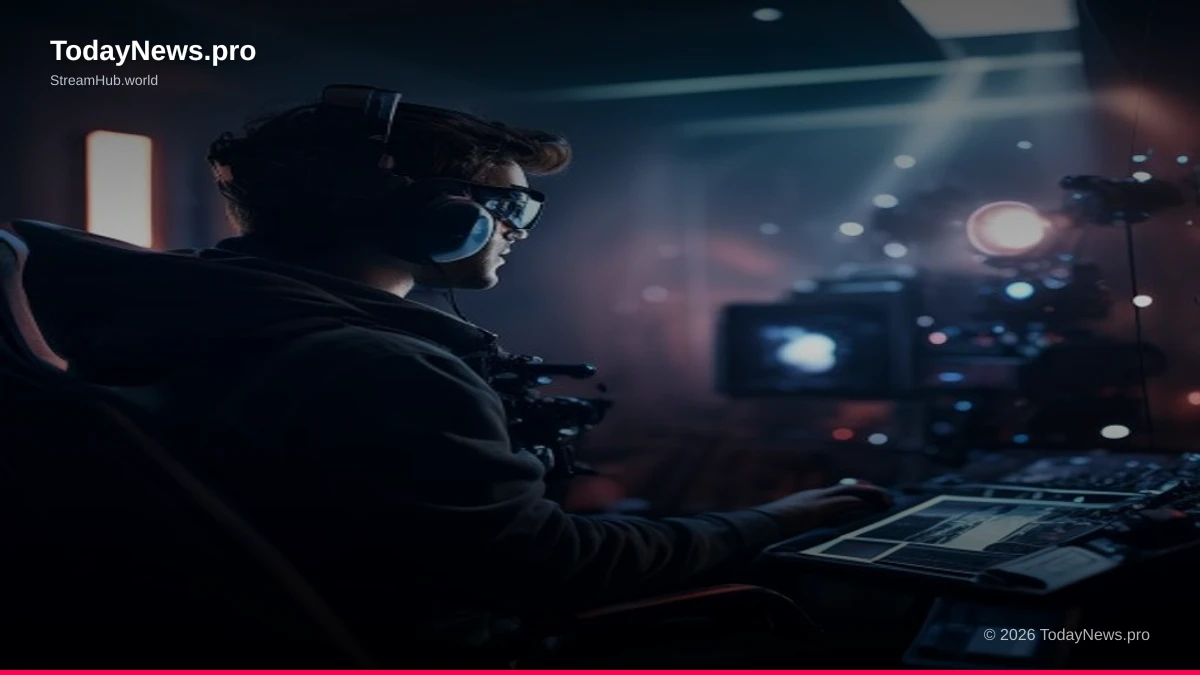
By 2027, the global audience for interactive entertainment is projected to reach over 3.5 billion individuals, a staggering figure that signals a profound shift in how we consume and engage with digital narratives, with cinema at the forefront of this transformation.
The Shifting Sands of Cinema: From Passive Viewing to Active Participation
For over a century, the cinematic experience has been largely a one-way street. Audiences have sat in darkened theaters or at home, passively absorbing stories crafted by filmmakers. This paradigm, while responsible for some of the greatest artistic achievements in human history, is now undergoing a seismic disruption. The rise of digital technologies and evolving audience expectations are coalescing to usher in an era where viewers are no longer just spectators but active participants, collaborators in the unfolding narrative. This transition is not merely an incremental change; it represents a fundamental redefinition of what it means to watch a movie.
The seeds of this revolution have been sown over decades. Early experiments in audience participation, from drive-in theaters with sing-alongs to theatrical productions that broke the fourth wall, hinted at a desire for deeper engagement. However, it was the advent of digital interactivity, particularly in video games, that truly demonstrated the potential for immersive storytelling where individual choices shape the experience. Now, these advancements are bleeding into the realm of film, promising a future where the line between viewer and creator blurs significantly.
This evolution is driven by a generation that has grown up with interactive media. For millennials and Gen Z, the ability to influence outcomes, customize experiences, and feel a sense of agency is not a novelty but an expectation. This demographic shift is compelling content creators and distributors to explore new formats that cater to these ingrained preferences. The traditional linear narrative, while enduring, is increasingly being supplemented, and perhaps eventually superseded, by experiences that demand active input from the audience.
The Evolution of Audience Expectations
The modern consumer is accustomed to personalization and control. From curated streaming playlists to interactive social media feeds, individuals are used to shaping their digital environment. This expectation naturally extends to entertainment. The passive consumption model of traditional cinema feels increasingly anachronistic to a generation that values agency and co-creation.
Consider the success of video games. Titles like "The Last of Us" or "Red Dead Redemption" offer deeply engaging narratives that are profoundly influenced by player decisions. This level of immersion, where players feel their actions have tangible consequences within the story world, sets a high bar for what audiences now expect from narrative experiences across all media. They are not content with simply observing; they want to feel involved.
This desire for engagement is not limited to younger demographics. As interactive technologies become more accessible and sophisticated, older audiences are also beginning to appreciate the added depth and replayability that interactive storytelling can offer. The appeal lies in the promise of a unique experience, tailored to individual choices and preferences.
The Blurring Lines Between Media
The boundaries between different forms of media are becoming increasingly porous. The success of transmedia storytelling, where a narrative unfolds across multiple platforms like films, TV shows, games, and comics, highlights a growing audience appetite for interconnected and expansive story worlds. Interactive cinema is a natural extension of this trend, bringing the engagement of gaming directly into the film viewing experience.
Streaming platforms, in particular, are proving to be fertile ground for experimentation. Their data-rich environments allow for sophisticated tracking of viewer choices and preferences, enabling personalized narrative branching and dynamic content delivery. This technological infrastructure is crucial for scaling interactive storytelling beyond niche experiments.
Furthermore, the convergence of virtual reality (VR) and augmented reality (AR) technologies with filmmaking is poised to accelerate this shift. As these immersive mediums mature, the potential for truly interactive cinematic experiences, where viewers can not only make choices but also physically inhabit the story world, will become increasingly realized.
The Technological Underpinnings: AI, Game Engines, and Streamings Evolution
The burgeoning field of interactive storytelling in cinema is not a sudden conjuration but the product of converging technological advancements. The sophisticated game engines that power today's visually stunning and complex video games are now being adapted for filmmaking. Artificial intelligence (AI) is emerging as a critical tool for generating dynamic content, personalizing narratives, and even assisting in the creative process. Coupled with the robust infrastructure of modern streaming services, these elements are creating a perfect storm for innovation.
Game engines like Unreal Engine and Unity, once primarily the domain of game developers, are now being utilized by filmmakers to create rich, interactive environments. These engines offer sophisticated rendering capabilities, physics simulations, and the flexibility to handle branching narratives and player input. Their adoption signifies a move towards a more dynamic and malleable form of cinematic production.
AI's role is multifaceted. It can be used to generate vast amounts of narrative content, adapt storylines in real-time based on viewer choices, and even create personalized character interactions. Machine learning algorithms can analyze viewer behavior to understand preferences and dynamically adjust the pacing or emotional tone of a story. This opens up possibilities for experiences that feel uniquely tailored to each individual viewer.
The Power of Game Engines in Film Production
Game engines have democratized high-fidelity visual creation. What once required massive studio budgets and specialized hardware can now be achieved with more accessible tools. For interactive cinema, this means filmmakers can build virtual worlds that are responsive to user input, allowing for a seamless transition between cinematic moments and interactive sequences.
The ability of these engines to render complex 3D environments in real-time is a game-changer. It allows for a level of visual fidelity that can rival traditional CGI, but with the added benefit of interactivity. This means a character's dialogue choice could lead to a branching path within a meticulously crafted, dynamic environment.
Furthermore, game engines facilitate rapid prototyping and iteration. Filmmakers can quickly test different narrative branches and interactive elements, refining the user experience before committing to full production. This agile development approach is essential for a medium that is still finding its footing.
Artificial Intelligence as a Narrative Co-Pilot
AI is no longer just about automating tasks; it's becoming a creative partner. In interactive storytelling, AI can be employed to manage the complexity of branching narratives. Instead of manually scripting every possible outcome, AI can dynamically generate plot points, dialogue, and even character reactions based on a set of parameters and viewer choices.
This dynamic generation is key to creating a sense of genuine agency for the viewer. When choices feel like they have authentic, emergent consequences, the interactive experience becomes far more compelling. AI can ensure that these consequences feel natural and consistent within the story's logic.
Beyond narrative generation, AI can also personalize the viewing experience on a granular level. It can adapt the difficulty of puzzles, the tone of dialogue, or even the focus of the camera based on the viewer's perceived engagement and preferences. This level of personalization was previously unimaginable in traditional cinema.
Streaming Platforms: The Distribution Backbone
The infrastructure of major streaming services is crucial for the widespread adoption of interactive cinema. These platforms have the bandwidth, the user base, and the technological capability to deliver complex, data-intensive interactive content to millions of households simultaneously.
Their ability to track user data is also invaluable. By analyzing how viewers interact with an experience, platforms can gather insights that inform future content development and personalize recommendations. This data feedback loop is essential for refining the interactive storytelling model.
Moreover, streaming services are actively investing in interactive content. Their willingness to experiment and fund these projects is a powerful catalyst for innovation. They see interactive storytelling not just as a niche offering but as a future driver of subscriber engagement and retention.
| Technology | Description | Impact on Interactive Storytelling |
|---|---|---|
| Game Engines (e.g., Unreal Engine, Unity) | Real-time 3D creation platforms for games, now used in film. | Enables creation of dynamic, responsive virtual environments and characters. Facilitates complex visual rendering and interactive sequences. |
| Artificial Intelligence (AI) / Machine Learning (ML) | Algorithms that can learn, adapt, and generate content. | Powers dynamic narrative branching, personalized content generation, adaptive difficulty, and real-time story adjustments based on viewer input. |
| Cloud Computing & High-Speed Internet | Scalable computing resources and reliable data transfer. | Essential for delivering interactive experiences that require significant processing power and real-time data streams to a global audience. |
| Advanced User Interface/User Experience (UI/UX) Design | Designing intuitive and engaging ways for users to interact with digital content. | Crucial for making the interactive elements easy to understand and use, ensuring a seamless and immersive storytelling experience. |
Early Adopters and Emerging Trends: Black Mirror: Bandersnatch and Beyond
While the concept of interactive storytelling in film is gaining momentum, its modern iteration truly captured public imagination with Netflix's "Black Mirror: Bandersnatch" in 2018. This ambitious project allowed viewers to make crucial decisions for the protagonist, leading to multiple branching storylines and endings. "Bandersnatch" served as a high-profile proof-of-concept, demonstrating the technical feasibility and audience appetite for this new form of cinematic engagement.
The success of "Bandersnatch" was significant. It garnered critical attention and sparked widespread discussion about the future of filmmaking. While not without its critics, who pointed to some narrative frustrations and technical limitations, its impact was undeniable. It opened the floodgates for further experimentation, encouraging studios and independent creators alike to explore interactive narratives.
Since "Bandersnatch," several other projects have emerged, each pushing the boundaries in different ways. These include interactive documentaries, short films with viewer-controlled segments, and even animated series that incorporate choices. The trend is moving towards more nuanced and integrated forms of interactivity, where choices feel less like binary decisions and more like organic contributions to the narrative flow.
The Bandersnatch Phenomenon
"Black Mirror: Bandersnatch" was a watershed moment. It presented viewers with choices ranging from trivial (what cereal to eat) to existential (whether to commit a crime), all presented through simple on-screen prompts. The experience was designed to be recursive, with some branches even leading viewers to discover the meta-narrative of the film's creation. This self-referential aspect added another layer of intrigue.
The technical implementation was sophisticated, requiring a vast network of video files and decision trees to be managed seamlessly by Netflix's streaming infrastructure. The goal was to make the viewing experience as fluid as possible, minimizing disruption when choices were presented. While occasional loading times or minor glitches were noted, the overall execution was impressive for its time.
The critical reception was mixed but largely positive regarding its innovation. Many praised the bold experimentation, while others found the interactive elements sometimes detracted from the narrative's emotional impact or led to frustrating loops. Nevertheless, it undeniably put interactive cinema on the map for a mainstream audience.
Beyond Bandersnatch: Diversifying Interactive Formats
Following "Bandersnatch," other platforms and creators began to explore interactive storytelling. Amazon Prime Video released "The Marvelous Mrs. Maisel: Squabbling," an interactive episode that allowed viewers to control the camera and choose different perspectives within scenes. This demonstrated an alternative approach, focusing on stylistic and observational interactivity rather than plot-driving decisions.
Interactive documentaries have also seen a rise, offering viewers the chance to explore different facets of a subject or choose which characters' stories to follow. These formats leverage interactivity to provide a more comprehensive and personalized understanding of complex real-world issues. Platforms like Oculus TV have also experimented with interactive VR narratives.
The trend is towards greater integration. Instead of distinct "choose your own adventure" moments, future interactive films will likely feature more subtle forms of influence. This could include influencing a character's mood, subtly guiding a conversation, or even affecting the visual style of a scene based on viewer input. The aim is to make interactivity feel like an organic extension of the storytelling, rather than an interruption.
The Viewer as Creator: Mechanisms of Interactivity in Film
The core of interactive storytelling lies in empowering the viewer to influence the narrative. This empowerment manifests in various mechanisms, each offering a different level of control and impact. By 2027, we can expect these mechanisms to become more sophisticated and seamlessly integrated into the cinematic experience, moving beyond simple binary choices to more nuanced forms of influence.
The most direct form of interactivity involves explicit decision-making. Viewers are presented with prompts, typically at key junctures, and must select an option to determine the story's progression. This can range from choosing a character's action to deciding on a dialogue response. The consequence of these choices can lead to entirely different plot branches, character relationships, and ultimately, different endings.
Beyond explicit choices, there are more subtle forms of interaction. These might include influencing character emotions through pacing, guiding the camera's focus, or even affecting the visual style of a scene based on ambient environmental cues or a viewer's perceived engagement. The goal is to make the viewer feel like a curator of their own experience, even if they aren't directly dictating plot points.
Branching Narratives and Multiple Endings
This is the most common and widely understood form of interactive storytelling. Based on viewer choices, the narrative diverges down different paths, leading to a variety of outcomes. The complexity can range from simple two-way branches to intricate webs of interconnected plotlines, each requiring careful scripting and management.
The challenge here is not just creating the branches but ensuring they are compelling and lead to satisfying conclusions. A poorly designed branch can feel arbitrary or inconsequential. By 2027, AI will play a significant role in managing these complex branching structures, ensuring narrative coherence and emergent storytelling that feels organic rather than pre-determined.
Multiple endings are the natural consequence of branching narratives. This not only enhances replayability but also allows filmmakers to explore different thematic possibilities and character arcs. The anticipation of discovering these various conclusions can be a powerful motivator for viewers to re-engage with the content.
Real-time Adaptation and Personalization
This is where AI truly shines in interactive cinema. Instead of pre-scripted branches, the narrative can adapt in real-time based on a viewer's inferred preferences, emotional state, or even their interaction patterns. This could mean adjusting the pacing of a scene, the intensity of a musical score, or the dialogue of a supporting character to better suit the individual viewer.
For example, if a viewer consistently chooses cautious actions, the AI might subtly steer the narrative towards more strategic or defensive plot developments. If a viewer seems to be enjoying suspenseful moments, the AI could inject more tension into subsequent scenes. This creates a highly personalized and responsive storytelling experience.
This level of real-time adaptation also extends to character interactions. An AI could allow characters to remember past viewer choices and react to them in nuanced ways, creating a more believable and immersive world. This is a significant step beyond the static character interactions found in traditional film.
Environmental and Observational Interactivity
This form of interactivity focuses on the viewer's relationship with the environment or their observational choices within a scene. For instance, a viewer might be able to:
- Control the camera's focus or perspective to discover hidden details.
- Influence the mood or lighting of a scene through subtle environmental cues.
- Uncover lore or backstory by interacting with objects in the environment.
- Choose which character's perspective to follow during a complex event.
This approach emphasizes exploration and discovery rather than direct plot manipulation. It allows viewers to engage with the narrative world on their own terms, rewarding curiosity and attention to detail. This is particularly effective in genres that rely on atmosphere and world-building.
The Economic and Creative Implications: New Revenue Streams and Narrative Frontiers
The rise of interactive storytelling in cinema presents a dual-edged sword of economic opportunity and creative challenge. For studios and distributors, it promises new avenues for revenue generation and deeper audience engagement. For creators, it opens up unexplored narrative territories and a more collaborative relationship with their audience, albeit with increased complexity.
Economically, interactive content can command premium pricing. The unique, personalized experience offered by these films can justify higher subscription tiers or individual purchase costs. Furthermore, the increased replayability inherent in branching narratives encourages multiple viewings, boosting overall content consumption and associated advertising or subscription revenue.
Creatively, interactive cinema liberates storytellers from the confines of a single, linear narrative. They can explore multiple character arcs, thematic variations, and plot divergences, offering a richer and more complex tapestry of storytelling. This allows for a deeper exploration of character motivations and the consequences of actions, leading to more resonant and thought-provoking narratives.
New Revenue Models and Monetization Strategies
Interactive content can unlock new monetization opportunities beyond traditional box office or subscription models. Consider:
- Premium Access: Offering exclusive interactive features or early access to new interactive films for higher subscription tiers.
- In-Content Purchases: While controversial, some models might allow for optional in-content purchases, such as unlocking hint systems for puzzles or cosmetic customizations within the interactive world.
- Data Monetization: The rich data generated by viewer interactions can be anonymized and aggregated to provide valuable market insights for advertisers and studios, leading to new forms of data-driven revenue.
- Interactive Events: Live, interactive film screenings where audiences collectively make decisions in real-time, creating a shared, dynamic event.
These new models can diversify a studio's revenue streams and create more resilient business models in an increasingly competitive entertainment landscape.
Expanding the Creative Palette for Storytellers
Interactive storytelling allows filmmakers to move beyond simply telling a story to crafting an experience. This opens up a vast new creative palette:
- Deeper Character Exploration: Viewers can actively engage with characters, influencing their development and relationships, leading to a more profound connection.
- Thematic Nuance: Branching narratives allow for the exploration of complex themes from multiple angles, showcasing the consequences of different choices and ethical dilemmas.
- World-Building: Interactive elements can encourage viewers to explore the intricacies of a story world, uncovering lore, history, and hidden details, enhancing immersion.
- Genre Innovation: The framework of interactive storytelling lends itself to new genre fusions, blending elements of film, gaming, and even educational content.
The challenge for creators lies in managing this increased complexity while maintaining narrative cohesion and emotional impact. It requires a shift in traditional filmmaking workflows and a willingness to embrace new storytelling paradigms.
The Rise of the Viewer-Creator Economy
As interactive storytelling matures, we may see the emergence of a "viewer-creator" economy. Platforms could allow advanced viewers to design and share their own interactive film segments or mods, which could then be integrated into official releases or gain traction within fan communities. This mirrors trends seen in the gaming industry with user-generated content.
This democratization of content creation could lead to an explosion of diverse and niche interactive narratives. It fosters a more engaged and participatory audience, transforming passive consumers into active contributors to the creative ecosystem. The boundary between viewer, gamer, and creator will continue to blur.
Challenges and Ethical Considerations: Navigating the Interactive Labyrinth
While the promise of interactive storytelling in cinema is immense, its rapid evolution is not without significant challenges and ethical considerations. As viewers gain more control, questions arise about narrative integrity, potential for manipulation, and the equitable access to these complex new formats. Navigating this labyrinth requires careful thought and proactive solutions from creators, platforms, and regulators.
One of the primary challenges is maintaining narrative coherence and artistic intent when the story can diverge into countless paths. Filmmakers must strike a delicate balance between offering meaningful choices and preserving their core vision. The risk of choices feeling arbitrary or leading to nonsensical outcomes is ever-present.
Ethically, concerns are mounting regarding the potential for manipulative design. If interactive films are used to subtly influence viewer behavior or opinions, especially in sensitive contexts, the line between entertainment and propaganda could become dangerously blurred. Transparency and viewer agency are paramount.
Maintaining Narrative Integrity and Artistic Vision
The sheer number of potential story paths in a highly interactive film can be daunting for creators. How does a filmmaker ensure that the story still resonates emotionally and thematically when viewers can steer it in drastically different directions? This requires meticulous planning, robust narrative design, and potentially AI assistance to manage plot consistency.
There's also the risk of the "game over" effect, where viewers feel compelled to explore every possible path to see all content, turning the experience into a chore rather than a pleasure. Designing for meaningful replayability, where each path offers genuine insight, is crucial. The artistic vision must remain strong enough to guide the experience, even with viewer input.
Narrative theory, which has long studied how stories are constructed and understood, is now being re-examined and expanded to encompass these dynamic, multi-linear forms of storytelling. Understanding how audiences process choice and consequence in interactive media is key to crafting effective experiences.
Ethical Concerns: Manipulation and Bias
The ability to tailor experiences in real-time raises ethical questions. Could interactive films be designed to exploit psychological vulnerabilities, encouraging addictive behavior or subtly promoting certain ideologies? The data collected on viewer choices could also be used in ways that are not transparent to the user.
Furthermore, if AI is used to generate or adapt narratives, there's a risk of embedding existing biases into the storytelling. This could perpetuate harmful stereotypes or present skewed realities. Developers must actively work to identify and mitigate bias in their AI systems and content.
Transparency is key. Audiences should be aware of how their choices are affecting the narrative and what data is being collected. Clear ethical guidelines for the development and distribution of interactive content will be essential as the medium matures.
Accessibility and the Digital Divide
Interactive cinema, by its very nature, requires a certain level of technological access. High-speed internet, compatible devices, and a degree of digital literacy are often prerequisites. This raises concerns about exacerbating the digital divide, potentially excluding significant portions of the population from experiencing these new narrative forms.
Ensuring that interactive films are accessible to people with disabilities is also a critical challenge. This includes providing alternative input methods, customizable display options, and clear audio descriptions. The development of universal design principles for interactive media will be vital.
By 2027, the industry will need to address these accessibility issues proactively. Solutions might include offering different tiers of interactivity, developing offline modes for certain experiences, and ensuring broad compatibility with assistive technologies. The goal should be to make interactive storytelling a broadly inclusive medium.
The Future Landscape: By 2027, Where Will Interactive Storytelling Take Us?
Looking ahead to 2027, interactive storytelling in cinema is poised to move from experimental novelty to a mainstream, integral part of the entertainment landscape. The technology will become more refined, the creative approaches more sophisticated, and the audience's expectations more deeply ingrained. We are on the cusp of a cinematic revolution where the viewer is no longer just a passive observer but an active participant in the unfolding drama.
By 2027, expect to see a proliferation of interactive content across all genres and platforms. Streaming services will heavily invest in these experiences, recognizing their potential to drive subscriber loyalty and attract new audiences. The technical hurdles that currently limit complexity will be significantly reduced, allowing for more intricate and seamless interactive narratives.
The role of AI in shaping these experiences will be profound. It will not only facilitate dynamic branching but also enable hyper-personalization, where each viewing is a unique journey. This could lead to a future where movies feel less like mass-produced products and more like bespoke creations tailored to the individual.
Ubiquitous Integration and Genre Expansion
Interactive storytelling will likely become a standard feature on major streaming platforms, not just a special event. This means audiences will encounter interactive films, series, and even short-form content with regular frequency. The technology will be more robust, offering smoother transitions and fewer technical glitches, making the experience more immersive.
Beyond traditional drama and sci-fi, expect to see interactive storytelling flourish in genres previously thought incompatible. Imagine interactive historical documentaries that allow you to explore different eras through the eyes of those who lived them, or interactive comedies where audience choices dictate the comedic beats. Even genres like horror could leverage interactivity to heighten suspense and player-driven scares.
The rise of VR and AR will also play a significant role, offering entirely new dimensions for interactive cinematic experiences. Viewers might not just make choices but physically inhabit the story world, interacting with characters and environments in ways that blur the lines between film and virtual reality gaming.
AI-Powered Personalization and Dynamic Narratives
By 2027, AI will be indispensable in powering interactive cinema. It will be used not only to manage complex branching narratives but also to analyze viewer behavior in real-time and adapt the story accordingly. This hyper-personalization will mean that no two viewings of the same "film" will be identical.
AI could dynamically adjust character motivations, plot twists, or even the emotional tone of scenes based on how the viewer is responding. This creates a sense of a truly living, breathing narrative that evolves with the audience's engagement. The potential for emergent storytelling, where unforeseen narrative developments arise from the interaction of AI and viewer choices, is immense.
This also opens up possibilities for adaptive difficulty in narrative challenges or puzzles embedded within the film, ensuring that the experience remains engaging and appropriately challenging for each individual. AI advancements are rapidly pushing the boundaries of what's possible in content generation and personalization.
The Democratization of Interactive Creation
While major studios will continue to lead the charge, the tools for creating interactive content will become more accessible. This democratization will empower independent filmmakers and even passionate fans to create their own interactive narratives, fostering a diverse and vibrant ecosystem of user-generated content. This mirrors the evolution of independent filmmaking and self-publishing.
Platforms may emerge that provide intuitive interfaces for building interactive stories, allowing for greater creative freedom without requiring extensive technical expertise. This could lead to a surge in niche interactive content catering to specific interests and communities. The "viewer-creator" economy will likely mature, with opportunities for creators to monetize their interactive works.
Ultimately, by 2027, interactive storytelling in cinema will represent a significant evolution in how we engage with narratives. It will offer more agency, deeper immersion, and a more personalized entertainment experience, fundamentally altering our relationship with the silver screen. The future of film is not just about watching; it's about participating.