

 Roger Evans
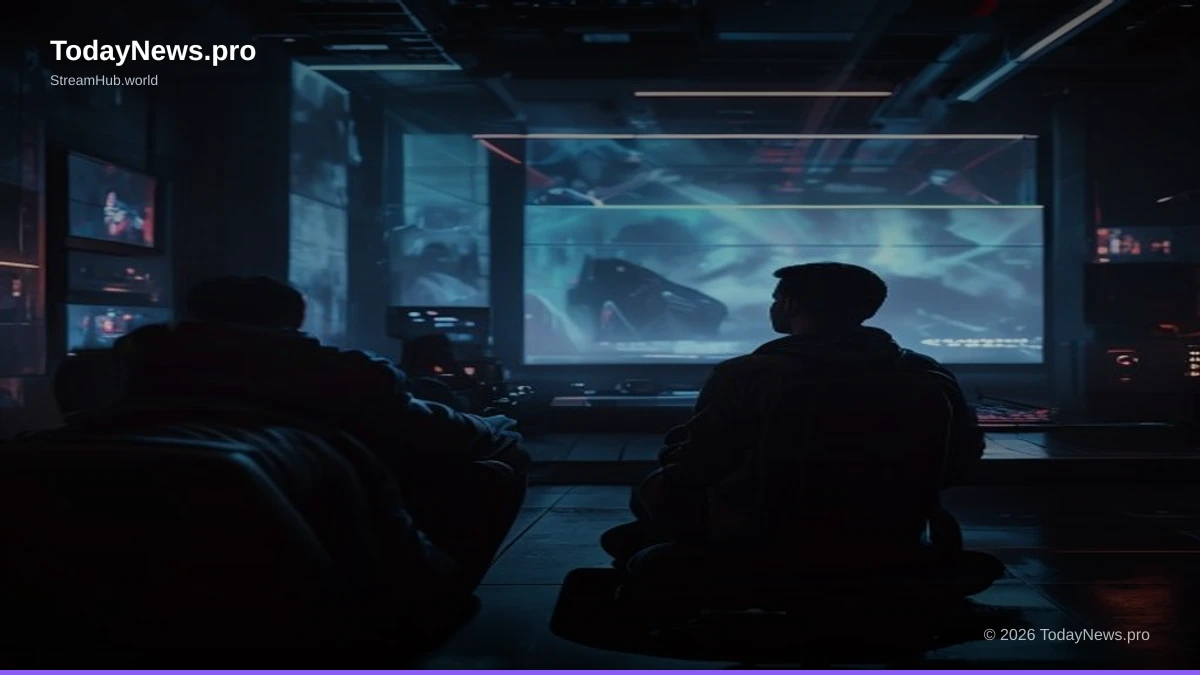
⏱ 15 min
The global virtual reality market is projected to reach $57.5 billion by 2027, signaling a seismic shift in how we consume and interact with digital content, with storytelling at its forefront.
The Shifting Sands of Spectacle: Why Immersive Storytelling is the Next Frontier
For decades, cinema and television have relied on the power of a framed narrative, a window through which audiences observe stories unfold. This passive consumption, while deeply engaging, has reached a plateau of innovation within its traditional confines. The advent of powerful new technologies, however, is dismantling that window, offering instead a doorway into worlds that audiences can not only see but also inhabit. Immersive storytelling, in its various forms, represents the natural and inevitable evolution of how we experience narratives, moving from mere observation to active participation and profound sensory engagement. This shift is not merely about technological novelty; it's about tapping into a fundamental human desire to be present, to explore, and to connect with stories on a deeper, more visceral level. The future of film and television lies beyond the screen, in experiences that transcend passive viewing and create lasting emotional and intellectual resonance. The very definition of "watching a movie" is undergoing a radical transformation. Gone are the days of simply sitting in a darkened room, passively absorbing a pre-determined narrative arc. The digital age, fueled by exponential growth in computing power, sophisticated rendering engines, and increasingly accessible hardware, has ushered in an era where audiences can step *inside* the story. This is not a hypothetical future; it is a rapidly unfolding reality that is already reshaping the entertainment landscape. From virtual reality's ability to transport viewers to alien planets to augmented reality's overlay of digital characters onto our physical world, the tools for creating truly immersive narratives are becoming more powerful and widespread. This article delves into the groundbreaking technologies, the evolving creative processes, and the profound implications of this paradigm shift for the future of movies and television.The Appetite for Experience
Audiences are no longer content with simply being told a story. There is a growing hunger for *experiences*. This is evident in the booming popularity of escape rooms, interactive theatre, and even themed amusement park attractions that offer narrative immersion. Media producers are recognizing this shift and are actively exploring ways to translate this desire for experiential engagement into their film and television productions. The economics are also shifting, with the potential for higher engagement leading to new monetization models beyond traditional ticket sales and ad revenue. The "experience economy" is no longer a niche concept; it's a driving force shaping consumer behavior across all entertainment sectors. The allure of immersion lies in its ability to bypass intellectual filters and speak directly to our emotions and senses. When we feel physically present in a narrative space, our emotional response is amplified. This is the promise of immersive storytelling: to make us feel what the characters feel, to understand their world not just intellectually, but viscerally. This deeper connection fosters greater empathy and a more profound understanding of the human condition, which is, after all, the enduring core of all great storytelling.From Flat Screens to Full Immersion: The Technological Evolution
The journey towards immersive storytelling has been a long and winding road, paved with technological breakthroughs that progressively chipped away at the limitations of the traditional screen. Early attempts at breaking the two-dimensional barrier were rudimentary, but they laid the groundwork for what we see today. The evolution has been characterized by a relentless pursuit of greater fidelity, interactivity, and sensory input, moving from simple visual enhancements to complex, multi-sensory experiences. The advent of color television, stereoscopic 3D in cinema, and high-definition displays were all significant steps in enhancing the visual impact of storytelling. However, these advancements remained within the confines of the framed screen. True immersion requires breaking free from that frame, allowing the viewer to occupy the narrative space. This transition has been accelerated by the convergence of several key technological trends.The Rise of Real-Time Rendering
The ability to generate complex, photorealistic environments and characters in real-time has been a game-changer. Advancements in game engines like Unreal Engine and Unity have provided filmmakers and storytellers with powerful tools previously only available in high-end visual effects pipelines. These engines allow for dynamic lighting, sophisticated physics simulations, and intricate character animation that can be manipulated and experienced interactively. This shift from pre-rendered sequences to real-time generation is fundamental to creating worlds that feel alive and responsive.Ubiquitous Computing and Connectivity
The proliferation of powerful, connected devices in our pockets and homes – smartphones, tablets, smartwatches – has created a rich ecosystem for delivering and interacting with digital content. These devices act as portals, enabling experiences that blend the digital and physical realms. Furthermore, the expansion of high-speed internet (5G and beyond) is crucial for delivering the massive data streams required for high-fidelity immersive experiences, reducing latency and enabling seamless interaction.Motion Capture and Performance Capture
The ability to capture human movement and facial expressions with increasing accuracy has been vital for creating believable digital characters and avatars. Advanced motion capture suits and facial capture rigs allow actors to perform nuanced roles that are then translated into digital representations. This technology bridges the gap between human performance and digital creation, ensuring that the emotional core of a performance is not lost in translation to an immersive environment.| Milestone | Year | Impact on Immersion |
|---|---|---|
| Stereoscopic 3D Films | Early 20th Century / Resurgence ~2000s | Enhanced depth perception, creating a sense of presence. |
| First CGI Feature Films | Toy Story (1995) | Enabled creation of entirely digital worlds and characters. |
| Consumer VR Headsets | Oculus Rift (2012 / Kickstarter) | Made immersive virtual environments accessible to the public. |
| Advanced Game Engines (Unreal, Unity) | Ongoing Development | Facilitated real-time rendering and interactive content creation. |
| 5G Network Rollout | Late 2010s - Present | Enabling low-latency, high-bandwidth immersive streaming. |
Virtual Reality: The Ultimate Escape Hatch
Virtual Reality (VR) remains the most potent technology for achieving complete narrative immersion. By strapping on a headset, users are transported to a fully synthesized digital environment, effectively shutting out the real world. This complete sensory isolation allows for unparalleled control over the viewer's perception and emotional state. VR storytelling is not just about watching a movie; it's about *being* in the movie. The potential of VR for storytelling is immense. Imagine experiencing the gritty streets of a cyberpunk city from the perspective of its inhabitants, feeling the rush of wind as you soar through a fantasy landscape, or witnessing historical events as if you were a direct observer. VR films and experiences can leverage the spatial nature of the medium to create environments that breathe and react, offering multiple paths and perspectives within a single narrative.Narrative Structures in VR
Traditional linear storytelling is often ill-suited to VR. Instead, VR narratives tend to be more experiential, allowing viewers to explore environments, interact with objects, and make choices that influence the unfolding story. This can range from passive 360-degree films where the viewer can simply look around, to fully interactive experiences where the viewer's agency directly impacts the plot. Developers are experimenting with various narrative techniques, including environmental storytelling, branching narratives, and emergent gameplay, to create compelling VR experiences.The Sensory Canvas
Beyond visuals, VR is increasingly incorporating other sensory inputs to deepen immersion. Haptic feedback suits and gloves can simulate touch, allowing users to feel the texture of objects or the impact of an event. Spatial audio is crucial, ensuring that sounds originate from specific points in the virtual environment, enhancing realism and spatial awareness. Future advancements may even incorporate scent and temperature simulation to further blur the lines between the virtual and the real."Virtual Reality offers a unique opportunity to recalibrate the audience's relationship with narrative. It shifts them from spectators to participants, imbuing them with a sense of agency that traditional media can only hint at. The challenge is to harness this power responsibly and creatively."
The development of VR content requires a fundamentally different approach to filmmaking and game design. Directors must consider the audience's freedom of movement and gaze, leading to new approaches in cinematography, blocking, and pacing. The goal is to guide the user's attention without restricting their exploration, a delicate balance that defines successful VR storytelling.
— Dr. Anya Sharma, Professor of Digital Media Studies
Augmented Reality: Blurring the Lines Between Worlds
While VR fully replaces the real world with a digital one, Augmented Reality (AR) overlays digital information and imagery onto our physical surroundings. This creates a hybrid reality where digital elements interact with and enhance our perception of the real world. AR storytelling offers a more accessible entry point for many, often utilizing devices people already own, like smartphones and tablets. AR can transform everyday environments into narrative playgrounds. Imagine a historical tour where digital ghosts of past figures appear on the street, recounting their stories, or a children's book where characters leap off the page to interact with the reader in their own living room. The magic of AR lies in its ability to seamlessly integrate digital narratives into our lived experiences, making them more engaging and informative.AR in Location-Based Entertainment
Theme parks and museums are increasingly leveraging AR to enhance visitor experiences. These applications can overlay historical context onto ancient ruins, bring animated characters to life in themed lands, or provide interactive games that are tied to specific locations. This creates a dynamic and personalized narrative journey for each visitor, transforming passive observation into active discovery.The Future of AR Devices
While smartphones are currently the primary AR interface, the development of lightweight, stylish AR glasses promises to make this technology even more pervasive. These glasses will allow for a truly hands-free, always-on AR experience, where digital information and narrative elements can be seamlessly integrated into our field of vision throughout the day. This has profound implications for how we learn, work, and, crucially, how we experience stories.80%
of consumers believe AR can make brands more engaging
200+
million
2025
projected AR users globally
Interactive Narratives: The Audience as Co-Creator
The most profound aspect of immersive storytelling is the shift in the audience's role, from passive observer to active participant, and in some cases, co-creator. Interactive narratives empower the audience to make choices that shape the story's direction, leading to a personalized and unique experience for each individual. This blurs the lines between watching a film and playing a game, creating a new hybrid entertainment form. The concept of interactivity has evolved significantly from early choose-your-own-adventure books. Today, sophisticated algorithms, branching narrative structures, and player agency are employed to create dynamic and responsive storytelling. This allows for a far greater degree of emotional investment, as audiences feel a direct connection to the consequences of their decisions.Branching Narratives and Player Agency
In interactive films and VR experiences, audiences often face moral dilemmas, strategic choices, or exploratory actions that lead to different plot developments, character interactions, and ultimately, multiple endings. This level of agency fosters a deeper sense of engagement and replayability, as audiences are motivated to explore all the potential outcomes of a story.AI-Driven Storytelling
Artificial intelligence is poised to play a significant role in the future of interactive narratives. AI can be used to generate dynamic dialogue, adapt plot points in real-time based on player actions, and even create emergent storylines that were not explicitly programmed. This allows for a level of complexity and responsiveness that is difficult to achieve with traditional, pre-scripted narratives. The commercial success of games like "Detroit: Become Human" and "Black Mirror: Bandersnatch" demonstrates a strong market appetite for interactive storytelling. These experiences offer a sense of ownership over the narrative that traditional media cannot replicate, making them incredibly compelling.The Sensory Symphony: Beyond Sight and Sound
True immersion extends beyond the visual and auditory. The most compelling immersive narratives will engage multiple senses, creating a holistic experience that mirrors our perception of the real world. This involves a careful orchestration of sensory inputs to evoke specific emotions, heighten realism, and deepen the narrative impact. While sight and sound are the primary senses engaged in traditional media, immersive technologies are opening doors to incorporate touch, smell, and even taste. This multi-sensory approach is not merely about novelty; it's about leveraging the full spectrum of human perception to create more profound and memorable storytelling.Haptics: The Sense of Touch
Haptic feedback technology, ranging from simple vibrations in controllers to complex full-body suits, allows users to "feel" virtual environments. This can range from the subtle tremor of an approaching vehicle to the visceral impact of an explosion. The development of more sophisticated haptic systems promises to translate textures, pressures, and temperatures, adding a crucial layer of realism to immersive experiences.Olfactory and Gustatory Stimulation
The use of scent and taste in immersive experiences is a more nascent but incredibly promising area. Imagine smelling the salty air of a pirate ship or the aroma of a bustling marketplace in a historical drama. While challenging to implement consistently, the potential for olfactory and gustatory stimulation to evoke powerful memories and emotions is immense. Companies are experimenting with scent dispensers that can be triggered by specific narrative cues, aiming to add another dimension to the storytelling. The goal of multi-sensory storytelling is to create an experience so rich and believable that the audience forgets they are engaging with a digital simulation. By engaging more of our senses, we can achieve a deeper emotional connection to the characters and their world, making the story's impact far more enduring.Challenges and Opportunities in the Immersive Landscape
Despite the exhilarating potential, the path to widespread immersive storytelling is not without its hurdles. Technological limitations, high production costs, and the need for new creative skillsets present significant challenges. However, these challenges also represent immense opportunities for innovation and growth. The development of compelling immersive content requires a shift in creative thinking. Filmmakers, writers, and designers must learn to work with new tools and paradigms. This involves understanding spatial storytelling, user agency, and the intricacies of designing for multi-sensory experiences. Educational institutions and industry bodies are beginning to offer training and resources to equip creators with these new skills.High Production Costs and Accessibility
Creating high-fidelity VR and AR experiences can be prohibitively expensive, requiring specialized hardware, software, and a team of skilled professionals. This has historically limited the production of immersive content to larger studios and well-funded projects. However, as the technology matures and becomes more accessible, production costs are expected to decrease, opening the door for a wider range of creators and stories.The Need for New Creative Skillsets
The traditional filmmaking pipeline is insufficient for immersive content creation. New roles such as VR/AR designers, interactive narrative designers, spatial audio engineers, and haptic feedback specialists are emerging. Bridging the gap between established creative industries and these new disciplines is crucial for the continued development of the field."The democratization of immersive content creation is key. As tools become more intuitive and accessible, we'll see an explosion of diverse voices and innovative stories emerge from unexpected places, much like the early days of independent filmmaking."
The opportunities lie in forging new business models, developing novel distribution platforms, and cultivating a new generation of storytellers who are fluent in the language of immersion. The potential to connect with audiences in entirely new ways is a powerful incentive for overcoming these initial obstacles.
— Ben Carter, Lead XR Developer
The Ethical Compass of Immersive Worlds
As immersive storytelling becomes more sophisticated and pervasive, it is essential to consider the ethical implications. The power to create deeply convincing simulated realities raises questions about user well-being, data privacy, and the potential for manipulation. A proactive approach to ethical considerations is paramount to ensuring that these technologies are used responsibly. The intensity of immersive experiences can have a profound psychological impact. Developers must be mindful of potential issues such as motion sickness, desensitization to violence, and the blurring of lines between reality and simulation. Careful design and clear disclaimers are necessary to mitigate these risks.Privacy and Data Security
Immersive platforms often collect vast amounts of user data, including biometric information, behavioral patterns, and environmental data. Ensuring the privacy and security of this sensitive information is critical. Transparent data policies and robust security measures will be essential for building trust with users.The Potential for Manipulation and Addiction
The highly engaging nature of immersive experiences could lead to issues of addiction or susceptibility to manipulation. Creators have a responsibility to design experiences that promote well-being and avoid exploitative practices. Industry-wide guidelines and ethical frameworks are needed to address these concerns. The long-term societal impact of widespread immersive storytelling is yet to be fully understood. As we venture further into these new frontiers, a constant dialogue between creators, ethicists, policymakers, and the public will be necessary to navigate the complexities and ensure that immersive storytelling enriches, rather than diminishes, our human experience.What is immersive storytelling?
Immersive storytelling refers to narrative experiences that go beyond traditional screens, aiming to create a sense of presence and engagement by placing the audience within the story world. This is achieved through technologies like Virtual Reality (VR), Augmented Reality (AR), and interactive narratives.
How is VR different from AR in storytelling?
Virtual Reality (VR) completely replaces the user's real-world environment with a simulated digital one, typically experienced through a headset. Augmented Reality (AR), on the other hand, overlays digital information and imagery onto the user's real-world view, often using smartphones, tablets, or specialized glasses. VR offers full immersion, while AR blends digital and physical realities.
Will immersive storytelling replace traditional movies and TV?
It's unlikely to completely replace them, but it will undoubtedly transform the landscape. Immersive storytelling offers a complementary and evolving form of entertainment that caters to a growing audience desire for deeper engagement and experiences. Traditional formats will likely coexist and even integrate elements of immersive technology.
What are the biggest challenges in creating immersive content?
The primary challenges include high production costs, the need for new creative skillsets and workflows, technological limitations (like hardware accessibility and fidelity), and developing effective narrative structures that leverage the unique capabilities of immersive mediums without alienating audiences.
How will AI impact immersive storytelling?
AI has the potential to revolutionize immersive storytelling by enabling dynamic content generation (e.g., adaptive dialogue and plotlines), creating more realistic and responsive virtual characters, personalizing narratives based on user interaction, and even assisting in the complex processes of world-building and content creation.