

 Kenji Sato
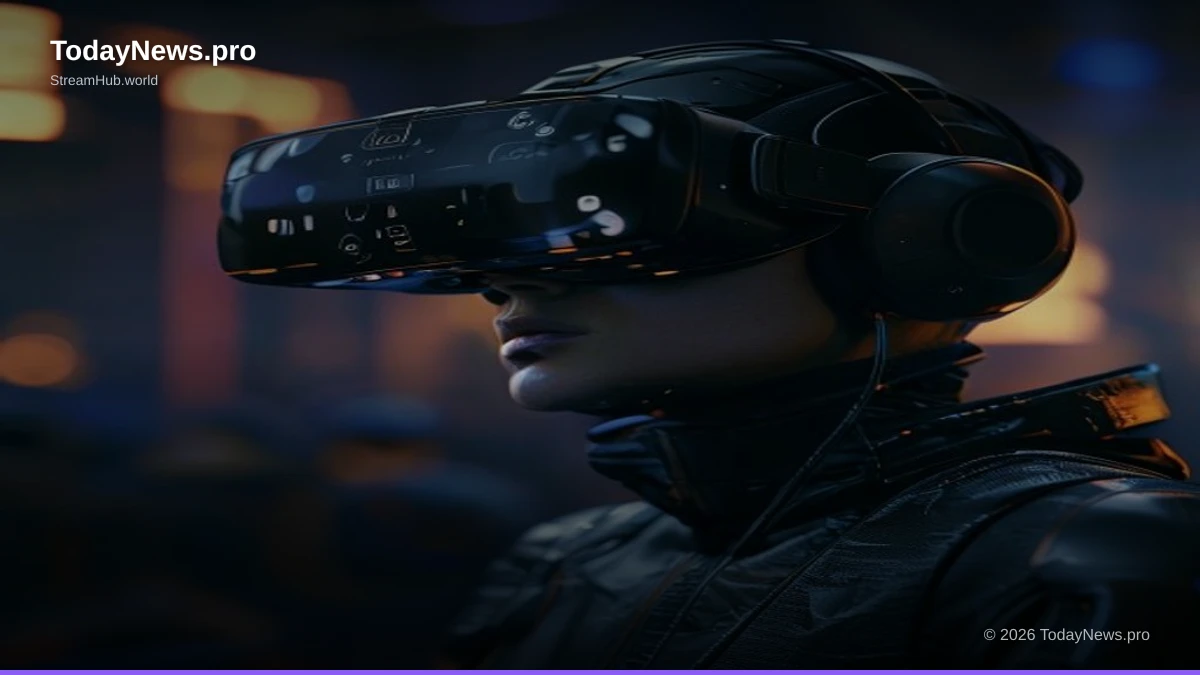
The global virtual reality market is projected to reach $184.63 billion by 2030, signifying a dramatic shift in how we interact with digital content and, by extension, with narratives. This rapid expansion underscores a fundamental transformation underway in cinema, driven by the potent combination of advanced Artificial Intelligence (AI) and Virtual Reality (VR) technologies.
The Dawn of a New Cinematic Era
For over a century, cinema has been a largely passive experience. Audiences have been confined to their seats, observing stories unfold on a flat screen. While the art form has evolved with advancements in sound, color, and special effects, the fundamental interaction remained consistent. However, the advent of immersive technologies, powered by sophisticated AI algorithms, is fundamentally redefining what it means to "watch" a movie, transforming it into an active, participatory experience.
This paradigm shift is not merely about higher resolution or more realistic CGI. It’s about creating worlds that audiences can inhabit, stories they can influence, and emotional connections that transcend traditional viewing. AI acts as the silent architect, building these complex realities, while VR provides the gateway for audiences to step directly into them. The result is a potent cocktail of engagement, immersion, and personalized narrative journeys.
The Evolution from Passive to Active Consumption
Historically, filmmaking has been a top-down process. Directors and writers craft narratives with a specific beginning, middle, and end, and the audience consumes it as presented. While filmmaking techniques like cinematography and editing aim to evoke emotion and guide perception, the viewer's agency is minimal. Immersive storytelling, conversely, places the audience at the center of the narrative.
Imagine a thriller where your choices—turning left instead of right, engaging in a conversation or remaining silent—genuinely alter the plot's trajectory. This is no longer science fiction. AI algorithms can dynamically generate plot points, character reactions, and even environmental changes based on user input, creating a truly unique experience for each viewer. VR headsets then deliver this experience with an unparalleled sense of presence, making the digital world feel as tangible as the physical one.
AI: The Invisible Hand of Innovation
Artificial Intelligence is the engine driving many of the advancements that make immersive storytelling possible. From procedural content generation to intelligent non-player characters (NPCs) and dynamic narrative adaptation, AI is revolutionizing every facet of content creation and delivery in virtual environments.
Procedural Content Generation (PCG)
Creating vast, detailed virtual worlds is an immense undertaking. AI-powered PCG allows for the automated generation of environments, objects, and even characters based on a set of rules and parameters. This dramatically reduces the time and cost associated with world-building, enabling filmmakers and game developers to create richer and more expansive virtual spaces than ever before.
For instance, an AI could be trained on architectural styles, geological data, and artistic aesthetics to generate an entire alien city or a fantastical forest. The level of detail and variation that AI can achieve means that even within a pre-defined narrative, the specific visual environment can feel unique and expansive, adding to the sense of discovery and immersion.
Intelligent Non-Player Characters (NPCs) and Dialogue Systems
One of the most significant limitations of traditional cinema, and even many early VR experiences, has been the stilted or predictable behavior of virtual characters. AI is changing this by enabling NPCs to exhibit more lifelike behaviors, react more intelligently to player actions, and engage in dynamic, context-aware conversations. Advanced natural language processing (NLP) models allow for more natural and nuanced dialogue, making virtual interactions feel more genuine.
Consider a detective story where an NPC witness’s responses change based on the player’s questioning style, their perceived trustworthiness, and even the ambient mood of the scene. AI can analyze sentiment, memory, and personality traits to generate responses that feel organic and contribute meaningfully to the unfolding narrative, rather than being pre-scripted lines.
Dynamic Narrative Adaptation and Personalization
Perhaps the most groundbreaking application of AI in immersive storytelling is its ability to dynamically adapt the narrative based on the audience's choices and behaviors. AI can monitor user interactions, emotional responses (through biometric data if available), and decision-making processes to subtly steer the story in a direction that enhances engagement and personalization. This moves away from a single, fixed narrative to a multitude of potential story paths.
This means that if a viewer consistently demonstrates bravery, the AI might present them with more challenging, heroic scenarios. Conversely, if a viewer shows a tendency towards caution, the AI might weave in elements of suspense and mystery that play on those inclinations. This level of personalization can create a deeply resonant and memorable experience for each individual.
AI in Scriptwriting and Pre-production
Beyond the real-time adaptation of narratives, AI is also making inroads into the earlier stages of filmmaking. AI tools can now assist in script analysis, identifying plot holes, character inconsistencies, and even suggesting alternative plot developments. They can also analyze vast datasets of successful films to identify narrative patterns and audience preferences, providing valuable insights for story development.
Script Analysis and Enhancement
AI algorithms can ingest screenplays and analyze them for a multitude of factors: pacing, emotional arc, character development, dialogue effectiveness, and even potential commercial appeal. Tools like ScriptBook, for example, use AI to predict a script's success based on its structure and themes, offering feedback to writers and producers. This can lead to more refined and engaging stories before production even begins.
Furthermore, AI can assist in generating variations of scenes or dialogue, offering creators a broader palette of creative options. This doesn't replace human creativity but augments it, allowing for more efficient exploration of narrative possibilities.
Virtual Reality: Stepping Inside the Story
Virtual Reality is the primary medium through which these AI-powered narratives are delivered. VR's ability to create a sense of presence—making the user feel like they are physically present in the virtual environment—is what elevates immersive storytelling from a novel concept to a transformative experience.
The Power of Presence
Presence in VR is more than just seeing and hearing. It's the feeling of "being there." This is achieved through a combination of high-fidelity visuals, spatial audio, and responsive interaction. When a user turns their head and the virtual environment moves accordingly, or when a sound source is accurately located in the 3D space, the brain interprets this as real. This profound sense of immersion is key to making AI-driven narrative choices feel consequential.
In a traditional film, a character might express fear by their facial expression and tone of voice. In VR, if that character is reacting to something behind you, and you can physically turn to see it, the fear becomes palpable and directly experienced. This visceral connection is what distinguishes VR from other media.
Interactive Elements and User Agency
VR enables a far richer set of interactions than passive viewing. Users can pick up objects, manipulate their environment, walk through scenes, and interact with characters in ways that are impossible in a flat-screen format. This agency is crucial for AI-driven adaptive narratives, as it provides the necessary input for the AI to make informed decisions about story progression.
For instance, a VR experience might require a user to solve a puzzle to unlock a new path in the story, or to physically dodge an incoming projectile to avoid a narrative consequence. The tactile feedback of interacting with virtual objects, combined with the visual immersion, creates a deeply engaging and active storytelling experience.
Sensory Immersion Beyond Sight and Sound
While visual and auditory fidelity are paramount, the pursuit of deeper sensory immersion in VR is ongoing. Haptic feedback suits, advanced motion tracking, and even scent emitters are being developed to further blur the lines between the virtual and the real. These technologies can convey the "feel" of a virtual object, the impact of an explosion, or even the atmosphere of a fictional location, adding further layers to the AI-driven narrative.
Imagine feeling the subtle rumble of an approaching train in a suspenseful scene, or the warmth of a virtual campfire. These multisensory cues, driven by AI interpretations of narrative context, can significantly amplify the emotional impact of an immersive story.
| VR Technology | Key Contribution to Immersion | Impact on Storytelling |
|---|---|---|
| High-Resolution Displays | Visual fidelity, detail, realism | Enhanced world-building, believability of characters and environments |
| Spatial Audio | 3D soundscapes, directional cues | Increased presence, improved environmental awareness, heightened suspense |
| Inside-Out/Outside-In Tracking | Accurate head and body movement translation | Natural interaction, seamless navigation, deeper player agency |
| Haptic Feedback | Tactile sensations (vibration, force) | Increased realism, emotional amplification, tangible interaction |
Synergy: When AI Meets VR
The true power of immersive storytelling lies not in AI or VR alone, but in their synergistic combination. AI provides the intelligence to create dynamic, responsive worlds and narratives, while VR offers the platform for users to experience these worlds with an unprecedented sense of presence and agency.
Personalized Narrative Journeys
The AI analyzes user behavior within the VR environment. It learns your preferences, your reactions to different stimuli, and your decision-making patterns. Based on this data, it can then dynamically adjust the storyline. If you’re a risk-taker, the AI might present more daring paths. If you’re more cautious, it might weave in more suspenseful elements.
This creates a unique narrative journey for every individual. No two experiences are identical, fostering a deeper personal connection to the story and its characters. It's the ultimate evolution of choose-your-own-adventure, powered by intelligent systems that understand and adapt to you.
Dynamic World-Building and Reactive Environments
AI can also influence the virtual environment itself in response to the user and the narrative. If a story escalates in intensity, the AI might dynamically alter the lighting, weather, or even the physical layout of the environment to reflect this change. This makes the world feel alive and reactive, further enhancing the immersion.
For example, in a horror narrative, as the player's fear levels rise (detected through gameplay or biometrics), the AI could subtly introduce unsettling visual glitches, shift shadows, or trigger ambient sounds that increase the tension, all without explicit pre-scripting for every possible scenario.
Intelligent Companions and Adversaries
AI-powered NPCs in VR are not just pre-programmed characters; they can become intelligent companions or formidable adversaries. They can learn from past interactions, adapt their strategies, and exhibit unique personalities. This makes the virtual world feel populated by believable entities, rather than static props.
A virtual companion could remember your past actions and offer advice tailored to your playstyle. An AI adversary could learn your preferred tactics and develop countermeasures, making each encounter a dynamic challenge. This level of sophistication blurs the line between scripted events and genuine emergent gameplay.
Challenges and Ethical Considerations
Despite the immense potential, the widespread adoption of AI-driven immersive storytelling faces significant hurdles and raises critical ethical questions that must be addressed.
Technical Limitations and Accessibility
High-fidelity VR experiences require substantial computational power, sophisticated hardware, and robust internet connectivity. This can make them inaccessible to a significant portion of the global population. Furthermore, the development of truly compelling AI-driven narratives is complex and requires specialized expertise, which is still a developing field.
Currently, VR hardware can still be cumbersome, and the risk of motion sickness for some users remains a concern. Overcoming these technical barriers to create seamless, comfortable, and universally accessible experiences is paramount for mainstream adoption.
Data Privacy and Security
As AI systems learn from user interactions to personalize narratives, they collect vast amounts of data about individual behavior, preferences, and even emotional responses. Ensuring the privacy and security of this sensitive data is of utmost importance. Robust data protection measures and transparent usage policies are essential to build user trust.
The potential for misuse of such deeply personal data, whether for targeted advertising or more nefarious purposes, is a serious concern. Clear regulations and ethical guidelines are needed to govern the collection and utilization of user data in immersive environments.
The Nature of Agency and Manipulation
When AI dynamically shapes a narrative, it raises questions about genuine user agency. Is the user truly making choices, or is the AI subtly guiding them towards pre-determined outcomes that it deems "optimal" for engagement? There is a fine line between intelligent adaptation and subtle manipulation. Users need to be aware of the extent to which the narrative is being influenced.
Furthermore, the emotional impact of these experiences can be profound. If an AI-driven narrative is designed to evoke strong emotions, how do we ensure responsible design, particularly for vulnerable audiences? The potential for psychological manipulation, even if unintentional, requires careful consideration.
Maintaining Artistic Vision
A significant concern for creators is the potential for AI to dilute or override artistic vision. While AI can assist in generating content and adapting narratives, the core creative intent and emotional resonance must originate from human artists. Finding the right balance between AI augmentation and human artistic control is a delicate, ongoing challenge.
There’s a risk that over-reliance on AI-generated content could lead to homogenization of stories, where narratives become formulaic and predictable, optimized for engagement metrics rather than artistic merit. The goal should be to use AI as a tool to enhance, not replace, human creativity.
The Future of Immersive Storytelling
The trajectory of AI and VR in cinema points towards a future where storytelling is more personal, dynamic, and deeply engaging than ever before. The lines between audience and participant will continue to blur.
Ubiquitous and Seamless Integration
As VR hardware becomes lighter, more powerful, and more affordable, and as AI becomes more sophisticated and integrated into everyday devices, immersive storytelling will likely become more ubiquitous. We might see AI-driven narratives embedded not just in dedicated VR experiences but also in augmented reality applications, interactive films accessible on multiple devices, and even live events that respond to audience input.
The future could see a "Netflix for Immersive Stories," where users can choose not just a title but also a narrative style, character archetypes, and desired emotional arcs, with AI curating and dynamically generating the experience in real-time.
AI as a Creative Partner
Beyond generating content, AI is poised to become a true creative partner for filmmakers. AI could analyze audience reactions to existing films and provide insights into what resonates, helping creators refine their craft. It could also assist in generating complex visual effects, composing adaptive soundtracks, and even helping actors refine their performances through motion capture analysis.
This collaborative model allows human artists to focus on the conceptual and emotional aspects of storytelling, while AI handles the more complex, data-intensive, or time-consuming tasks. The result could be richer, more nuanced, and more emotionally impactful stories.
New Forms of Narrative and Entertainment
The convergence of AI and VR is not just an evolution of cinema; it's the birth of entirely new forms of narrative and entertainment. We might see interactive documentaries where users can influence the outcome of real-world events through their virtual actions, or historical simulations that allow users to experience pivotal moments in history firsthand, with AI populating the world and adapting the events based on historical data and user interaction.
The potential for educational, therapeutic, and experiential storytelling is vast, offering new ways to learn, empathize, and understand the world around us. Imagine walking through a virtual recreation of ancient Rome, guided by an AI historian who adapts the tour based on your questions and interests.
Case Studies: Pioneers in Immersive Cinema
Several projects are already pushing the boundaries of what's possible, showcasing the potent blend of AI and VR in storytelling.
The Matrix Awakens by Epic Games
While primarily a tech demo for Unreal Engine 5, "The Matrix Awakens" demonstrated the potential for AI-driven character creation and highly realistic virtual environments. The demo allowed users to explore a meticulously crafted city and interact with AI-generated citizens, hinting at the possibilities for dynamic, living worlds in future narrative experiences.
The sheer fidelity of the virtual city and the responsiveness of the characters, powered by advanced rendering and AI, provided a glimpse into what fully realized immersive worlds could feel like. It showcased how AI can contribute to the believable construction of complex digital spaces.
Nomadland VR Experience
The VR experience accompanying Chloé Zhao's "Nomadland" offered a more contemplative and atmospheric immersion. While not heavily AI-driven in terms of dynamic narrative, it used VR to place viewers directly into the landscape and lived experiences of the characters, creating a profound sense of empathy and presence. Future iterations could integrate AI to allow for more direct interaction with the virtual world and its inhabitants.
This project highlighted the power of VR to convey emotional weight and atmosphere, proving that immersion isn't solely about complex interactivity but also about creating a profound sense of place and connection. AI could enhance such experiences by introducing dynamic elements that reflect the characters' internal states or external environments.
Interactive VR Films with Branching Narratives
Projects like "Allumette" and "The VR Doldrums" explored early forms of interactive VR storytelling. While these often relied on pre-defined branching pathways rather than true AI-driven adaptation, they paved the way for more sophisticated narrative structures. Future AI integration promises to make these choices feel more organic and impactful, with the AI actively constructing new narrative paths in real-time.
These early pioneers demonstrated the appetite for more participatory cinematic experiences. The challenge now is to imbue these experiences with the intelligent responsiveness that AI can provide, moving beyond fixed branching to truly fluid and adaptive narratives.
The integration of advanced AI and VR is not just enhancing cinema; it's fundamentally reshaping it. As these technologies mature, we can expect a future where stories are not merely watched but lived, experienced, and personally shaped, ushering in an era of unprecedented engagement and emotional depth in entertainment.