

 Daniel Volk
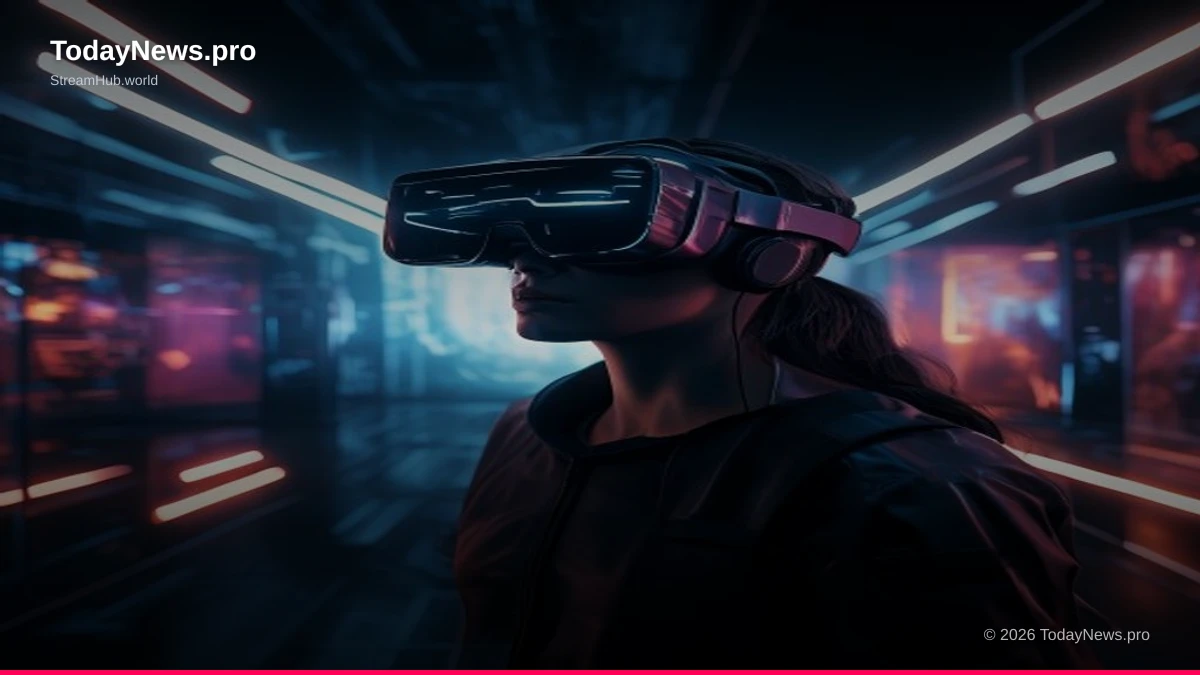
By 2025, the global market for immersive technologies, encompassing VR, AR, and mixed reality (MR), is projected to reach an astounding $209.2 billion, signaling a seismic shift in how we consume and interact with digital content, particularly narratives.
The Dawn of Experiential Storytelling
For millennia, storytelling has been a cornerstone of human culture. From ancient oral traditions and the written word to the advent of film and television, each evolution has offered new ways for creators to transport audiences to different worlds and perspectives. However, these traditional mediums, while powerful, have largely remained passive experiences. The audience observes, listens, and imagines, but they are fundamentally external to the narrative's unfolding. The digital age, however, has ushered in an era where the audience is no longer just a spectator but an active participant. Immersive technologies are breaking down the fourth wall, transforming passive consumption into active participation, and fundamentally redefining what it means to tell and experience a story.
This paradigm shift is driven by a confluence of technological advancements and a growing desire for more engaging, personalized, and memorable entertainment. Consumers are no longer satisfied with simply being told a story; they want to live it. This demand is fueling innovation across virtual reality (VR), augmented reality (AR), and a host of other interactive technologies that are collectively reshaping the landscape of narrative creation and consumption.
From Passive Observation to Active Engagement
Historically, storytelling has relied on the creator's ability to evoke emotion and imagination through carefully crafted words, images, and sounds. A novel invites us to paint mental pictures, a film guides our gaze and hearing, and a play stages a physical performance for us to witness. While these methods have been incredibly effective, they rely on an indirect connection between the audience and the narrative world. The experience is mediated. Immersive technologies, conversely, aim to create a direct, visceral connection. They dissolve the boundary between the viewer and the viewed, placing the individual at the center of the story and giving them agency within its unfolding.
The core difference lies in the shift from a unidirectional flow of information to a dynamic, bidirectional exchange. In traditional storytelling, the creator dictates the experience. In immersive narratives, the audience's actions, choices, and even their presence can influence the direction, outcome, and very fabric of the story. This democratizes the storytelling process, empowering the audience and fostering a deeper, more personal connection with the narrative world and its characters.
Virtual Reality: Stepping Into the Narrative
Virtual Reality (VR) is perhaps the most direct and potent manifestation of immersive storytelling. By completely immersing users in a computer-generated environment, VR allows them to inhabit a story world, interact with its elements, and experience events from a first-person perspective. This level of presence is unprecedented, offering a sense of "being there" that traditional media cannot replicate. Whether it's exploring alien landscapes, reliving historical events, or confronting personal fears, VR offers a unique gateway into subjective experience.
The technology behind VR – head-mounted displays (HMDs) with high-resolution screens, precise motion tracking, and spatial audio – creates a convincing illusion of reality. When a user turns their head, the virtual world responds accordingly, creating a seamless and believable experience. This sense of embodiment is crucial for narrative immersion, as it allows users to feel physically present within the story, making the emotional impact far more profound.
VRs Transformative Potential in Entertainment
In the realm of entertainment, VR has unlocked new genres and experiences. Horror games become terrifyingly real when you can physically dodge a monster. Interactive dramas allow you to make life-altering decisions that affect the plot's trajectory. Documentaries can transport you to remote corners of the globe or into the lives of individuals you would otherwise never encounter. For example, projects like "Notes on Blindness: Into Darkness" use VR to allow sighted audiences to understand the experience of blindness, offering a deeply empathetic narrative journey.
The key to successful VR storytelling lies in leveraging its unique affordances. Creators must think not just about what the user sees, but what they can do, how they can move, and how their actions will be perceived within the narrative framework. This requires a departure from traditional cinematic techniques, focusing instead on environmental storytelling, user agency, and the creation of believable, responsive worlds. The narrative becomes less about a linear plot and more about an unfolding experience that the user navigates.
Beyond Entertainment: Education and Therapy
The applications of VR storytelling extend far beyond entertainment. In education, VR can bring historical events to life, allowing students to walk through ancient Rome or witness the signing of the Declaration of Independence. Medical professionals can use VR to practice complex surgeries in a risk-free environment, or to train in patient interaction. Perhaps most profoundly, VR is proving to be a powerful tool in therapy. Exposure therapy for phobias, PTSD treatment, and even pain management are seeing significant advancements through carefully constructed VR narratives that allow individuals to confront their challenges in a controlled and supportive virtual space.
Consider the use of VR for treating anxiety. A narrative might guide a user through a gradually escalating series of challenges, from mild social discomfort to more intense public speaking scenarios, all within the safe confines of a virtual environment. The user can practice coping mechanisms and build confidence without real-world consequences, leading to genuine psychological benefits. This exemplifies how VR storytelling can transcend mere entertainment to offer tangible, life-changing experiences.
Augmented Reality: Blending Worlds
While VR replaces our reality with a digital one, Augmented Reality (AR) overlays digital information and experiences onto our existing physical world. This creates a hybrid reality where the digital and physical coexist, offering a less isolating form of immersion. AR applications can range from simple overlays like navigation arrows on a street view to complex interactive narratives that transform everyday environments into story landscapes.
The accessibility of AR, particularly through smartphones and tablets, has made it a rapidly growing area for immersive storytelling. Apps like Pokémon GO demonstrated the potential for location-based AR narratives, encouraging users to explore their surroundings to find and interact with digital characters. More sophisticated AR experiences are now emerging, designed for dedicated AR glasses or sophisticated mobile devices, offering richer and more integrated narrative possibilities.
ARs Everyday Integration
AR's ability to integrate seamlessly into our daily lives makes it a compelling medium for storytelling. Imagine walking through a historical district and having an AR app overlay ghosts of past inhabitants, re-enacting significant events from that very spot. Or consider a children's book where characters pop off the page, interacting with the reader's environment. Retailers are already using AR for virtual try-ons, and this concept can be extended to narrative experiences, allowing users to interact with virtual objects or characters that appear in their living room.
The narrative potential of AR is vast. It can enhance existing spaces, turning a park into a fantasy realm or a museum into an interactive historical exhibit. Unlike VR, AR doesn't require users to disconnect from their physical surroundings, making it suitable for public spaces and situations where awareness of the real world is paramount. This also opens up avenues for social AR experiences, where multiple users can interact with the same digital narrative overlaid onto their shared physical space.
The Evolution of AR Storytelling Platforms
The development of AR storytelling platforms is crucial for its widespread adoption. Tools are emerging that allow creators to build AR experiences without extensive coding knowledge. These platforms facilitate the integration of 3D models, animations, audio, and interactive elements, enabling the creation of complex narrative arcs that respond to user input and environmental context. As AR hardware becomes more sophisticated and affordable, these platforms will undoubtedly lead to an explosion of innovative AR narratives.
Companies like Niantic, the creators of Pokémon GO, are continuously pushing the boundaries of location-based AR. Their platform allows for persistent digital content to be overlaid onto the real world, creating shared experiences that can evolve over time. This opens up possibilities for ongoing narrative arcs that play out in real-world locations, encouraging repeat engagement and fostering a sense of community among participants. The future of AR storytelling is about creating persistent, interactive narratives that are woven into the fabric of our daily lives.
| Platform | Primary Use Case | Immersive Level | Accessibility |
|---|---|---|---|
| Virtual Reality (VR) | Full immersion in digital worlds | High | Requires dedicated hardware (headsets) |
| Augmented Reality (AR) | Overlaying digital content onto the real world | Medium | Accessible via smartphones, tablets, AR glasses |
| Mixed Reality (MR) | Interacting with digital objects in the real world | High | Requires advanced hardware (e.g., HoloLens) |
Interactive Technologies: The Audience as Co-Author
Beyond VR and AR, a broader spectrum of interactive technologies is empowering audiences to become active participants in storytelling. This includes everything from branching narratives in video games and choose-your-own-adventure apps to sophisticated AI-driven characters that can converse with users and adapt their responses based on player input.
The core principle here is agency. By giving the audience meaningful choices that impact the narrative's progression, creators can foster a deeper sense of investment and ownership. This shift from passive consumption to active participation transforms the storytelling experience into a collaborative journey, where the audience is no longer just a recipient of the story but a co-author of its unfolding.
The Rise of Branching Narratives and Player Agency
Video games have long been at the forefront of interactive storytelling. Titles like "The Witcher 3: Wild Hunt" or "Detroit: Become Human" are renowned for their complex branching narratives, where player decisions can lead to vastly different plot outcomes, character relationships, and even the survival of key individuals. This level of player agency is a powerful tool for creating emotionally resonant and replayable experiences.
The challenge for creators is to design narratives that feel organic and consequential, rather than simply offering a series of superficial choices. A truly compelling branching narrative requires a deep understanding of character motivations, plot causality, and the emotional impact of different pathways. The goal is to make the player feel that their choices genuinely matter and that they are actively shaping the story's destiny.
AI and the Future of Dynamic Storytelling
Artificial intelligence (AI) is poised to revolutionize interactive storytelling by enabling dynamic and adaptive narratives. Imagine AI-powered characters that can hold genuine conversations with users, remember past interactions, and evolve their personalities and motivations based on those exchanges. This could lead to stories that are not pre-scripted but are generated in real-time, tailored to each individual user's engagement.
AI can also be used to create more sophisticated world simulation. Instead of a fixed environment, AI could dynamically alter the world based on player actions, creating emergent narrative possibilities. This could lead to stories that are truly unique to each playthrough, offering an unparalleled level of personalization and replayability. The ethical implications of AI-generated narratives, particularly regarding bias and control, will also be an important area of consideration as this technology matures.
Industry Impact and Market Trends
The growing adoption of immersive technologies is profoundly impacting various industries, from entertainment and gaming to education, marketing, and healthcare. The demand for compelling interactive narratives is driving innovation and investment across the board. This technological evolution is not just about creating new forms of entertainment; it's about fundamentally changing how we learn, work, and connect with the world around us.
The convergence of VR, AR, and AI is creating a powerful ecosystem for narrative experiences. As hardware becomes more accessible and software development tools become more sophisticated, we are witnessing a democratization of immersive content creation. This is leading to a diverse range of applications and an increasing number of creators exploring the potential of these new mediums.
Growth in Immersive Gaming and Entertainment
The gaming industry has been an early adopter and a significant driver of immersive technology. VR gaming, in particular, has seen substantial growth, with titles offering unparalleled levels of immersion and interactivity. Beyond gaming, VR and AR are finding their way into film, theater, and theme park attractions, creating entirely new forms of entertainment. Experiences that were once confined to imagination are now becoming tangible realities, offering audiences thrilling and unforgettable encounters.
The market for VR/AR content is expanding rapidly. Major tech companies are investing heavily in developing their platforms and content libraries. This investment is fueling a cycle of innovation, leading to more sophisticated hardware, more engaging software, and a wider array of narrative experiences. The increasing prevalence of VR arcades and dedicated VR homes also contributes to this growth, making immersive experiences more accessible to a broader audience.
Marketing and Brand Storytelling
Marketers are increasingly leveraging immersive technologies to create engaging and memorable brand experiences. AR filters on social media, virtual showrooms, and interactive product demonstrations are just a few examples of how brands are using these tools to connect with consumers on a deeper level. The ability to allow consumers to "experience" a product or service before purchasing can significantly influence buying decisions and build brand loyalty. Imagine virtually test-driving a car or experiencing a travel destination before booking a trip.
This shift towards experiential marketing is driven by a desire to cut through the noise of traditional advertising. Immersive narratives offer a unique way for brands to tell their story, convey their values, and create emotional connections with their audience. This can lead to higher engagement rates, increased brand recall, and ultimately, greater commercial success. The future of brand storytelling is likely to be highly interactive and personalized, leveraging the power of immersive technologies.
Challenges and the Road Ahead
Despite the immense potential, the widespread adoption of immersive narratives faces several hurdles. Cost, accessibility, content creation complexity, and user comfort are all significant factors that need to be addressed. While VR headsets are becoming more affordable, they still represent a significant investment for many. AR, while more accessible through mobile devices, often lacks the full immersion of dedicated hardware.
The development of compelling, high-quality immersive content also requires specialized skills and tools. Creating engaging VR or AR narratives is not simply a matter of adapting existing storytelling techniques; it demands a new way of thinking about space, interaction, and user agency. This has led to a demand for new kinds of storytellers and developers who can master these emerging mediums.
Hardware Accessibility and User Experience
The current state of VR hardware, while improving, still presents challenges. Headsets can be expensive, and some users experience motion sickness or discomfort during prolonged use. The need for external sensors for full room-scale tracking can also be cumbersome. For AR, while smartphones are ubiquitous, the experience can be limited by screen size and processing power. The development of more comfortable, affordable, and powerful AR glasses is crucial for unlocking its full narrative potential.
Furthermore, the onboarding process for many immersive experiences can be steep. Users need to learn new control schemes and understand how to interact within these virtual or augmented environments. Streamlining this process and making it intuitive is essential for broader adoption. The goal is to make the technology disappear, allowing the user to focus solely on the narrative experience.
Content Creation and Standardization
The creation of immersive content is currently a complex and resource-intensive process. Developing high-fidelity 3D assets, programming interactive elements, and designing narrative structures that accommodate user agency requires significant expertise and time. The lack of standardized tools and platforms can also lead to fragmentation, making it difficult for creators to reach a broad audience.
As the industry matures, we can expect to see the development of more sophisticated and user-friendly content creation tools, akin to what we've seen in game development. This will democratize the creation process, allowing a wider range of individuals and smaller studios to produce compelling immersive narratives. Standardization of file formats and interaction protocols will also be crucial for ensuring interoperability and wider distribution.
The development of compelling VR and AR narratives is also a continuous process of iteration and learning. Creators are still exploring the best practices for storytelling in these new mediums. This includes understanding how to guide user attention without explicit cues, how to convey emotional information through non-verbal means, and how to build believable and responsive worlds. As more research and practical experience accumulate, we will see the refinement of these techniques, leading to more impactful and sophisticated immersive stories.
The Future of Immersive Narratives
The trajectory of immersive storytelling is undeniably upward. As technology continues to advance, we can anticipate experiences that are more realistic, more interactive, and more deeply integrated into our lives. The lines between the physical and digital worlds will continue to blur, offering new avenues for creative expression and profound human connection.
The future is not just about VR headsets and AR glasses; it's about a seamless integration of digital and physical realities. Imagine ambient storytelling that unfolds around you, personalized narratives that adapt to your mood and preferences, and collective storytelling experiences that connect people across geographical boundaries. The possibilities are as boundless as human imagination.
Towards Seamless Integration and Personalization
The next generation of immersive technologies will likely focus on greater integration with our daily lives. Wearable AR devices will become more discreet and powerful, offering context-aware information and interactive narrative elements that seamlessly blend with our surroundings. AI will play an increasingly crucial role in personalizing these experiences, tailoring narratives to individual interests, emotional states, and even physiological responses.
This move towards personalization means that stories will no longer be one-size-fits-all. Instead, each individual might experience a unique version of a narrative, shaped by their own interactions and preferences. This could lead to a level of engagement and emotional connection that is currently unimaginable. The potential for creating deeply meaningful and transformative experiences is immense.
The Metaverse and Shared Narrative Universes
The concept of the metaverse, a persistent, interconnected network of virtual worlds, represents the ultimate frontier for immersive storytelling. In these shared digital spaces, users can not only experience individual narratives but also participate in vast, evolving narrative universes. This could lead to new forms of collaborative storytelling, where communities of users contribute to the development and evolution of ongoing sagas.
The metaverse offers the potential for truly epic narratives that transcend the limitations of individual experiences. Imagine being part of a living, breathing story world where your actions have long-lasting consequences, and where you can interact with countless other individuals who are also shaping the narrative. This could be the next evolution of storytelling, where the audience becomes an integral part of a grand, collective epic. It's a future where stories are not just consumed, but lived, co-created, and continuously reimagined.
The journey into immersive narratives is just beginning. As VR, AR, and interactive technologies continue to evolve, they will undoubtedly redefine the boundaries of what is possible in storytelling, offering us new ways to explore, understand, and connect with the world and each other.