

 Sophie Turner
⏱ 15 min
The global market for virtual reality (VR) and augmented reality (AR) combined is projected to reach over $300 billion by 2027, signaling a monumental shift in how we interact with digital content and entertainment. This surge is not just about bigger screens or faster processors; it's about fundamentally redefining the very nature of play, moving from passive consumption to active, embodied participation. Gaming, as a pioneering industry, is at the forefront of this transformation, leveraging emerging technologies like VR, AR, and cloud streaming to unlock experiences that were once confined to the realm of science fiction. The Immersive Revolution: VRs Ascendancy
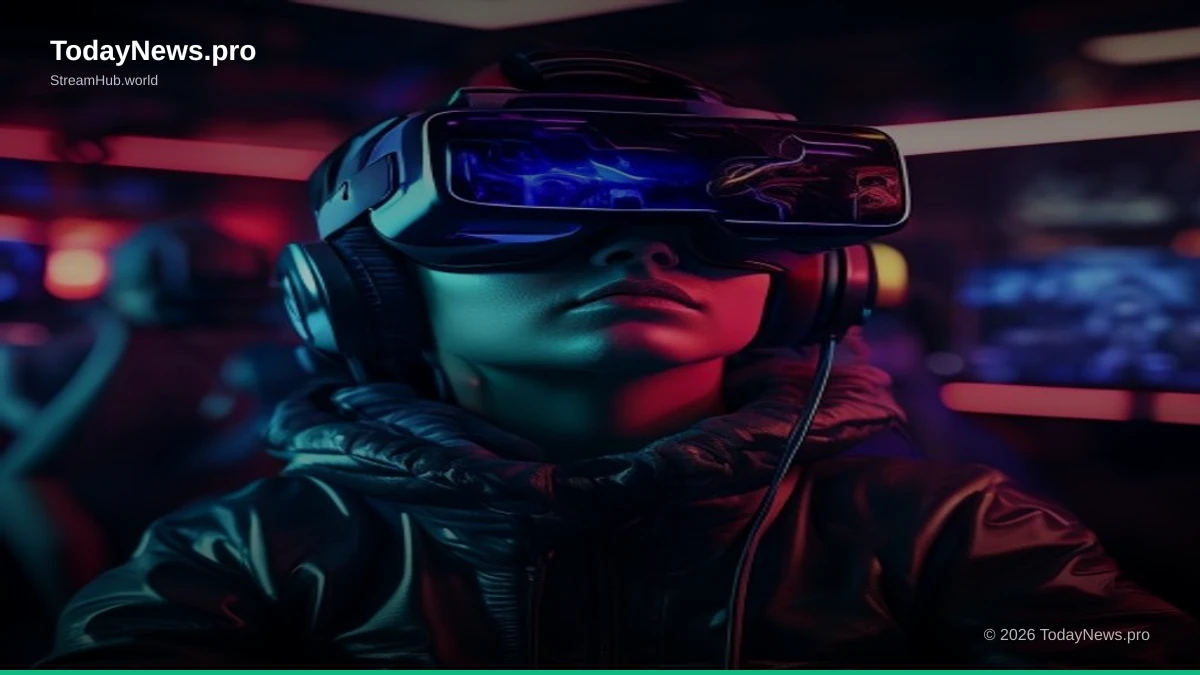
Virtual Reality, once a niche technology relegated to bulky headsets and ambitious but flawed prototypes, has entered a new era of accessibility and sophistication. The latest generation of VR hardware, exemplified by devices like the Meta Quest 3 and PlayStation VR2, offers higher resolutions, wider fields of view, and improved tracking capabilities, all contributing to a more convincing sense of presence. This immersion is crucial for gaming, as it allows players to feel truly *inside* the game world, rather than merely observing it from a distance.Beyond the Screen: Embodied Interaction
The most profound impact of VR in gaming lies in its ability to translate physical actions into in-game movements. Swinging a sword, aiming a bow, or ducking behind cover are no longer button presses but direct, intuitive physical gestures. This embodied interaction deepens engagement, fostering a primal connection between the player and the virtual environment. Games like "Half-Life: Alyx" have set a benchmark for this, demonstrating how VR can deliver narrative depth and complex gameplay through naturalistic player input.The Rise of VR Exclusives
As VR technology matures, so too does its content library. While many early VR titles were ports of existing games, the platform is now seeing a robust pipeline of VR-exclusive experiences designed from the ground up to leverage the medium's unique strengths. These titles are pushing creative boundaries, exploring new genres and gameplay mechanics that are impossible on traditional platforms.| Manufacturer | Estimated Market Share (%) | Key Models |
|---|---|---|
| 45.2 | Quest 2, Quest 3 | |
| Sony Interactive Entertainment | 22.8 | PlayStation VR2 |
| HTC Corporation | 15.1 | Vive Pro 2, Vive XR Elite |
| Valve Corporation | 9.5 | Valve Index |
| Others | 7.4 | Various Pico, HP Reverb, etc. |
"VR gaming is no longer about novelty; it's about deeply resonant experiences. The feeling of truly being present in another world, interacting with it organically, is a paradigm shift that will continue to drive adoption and innovation."
— Dr. Anya Sharma, Lead Researcher, Immersive Technologies Lab
Augmented Reality: Blurring the Lines of Reality
While VR completely replaces the user's real-world view with a digital one, Augmented Reality (AR) overlays digital information and graphics onto the real world. This technology, made mainstream by mobile games like "Pokémon GO," offers a less isolating, more integrated form of digital interaction. The potential for AR in gaming is immense, transforming everyday environments into dynamic playgrounds.Location-Based and Persistent Worlds
AR gaming thrives on interaction with the physical world. Location-based games can transform cities into fantastical landscapes, with players hunting virtual creatures or solving puzzles tied to real-world landmarks. Furthermore, the concept of persistent AR worlds suggests a future where digital elements remain in specific physical locations, creating shared experiences that evolve over time and can be revisited by multiple players.AR on Wearables and Beyond
The development of AR glasses and more sophisticated head-mounted displays promises to take AR gaming beyond smartphones. Imagine playing a game where virtual characters interact with your living room furniture, or where strategic battle plans are projected onto your coffee table. This seamless integration of digital and physical realities opens up entirely new avenues for gameplay, social interaction, and entertainment.Projected Growth of AR Gaming Revenue (USD Billions)
The Social Dimension of AR
AR's ability to overlay digital elements onto shared physical spaces fosters unique social gaming opportunities. Imagine a collaborative AR puzzle game where players see the same digital elements in a park, or a competitive AR experience where players can see each other's virtual avatars interacting in the real world. This blend of social presence and digital overlay creates a new form of shared digital community.Cloud Gaming: The Democratization of High-Fidelity Play
The technological advancements in VR and AR are impressive, but they often come with significant hardware costs and performance demands. This is where cloud gaming, or game streaming, plays a pivotal role. Services like Xbox Cloud Gaming, PlayStation Plus Premium, and NVIDIA GeForce NOW allow players to stream high-fidelity games from powerful remote servers directly to a wide range of devices, including smartphones, tablets, and lower-spec PCs.Accessibility Without Compromise
Cloud gaming democratizes access to AAA gaming experiences. Players no longer need to invest in expensive consoles or gaming PCs to enjoy the latest graphically intensive titles. This opens up gaming to a much broader audience, breaking down traditional hardware barriers and making high-fidelity play accessible to anyone with a stable internet connection.Overcoming Latency Challenges
The primary hurdle for cloud gaming has always been latency – the delay between a player's input and the game's response. However, significant improvements in network infrastructure, streaming technology, and edge computing are rapidly mitigating this issue. As more data centers are deployed closer to users, latency is becoming less of a concern, offering a smoother and more responsive gaming experience.500+
Million+
100+
Gbps
20+
Ms
Illustrative data: Average global broadband speeds, Data center network capacity, Target latency for smooth cloud gaming.
Subscription Models and Content Libraries
Cloud gaming services typically operate on a subscription model, offering access to a large and constantly updated library of games. This "Netflix for games" approach provides players with a vast selection of titles to explore without the need for individual purchases, fostering a culture of discovery and experimentation within the gaming ecosystem. This model also benefits developers by providing a continuous revenue stream and a wider audience for their creations.For more on the evolution of streaming technology, see Cloud Gaming on Wikipedia.
Synergies and Convergence: The Future is Integrated
The true power of these emerging technologies lies not in their individual capabilities, but in their potential to converge and create novel, hybrid experiences. Imagine playing a VR game that seamlessly incorporates AR elements, or using a cloud-streamed VR experience on a portable AR device.Mixed Reality Gaming
Mixed reality (MR) is the umbrella term for experiences that blend VR and AR. This could manifest as a VR game where players can see real-world objects and people appear within their virtual environment, or an AR game where virtual characters can interact with real-world physics and environments in a persistent, spatially aware manner.Cross-Platform Play and Interoperability
As these technologies mature, the demand for seamless cross-platform play and interoperability will grow. Players should ideally be able to switch between playing a game on their VR headset, their AR glasses, or even a traditional screen, with their progress and in-game assets carrying over. This interconnectedness will foster larger, more vibrant gaming communities.The Metaverse and Beyond
The concept of the metaverse, a persistent, interconnected set of virtual worlds, is heavily reliant on the convergence of VR, AR, and cloud streaming. These technologies will provide the foundational infrastructure for immersive digital spaces where gaming will undoubtedly be a central activity. The ability to move fluidly between different virtual environments, interact with others, and engage in a wide array of activities, including gaming, will define the next iteration of online interaction.Leading tech companies are investing billions in metaverse development. For insights into this ongoing trend, consult Reuters' coverage of the Metaverse.
Challenges and the Road Ahead
Despite the immense promise, significant challenges remain in fully realizing the potential of VR, AR, and cloud gaming.Hardware Cost and Comfort
High-end VR headsets can still be prohibitively expensive for many consumers. Furthermore, issues of comfort, motion sickness, and battery life need to be continually addressed to ensure widespread adoption. AR glasses, while becoming more sophisticated, are still in their early stages of development and face similar hurdles.Infrastructure and Connectivity
For cloud gaming, robust and widespread high-speed internet infrastructure is paramount. Areas with less developed connectivity will be left behind, creating a digital divide in gaming access. The demand for low latency also puts significant strain on existing networks.Content Development and Monetization
Developing high-quality VR and AR games is complex and costly. Studios need to invest in new tools, workflows, and expertise. Finding sustainable monetization models that balance player enjoyment with developer profitability is also an ongoing challenge. The shift to subscription services and new forms of in-game economies will be critical.Privacy and Security Concerns
As these technologies become more integrated into our lives, concerns around data privacy, security, and the ethical implications of immersive technologies will only grow. Ensuring user data is protected and that these platforms are safe and inclusive will be crucial for long-term success."The ethical considerations of AR and VR gaming are as important as the technological ones. We must ensure these powerful tools are used responsibly, respecting user privacy and fostering positive social interactions, not exacerbating existing societal problems."
— Dr. Kenji Tanaka, Digital Ethics Professor
The Economic and Social Impact
The evolution of gaming through VR, AR, and cloud streaming is poised to have a profound economic and social impact.New Job Markets and Industries
These technological shifts are creating entirely new job markets in areas such as VR/AR development, 3D modeling, spatial computing, cloud infrastructure management, and immersive experience design. Entirely new industries are emerging around these technologies, fostering innovation and economic growth.Enhanced Learning and Training
Beyond entertainment, VR and AR offer transformative potential for education and professional training. Immersive simulations can provide hands-on learning experiences that are impossible in traditional settings, from surgical training to complex machinery operation. Gaming principles can be applied to educational content to make learning more engaging and effective.Transforming Social Interaction
The way we socialize and connect with others is already being reshaped by digital platforms. VR and AR promise to make these interactions more embodied and present, offering new ways to connect with friends and family, attend virtual events, and participate in shared digital experiences, blurring the lines between our physical and digital social lives.The gaming industry's economic influence is substantial. For statistics on its global scale, refer to Statista's video game market overview.
Will VR eventually replace traditional gaming?
It's unlikely VR will entirely replace traditional gaming. Instead, it's expected to coexist and complement existing platforms, offering a distinct and more immersive way to play. Many gamers enjoy the flexibility and accessibility of traditional setups.
Is cloud gaming good for the environment?
The environmental impact of cloud gaming is complex. While it reduces the need for individual, energy-intensive hardware, the massive data centers powering these services consume significant amounts of energy. The net environmental benefit depends heavily on the energy sources used by data centers and the efficiency of streaming technology.
What is the difference between VR and AR?
VR (Virtual Reality) completely immerses you in a digital world, replacing your real-world view. AR (Augmented Reality) overlays digital information and graphics onto your real-world view, enhancing your perception of reality rather than replacing it.
How will cloud gaming affect game development?
Cloud gaming allows developers to create more graphically intensive and complex games without being limited by consumer hardware. It also encourages innovative game design tailored for streaming and subscription models, potentially leading to more experimental titles and shorter development cycles for some types of games.