

 David Chen
⏱ 15 min
The global market for immersive technologies, including VR, AR, and mixed reality, is projected to reach $600 billion by 2027, signaling a seismic shift in how we interact with digital content and each other. Beyond the Goggles: The Evolving Landscape of Immersive Entertainment
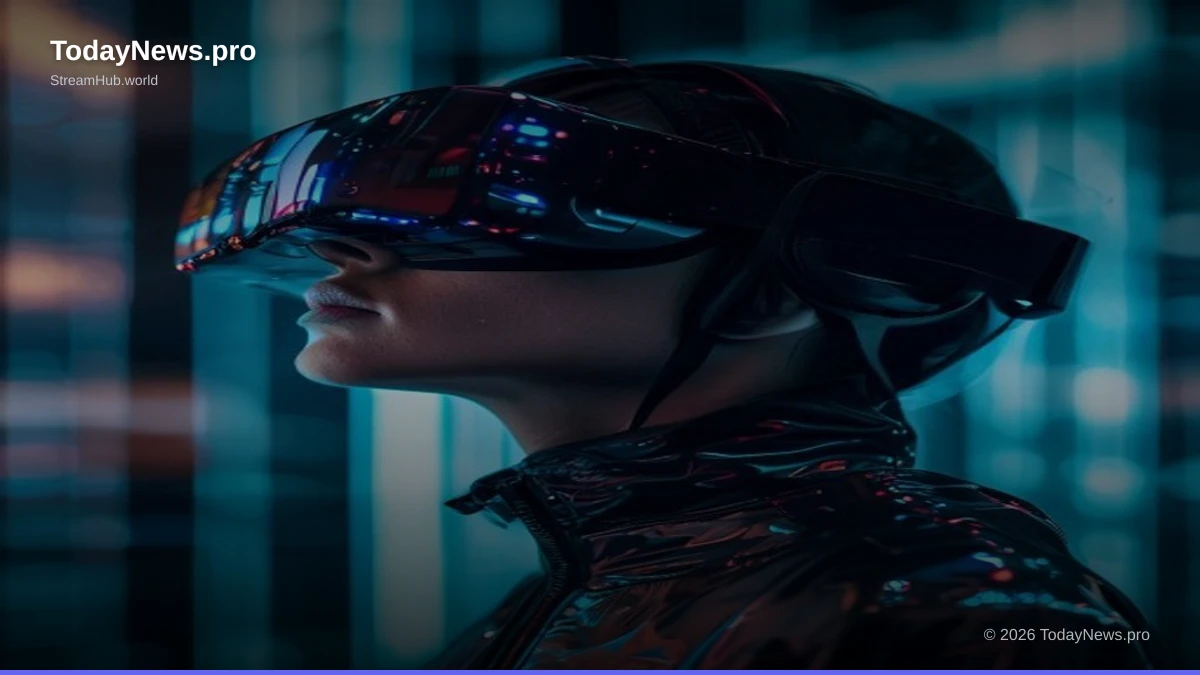
For years, virtual reality (VR) headsets have been the vanguard of immersive entertainment, offering glimpses into digital realms that transport users beyond their physical limitations. However, the future of experiencing digital content is rapidly expanding, moving beyond the confines of enclosed headsets towards more integrated, natural, and multi-sensory interactions. We are on the cusp of a new era where entertainment isn't just seen and heard, but felt, smelled, and even tasted. This evolution is driven by advancements in display technologies, artificial intelligence, haptics, and even olfactory systems, promising experiences that are not just immersive, but truly transformative. The current reliance on bulky headsets, while foundational, represents a stepping stone rather than the destination. The industry is diligently working to shed the hardware that isolates users and instead, create environments where digital elements seamlessly blend with reality.The Limitations of Current VR
While VR has achieved remarkable feats in creating believable digital environments, it faces inherent challenges. The isolation caused by wearing a headset can hinder social interaction within the virtual space. Furthermore, the physical discomfort, motion sickness, and the sheer visual fidelity limitations prevent many from fully embracing the technology. The tethering of many VR systems to powerful PCs or consoles also limits portability and accessibility. These are not minor inconveniences; they are fundamental barriers to mass adoption. The quest is to move from "feeling like you're there" to "being there" without the cumbersome intermediaries. The industry recognizes that true immersion lies in effortless integration, not in the deliberate act of donning specialized equipment that separates one from the real world.The Promise of Extended Reality (XR)
Extended reality (XR) is the umbrella term encompassing VR, augmented reality (AR), and mixed reality (MR). This convergence is key to unlocking the next generation of immersive experiences. AR overlays digital information onto the real world, while MR allows digital objects to interact with and be influenced by the real environment. The future lies in the fluid transition between these states, allowing users to engage with digital content in ways that are contextually relevant and intuitively controlled. Imagine a concert where holograms of the artists perform on stage, visible to everyone in the audience, or a museum where artifacts come to life with interactive historical narratives. This is the promise of XR: a spectrum of immersive experiences that adapt to user needs and environments.The Current State of VR: A Foundation for the Future
Virtual reality has undeniably laid critical groundwork for what is to come. Companies like Meta with their Quest line, Sony with PlayStation VR, and HTC with its Vive series have made significant strides in improving resolution, reducing latency, and enhancing tracking capabilities. These advancements have paved the way for more compelling gaming, training simulations, and even social VR platforms. The installed base of VR users, while still a niche compared to traditional gaming, is steadily growing, creating a fertile ground for further innovation and investment. The development of standalone VR headsets has also democratized access, removing the need for expensive PC hardware.Gaming and Entertainment Dominance
Currently, gaming remains the primary driver of VR adoption. Titles like "Half-Life: Alyx," "Beat Saber," and "Resident Evil 4 VR" showcase the unique potential of VR for deeply engaging gameplay. Beyond gaming, VR is making inroads into film and storytelling, with interactive narratives and 360-degree cinematic experiences offering new ways to consume visual media. The ability to be "inside" a story, rather than passively observing it, is a powerful draw. However, the content library, while growing, still needs to diversify to cater to a broader audience.Enterprise and Training Applications
Beyond entertainment, VR is proving invaluable in enterprise settings. Companies are using VR for employee training, particularly in high-risk or complex environments like manufacturing, healthcare, and aviation. Surgeons can practice intricate procedures without risk, pilots can simulate emergency scenarios, and factory workers can learn assembly lines in a safe, virtual setting. This practical application demonstrates VR's utility as a powerful tool for skill development and knowledge transfer.| Year | Market Size | Projected Growth Rate |
|---|---|---|
| 2022 | $20.2 | N/A |
| 2023 | $26.7 | 32.2% |
| 2024 | $35.3 | 32.2% |
| 2025 | $46.8 | 32.6% |
| 2026 | $61.2 | 30.8% |
| 2027 | $77.1 | 26.0% |
The Dawn of Holographic Experiences: Bringing Digital to Physical
The science fiction trope of holographic communication and entertainment is rapidly becoming a tangible reality. Unlike VR, which creates a fully enclosed digital environment, holography aims to project three-dimensional images into our physical space, appearing as if they are actually present. This technology promises to revolutionize how we interact with digital information and each other, moving beyond screens to truly spatial displays.Light Field and Volumetric Displays
Current holographic technologies are primarily based on light field displays, which manipulate light rays to create the illusion of depth, and volumetric displays, which create physical points of light in three-dimensional space. While these are still in their early stages, they offer a compelling glimpse into a future where digital characters can interact with us in our living rooms or meeting rooms. Companies are exploring various methods, from intricate laser arrays to advanced LED structures, to achieve true holographic projection.Applications in Communication and Entertainment
Imagine attending a business meeting where remote colleagues appear as life-sized holograms, or watching a live concert where the performers are projected onto your stage. In gaming, holographic elements could interact with your physical environment, creating a more dynamic and engaging play experience. Education could be transformed with holographic dissections or historical reenactments that appear in the classroom. The potential for holographic displays to bridge the gap between the digital and physical worlds is immense, offering a more natural and intuitive form of interaction."Holography isn't just about seeing; it's about believing. It's about making the digital tangible, and in doing so, fundamentally altering our perception of presence and interaction." — Dr. Anya Sharma, Lead Research Scientist, Immersive Technologies Lab
Sensory Worlds: Engaging All Five Senses
True immersion goes beyond sight and sound. The future of entertainment lies in creating experiences that engage all five senses, creating a holistic and deeply memorable encounter. This involves integrating haptic feedback, olfaction, and even gustation into digital environments.The Power of Haptics
Haptic technology, which simulates touch and force feedback, is crucial for enhancing the realism of immersive experiences. Advanced haptic suits, gloves, and even specialized furniture are being developed to allow users to "feel" virtual objects, textures, and impacts. This could range from the gentle brush of wind to the powerful jolt of an explosion. The subtlety of haptic feedback is often underestimated, but its absence can significantly diminish the sense of presence.Olfactory and Gustatory Immersion
The integration of scent and taste into digital experiences is perhaps the most ambitious frontier. Researchers are developing sophisticated scent synthesizers that can emit specific aromas in response to virtual stimuli. Imagine smelling the sea breeze while virtually sailing or experiencing the aroma of freshly baked bread in a virtual bakery. Similarly, early research into gustatory interfaces aims to simulate taste, though this remains the most challenging sense to replicate digitally. These advancements promise to unlock entirely new dimensions of sensory engagement.Projected Growth of Sensory Immersion Technologies (CAGR %)
Technological Hurdles and Breakthroughs
The path to truly immersive, multi-sensory experiences is not without its significant challenges. Pushing the boundaries of current technology requires overcoming complex engineering and scientific obstacles.Display Technology Evolution
For holography, achieving true, high-resolution, full-color, and glasses-free 3D displays remains a significant hurdle. Current implementations are often limited in field of view, resolution, or require specific viewing angles. The development of micro-LEDs and advanced light field projectors is crucial. For VR, increasing display resolution and refresh rates while reducing weight and bulk are ongoing goals. The quest for "retina resolution" in VR, where pixels are indistinguishable, is a key milestone.Processing Power and AI Integration
Rendering complex holographic environments or simulating realistic sensory feedback requires immense processing power. This necessitates advancements in graphics processing units (GPUs) and the development of more efficient rendering techniques. Artificial intelligence plays a pivotal role in generating dynamic content, understanding user intent, and creating believable non-player characters (NPCs) that can react realistically to sensory input. AI will be the engine driving the intelligence of these simulated worlds.Miniaturization and Power Efficiency
The dream of sleek, lightweight holographic glasses or unobtrusive sensory feedback devices hinges on significant miniaturization and improved power efficiency. Current prototypes for advanced haptics and olfactory devices can be bulky and power-hungry. Breakthroughs in battery technology and the development of highly integrated, low-power chips are essential for creating consumer-ready products.100+
Patents filed for holographic display tech in the last 3 years
50%
Reduction in VR headset weight targeted by leading manufacturers
10x
Increase in AI-driven content generation capability needed for seamless XR
The Economic and Social Impact
The widespread adoption of immersive technologies will undoubtedly reshape economies and societies. The potential for new industries, job creation, and altered forms of social interaction is profound.New Industries and Job Markets
The development of holographic displays, advanced haptics, and sensory simulation systems will spawn entirely new industries. This will create demand for engineers, designers, content creators, AI specialists, and technicians. The existing entertainment and gaming industries will evolve, while new sectors like virtual tourism, holographic education, and immersive retail will emerge. The metaverse, if it fully materializes, could represent a significant new economic frontier.Transformation of Social Interaction
Immersive technologies have the potential to redefine how we connect with others. Holographic communication could make remote interactions feel as natural as being in the same room. Social VR platforms will likely become more sophisticated, offering richer shared experiences. However, concerns about digital addiction, the blurring of lines between virtual and real identities, and issues of digital equity will need to be addressed. The societal impact requires careful consideration and ethical guidelines.Ethical Considerations and Digital Equity
As immersive experiences become more pervasive, so do the ethical questions. Issues of privacy, data security, and the potential for manipulation within these highly engaging environments are paramount. Ensuring equitable access to these technologies will be crucial to prevent a widening digital divide. The accessibility of these future entertainment forms, both in terms of cost and usability, will determine their true societal reach."We are moving towards a future where the digital and physical worlds are indistinguishable, offering unparalleled opportunities for connection and creation. However, with this power comes great responsibility to ensure inclusivity and ethical development." — Dr. Kenji Tanaka, Professor of Digital Ethics, Kyoto University
The Future is Now: Early Adopters and Emerging Applications
While the fully realized future of immersive entertainment may be years away, the seeds are already being sown. Early adopters and cutting-edge applications are providing a glimpse into what's to come.Holographic Conferencing and Live Events
Companies are already experimenting with holographic displays for teleconferencing, allowing remote participants to appear as if they are in the same room. Live events are also exploring holographic projections to enhance audience experiences, bringing virtual performers to physical stages. This is a tangible step towards the holographic communication we've long envisioned.Interactive Immersive Art and Storytelling
Artists and storytellers are leveraging emerging technologies to create new forms of immersive art. This includes interactive holographic installations and VR experiences that blur the lines between observer and participant. These pioneers are pushing the creative boundaries and demonstrating the emotional power of these new mediums.Sensory Feedback in Gaming and Training
The gaming industry is a key driver for haptic feedback integration, with controllers and even full-body suits offering increasingly sophisticated tactile experiences. In training simulations, realistic haptic feedback is becoming essential for effective skill development. The gradual integration of these sensory elements is making entertainment more visceral and practical applications more effective. The journey beyond VR headsets to true holographic experiences and multi-sensory worlds is an exciting one, promising to redefine entertainment and human interaction. While challenges remain, the pace of innovation suggests that these once-imaginary futures are rapidly approaching reality. The way we play, learn, and connect is about to undergo a profound transformation. For more on the evolution of display technology, you can refer to resources on Wikipedia. The impact of these technologies on our daily lives is a subject of ongoing analysis by organizations like Reuters.Will VR headsets become obsolete?
While VR headsets may evolve, it's unlikely they will become entirely obsolete. They will likely continue to be a primary way to access fully virtual environments, especially for gaming and deep simulation. However, the trend is towards less intrusive and more integrated forms of immersion, such as AR glasses and holographic displays, which will coexist with and potentially surpass VR for many applications.
How soon can we expect widespread holographic entertainment?
Widespread consumer adoption of truly high-fidelity holographic entertainment is still several years away, likely within the next 5-10 years. Current holographic technologies are still relatively expensive and have limitations in resolution, field of view, and image stability. However, advancements are occurring rapidly, and we are already seeing early forms of holographic displays in commercial and industrial applications.
What are the biggest challenges for sensory immersion?
The biggest challenges for sensory immersion lie in replicating the complexity and subtlety of human senses accurately and affordably. Haptics requires intricate mechanical systems. Olfactory displays need to precisely control and blend a vast range of scents without cross-contamination. Gustatory interfaces are the most difficult, requiring complex chemical stimulation to mimic taste sensations without ingestion. Miniaturization and power consumption are also significant hurdles for all sensory technologies.