

 Kenji Sato
⏱ 20 min
The global virtual reality market is projected to reach $62.10 billion by 2024, signaling a seismic shift in how we consume media and entertainment. This exponential growth isn't just about gaming; it's fundamentally reshaping the cinematic experience, pushing it beyond the passive observation of a flat screen into a realm of active participation and unparalleled immersion.
The Silent Revolution: Cinemas Evolution Beyond the Screen
For over a century, cinema has been a communal ritual of shared darkness and projected light. We sat, we watched, we felt. Yet, this paradigm is undergoing a profound metamorphosis. Driven by advancements in Virtual Reality (VR), Augmented Reality (AR), and sophisticated interactive storytelling techniques, the very definition of "going to the movies" is being rewritten. The industry is no longer content with simply telling stories; it's aiming to invite audiences to live them. This isn't a gradual upgrade; it's a fundamental reimagining of narrative consumption, moving from an observer's seat to a protagonist's perspective. The traditional projector and screen are giving way to headsets, haptic suits, and branching narrative algorithms, ushering in an era where the viewer's agency dictates the unfolding of the cinematic journey.From Spectator to Participant
The core shift is the transition from a passive spectator to an active participant. VR, in particular, dissolves the physical boundaries between the audience and the narrative world. Viewers are no longer confined to a single viewpoint; they can explore environments, interact with characters, and influence plotlines. This level of engagement fosters a deeper emotional connection, making the cinematic experience intensely personal and memorable. The story becomes less about what is shown *to* you, and more about what you experience *within*. This participatory element is key to the allure of immersive entertainment, promising an emotional resonance that traditional cinema, while powerful, can only approximate.The Multisensory Experience
Beyond visual and auditory immersion, the future of cinema is increasingly multisensory. Haptic feedback, olfactory displays, and even temperature control are being integrated to create a holistic sensory experience. Imagine feeling the rumble of an approaching spaceship, smelling the salty air of a virtual ocean, or experiencing the chill of a haunted forest. These elements combine to create a more believable and impactful narrative, blurring the lines between the real and the simulated. This comprehensive sensory engagement moves beyond mere visual spectacle, aiming to create a truly embodied experience that engages the viewer on a primal level, making the digital world feel as tangible as the physical one.Virtual Reality: Stepping Inside the Narrative
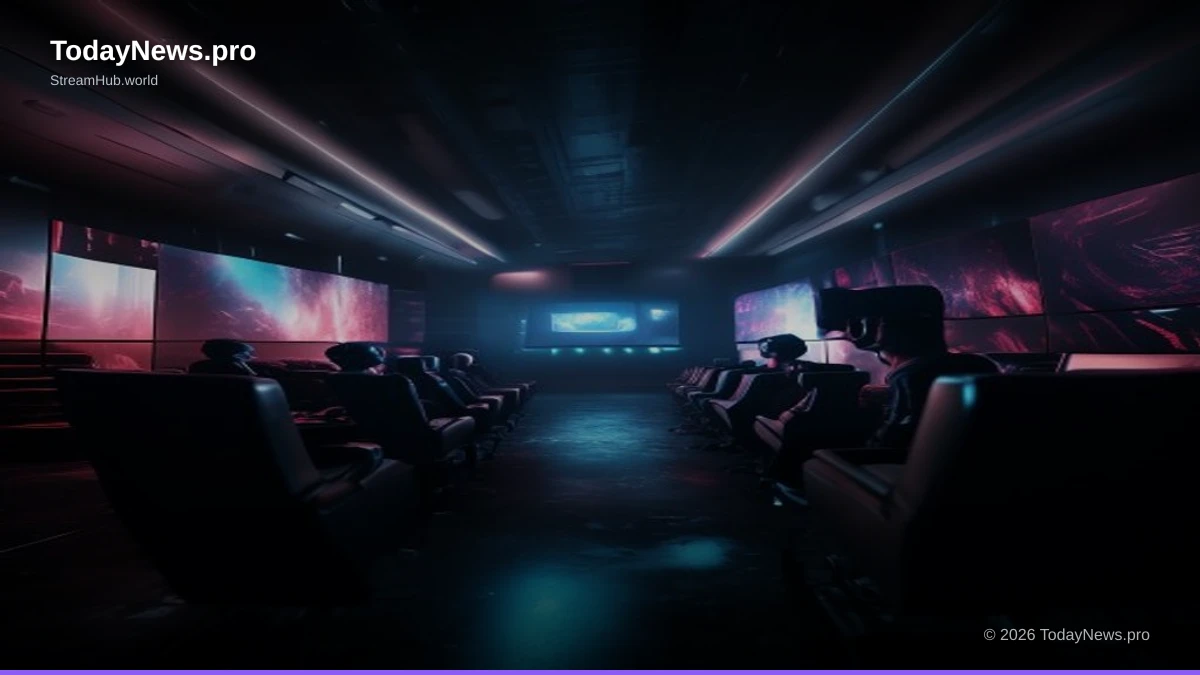
Virtual reality stands at the forefront of this immersive revolution. By donning a VR headset, users are transported to entirely new digital landscapes, becoming physically present within the story. This technology offers an unparalleled sense of presence, where the narrative unfolds around the viewer, not just in front of them. From exploring alien planets to witnessing historical events firsthand, VR cinema promises to deliver experiences that are both deeply personal and astonishingly visceral. The 360-degree field of view, coupled with spatial audio, creates a convincing illusion of reality, making the viewer feel as though they are an integral part of the unfolding events, rather than an detached observer.The Promise of Presence
The key differentiator for VR is its ability to induce a strong sense of "presence"—the feeling of actually being in the virtual environment. This is achieved through a combination of high-resolution visuals, low latency tracking, and immersive audio. When these elements align, the brain accepts the virtual world as a believable reality, leading to heightened emotional responses and deeper engagement. A horror film experienced in VR, for instance, can be exponentially more terrifying than a traditional screening, as the threats feel immediate and inescapable. Similarly, a documentary about wildlife can allow viewers to stand inches away from majestic creatures, fostering a profound connection with the natural world.VR Content Formats
VR cinema isn't a monolithic entity. It encompasses various formats, from 360-degree films that offer a fixed narrative path with directorial control over the viewer's focus, to fully interactive VR experiences where users have agency over their actions and the story's progression. There are also "cinematic VR" experiences that blend traditional filmmaking techniques with VR's immersive capabilities, often featuring live-action footage within a virtual environment. Each format offers a unique way to engage with stories, catering to different levels of desired interactivity and narrative control. The evolution of these formats is crucial for expanding the appeal and accessibility of VR storytelling.Global VR Headset Shipments (Millions of Units)
Augmented Reality: Blurring Lines Between Fiction and Reality
Augmented reality offers a more subtle yet equally transformative approach to immersive storytelling. Unlike VR, which completely replaces the real world with a digital one, AR overlays digital information and imagery onto our existing surroundings. This allows for unique narrative experiences that blend the fantastical with the familiar. Imagine characters from a film appearing in your living room, or a historical documentary that brings ancient ruins to life in your current location. AR has the potential to turn everyday spaces into interactive canvases for storytelling, making cinema more integrated into our daily lives. The accessibility of AR through smartphones and tablets makes it a particularly potent medium for widespread adoption.Everyday Immersion
The beauty of AR lies in its accessibility and its ability to enhance, rather than replace, reality. Mobile AR applications, powered by advancements in computer vision and spatial mapping, can recognize environments and place virtual objects within them with remarkable accuracy. This opens up possibilities for location-based narratives, interactive scavenger hunts that unfold across a city, or educational experiences that bring textbook illustrations to three-dimensional life. The ubiquity of smartphones ensures that AR storytelling can reach a massive audience, democratizing the immersive experience.AR in Public Spaces and Marketing
AR is poised to revolutionize how we interact with public spaces and how brands engage with consumers. Imagine walking down a street and seeing historical figures reenacting events on the very spot where they occurred, or visiting a museum where the artifacts on display come alive with animated stories. In marketing, AR can offer product demonstrations that leap off the packaging, or allow customers to virtually "try on" clothes in their own homes. These applications not only entertain but also provide valuable context and utility, making AR a powerful tool for narrative dissemination.90%
of consumers are more likely to purchase from a brand that offers AR experiences.
3x
higher engagement rates for AR-enabled marketing campaigns compared to traditional ones.
2030
estimated year for AR to surpass VR in market size according to some analysts.
Interactive Storytelling: The Audience as Co-Creator
Beyond the hardware, the software and narrative design are evolving to embrace interactivity. Interactive storytelling empowers the audience to make choices that influence the plot, character development, and even the ending. This transforms the viewer from a passive recipient into an active participant, a co-creator of the cinematic experience. Technologies like branching narrative engines, real-time rendering, and AI-driven character responses are enabling complex and dynamic storytelling. This shift taps into a fundamental human desire for agency and consequence, making the narrative deeply personal and engaging.Branching Narratives and Player Agency
The concept of branching narratives, popularized by video games, is now a cornerstone of interactive cinema. Audiences are presented with choices at critical junctures, and their decisions lead them down different paths within the story. This creates a unique experience for each viewer, encouraging repeat viewings to explore alternative storylines. The complexity of these branches can range from simple binary choices to intricate webs of cause and effect, demanding sophisticated narrative design and robust technological infrastructure.The Rise of AI in Storytelling
Artificial intelligence is poised to play a significant role in the future of interactive cinema. AI can be used to generate dynamic dialogue, create responsive non-player characters (NPCs), and even adapt the narrative in real-time based on the viewer's actions and emotional state. This could lead to truly personalized cinematic experiences, where the story feels uniquely crafted for each individual viewer. Imagine an AI director that understands your preferences and crafts a narrative that perfectly resonates with you. This opens up unprecedented possibilities for creative expression and audience engagement."The greatest strength of interactive cinema lies in its ability to foster empathy. When an audience member has to make a difficult choice within a narrative, they are forced to confront the consequences and understand the motivations of characters on a profound level. It moves beyond simply observing a story to actively living through its dilemmas."
— Dr. Anya Sharma, Professor of Digital Media Studies
Technological Hurdles and Creative Horizons
Despite the immense potential, the widespread adoption of immersive cinema faces several technological and creative challenges. High-end VR hardware can still be expensive and cumbersome. The technical demands of rendering complex virtual environments in real-time are substantial, requiring powerful processing capabilities. Furthermore, the art of crafting compelling interactive narratives is a nascent field, requiring new storytelling techniques and a deep understanding of audience psychology. Bridging the gap between technological feasibility and creative vision is paramount for the evolution of this medium.Hardware and Accessibility
The cost and complexity of VR headsets remain significant barriers to mass adoption. While prices are decreasing and form factors are becoming more user-friendly, widespread accessibility is still some way off. Similarly, the need for powerful computing hardware to run demanding VR and AR experiences can be prohibitive for many consumers. Solutions like cloud rendering and more efficient mobile AR technologies are crucial for democratizing access to these immersive formats. The ongoing race for lighter, more powerful, and more affordable headsets is a key determinant of future market penetration.Narrative Design and Authorial Intent
One of the most significant creative challenges is balancing audience agency with authorial intent. How does a filmmaker maintain their artistic vision when the audience can alter the course of the story? Developing effective narrative structures that accommodate player choices without sacrificing thematic coherence or emotional impact is a complex undertaking. This requires new forms of scripting, character development, and directorial control, pushing the boundaries of traditional filmmaking. The development of robust authoring tools and educational frameworks for interactive narrative design is essential."We're still in the nascent stages of understanding what it means to tell a story in three dimensions, with agency. The current tools and methodologies are often adaptations of existing media. True immersive storytelling will require entirely new paradigms of scriptwriting, character psychology, and directorial control, moving beyond linear progression to embrace emergent narrative."
— Ben Carter, Lead Immersive Experience Designer
The Business of Immersion: Monetization and Market Potential
The economic implications of immersive cinema are vast. Beyond traditional ticket sales and distribution models, new avenues for monetization are emerging. This includes premium VR experiences, in-app purchases for interactive content, subscriptions to immersive platforms, and brand partnerships for AR activations. The potential to create unique, high-value experiences suggests a lucrative future for creators and distributors willing to innovate. The market is not just about entertainment; it extends to education, training, and therapeutic applications, broadening the scope of revenue streams.New Revenue Streams
The shift to interactive and immersive formats opens up diverse revenue models. Direct-to-consumer sales of VR films and interactive experiences through dedicated platforms are becoming prevalent. Subscription services offering a library of immersive content, similar to Netflix, are also gaining traction. Additionally, the ability to create bespoke, branded AR experiences presents significant opportunities for advertisers and marketing agencies. The potential for in-experience purchases, such as unlocking new narrative paths or acquiring virtual goods, further diversifies the monetization landscape.Market Growth and Investment
The market for immersive entertainment is experiencing rapid growth, attracting significant investment from venture capitalists and major media companies. As the technology matures and consumer adoption increases, the market for VR, AR, and interactive storytelling is expected to expand exponentially. Analysts predict a significant portion of the entertainment budget will eventually be allocated to these immersive forms, reflecting a fundamental shift in consumer demand and technological capability. This influx of capital is driving further innovation and accelerating the development of new content and platforms.| Segment | 2023 | 2025 (Projected) | 2027 (Projected) |
|---|---|---|---|
| VR Content & Services | 15.2 | 28.5 | 55.8 |
| AR Content & Services | 8.9 | 19.1 | 42.3 |
| Interactive Storytelling Platforms | 6.5 | 14.2 | 30.1 |
Case Studies: Early Pioneers in Immersive Cinema
Several groundbreaking projects are already demonstrating the power and potential of immersive cinema. From award-winning VR documentaries that place viewers in the heart of critical events, to interactive narrative games that challenge traditional storytelling structures, these examples offer a glimpse into the future. Studios and independent creators are experimenting with new forms of engagement, pushing the boundaries of what's possible and paving the way for a richer, more participatory cinematic landscape.VR Documentaries: Bearing Witness
VR documentaries like "Notes on Blindness: Into Darkness" and "The Displaced" have garnered critical acclaim for their ability to immerse viewers in profound human experiences. By placing the audience directly into the perspective of their subjects, these films foster a powerful sense of empathy and understanding that is difficult to achieve through traditional mediums. They demonstrate VR's capacity not just for entertainment, but for impactful social commentary and education.Interactive Narrative Films
Platforms like Black Mirror: Bandersnatch on Netflix proved the appetite for interactive storytelling within a mainstream context. While a more simplified form of interactivity, it highlighted the audience's desire for agency. More complex examples exist in the gaming world, such as "Her Story" and "Telling Lies," which utilize video footage and investigative gameplay to create compelling, non-linear narratives that are pieced together by the player.The Future is Now: Predictions and Perceptions
The trajectory is clear: cinema is evolving from a visual medium into an experiential one. The convergence of VR, AR, and interactive storytelling promises a future where audiences don't just watch movies; they live them. While challenges remain, the rapid pace of technological development and the growing creative experimentation suggest that the immersive future of cinema is not a distant dream, but an unfolding reality. The question is no longer if, but when and how profoundly, these technologies will redefine our relationship with narrative and entertainment.Will VR replace traditional cinema?
It's unlikely to completely replace traditional cinema, which offers a unique communal experience. Instead, VR cinema is expected to become a complementary medium, offering distinct forms of immersive storytelling. It will likely coexist, catering to different audience preferences and occasions.
How will interactive elements affect the director's vision?
This is a key area of innovation. Directors will need to develop new techniques for guiding narratives while allowing for audience agency. This might involve designing multiple, equally compelling narrative branches, or utilizing AI to adapt the story in a way that still aligns with overarching themes and artistic intent.
What are the ethical considerations of immersive storytelling?
Ethical considerations include issues of data privacy in interactive experiences, potential for manipulation through highly personalized narratives, and the psychological impact of hyper-realistic immersive content, especially for vulnerable audiences. Responsible design and clear guidelines are crucial.
How can I experience immersive cinema today?
You can experience immersive cinema through VR headsets like the Meta Quest series, HTC Vive, or PlayStation VR, accessing content on platforms like YouTube VR, Oculus TV, and specialized VR film apps. AR experiences are widely available on smartphones via apps like IKEA Place or through specific AR filters on social media platforms.