

 Sarah Jenkins
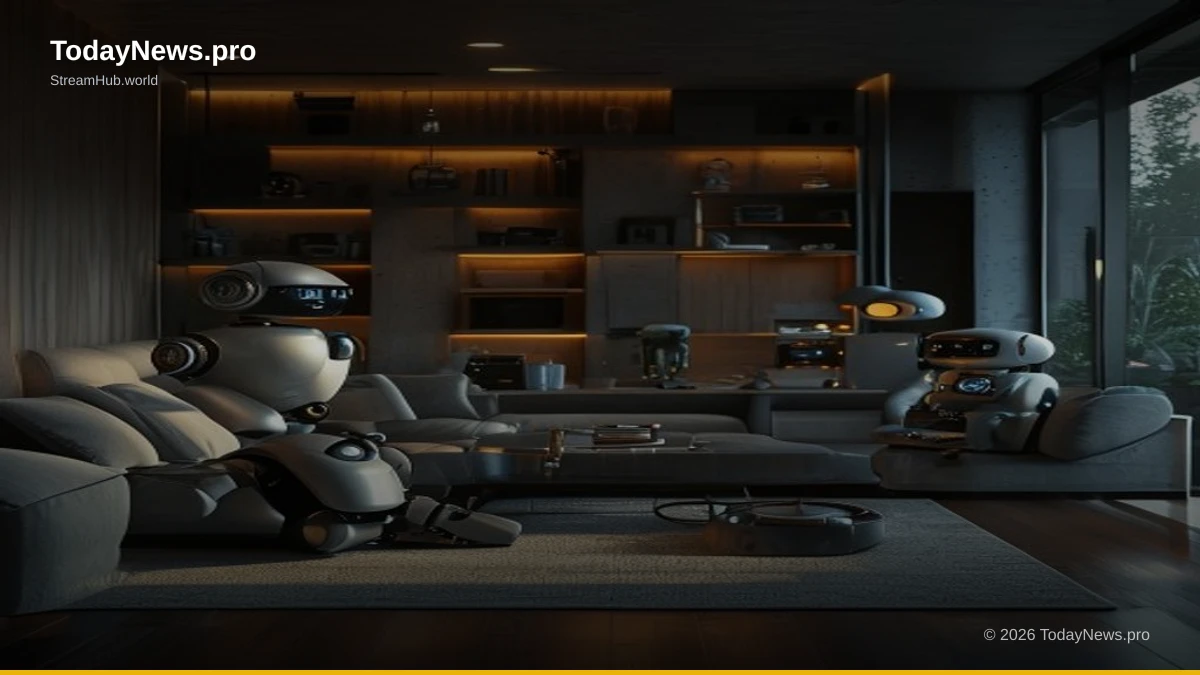
By 2030, the global market for household robots is projected to reach over $20 billion, signaling a dramatic shift in how we manage our homes and our lives. This isn't science fiction; it's the rapidly unfolding reality of personal and service automation.
The Dawn of the Domestic Robot: More Than Just a Vacuum
For decades, the idea of robots in our homes was confined to the realm of fantasy. Early iterations, like the now ubiquitous robotic vacuum cleaners, were mere tasters of what was to come. These machines, while revolutionary for their time, performed singular, repetitive tasks. They were smart enough to navigate a floor plan, but lacked the nuance and adaptability required for true domestic partnership.
Today's generation of household robots is vastly different. They are designed with greater autonomy, sophisticated sensors, and increasingly, a degree of artificial intelligence that allows them to learn and adapt to their environment and their human inhabitants. From intelligent assistants that manage schedules and control smart home devices to more complex machines capable of food preparation or elder care, the scope of domestic robotics is expanding at an exponential rate.
The evolution is driven by several key technological advancements. Miniaturization of powerful processors, the development of advanced AI algorithms, and improvements in battery technology have all contributed to making these sophisticated machines not only feasible but also increasingly affordable for the average consumer. The dream of a truly automated home, once a distant aspiration, is now within tangible reach.
The Evolution of Robotic Tasks
The journey began with simple automation. Robotic vacuum cleaners like the Roomba, first introduced in 2002, revolutionized household cleaning by automating a tedious chore. These early models relied on relatively simple algorithms, often bumping into walls and relying on infrared sensors to detect drops. Their primary function was to cover a designated area, collecting dust and debris autonomously.
Following the success of vacuuming robots, manufacturers began exploring other niche areas. Robotic lawnmowers emerged, offering a hands-free solution for garden maintenance. Window cleaning robots, though less widespread, also demonstrated the potential for robots to tackle specific, physically demanding tasks within the home. Each of these innovations, while limited in scope, paved the way for more integrated and intelligent systems.
The current wave of domestic robots is characterized by a move towards multitasking and greater interaction. These are not just tools; they are increasingly seen as potential assistants, capable of performing a range of duties and even engaging with their users in a more meaningful way. This shift signifies a maturation of the technology, moving from single-purpose devices to more comprehensive home automation solutions.
Sensors and Navigation: The Eyes and Brains of the Home Robot
The ability of a robot to function effectively within the complex and dynamic environment of a home hinges on its sensory capabilities and sophisticated navigation systems. Modern domestic robots employ a suite of sensors that allow them to perceive their surroundings with remarkable detail.
Lidar (Light Detection and Ranging) and advanced camera systems provide detailed 3D mapping of rooms, enabling robots to understand spatial relationships, identify obstacles, and plan efficient routes. Ultrasonic sensors, infrared sensors, and even tactile sensors help in close-proximity detection, preventing collisions with furniture, pets, and people. This sophisticated perception allows robots to operate safely and effectively, even in cluttered environments.
Simultaneously, advanced AI algorithms process this sensor data to make intelligent decisions. Simultaneous Localization and Mapping (SLAM) techniques allow robots to build a map of their environment while simultaneously tracking their own position within that map. This enables them to navigate autonomously, return to charging stations, and perform tasks in previously unexplored areas of the home without human intervention.
| Robot Type | Primary Function | Key Technologies | Market Maturity |
|---|---|---|---|
| Robotic Vacuum Cleaners | Automated Floor Cleaning | Sensors (IR, bumper), SLAM, AI Navigation | High |
| Robotic Lawn Mowers | Automated Lawn Care | GPS, boundary wires, rain sensors | Medium |
| Smart Home Assistants (with robotic capabilities) | Voice Control, Task Management, Entertainment | AI, Natural Language Processing, Connectivity | High |
| Companion Robots | Social Interaction, Entertainment, Basic Assistance | AI, facial recognition, voice synthesis | Emerging |
| Service Robots (e.g., delivery, security) | Specific Service Delivery within Home/Property | Advanced Navigation, AI, task-specific manipulators | Emerging |
Beyond Chores: Robots as Companions and Caregivers
The narrative of domestic robots is rapidly shifting from mere task automation to becoming integral members of the household, offering companionship and crucial caregiving support. This evolution is particularly significant for aging populations and individuals living alone.
Companion robots, such as those designed to interact with users through conversation, play games, or even provide reminders for medication, are emerging as a vital tool in combating loneliness and ensuring well-being. These robots can offer a sense of presence and engagement, providing a valuable service where human interaction may be limited.
In the realm of caregiving, robots are being developed to assist with a range of tasks, from monitoring vital signs and detecting falls to helping with mobility and even providing basic physical assistance. While not intended to replace human caregivers, these robots can significantly enhance the quality of life for individuals needing support, allowing them to maintain independence for longer periods.
Combating Loneliness and Enhancing Well-being
Loneliness is a growing public health concern, particularly among the elderly. Companion robots are being designed to offer a form of social interaction and emotional support. Brands like LG's CLOi HubBot and SoftBank's Pepper have showcased capabilities ranging from engaging in simple conversations and telling jokes to playing music and even recognizing faces and emotions.
These robots are equipped with advanced natural language processing (NLP) capabilities, allowing them to understand and respond to human speech in a more natural and engaging manner. They can also be programmed with personalized routines, offering reminders for appointments, medication, or even suggesting activities to keep users engaged. The goal is not to replicate human connection but to provide a consistent, accessible source of interaction that can alleviate feelings of isolation.
Furthermore, some companion robots can integrate with smart home systems, allowing them to control lights, adjust thermostats, or even order groceries via voice command, thus simplifying daily routines and enhancing the user's sense of autonomy and control over their environment. This dual functionality makes them more than just a novelty; they become practical aids for everyday living.
Assistive Robotics for Elder Care
The demographic shift towards an aging global population presents a significant need for innovative solutions in elder care. Assistive robots are emerging as a promising avenue, offering support to both the elderly and their human caregivers. These robots can perform tasks that might be challenging or unsafe for older individuals to undertake on their own.
Consider robots designed for physical assistance. Prototypes are being developed that can help users stand up from chairs, provide support while walking, or even carry objects. These devices aim to maintain mobility and reduce the risk of falls, a major concern for seniors. Beyond physical aid, robots can also play a crucial role in health monitoring. Wearable sensors can transmit data to a central home robot, which can then alert family members or healthcare professionals if any anomalies are detected.
Robots are also being explored for tasks like medication management, dispensing the correct dosage at the right time. This reduces the burden on caregivers and ensures that individuals are receiving their prescribed treatments accurately. The integration of these robots into home care settings promises to enhance independence, improve safety, and potentially reduce healthcare costs.
The Intelligence Behind the Machine: AI and Learning
The sophistication of modern domestic robots is inextricably linked to the advancements in artificial intelligence (AI) and machine learning (ML). These technologies imbue robots with the capacity to perceive, reason, learn, and adapt, transforming them from programmable tools into intelligent assistants.
At the core of this intelligence is the ability for robots to process vast amounts of data from their sensors and make informed decisions. This includes understanding spoken commands, recognizing objects and people, and navigating complex environments. Machine learning algorithms allow these robots to improve their performance over time, learning from their experiences and refining their responses without explicit reprogramming.
From understanding nuanced voice commands to predicting user needs, the AI powering these robots is becoming increasingly sophisticated, paving the way for more intuitive and personalized interactions. The continuous development in areas like deep learning and reinforcement learning is pushing the boundaries of what domestic robots can achieve.
Natural Language Processing (NLP) and Voice Control
The ability to communicate naturally with machines is a cornerstone of user-friendly automation. Natural Language Processing (NLP) is the AI field that empowers robots to understand, interpret, and generate human language. This is what allows devices like Amazon's Alexa or Google Assistant to respond to your spoken queries, even when phrased in different ways.
In domestic robots, advanced NLP enables them to go beyond simple commands. They can understand context, infer intent, and engage in more fluid conversations. For instance, a robot might understand "It's a bit chilly in here" not just as a statement of fact, but as a directive to adjust the thermostat. This level of understanding is crucial for creating a seamless and intuitive user experience.
The ongoing research in NLP focuses on improving accuracy, understanding dialects and accents, and enabling robots to detect emotional cues in speech. As these capabilities advance, the interaction between humans and their robotic assistants will become increasingly natural and less like issuing commands to a machine, fostering a more collaborative relationship.
Machine Learning and Adaptive Behavior
Machine learning is the engine that allows robots to learn and improve from experience, a critical component for their integration into dynamic home environments. Instead of being explicitly programmed for every possible scenario, robots can use ML algorithms to identify patterns, make predictions, and adapt their behavior accordingly.
For example, a robot vacuum cleaner might use ML to learn the most efficient cleaning path for a particular room over time, avoiding areas that are consistently clean or identifying persistent obstacles. Similarly, a companion robot might learn the user's daily routine, anticipating their needs and offering assistance proactively. This adaptive behavior makes the robot more useful and less intrusive.
Reinforcement learning, a subset of ML, is particularly valuable. It allows robots to learn through trial and error, receiving rewards for desired actions and penalties for undesirable ones. This is crucial for complex tasks like grasping objects or navigating cluttered spaces, where precise programming for every eventuality is impractical. As ML models become more powerful and data becomes more readily available, the adaptive capabilities of domestic robots will continue to soar.
Navigating the Ethical Landscape: Privacy, Security, and Job Displacement
As robots become more integrated into our homes and lives, they bring with them a complex set of ethical considerations that demand careful attention. Issues surrounding privacy, data security, and the potential impact on employment are paramount concerns for consumers, developers, and policymakers alike.
The pervasive data collection capabilities of smart robots raise significant privacy questions. These devices often capture audio, video, and behavioral data, which, if not adequately protected, could be vulnerable to misuse or unauthorized access. Robust security measures and transparent data policies are essential to building consumer trust.
Furthermore, the increasing automation of tasks traditionally performed by humans, even within the domestic sphere, inevitably sparks discussions about job displacement. While new roles may emerge in robot maintenance and development, the broader economic impact requires proactive consideration and strategies for workforce adaptation.
Privacy Concerns and Data Security
The very nature of a domestic robot operating within the intimate space of a home means it will inevitably gather sensitive data. Cameras can record household activities, microphones can capture conversations, and sensors can track movement patterns. The potential for this data to be compromised or exploited is a significant concern.
Reputable manufacturers are implementing advanced encryption protocols and robust access controls to protect user data. However, the threat of cyberattacks remains constant. Consumers must be vigilant about the security practices of the devices they bring into their homes and ensure that software is regularly updated to patch potential vulnerabilities. Transparency from manufacturers regarding what data is collected, how it is used, and how it is protected is crucial for informed consent and building trust.
Regulations such as the GDPR in Europe and similar initiatives elsewhere are beginning to address these data privacy issues, but the rapidly evolving landscape of AI and robotics requires ongoing adaptation and robust legal frameworks to ensure that personal data remains secure and is used ethically. The question of who owns the data generated by a home robot, and how it can be used, is a complex one with significant legal and ethical ramifications.
The Impact on Employment and the Future of Work
The automation revolution, which has already transformed industries, is now knocking on the doors of our homes. As robots become more capable of performing domestic tasks, questions arise about the impact on jobs, particularly in sectors like cleaning, elder care, and even some forms of personal assistance.
While some roles may be diminished, the rise of domestic robotics also presents opportunities for new jobs in robot design, manufacturing, maintenance, software development, and specialized AI training. The challenge lies in ensuring that the workforce is equipped with the skills needed for these emerging roles through education and retraining programs.
Economists and futurists debate the net effect on employment. Some predict a significant shift, requiring societal adjustments in how we define work and compensation. Others believe that automation will augment human capabilities, freeing individuals from mundane tasks to focus on more creative, complex, and fulfilling endeavors. The transition will likely be uneven, necessitating proactive policy interventions to mitigate negative consequences and maximize the benefits of increased productivity.
The Future is Now: Emerging Technologies and the Smart Home Ecosystem
The current generation of domestic robots is just the beginning. Emerging technologies are poised to further enhance their capabilities and integrate them seamlessly into the broader smart home ecosystem, creating a truly interconnected and intelligent living environment.
Advancements in robotics, artificial intelligence, and sensor technology are converging to create robots that are not only more capable but also more intuitive and personalized. This includes robots that can learn user preferences, anticipate needs, and interact in more sophisticated ways, blurring the lines between tool and companion.
The concept of the 'smart home' is evolving from a collection of connected devices to a unified, intelligent ecosystem where robots play a central role in managing and optimizing daily life. This integration promises unprecedented levels of convenience, efficiency, and personalized comfort.
The Rise of Multi-functional and Collaborative Robots
The trend in domestic robotics is moving away from single-purpose devices towards multi-functional robots capable of performing a diverse range of tasks. These next-generation robots are designed to be adaptable and versatile, a significant leap from the specialized cleaners of yesterday.
Imagine a single robot that can not only vacuum and mop floors but also fetch items, monitor security, assist with cooking, and even provide basic companionship. This is the vision of multi-functional robotics. These robots will likely feature modular designs or advanced manipulators that allow them to switch between different tools and perform a wider array of operations. Their AI will be sophisticated enough to understand complex commands involving multiple steps and to coordinate their actions with other smart home devices.
Collaborative robots, or "cobots," are also set to play a role in the domestic sphere. These robots are designed to work alongside humans, assisting them rather than replacing them. In a domestic setting, this could mean a robot helping a user prepare a meal by chopping vegetables or assembling components for a DIY project. This collaborative approach leverages the strengths of both humans and robots, leading to enhanced productivity and creativity.
Integration with the Internet of Things (IoT)
The true power of domestic robots will be unlocked through their seamless integration with the broader Internet of Things (IoT) ecosystem. This interconnectedness will allow robots to act as central hubs and intelligent agents within the smart home.
A robot could receive a notification from your smart refrigerator that you're low on milk and then add it to your online grocery order. It could coordinate with your smart thermostat to adjust the temperature based on your presence and the weather forecast. It could even communicate with your smart security system to alert you to any unusual activity when you're away.
This level of integration transforms the home from a collection of disparate smart devices into a cohesive, intelligent organism. Robots, with their mobility and advanced AI, are ideally positioned to orchestrate these interactions, making the smart home experience more intuitive, efficient, and personalized than ever before. The development of open standards and interoperability protocols will be key to realizing this interconnected future.
For further reading on the impact of IoT on our lives, explore resources like Wikipedia's entry on the Internet of Things.
Investing in the Automated Home: Market Trends and Consumer Adoption
The burgeoning market for domestic robots is attracting significant investment from venture capital firms and established technology giants alike. This influx of capital is fueling rapid innovation and driving down costs, making advanced robotics more accessible to a wider consumer base.
Consumer adoption rates are steadily increasing, driven by the desire for convenience, time-saving solutions, and enhanced quality of life. Early adopters have paved the way, and as the technology matures and prices become more competitive, mainstream consumers are increasingly embracing robotic solutions for their homes.
Understanding the market trends and factors influencing consumer adoption is crucial for both businesses and individuals navigating this evolving landscape. The future trajectory of domestic robotics will be shaped by technological advancements, economic factors, and evolving consumer preferences.
Market Growth and Investment Outlook
The global market for household robots has experienced consistent growth, and projections indicate a continued upward trajectory. Several factors are contributing to this expansion, including increasing disposable incomes, a growing demand for automation to simplify daily tasks, and significant technological advancements.
Major technology companies are investing heavily in R&D for domestic robotics, acquiring smaller startups and developing their own innovative products. This competitive landscape is driving rapid innovation and pushing the boundaries of what is possible. Venture capital funding has also surged, supporting the development of new companies and disruptive technologies in the sector.
The market is segmented by robot type, application, and end-user. While robotic vacuum cleaners currently dominate, the fastest growth is expected in areas like companion robots, assistive robots for elder care, and advanced service robots. The overall outlook for investment in this sector remains highly positive, with strong potential for long-term growth and profitability.
For insights into market dynamics, consider reports from reputable news agencies such as Reuters, which frequently cover technology market trends and investments.
Consumer Adoption Drivers and Barriers
The widespread adoption of domestic robots is influenced by a combination of driving forces and potential barriers. Understanding these factors is key to predicting the pace and extent of their integration into households worldwide.
Key drivers include the desire for convenience and time-saving solutions. As people lead increasingly busy lives, the appeal of robots that can automate mundane chores like cleaning, cooking, or lawn maintenance is significant. The growing elderly population also presents a strong demand for assistive robots that can enhance independence and quality of life. Furthermore, advancements in AI and robotics are making these devices more capable, user-friendly, and aesthetically appealing, reducing hesitation among consumers.
However, several barriers remain. Cost is a significant factor; while prices are decreasing, high-end robots can still be prohibitively expensive for many households. Concerns about privacy and data security, as previously discussed, can deter potential buyers. Furthermore, a lack of consumer awareness or understanding about the capabilities and benefits of certain robotic technologies can hinder adoption. Finally, the perceived complexity of setup and operation can also be a deterrent for less tech-savvy individuals.
Preparing for the Robot Revolution in Your Living Room
The integration of robots into our homes is no longer a futuristic concept but a present reality that is rapidly accelerating. As these intelligent machines become more commonplace, understanding their capabilities, limitations, and implications is essential for navigating this transformative era.
From simple task automation to complex companionship and caregiving roles, domestic robots are set to redefine our relationship with technology and our living spaces. Embracing this evolution requires an informed approach, focusing on the benefits while also proactively addressing the ethical and practical considerations.
As we stand on the cusp of this new domestic era, preparing for the robot revolution means staying informed, making conscious choices about the technology we adopt, and understanding how these machines can best serve us in creating more efficient, comfortable, and supportive homes.
What to Consider When Buying a Home Robot
As the market for domestic robots expands, consumers will have a wider array of choices. Making an informed decision requires careful consideration of several key factors:
- Functionality: Clearly define what tasks you want the robot to perform. Are you looking for a cleaning solution, a security assistant, a companion, or a combination?
- Budget: Determine your price range. While initial costs can be high, consider the long-term value and potential cost savings (e.g., reduced need for professional cleaning services).
- Ease of Use: Assess the robot's user interface and setup process. Look for intuitive controls and clear instructions, especially if you are not highly tech-savvy.
- Connectivity and Integration: If you have a smart home ecosystem, ensure the robot can integrate with your existing devices and platforms.
- Privacy and Security Features: Research the manufacturer's data policies and security measures. Understand what data the robot collects and how it is protected.
- Maintenance and Support: Investigate warranty options, availability of spare parts, and customer support services.
- Reputation and Reviews: Read independent reviews and consumer feedback to gauge the reliability and performance of specific models and brands.
By carefully evaluating these aspects, consumers can select a robotic solution that best meets their needs and enhances their home environment effectively and responsibly.
The Evolving Human-Robot Relationship
The introduction of robots into our daily lives is fundamentally changing the nature of our relationship with technology. We are moving from a paradigm of using tools to collaborating with intelligent agents.
This evolving relationship raises profound questions about trust, dependence, and the very definition of assistance. As robots become more capable of understanding our emotions and anticipating our needs, the line between utility and genuine interaction may blur. Ethical frameworks and societal norms will need to adapt to this new dynamic.
Ultimately, the goal is to foster a symbiotic relationship where robots enhance human capabilities, improve our quality of life, and contribute to a more efficient and sustainable future, all while respecting human dignity and autonomy. This requires ongoing dialogue, thoughtful design, and a commitment to ethical development.