

 Diana Prince
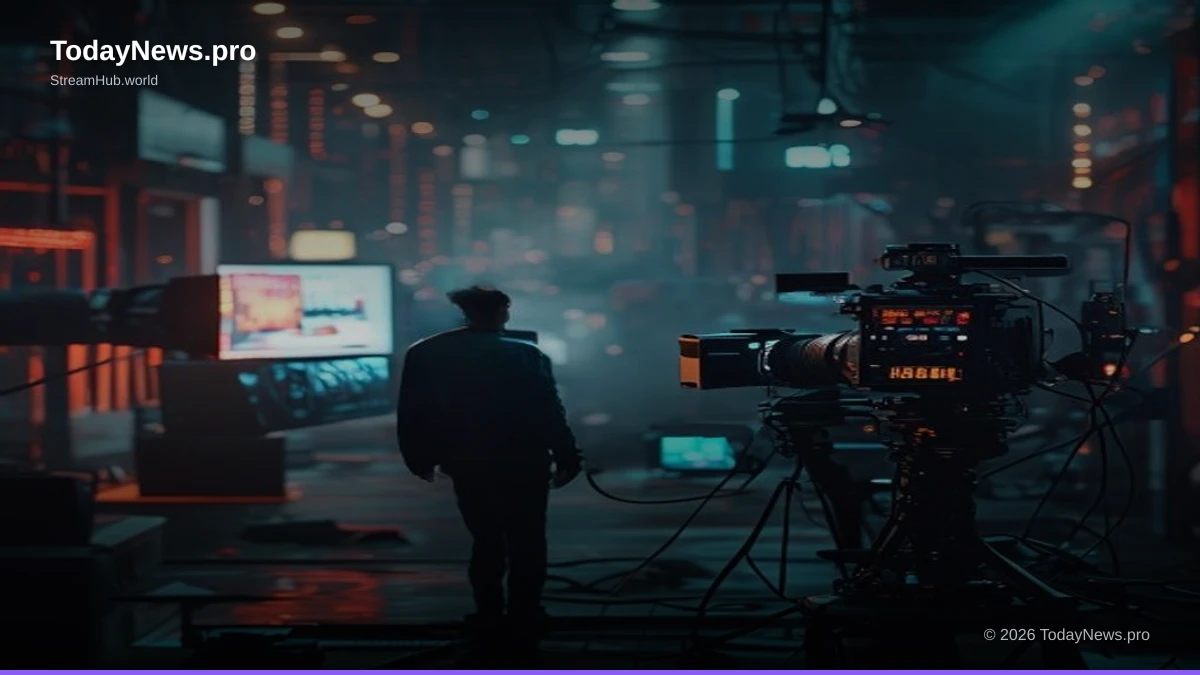
In 2023, studios spent an estimated $30 billion on visual effects (VFX) globally, a figure poised to skyrocket as AI and virtual production become more integrated into Hollywood's workflows.
Hollywoods Digital Transformation: A New Era Dawns
Hollywood, a town historically synonymous with celluloid dreams and practical ingenuity, is undergoing a seismic shift. The once-dominant analog processes are rapidly yielding to the power of digital innovation. This transformation is not merely an upgrade; it's a fundamental redefinition of how films are conceived, created, and experienced. At the forefront of this revolution are Artificial Intelligence (AI) and Virtual Production, two intertwined technologies that are reshaping every facet of filmmaking, from pre-production to post-production and beyond.
The allure of digital is multifaceted. It offers unparalleled flexibility, cost efficiencies in certain areas, and the ability to realize visions previously confined to the realm of the impossible. This digital renaissance promises to democratize filmmaking to some extent, while simultaneously concentrating immense power in the hands of those who master these new tools. The landscape of cinematic storytelling is expanding, pushing boundaries and inviting new forms of artistic expression.
The speed of adoption has been remarkable. What were once niche technologies are now becoming mainstream, with major studios investing heavily in infrastructure and talent. This rapid integration signals a commitment to a future where digital workflows are not just supplementary but foundational to the entire filmmaking process. The implications for audiences are equally profound, with the potential for more immersive, visually stunning, and emotionally resonant cinematic experiences.
The Genesis of the Digital Shift
The journey from film reels to digital sensors began decades ago, but the recent advancements in processing power, data storage, and algorithmic sophistication have accelerated the transition exponentially. Early digital tools, while revolutionary for their time, were often cumbersome and expensive. Today, powerful software and hardware are more accessible, allowing for a wider range of creators to engage with digital filmmaking.
The advent of digital cameras, sophisticated editing software like Adobe Premiere Pro and Avid Media Composer, and the widespread adoption of CGI in the late 20th century laid the groundwork for the current digital revolution. Films like "Jurassic Park" (1993) and "Toy Story" (1995) were pivotal in showcasing the potential of digital effects and animation, paving the way for the widespread acceptance and integration of these technologies.
This foundational work has enabled the current wave of innovation, where AI and virtual production are not just augmenting existing digital workflows but fundamentally changing them. The industry is now grappling with how to best leverage these advanced tools to enhance storytelling and production efficiency.
Beyond CGI: A New Paradigm
While CGI has been a cornerstone of digital filmmaking for years, AI and virtual production represent a significant leap forward. They are not simply about generating fantastical creatures or impossible landscapes; they are about fundamentally altering the way scenes are shot, actors perform, and narratives are constructed. This shift moves beyond the traditional limitations of green screens and extensive post-production compositing.
The integration of these technologies is creating a more fluid and iterative production process. Instead of relying solely on visual effects teams to "fix it in post," filmmakers can now see and interact with digital elements in real-time during principal photography. This paradigm shift is reducing guesswork and enabling more informed creative decisions on set.
The potential for creative exploration is immense. Filmmakers can now experiment with different camera angles, lighting setups, and even environmental changes instantaneously, leading to a more dynamic and responsive filmmaking process. This level of control and immediate feedback was unimaginable just a few years ago.
The Rise of Artificial Intelligence in Filmmaking
Artificial Intelligence is no longer a concept confined to science fiction; it is an active participant in Hollywood's creative and technical processes. AI's ability to analyze vast datasets, learn patterns, and generate novel content is opening up a Pandora's Box of possibilities for filmmakers. From script analysis and character design to automated editing and predictive analytics, AI is proving to be a versatile tool.
The application of AI in filmmaking spans multiple domains. Generative AI models can assist in storyboarding, concept art, and even the creation of synthetic actors or digital doubles. Machine learning algorithms can analyze scripts for pacing, character arcs, and audience engagement potential, providing valuable insights to writers and producers. Furthermore, AI is being used to automate tedious post-production tasks, such as rotoscoping, color correction, and even sound mixing.
This technological infusion is not about replacing human creativity but augmenting it. AI acts as a powerful assistant, handling the computationally intensive or repetitive tasks, thereby freeing up human artists and technicians to focus on higher-level creative decisions and problem-solving. The synergy between human intuition and AI's analytical power is the key to unlocking its full potential.
AI in Pre-Production and Script Development
The initial stages of filmmaking, often the most time-consuming and creatively challenging, are being significantly impacted by AI. AI-powered tools can analyze scripts for narrative coherence, character development, and emotional resonance, offering suggestions for improvement. They can also identify potential plot holes or areas where audience engagement might dip.
Generative AI models can assist in creating concept art and storyboards, visualizing scenes and characters with remarkable speed and detail. This allows directors and cinematographers to explore multiple visual styles and ideas early in the process, saving time and resources. The ability to quickly iterate on visual concepts is a significant advantage.
Furthermore, AI can analyze historical box office data and audience demographics to predict the potential success of a film or identify target audiences for specific genres. This data-driven approach can inform marketing strategies and even influence script choices, aiming to optimize commercial viability.
AI-Powered Visual Effects and Animation
The realm of visual effects, long a domain of intricate human artistry, is now being enhanced by AI. AI algorithms can automate complex tasks like rotoscoping (the process of tracing frames to create masks for compositing) and motion tracking. This significantly reduces the labor-intensive nature of these tasks, allowing VFX artists to focus on more creative aspects.
Generative AI is also being used to create realistic textures, environments, and even character animations. AI can learn from existing animation data to generate new movements or stylistic variations, accelerating the animation pipeline. The creation of highly realistic digital doubles for stunts or deceased actors is also becoming more feasible with AI.
One of the most exciting applications is in procedural content generation, where AI can create vast, detailed worlds and environments automatically, based on specific parameters. This can dramatically reduce the time and cost associated with building complex digital sets. A recent example of AI's impact can be seen in tools that can de-age actors or even generate entirely new performances based on existing data.
The Future of AI in Sound and Music
The auditory experience of a film is as crucial as its visual component, and AI is making inroads here as well. AI-powered tools can assist in sound design, generating realistic ambient sounds, Foley effects, and even dialogue cleanup. Machine learning can analyze existing soundtracks to create new musical compositions that fit the mood and tone of a scene.
The ability to automatically generate background music or suggest sound effects based on visual cues can streamline the post-production audio workflow. Furthermore, AI can be used to create personalized soundtracks for different audience segments or viewing platforms, enhancing the immersive experience.
While the artistic nuances of music composition and sound design are deeply human, AI can serve as a powerful co-pilot, offering inspiration and handling the more technical aspects. The goal is to create richer, more dynamic soundscapes that elevate the storytelling.
Virtual Production: Unlocking Unprecedented Visuals
Virtual Production is not a single technology but a suite of interconnected tools and techniques that leverage real-time rendering, game engines, and advanced camera tracking to create digital environments that actors and filmmakers can interact with on set. This method dramatically reduces the reliance on traditional green screens and extensive post-production compositing.
The core of virtual production lies in LED volumes – massive, curved LED screens that display computer-generated environments. Cameras are tracked in real-time, and the digital background on the LED screens adjusts dynamically to match the camera's perspective and movement. This allows for photorealistic integration of digital sets and characters with live-action footage, shot in-camera.
This approach offers a level of immediacy and immersion previously unattainable. Directors can see the final shot in-camera, with digital characters and environments appearing as they will in the finished film. This facilitates more intuitive directing, acting, and cinematography, leading to more cohesive and visually stunning results.
LED Volumes and Real-Time Rendering
The dramatic rise of virtual production is intrinsically linked to advancements in LED display technology and real-time rendering engines, such as Unreal Engine and Unity. These game engines, once primarily used for video games, now power the creation of highly detailed and dynamic virtual sets that can be displayed on enormous LED screens.
When an actor walks across a virtual stage, the digital environment on the LED volume shifts accordingly, creating a convincing sense of depth and perspective. This eliminates the "flatness" often associated with green screen work and provides actors with tangible environments to react to. The quality of the LED screens has improved dramatically, offering high resolution, vibrant colors, and deep blacks, crucial for realistic imagery.
This real-time feedback loop is a game-changer. Instead of waiting weeks or months for VFX shots to be rendered, filmmakers can see the finalized image during the shoot. This allows for immediate adjustments to lighting, camera angles, and environmental elements, fostering a more collaborative and efficient production process.
The Convergence of Game Engines and Filmmaking
The marriage of game engines and filmmaking has been a pivotal development. Tools like Unreal Engine, originally designed for creating immersive video game worlds, are now being repurposed to build the virtual sets and environments for films. Their ability to render complex scenes in real-time, with sophisticated lighting and physics, makes them ideal for virtual production.
This convergence allows for rapid iteration and experimentation. Filmmakers can easily swap out different virtual assets, adjust lighting conditions, and test various camera movements without the costly and time-consuming traditional methods. The interactive nature of these engines also facilitates collaboration between different departments, as cinematographers, art directors, and VFX supervisors can work within the same digital space.
The technical expertise required for game development is now becoming increasingly valuable in the film industry. Studios are actively recruiting game developers and engineers to build and manage their virtual production pipelines, highlighting the growing integration between these two creative sectors.
Case Studies: The Mandalorian and Beyond
Perhaps the most prominent example of virtual production's transformative power is Disney's "The Mandalorian." The show revolutionized the use of LED volumes, creating its iconic otherworldly landscapes and ensuring consistent lighting and environmental integration for its actors. This approach not only saved time and money but also contributed significantly to the show's distinctive visual aesthetic.
Other productions have followed suit. Films like "Avatar: The Way of Water" utilized advanced virtual production techniques to create its breathtaking underwater worlds. The technology is no longer limited to science fiction or fantasy genres; it's being adopted across a wider range of films, offering new creative possibilities for historical dramas, contemporary thrillers, and more.
The success of these productions has spurred further investment and innovation in virtual production. Studios are building dedicated virtual production stages and developing proprietary technologies to gain a competitive edge. The ease with which complex environments can be realized is a major draw for filmmakers seeking to push the boundaries of visual storytelling.
The Impact on Creativity and Storytelling
The integration of AI and virtual production is not just about technological advancement; it's fundamentally changing how stories are told and how creative decisions are made. These tools offer new avenues for artistic expression, allowing filmmakers to realize visions that were once impossible or prohibitively expensive.
The ability to visualize scenes in real-time during shooting, for instance, allows actors to engage more deeply with their environment, leading to more nuanced performances. Directors can provide immediate feedback and make on-the-spot creative adjustments, fostering a more dynamic and collaborative storytelling process. This immediacy can translate into more authentic and emotionally resonant performances.
However, this also raises questions about the balance between technology and human artistry. The ease with which digital elements can be created and manipulated necessitates a careful consideration of how these tools are used to enhance, rather than overshadow, the core narrative and human performance.
Enhancing Actor Performance
Virtual production, by providing tangible, albeit digital, environments on set, significantly impacts actor performance. Actors no longer have to imagine a vast alien landscape or a burning cityscape; they can see and interact with it in real-time. This allows for more grounded and naturalistic performances, as actors can react to their surroundings with genuine emotion and physical presence.
The ability for actors to see the virtual environment and its inhabitants (even if they are digital) during takes fosters a stronger sense of immersion. This can lead to more believable and compelling character portrayals, as the actor's performance is informed by a more complete visual context. This is a stark contrast to the often isolating experience of acting against a green screen with minimal visual cues.
AI can also play a role in performance enhancement. For example, AI can be used to analyze an actor's performance for micro-expressions or emotional nuances, providing feedback for refinement. While controversial, the potential for AI to assist in character development and performance coaching is an area of ongoing exploration.
New Forms of Visual Storytelling
AI and virtual production are enabling entirely new forms of visual storytelling. The seamless integration of real and digital elements opens up possibilities for fantastical narratives and immersive experiences that were previously the domain of animation or heavily reliant on CGI in post-production. This allows for a more fluid and organic blend of the real and the imagined.
Filmmakers can now create worlds that defy the laws of physics, construct intricate historical settings with unparalleled accuracy, or generate dynamic, ever-changing environments that respond to the narrative. The limitations of physical sets are removed, paving the way for truly imaginative visual creations. The ability to shoot scenes that previously would have required months of complex VFX work in a matter of days is a significant creative and logistical advantage.
This democratization of visual creation means that more ambitious storytelling can be realized by a wider range of filmmakers, potentially leading to a more diverse and innovative cinematic landscape. The focus can shift from the technical challenges of realizing a vision to the creative possibilities it unlocks.
The Democratization of Filmmaking?
While the cutting edge of AI and virtual production involves significant investment, the underlying technologies are becoming more accessible. Cloud-based AI tools and more affordable real-time rendering software are enabling independent filmmakers and smaller studios to experiment with these advanced techniques. This could lead to a democratization of filmmaking, where budget constraints are less of a barrier to visual ambition.
The availability of powerful tools on personal computers and the rise of online collaboration platforms mean that filmmakers no longer need massive studio infrastructure to create high-quality visual content. This accessibility fosters a new generation of creators who can leverage these technologies to tell their unique stories.
However, the significant cost of high-end virtual production stages and specialized hardware still presents a barrier to entry for many. While accessible tools exist, the most groundbreaking applications still require substantial capital investment, creating a potential divide within the industry.
Economic Implications and Future Prospects
The adoption of AI and virtual production is having a profound impact on the economics of filmmaking. While these technologies represent significant upfront investments, they also promise substantial long-term cost savings and increased production efficiency.
Studios are investing billions in new virtual production facilities and AI research and development. This is creating new job opportunities in fields like real-time graphics programming, virtual production supervision, and AI ethics. Simultaneously, traditional roles in VFX may see a shift, with an increased demand for artists who can work with these new digital pipelines.
The ability to shoot more scenes in-camera, reduce the need for extensive location scouting, and minimize the reliance on costly post-production compositing can lead to shorter production schedules and reduced overall budgets for certain types of films. This efficiency is a major driver for the industry's embrace of these technologies.
Cost Efficiencies and Time Savings
One of the most compelling economic arguments for AI and virtual production is the potential for cost savings and time efficiency. By shooting scenes with digital environments in-camera, filmmakers can significantly reduce the need for expensive location shoots, elaborate set constructions, and extensive green screen work, which often require costly compositing and set extensions in post-production.
Virtual production allows for rapid iteration and visualization, cutting down on pre-production planning time and reducing costly reshoots. The ability to see the final image during principal photography means that creative decisions can be made and finalized on set, rather than waiting for weeks or months for VFX renders. This streamlined workflow translates directly into shorter production schedules and, consequently, lower overall production costs.
AI can also automate time-consuming tasks in post-production, such as rotoscoping, color grading, and even basic editing, freeing up human talent to focus on more complex creative challenges. This increased efficiency is crucial in a competitive market where speed and budget are often paramount.
Job Market Evolution
The rise of AI and virtual production is inevitably reshaping the film industry's job market. While some traditional roles might see a decline, new, highly specialized positions are emerging. There is a growing demand for real-time 3D artists, virtual production technicians, AI ethicists, and data scientists who can work with these advanced tools.
The skills required are shifting. Instead of solely focusing on traditional VFX techniques, artists and technicians are increasingly needing proficiency in game engines, real-time rendering, and AI-driven workflows. This necessitates a continuous learning and adaptation process for professionals in the industry. The demand for individuals who can bridge the gap between artistic vision and technical execution is particularly high.
For example, a traditional compositor might now need to understand how to integrate live-action footage with real-time rendered environments from an LED volume, a different skillset than compositing CGI elements in post. The industry is actively investing in training programs and educational initiatives to equip its workforce with these new competencies.
Investment Trends and Market Growth
Major Hollywood studios and independent production companies are making substantial investments in virtual production facilities and AI research. This includes building dedicated LED volume stages, acquiring advanced motion-capture technology, and developing proprietary AI algorithms. The market for virtual production services and AI-powered filmmaking tools is experiencing exponential growth.
According to reports, the global virtual production market is projected to grow from approximately $2.5 billion in 2023 to over $7.5 billion by 2028, a compound annual growth rate of over 25%. This rapid expansion underscores the industry's confidence in the transformative potential of these technologies. The investment is not limited to large studios; smaller companies and even individual filmmakers are finding ways to leverage accessible AI tools and cloud-based rendering services.
This growth is fueled by the desire to create more visually compelling content, reduce production costs, and gain a competitive edge in an increasingly crowded entertainment landscape. The future of filmmaking is undeniably digital, and these technologies are at the forefront of that evolution.
Challenges and Ethical Considerations
While the potential of AI and virtual production is immense, their integration into filmmaking is not without its challenges and ethical considerations. As these technologies become more sophisticated, they raise important questions about authorship, authenticity, job displacement, and the potential for misuse.
One of the primary concerns is the potential for AI to generate deepfakes or manipulate visual content in ways that are difficult to detect. This has implications for misinformation and the erosion of trust in visual media. Furthermore, the increasing reliance on AI-generated content raises questions about artistic ownership and the future of creative professions.
The ethical implications of using AI for tasks like de-aging actors, creating synthetic performances, or even generating entire virtual characters require careful consideration. Ensuring transparency, establishing clear guidelines, and fostering responsible development are crucial steps in navigating this complex landscape.
Authorship and Authenticity
The increasing role of AI in creative processes brings forth complex questions about authorship. If an AI generates a script or a visual concept, who is the true author? Is it the programmer, the user who prompts the AI, or the AI itself? This ambiguity challenges traditional notions of intellectual property and creative ownership.
The issue of authenticity is also paramount. With AI's ability to generate highly realistic images and performances, it becomes increasingly difficult to distinguish between what is real and what is synthetically created. This can lead to a devaluation of genuine human creativity and a potential erosion of trust in visual media. The ethical imperative is to ensure that audiences are aware when content is AI-generated.
The concept of a "digital double" created or manipulated by AI raises further questions. While useful for safety or extending an actor's career, it blurs the lines of identity and performance. Transparency regarding the use of such technologies is essential for maintaining audience trust and respecting the actors involved.
Job Displacement and Skill Gaps
A significant concern surrounding the widespread adoption of AI in filmmaking is the potential for job displacement. As AI tools become more capable of performing tasks traditionally handled by human professionals – such as editing, visual effects artistry, and even scriptwriting – there is a fear that many jobs could become redundant.
While new roles are emerging, the transition may not be seamless for everyone. There is a risk of a widening skill gap, where professionals who do not adapt to the new technological landscape may struggle to find employment. This necessitates proactive measures for reskilling and upskilling the existing workforce.
The industry needs to focus on creating pathways for workers to acquire the new skills required for AI-driven filmmaking. This could involve partnerships with educational institutions, company-sponsored training programs, and a broader societal commitment to lifelong learning. The goal is to ensure that technological advancement benefits as many people as possible.
The Ethics of AI-Generated Content
The ethical implications of AI-generated content are far-reaching. The potential for deepfakes to spread misinformation, damage reputations, or even influence political discourse is a serious concern. Safeguards and regulations are needed to prevent the malicious use of AI in filmmaking and media production.
Furthermore, the use of AI in creating synthetic actors or manipulating existing performances raises questions about consent and exploitation. Who owns the digital likeness of an actor, and how should that likeness be used? Clear ethical guidelines and legal frameworks are required to address these complex issues. The ability to generate convincing fake news or propaganda using AI-generated video is a significant societal threat.
The development and deployment of AI in filmmaking must be guided by principles of transparency, accountability, and human oversight. The focus should always be on using AI as a tool to augment human creativity, not to replace it or to create deceptive content.
The Evolving Role of the Filmmaker
The advent of AI and virtual production is not just changing the tools of filmmaking; it is fundamentally altering the role of the filmmaker. Directors, writers, cinematographers, and producers must now navigate a landscape where technology plays an increasingly integral part in the creative process.
Filmmakers are becoming more like conductors of complex technological orchestras. They need to understand the capabilities and limitations of AI and virtual production, and how to best leverage these tools to achieve their artistic vision. This requires a blend of traditional storytelling acumen and a growing technical fluency.
The emphasis is shifting from purely aesthetic or narrative considerations to a more holistic approach that integrates technology seamlessly into the creative workflow. The ability to collaborate effectively with AI systems and technical specialists is becoming as crucial as directing actors or composing shots. This evolution is pushing the boundaries of what it means to be a filmmaker in the 21st century.
From Director to Conductor of Technology
The traditional role of the director as the sole visionary is evolving. In the age of AI and virtual production, the director often acts as a conductor, orchestrating a symphony of complex technological systems and human talent. They need to understand how to interface with AI, guide virtual environments, and integrate real-time rendered elements with live-action performances.
This requires a new set of skills, including a deep understanding of real-time rendering pipelines, game engine technology, and the potential of AI-driven tools. Directors must be able to communicate effectively with technical teams and make informed decisions about how to best utilize these advanced technologies to serve the narrative and artistic goals of the film.
The director's role is becoming more collaborative and interdisciplinary. They are no longer just guiding actors and crew; they are also guiding algorithms and digital environments. This necessitates a willingness to embrace and learn about cutting-edge technology.
The Rise of New Specializations
The integration of AI and virtual production has led to the emergence of new specialized roles within the film industry. Positions such as Virtual Production Supervisor, Real-Time Graphics Artist, AI Storytelling Consultant, and Data Wrangler are becoming increasingly common and highly sought after.
These new specializations require a unique blend of technical expertise and creative understanding. For instance, a Virtual Production Supervisor needs to understand camera tracking, LED wall technology, and how to integrate digital assets into live-action footage seamlessly. An AI Storytelling Consultant might use AI tools to analyze scripts and suggest narrative enhancements.
This evolution of roles signifies a maturing of the industry's approach to digital filmmaking. It highlights the growing importance of technical proficiency and the ability to adapt to new technological paradigms. The industry is actively seeking individuals who can bridge the gap between artistic intent and technological execution.
Embracing the Future of Storytelling
The filmmakers who thrive in this new era will be those who embrace the future of storytelling with open arms. This means being willing to experiment with new technologies, adapt to evolving workflows, and continuously learn. The digital revolution in filmmaking is not a fleeting trend; it is a fundamental shift that will continue to shape the industry for decades to come.
The key lies in understanding that AI and virtual production are not replacements for human creativity but powerful tools that can amplify it. By mastering these technologies and integrating them thoughtfully into the filmmaking process, creators can unlock unprecedented possibilities for visual storytelling and create experiences that captivate and inspire audiences worldwide. The future of cinema is being written, and it is undeniably digital.