

 Marcus Thorne
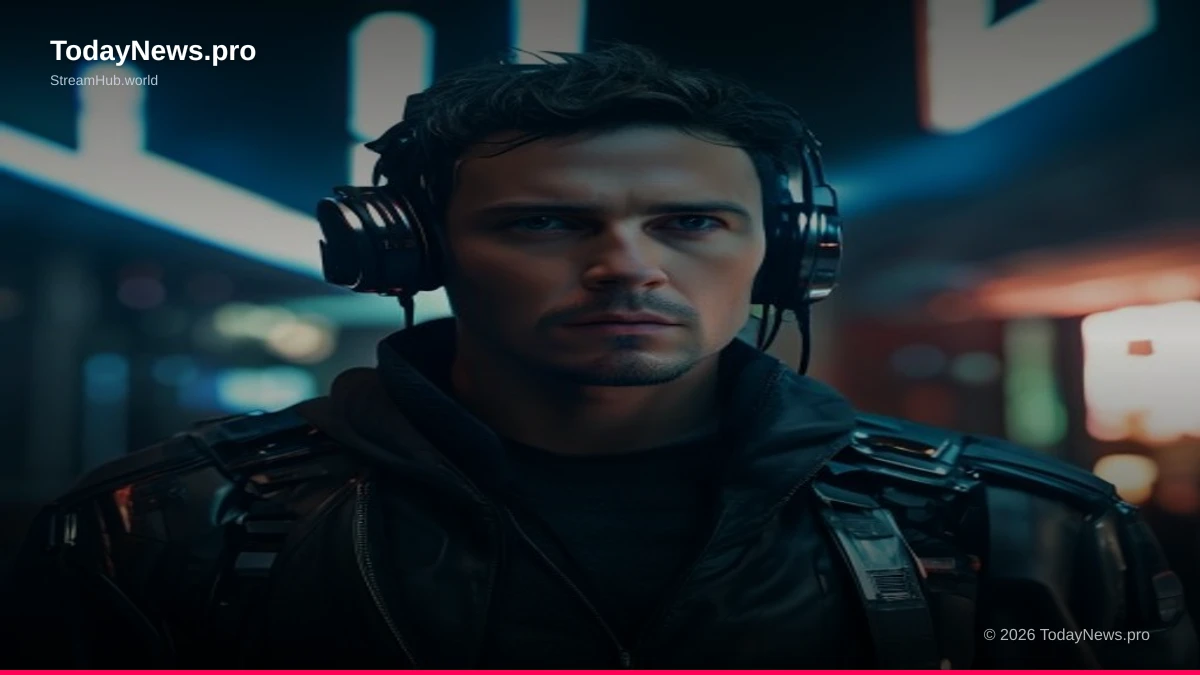
Hollywood is investing an estimated $1.5 billion annually in AI technologies, a figure projected to double within the next five years, signaling a profound shift in how films are conceived, created, and consumed.
Hollywoods AI Renaissance: A New Era of Creation
The silver screen has always been a canvas for innovation, from the advent of sound to the marvels of CGI. Now, Artificial Intelligence is poised to become the industry's newest, and perhaps most transformative, co-star. Across studios and independent productions alike, AI tools are no longer a distant sci-fi concept but a tangible reality, weaving their way into every facet of filmmaking. This isn't just about faster rendering or cheaper effects; it's about fundamentally reimagining the creative process, opening up unprecedented possibilities, and simultaneously posing complex ethical dilemmas that the industry is only beginning to grapple with.
The allure of AI in Hollywood stems from its potential to democratize filmmaking, streamline cumbersome processes, and unlock creative visions that were previously cost-prohibitive or technically impossible. From generating synthetic dialogue and character performances to automating complex visual effects and optimizing post-production workflows, AI is proving to be a versatile and powerful ally. This technological surge is not a gradual evolution but a rapid revolution, catching many off guard and prompting urgent discussions about authorship, originality, and the very definition of artistry in the digital age.
The Genesis of AI in Cinema
While AI's presence in filmmaking is gaining momentum now, its roots can be traced back to early attempts at computer-generated imagery (CGI). The groundbreaking work on films like "Tron" (1982) and "Toy Story" (1995) laid the groundwork for digital creation. However, modern AI, with its sophisticated machine learning algorithms and vast datasets, represents a quantum leap. Tools capable of understanding context, generating novel content, and even mimicking human creative styles are now accessible, offering a level of sophistication that was once the exclusive domain of large, specialized teams.
The initial integration of AI was often subtle, working behind the scenes to optimize workflows or analyze audience data. However, recent advancements have brought AI front and center, enabling direct creative contributions. This shift is driven by the increasing power of generative AI models, trained on enormous volumes of text, images, and video, allowing them to produce entirely new content based on textual prompts or existing material. This accessibility has lowered the barrier to entry for complex creative tasks, empowering filmmakers to explore more ambitious projects.
Economic Imperatives and Creative Ambitions
The economic pressures on Hollywood are immense. Budgets are ballooning, and the demand for high-quality content across multiple platforms is insatiable. AI offers a compelling solution to these challenges. By automating repetitive tasks, reducing the need for extensive reshoots, or generating photorealistic digital actors, AI can significantly cut production costs. Furthermore, AI-powered analytics can help predict audience reception, guiding studios in their investment decisions and script development. This efficiency, combined with the promise of pushing creative boundaries, makes AI an irresistible proposition for studios and producers seeking to maximize their return on investment while delivering groundbreaking entertainment.
Beyond mere cost-saving, AI is unlocking ambitious creative endeavors. Imagine crafting entire alien worlds with unique ecologies, designing intricate historical settings with unparalleled accuracy, or creating performances from deceased actors with uncanny realism. These were once pipe dreams, limited by budgets and the constraints of physical production. AI, however, is making them increasingly attainable, allowing filmmakers to explore narratives and visual styles that were previously beyond their reach. This democratization of complex creative capabilities promises a richer, more diverse cinematic landscape.
The AI Toolkit: From Script to Screen
The application of AI in filmmaking spans the entire production pipeline, from the initial spark of an idea to the final polish of the film. Generative AI models are now capable of assisting with scriptwriting, character development, and even generating storyboards, accelerating the pre-production phase dramatically.
These tools can analyze vast literary databases to identify narrative patterns, suggest plot twists, or even generate dialogue in the style of specific writers. For instance, a screenwriter might feed a basic plot outline into an AI model and receive multiple variations of dialogue, character backstories, or scene descriptions. This doesn't replace the human writer's vision but acts as a powerful brainstorming partner, overcoming writer's block and offering fresh perspectives. The ability to iterate rapidly on script ideas allows for more robust storytelling and efficient development.
AI-Powered Scriptwriting and Storyboarding
Tools like GPT-3 and its successors have demonstrated remarkable proficiency in generating coherent and creative text. In scriptwriting, this translates to AI assistants that can:
- Generate scene descriptions based on plot points.
- Develop character dialogue that adheres to specific personalities and motivations.
- Suggest plot developments or alternative narrative arcs.
- Identify thematic inconsistencies or pacing issues within a script.
Similarly, AI image generation models can be used to quickly visualize scenes. A director can describe a setting, character, or action, and the AI can produce a series of images that serve as a visual guide for the cinematographer and production designer. This dramatically speeds up the conceptualization process, allowing for faster iteration and clearer communication of artistic intent.
Character Generation and Performance Synthesis
One of the most captivating applications of AI is in the creation of digital characters and the synthesis of performances. AI can generate entirely new, photorealistic human faces and bodies, eliminating the need for extensive casting or the limitations of practical effects. This extends to voice synthesis, where AI can generate dialogue in the voice of an existing actor, or even create entirely new vocal performances based on textual input.
The implications for historical dramas or fantasy epics are immense. AI can resurrect long-deceased actors for cameo appearances or create wholly original digital performers who can perform impossible feats. Furthermore, AI can analyze an actor's performance and replicate their mannerisms, expressions, and voice, allowing for digital doubles or even the creation of entire performances without the physical presence of an actor. This raises profound questions about the nature of performance and intellectual property, as AI models learn from and replicate the work of human artists.
AI in Music Composition and Sound Design
The auditory experience of a film is as crucial as its visuals. AI is also making significant inroads in music composition and sound design. AI-powered tools can generate original musical scores that adapt to the emotional tone of a scene, or create immersive soundscapes that enhance the viewer's experience. These systems can learn from vast libraries of music and sound effects, producing bespoke compositions that would otherwise require a dedicated team of composers and sound engineers.
For instance, an AI composer might be tasked with creating a suspenseful orchestral piece for a chase scene. By analyzing the pacing, emotional arc, and visual cues of the scene, the AI can generate music that perfectly complements the on-screen action. Similarly, AI can be used to generate realistic ambient sounds for any given environment, from the bustling streets of a metropolis to the eerie silence of a haunted house, enriching the film's sonic tapestry.
Revolutionizing Visual Effects and Animation
Visual Effects (VFX) and animation have long been areas ripe for technological disruption, and AI is delivering on that promise with unprecedented speed and sophistication. The painstaking, time-consuming processes traditionally involved in creating digital assets and environments are being fundamentally reshaped by AI-powered tools.
The ability of AI to generate complex textures, simulate natural phenomena like fire and water with greater realism, and automate the tedious work of rotoscoping and motion tracking is transforming VFX pipelines. This not only speeds up production but also allows for a level of visual fidelity and complexity that was previously unattainable or astronomically expensive.
Automating Complex VFX Tasks
One of the most impactful uses of AI in VFX is the automation of laborious tasks. Rotoscoping, the process of manually tracing objects frame by frame to isolate them for compositing, can now be largely automated by AI. Similarly, AI can significantly speed up motion tracking, matchmoving, and the creation of digital matte paintings. These advancements free up human artists to focus on higher-level creative decisions rather than repetitive manual labor.
AI-powered generative models are also excelling at creating realistic textures and materials. Instead of manually painting textures for digital assets, artists can use AI to generate them based on textual descriptions or reference images, ensuring consistency and detail. This accelerates the asset creation pipeline, allowing for more detailed and varied digital environments and characters.
| VFX Task | Traditional Time Estimate | AI-Assisted Time Estimate | Percentage Reduction |
|---|---|---|---|
| Rotoscoping | 4-8 hours per minute of footage | 1-2 hours per minute of footage | 60-75% |
| Motion Tracking | 2-5 hours per shot | 0.5-1.5 hours per shot | 50-75% |
| Texture Generation | 8-16 hours per complex asset | 2-4 hours per complex asset | 60-75% |
AI in Character Animation and Digital Humans
Creating believable animated characters has always been a significant challenge. AI is now enabling more fluid, nuanced, and realistic character animation. AI can learn from vast datasets of human movement to generate naturalistic motion for digital characters. This applies to everything from subtle facial expressions to complex physical actions.
The development of "digital humans" – highly realistic AI-generated characters – is a major frontier. These digital actors can be programmed with specific personalities and emotional ranges, controlled through motion capture or even AI-driven performance generation. This opens up possibilities for entirely synthetic performances, offering actors unprecedented control over their digital counterparts and enabling new forms of character portrayal.
Procedural Generation and World Building
Building expansive and detailed virtual worlds for films has traditionally been an immense undertaking. AI-powered procedural generation tools can now create vast landscapes, intricate cityscapes, and complex environments based on a set of rules and parameters. This allows filmmakers to generate unique, sprawling worlds with a high degree of detail and variation, often at a fraction of the cost and time required for manual creation.
For instance, in a science fiction film requiring an alien planet, AI can generate unique flora, fauna, geological formations, and atmospheric conditions based on scientific principles or imaginative prompts, creating a rich and believable ecosystem. This capability is a game-changer for genres that rely heavily on imaginative world-building, enabling filmmakers to bring their most ambitious visions to life.
The Unseen Hand: AI in Editing and Post-Production
While AI's presence in visual effects and scriptwriting is often more visible, its impact on editing and post-production is equally profound, though perhaps more subtle. AI algorithms are streamlining workflows, enhancing storytelling through intelligent editing, and even aiding in color correction and sound mixing.
The sheer volume of footage generated in modern film productions can be overwhelming. AI can sift through this data, identifying key moments, categorizing shots, and even suggesting initial cuts. This significantly reduces the burden on editors, allowing them to focus on the narrative flow and emotional impact of the film.
Intelligent Editing and Content Analysis
AI-powered editing tools can analyze footage for emotional content, pacing, and narrative coherence. They can identify the best takes of a performance, flag continuity errors, or even suggest different cuts for a scene based on predefined stylistic parameters. This intelligent assistance can help editors assemble rough cuts more quickly and efficiently.
Furthermore, AI can assist in analyzing audience reactions to early cuts of a film, providing insights into pacing and engagement. By identifying moments where viewers tend to lose interest or become disengaged, AI can help editors refine the film's structure and maximize its impact. This data-driven approach to editing is a significant departure from traditional methods, offering a new layer of precision.
AI in Color Grading and Restoration
Color grading is a critical aspect of establishing a film's mood and aesthetic. AI tools can now automate aspects of color correction, ensuring consistency across shots and scenes. They can analyze footage and suggest optimal color palettes based on genre, time period, or desired mood. This not only saves time but can also achieve a level of consistency that is challenging to maintain manually.
Beyond new productions, AI is also proving invaluable in film restoration. Old films, often suffering from damage, fading, and noise, can be digitally restored using AI algorithms. AI can intelligently remove scratches, repair missing frames, and enhance image clarity, breathing new life into cinematic classics and making them accessible to new generations of viewers.
Automated Sound Design and Dubbing
The creation of immersive soundscapes and the dubbing of films into multiple languages are complex and time-consuming processes. AI is beginning to automate these tasks. AI can generate realistic sound effects, clean up dialogue, and even synthesize foreign language voiceovers that closely mimic the original actor's performance and emotional cadence.
This technology is particularly revolutionary for international distribution. AI can enable rapid and cost-effective dubbing, making films accessible to a global audience without the extensive post-production costs and delays previously associated with localization. The quality of AI-generated dubbing is rapidly improving, often reaching a point where it is indistinguishable from human-performed dubs.
Ethical Crossroads: The Human Element Under Threat?
As AI becomes more deeply integrated into filmmaking, it inevitably raises a host of ethical questions that the industry must confront. The most prominent concerns revolve around job displacement, the nature of authorship and intellectual property, and the potential for AI to homogenize creative output.
The fear that AI will replace human workers—from screenwriters and animators to editors and even actors—is palpable. While proponents argue that AI will augment human creativity, critics worry about mass unemployment and the devaluation of human skills. The debate is complex, touching on the future of work in the creative industries.
Job Displacement and the Future of Creative Roles
The automation of tasks previously performed by humans is a significant concern. Roles that involve repetitive or data-intensive work, such as rotoscoping, basic animation tasks, or initial script assembly, are particularly vulnerable. While AI may create new roles related to AI oversight and development, the transition could be disruptive for many existing professionals.
The Writers Guild of America (WGA) and the Screen Actors Guild‐American Federation of Television and Radio Artists (SAG-AFTRA) have already been at the forefront of these discussions, negotiating for protections against AI's unchecked proliferation. Their demands center on ensuring that AI is used as a tool to assist human creators, not replace them, and that the intellectual property rights of human artists are safeguarded.
Authorship, Copyright, and Intellectual Property
A fundamental question arises: who owns the copyright to content generated by AI? If an AI writes a script or creates a piece of art, does the copyright belong to the AI, the company that developed the AI, or the user who prompted the AI? Current copyright laws are not equipped to handle this paradigm shift.
Furthermore, AI models are trained on existing data, often including copyrighted works. This raises concerns about the originality of AI-generated content and the potential for infringement. The legal landscape is still catching up, and significant challenges lie ahead in defining ownership and protecting the rights of creators whose work forms the foundation of AI's learning.
For example, Wikipedia's stance on AI-generated content highlights this complexity. While AI can be used to draft articles, human oversight and editing are crucial to ensure accuracy, neutrality, and adherence to editorial standards. The challenge is to leverage AI's capabilities without compromising the integrity and originality of human creative endeavors. Wikipedia's entry on AI offers further context on its broader societal implications.
The Risk of Homogenization and Loss of Authenticity
One of the most subtle but significant ethical concerns is the potential for AI to lead to a homogenization of creative output. If AI models are trained on the same vast datasets of popular films, music, and literature, they might inadvertently produce content that is formulaic and lacks genuine originality or a unique artistic voice. The risk is that AI, in its pursuit of optimal audience engagement, might favor established trends over experimental or boundary-pushing art.
Authenticity is the bedrock of compelling storytelling. While AI can mimic styles and generate plausible narratives, it lacks the lived experience, emotional depth, and genuine human perspective that imbues art with its power. The worry is that a reliance on AI could lead to a proliferation of technically proficient but soulless films, diminishing the rich diversity of human expression in cinema.
The Future is Now: Navigating the AI Landscape
The integration of AI into filmmaking is not a future possibility; it is a present reality. The industry is at a critical juncture, where embracing AI is becoming a necessity for staying competitive, while simultaneously navigating the ethical and practical challenges it presents.
Studios and independent filmmakers alike are investing in AI talent and infrastructure, recognizing its transformative potential. The key to successful integration lies in a balanced approach, one that leverages AI's strengths while safeguarding the invaluable contributions of human creativity.
AI as a Collaborative Partner, Not a Replacement
The most productive way forward is to view AI as a sophisticated collaborative partner. AI can handle the repetitive, data-intensive tasks, freeing up human artists to focus on conceptualization, storytelling, and emotional resonance. This synergy can lead to more ambitious projects, executed with greater efficiency and a higher degree of artistry.
For instance, an AI might generate a multitude of visual concepts for a creature design, but it will be the human artist who selects the most compelling, refines its details, and imbues it with personality. Similarly, AI can draft multiple versions of a scene, but the human director and editor will be responsible for shaping the narrative arc and conveying the intended emotional weight.
The future of filmmaking will likely involve a hybrid workforce, where human creativity is amplified by AI's capabilities. This collaborative model promises to unlock new creative frontiers and push the boundaries of cinematic storytelling. It's about augmenting human potential, not replacing it.
The Evolving Role of the Filmmaker
As AI tools become more sophisticated, the role of the filmmaker will evolve. Directors and producers will need to become adept at understanding and utilizing AI capabilities, guiding AI systems to achieve their creative vision. This requires a new skillset, blending traditional filmmaking acumen with an understanding of AI's potential and limitations.
The ability to craft effective prompts for generative AI, interpret its outputs, and integrate them seamlessly into the filmmaking process will become increasingly important. Filmmakers will act as orchestrators, wielding AI as a powerful new instrument in their creative orchestra, shaping its output to serve the narrative and emotional goals of the film.
The Importance of Ethical Frameworks and Regulation
To ensure that AI is used responsibly in filmmaking, the development of robust ethical frameworks and potentially regulatory guidelines is crucial. This includes establishing clear guidelines for intellectual property, data privacy, and the transparent disclosure of AI's use in film production.
Collaborative efforts involving filmmakers, technologists, legal experts, and ethicists are needed to define best practices. The goal is to foster innovation while mitigating risks and ensuring that AI serves to enhance, rather than diminish, the human element in storytelling. Reuters has reported extensively on the ongoing debates between AI and artists in the creative industries.
Industry Reactions: Hopes and Apprehensions
The rapid advancement and adoption of AI in Hollywood have elicited a wide spectrum of reactions from industry professionals. While many express excitement about the creative and economic opportunities, a significant undercurrent of apprehension regarding job security and artistic integrity persists.
The consensus among many forward-thinking professionals is that AI is an unstoppable force. The question is not whether to adopt it, but how to do so responsibly and strategically. This involves understanding its limitations as much as its potential.
Optimism for Creative Expansion
Many see AI as a powerful tool that will unlock unprecedented creative possibilities. Independent filmmakers, in particular, are excited by the prospect of accessing sophisticated tools that were once only available to major studios. This democratization of technology could lead to a surge of innovative and diverse cinematic content.
"AI allows us to dream bigger," says Anya Sharma, a visual effects supervisor at a burgeoning indie studio. "We can now visualize concepts that would have been prohibitively expensive or technically impossible just a few years ago. It's like gaining superpowers for storytelling."
Concerns Over Job Security and Fair Compensation
Conversely, significant anxiety exists among established professionals regarding job security. Unions like WGA and SAG-AFTRA have been vocal about the need for clear guidelines and protections against AI-driven job displacement and the exploitation of creative work.
The fear is that studios may opt for AI-generated content over human talent to cut costs, leading to a devalued creative workforce. Ensuring fair compensation for human artists whose work is used to train AI, and establishing clear boundaries for AI's use in creative roles, are paramount concerns.
The Path Forward: Collaboration and Adaptation
The prevailing sentiment among industry leaders is that adaptation is key. Those who learn to harness AI effectively will likely thrive, while those who resist it may fall behind. The focus is shifting towards understanding how AI can augment human capabilities rather than replace them.
The future of Hollywood will undoubtedly be shaped by AI. The challenge lies in ensuring that this powerful technology is integrated in a way that preserves the artistry, integrity, and human spirit that have always defined cinema. The dialogue between innovation and ethics is ongoing, and its outcome will determine the next chapter of filmmaking.