

 Max Speed
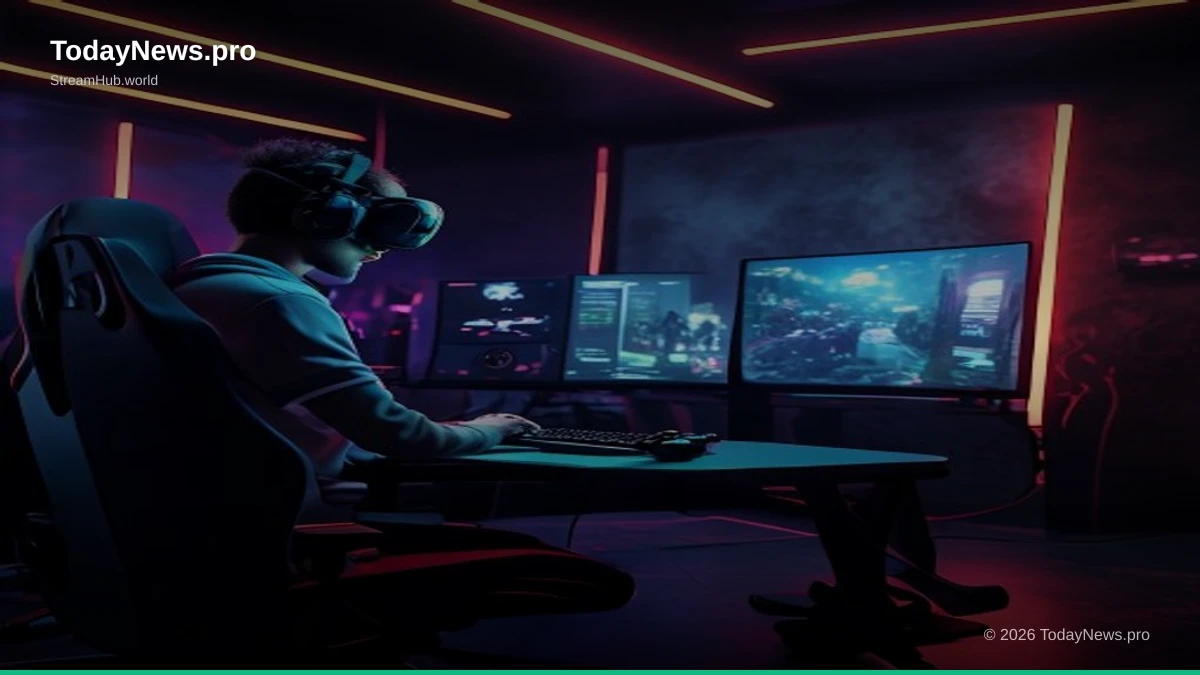
The global gaming market is projected to reach over $314 billion by 2027, a testament to its exponential growth and increasing sophistication.
The Phantom Touch: Haptics Revolutionizing Interaction
For decades, video games have primarily engaged our sight and sound. We see the vibrant worlds, hear the epic soundtracks, and react to the on-screen action. But the sense of touch, the most primal and often the most nuanced of our senses, has largely been an afterthought. This is rapidly changing, thanks to the burgeoning field of haptics. Haptics, derived from the Greek word "haptikos" meaning "tactile," refers to technology that recreates the sense of touch through forces, vibrations, and motions. In gaming, this translates from the simple rumble of a controller to sophisticated systems that can simulate textures, impacts, and even temperature changes.
The evolution of haptics in gaming has been a gradual but significant one. Early console controllers offered rudimentary vibration, primarily used to signify impacts or explosions. While a novel addition at the time, it offered little in the way of nuanced feedback. Players learned to associate a generic buzz with a variety of in-game events, but the potential for deeper immersion was largely untapped. Today, however, advancements in actuators, specialized materials, and sophisticated software algorithms are allowing for a far richer and more detailed tactile experience, blurring the lines between the virtual and the physical.
The Origins of Feel
The rudimentary rumble pack, first popularized by the Nintendo 64, was a pioneering step. It introduced the concept of a player's physical controller reacting to in-game events. This was a far cry from what we see today, but it laid the groundwork for future innovations. Developers quickly realized that even simple vibrations could enhance the player's connection to the game world, providing feedback that augmented visual and auditory cues. This early success demonstrated the inherent desire for more tactile feedback in interactive entertainment.
The subsequent generations of console controllers, such as those for the PlayStation and Xbox, continued to refine this technology. DualShock controllers introduced dual motors for more varied vibration patterns, allowing for distinct sensations like the recoil of a weapon versus the impact of a fall. This marked a significant step forward in differentiating tactile feedback, making it more informative and less generic. The focus began to shift from simply "rumbling" to "simulating."
Modern Haptic Marvels
The current generation of gaming hardware has pushed the boundaries of haptic technology considerably. Sony's PlayStation 5 DualSense controller, for example, features advanced haptic feedback and adaptive triggers. The haptic motors can generate a wide range of vibrations, from the subtle crunch of footsteps on gravel to the intense jolt of a near-miss in a racing game. Adaptive triggers can dynamically alter their resistance, simulating the tension of a bowstring being drawn or the gritty feel of a gun trigger.
These innovations are not limited to controllers. Companies are developing specialized haptic suits, gloves, and even full-body rigs that can provide a comprehensive tactile experience. Imagine feeling the subtle brush of wind as you glide through a virtual sky, the impact of raindrops on your skin, or the warmth of a virtual campfire. This level of immersion was once the stuff of science fiction, but it is rapidly becoming a tangible reality.
Beyond the Rumble: The Spectrum of Haptic Feedback
While rumble is the most commonly understood form of haptic feedback, the technology encompasses a much broader spectrum of sensations. Understanding this spectrum is key to appreciating the future of immersive gaming. Developers are moving beyond simple vibrations to simulate a far wider range of tactile experiences, aiming to replicate the nuances of the real world within virtual environments.
Vibrational Feedback
Vibrational feedback remains the cornerstone of many haptic systems. However, modern systems employ sophisticated linear resonant actuators (LRAs) and voice coil actuators (VCAs) that can produce a much wider range of frequencies and intensities. This allows for more precise and varied sensations. For instance, a low-frequency vibration might signify a distant explosion, while a high-frequency buzz could represent a delicate interaction, like picking up a small object. The ability to fine-tune these vibrations opens up new avenues for conveying information and enhancing immersion.
The fidelity of these vibrations is crucial. A poorly implemented vibration can be jarring and detract from the experience. Conversely, a well-tuned vibration can feel incredibly natural, enhancing the player's sense of presence. Game designers are learning to use these subtle cues to guide players, alert them to danger, or even convey emotional states. For example, a rapid, erratic vibration might signal an impending threat, while a gentle, pulsing sensation could indicate a moment of calm or discovery.
Kinesthetic Feedback
Kinesthetic feedback, which involves the sense of force and motion, is another critical component of advanced haptics. This goes beyond mere vibration to actively resist or assist the player's movements. Force feedback steering wheels in racing games are a classic example, simulating the resistance of the road and the tires. In VR, this can extend to entire systems that push back against your movements, making it feel as though you are physically interacting with virtual objects. Imagine the weight of a virtual sword in your hand or the resistance of pushing open a heavy door.
Companies are developing sophisticated exoskeletons and haptic gloves that can provide kinesthetic feedback. These devices can exert forces on the wearer's limbs, simulating the feeling of grasping objects, applying pressure, or even experiencing recoil. This adds a significant layer of realism, allowing players to "feel" the weight and texture of virtual items and environments. The potential applications range from simulating the grip of a weapon to the strain of lifting a heavy object.
Thermal and Texture Simulation
The most cutting-edge haptic technologies are beginning to explore thermal and texture simulation. Imagine feeling the chill of a snowy landscape or the warmth of a desert sun. Researchers are developing systems that can rapidly change surface temperatures to mimic environmental conditions. Similarly, advancements in materials science and micro-actuation are paving the way for surfaces that can change their texture, allowing players to feel the roughness of stone, the smoothness of silk, or the stickiness of mud.
These elements, while perhaps less immediately obvious than force feedback, contribute immensely to overall immersion. Feeling the subtle temperature shift as you enter a different biome or the distinct texture of different materials under your virtual fingertips can ground the player in the game world in profound ways. This level of sensory detail transforms passive observation into active, embodied experience, making the virtual world feel tangibly real.
| Technology | Description | Primary Sensation | Examples |
|---|---|---|---|
| Vibrational Actuators | Devices that create tactile sensations through vibration. | Buzzing, pulsing, shaking | Controller rumble, haptic vests |
| Force Feedback Systems | Technology that applies physical forces to the user. | Resistance, push/pull, impact | Steering wheels, haptic gloves, motion platforms |
| Thermal Feedback | Systems that can alter the perceived temperature of surfaces. | Warmth, coolness, temperature change | Haptic suits, specialized gloves |
| Texture Simulation | Devices that can alter the tactile properties of surfaces. | Roughness, smoothness, stickiness | Advanced haptic displays, VR gloves |
VRs Physical Embrace: Full-Body Tracking and Its Potential
Virtual Reality (VR) has always promised a level of immersion that traditional gaming could only dream of. By placing players directly into a digital world, VR bypasses the screen and engages users more directly. However, for true embodiment, VR needs to not only track head and hand movements but also the entire body. Full-body tracking (FBT) is the technology that allows for this holistic immersion, translating every movement of the player's physical form into the virtual space.
The concept is simple: if your avatar in VR moves exactly as you do, your sense of presence and immersion will skyrocket. This means that not only can you look around and interact with your hands, but you can also walk, crouch, jump, and even gesture with your entire body. This unlocks a new dimension of interaction and allows for a much more natural and intuitive way to experience virtual worlds.
The Evolution of Tracking
Early VR systems relied heavily on external sensors and base stations. The Oculus Rift and HTC Vive utilized these systems to track the headset and controllers. While effective, they could be cumbersome to set up and had limitations in tracking occlusion (when an object blocks the sensors' view). The introduction of inside-out tracking, where cameras on the headset track the environment, was a significant step towards more accessible and less intrusive VR.
Full-body tracking takes this a step further. It typically involves placing additional sensors on the player's feet, torso, and sometimes even elbows and knees. These sensors communicate with the VR system, providing a complete skeletal representation of the player's body. This allows for highly accurate and responsive tracking of every limb, enabling a truly embodied virtual experience. Platforms like VRChat and Rec Room have become popular showcases for FBT, allowing users to express themselves with incredible fidelity.
Applications Beyond Gaming
While gaming is a primary driver, the implications of accurate full-body tracking extend far beyond entertainment. In education and training, FBT can allow students to practice complex physical tasks, such as surgical procedures or operating heavy machinery, in a safe and realistic virtual environment. Athletes can refine their techniques through virtual coaching, and architects can walk through their designs, experiencing the space as if it were real.
The social aspect of VR is also significantly enhanced by FBT. Non-verbal communication, body language, and subtle gestures become possible, making virtual interactions feel more natural and meaningful. This has profound implications for remote work, virtual meetings, and social gatherings in the metaverse. Imagine attending a virtual conference and being able to read the room through the body language of other attendees.
The Technology Landscape
Several companies are at the forefront of FBT technology. Vive Trackers, developed by HTC, are widely used accessories that attach to various parts of the body to enable tracking. SlimeVR and other open-source initiatives are also contributing to the accessibility and innovation in this space, allowing enthusiasts to build their own FBT solutions. The ongoing development of more sophisticated algorithms and cheaper hardware promises to make FBT more mainstream.
The ultimate goal is a seamless and invisible tracking system that doesn't require users to strap on multiple devices. Research is ongoing into markerless FBT, which uses advanced computer vision and AI to track body movements without the need for external sensors. This would represent the next leap in VR immersion, making the technology even more accessible and intuitive for everyone.
Bridging the Gap: Haptics and VR, A Synergistic Future
The true magic happens when haptics and VR are combined. While VR offers unparalleled visual and auditory immersion, it has historically lacked a crucial component: believable tactile feedback. Haptic technology is the missing piece that can elevate VR from a visually engaging experience to a truly embodied one. Imagine not only seeing and hearing a virtual world but also feeling its textures, its impacts, and its resistance.
This synergy is where the "sensory revolution" truly takes flight. When a player can feel the recoil of a weapon in a VR shooter, the resistance of climbing a virtual wall, or the subtle vibration of interacting with a virtual object, the level of presence and believability increases exponentially. The virtual world stops being a passive environment to observe and becomes an active space to inhabit and interact with physically.
Enhanced Realism and Immersion
The combination of VR and advanced haptics creates a feedback loop that dramatically enhances realism. When a player reaches out to touch a virtual surface, receiving not only visual confirmation but also a tactile sensation that matches the visual, the brain is more readily convinced of the reality of the experience. This sensory congruence is vital for deep immersion. For instance, in a VR driving simulator, feeling the vibrations of the engine, the resistance of the steering wheel, and the impact of hitting a pothole makes the experience far more visceral than just seeing and hearing it.
This is particularly crucial for experiences where precise physical interaction is key. In virtual surgery training, for example, trainees need to feel the resistance of tissue and the precise feedback of instruments. Similarly, in virtual sports, athletes need to feel the impact of a ball or the resistance of a paddle to refine their technique effectively. The more senses that are engaged in a congruent manner, the more convincing and impactful the virtual experience becomes.
New Gameplay Possibilities
The convergence of VR and haptics unlocks entirely new gameplay mechanics and experiences that were previously impossible. Developers can design games that rely heavily on tactile cues and physical interactions. Imagine a puzzle game where the solution involves feeling subtle changes in texture or temperature, or an adventure game where the player must discern different materials by touch to progress.
Horror games can leverage haptics to create a more visceral sense of fear. Feeling a phantom touch, the chilling presence of an unseen entity, or the shudder of an unstable environment can amplify the psychological impact of the game. Similarly, action games can offer more satisfying combat by allowing players to feel the weight of their attacks and the impact of enemy blows. This opens up a vast frontier for creative game design, pushing the boundaries of what is considered interactive entertainment.
The Role of Haptic Suits and Gloves
Haptic suits and gloves are at the cutting edge of this synergistic future. These wearable devices can provide detailed feedback across the entire body. A haptic suit can simulate impacts, pressure, and even environmental effects like wind or rain. Haptic gloves can replicate the feeling of grasping objects, their textures, and their weight. When combined with full-body tracking in VR, these devices create an unparalleled sense of embodiment.
Companies like Teslasuit and HaptX are developing advanced haptic suits that offer extensive feedback. These suits use a network of actuators and pneumatic systems to create a wide range of sensations. Haptic gloves, such as those developed by SenseGlove, provide precise force feedback, allowing users to feel the shape and resistance of virtual objects. The integration of these technologies with VR headsets promises to deliver the most immersive experiences yet conceived.
The Business of Immersion: Market Trends and Investment
The pursuit of deeper sensory immersion in gaming is not merely a technological curiosity; it represents a significant economic opportunity. The market for advanced haptics and VR hardware and software is experiencing rapid growth, attracting substantial investment from established tech giants and venture capital firms alike. This commercial interest signals a strong belief in the future of these technologies and their potential to redefine the entertainment landscape.
Companies are recognizing that consumers are willing to pay a premium for more engaging and realistic experiences. The success of advanced controllers like the DualSense and the growing popularity of VR headsets are indicators of this market demand. The investment landscape reflects this optimism, with significant capital flowing into startups and R&D departments focused on sensory technologies.
Market Growth and Projections
The global VR/AR market, which encompasses the hardware and software driving immersive experiences, is projected to grow substantially in the coming years. Reports from market research firms consistently forecast a compound annual growth rate (CAGR) of over 30% for this sector. This expansion is fueled by decreasing hardware costs, increasing content availability, and a growing consumer base eager for more advanced entertainment options. Haptics, as a critical component of this market, is expected to see parallel growth.
The increasing adoption of VR headsets in both consumer and enterprise markets is a key driver. As more people experience VR, the demand for more sophisticated peripherals, including advanced haptic devices, will naturally increase. Furthermore, the development of the metaverse, a persistent, interconnected set of virtual spaces, relies heavily on technologies that can create a sense of tangible presence and interaction, making haptics and FBT essential components.
| Year | Market Size | Projected CAGR |
|---|---|---|
| 2022 | 45.0 | - |
| 2023 | 60.0 | 33.3% |
| 2025 | 100.0 | ~30% |
| 2030 | 300.0+ | ~25% |
Investment and Innovation Hubs
Major technology players like Meta (formerly Facebook), Apple, Google, and Microsoft are investing heavily in VR/AR and haptics research and development. Meta's acquisition of Oculus and its ongoing push into the metaverse signifies its commitment to creating deeply immersive virtual experiences. Apple's rumored VR/AR headset also indicates a significant entry into this market, likely to feature advanced haptic capabilities.
Venture capital firms are actively funding startups specializing in haptic technology, VR content creation, and full-body tracking solutions. These investments are crucial for driving innovation and bringing new products to market. The competitive landscape is fostering rapid advancements, with companies vying to create the most compelling and user-friendly sensory feedback systems. This influx of capital accelerates the development cycle and brings groundbreaking technologies closer to mass adoption.
The economic potential of highly immersive gaming experiences is immense. As technology matures and becomes more accessible, the market for games and applications that leverage advanced haptics and VR will continue to expand. This creates a virtuous cycle: increased investment leads to better technology, which in turn drives greater consumer adoption and further market growth.
Challenges and the Road Ahead: Ethical and Technical Hurdles
Despite the immense promise, the journey toward full sensory immersion in gaming is not without its obstacles. Both technical limitations and ethical considerations present significant challenges that the industry must address to realize the full potential of haptics and VR.
From the cost of advanced hardware to potential health concerns, the path forward requires careful navigation. Developers and manufacturers are actively working to overcome these hurdles, but they remain critical factors in the widespread adoption of these transformative technologies.
Technical Limitations
One of the primary technical hurdles is the cost and complexity of advanced haptic hardware. High-fidelity haptic suits and gloves are currently very expensive, making them inaccessible to the average consumer. While controller-based haptics are becoming more affordable, the truly groundbreaking sensory experiences often require a significant investment. Miniaturization of actuators, development of efficient power sources, and sophisticated software integration are all areas of ongoing research.
Another challenge is the need for standardization. A lack of universal protocols for haptic feedback can lead to fragmentation, where content designed for one haptic system may not be compatible with another. This can hinder developer efforts and confuse consumers. Creating industry-wide standards for haptic data transmission and rendering will be crucial for seamless integration across different hardware platforms.
Furthermore, the development of compelling content that effectively utilizes these advanced sensory technologies is an ongoing effort. Game designers need to learn how to integrate haptics and FBT in ways that enhance gameplay without being distracting or overwhelming. This requires a new design philosophy that considers the tactile experience alongside visual and auditory elements.
Ethical Considerations
As virtual experiences become more realistic, ethical questions surrounding their impact on users become increasingly important. One concern is the potential for increased addiction or escapism, as highly immersive worlds can be more compelling than reality. Developers and platform holders have a responsibility to implement features that encourage healthy usage habits and provide tools for managing playtime.
The implications of highly realistic sensory feedback for sensitive individuals, such as those prone to motion sickness or anxiety, also need careful consideration. While advanced haptics can reduce VR sickness for some, others might find intense sensations overwhelming or even distressing. Thorough testing and customizable feedback options will be essential to ensure accessibility and user comfort.
Data privacy is another critical area. Full-body tracking and detailed haptic interaction generate vast amounts of personal data about a user's physical movements and responses. Ensuring this data is collected, stored, and used ethically and securely is paramount. Clear consent mechanisms and robust data protection policies are necessary to build trust with users.
The Player of Tomorrow: What This Means for Gaming
The ongoing sensory revolution in gaming is not just about technological advancement; it's about fundamentally changing the player's experience. The future of gaming promises a level of immersion that will blur the lines between the virtual and the real, transforming passive consumption into active, embodied participation.
For the player, this means games will feel more alive, more impactful, and more personal. The subtle nuances of touch, the weight of actions, and the full expression of self through body language will become integral to the gaming experience. This evolution will cater to a wider range of players, offering new ways to engage with digital worlds that appeal to different senses and preferences.
A More Empathetic and Engaged Player
When players can feel the weight of their virtual actions, the impact of their choices, and the physical sensations of the game world, their emotional engagement deepens. This enhanced empathy can lead to more profound storytelling and more memorable gaming experiences. Imagine feeling the fatigue of a long journey, the thrill of a close victory, or the sorrow of a loss not just as abstract concepts but as tangible sensations.
This increased engagement can also foster a stronger connection with game characters and narratives. Feeling the rough texture of a character's worn armor, the jolt of a shared explosion, or the subtle tremor of fear can make virtual companions and adversar.ie.s feel more real. This level of sensory connection can elevate games from mere entertainment to powerful, emotionally resonant experiences.
Accessibility and Inclusivity
While advanced haptics might seem like a luxury, the underlying principles of sensory feedback can also enhance accessibility. Developers are exploring how haptic cues can provide information for players with visual or auditory impairments, opening up new gaming possibilities for a broader audience. The intuitive nature of tactile feedback can also simplify controls and interactions for players who struggle with complex button combinations.
Furthermore, as VR and haptics become more mainstream, they offer new avenues for social interaction and community building. The ability to express oneself fully through body language and to share tactile experiences can foster a greater sense of connection among players, transcending geographical boundaries. This inclusivity ensures that the future of gaming is not just for a select few but for everyone.
The sensory revolution is well underway, promising a future where gaming is not just played, but felt. As technology continues to advance and developers harness its potential, players can anticipate a richer, more immersive, and more deeply engaging interactive entertainment landscape than ever before.