

 David Chen
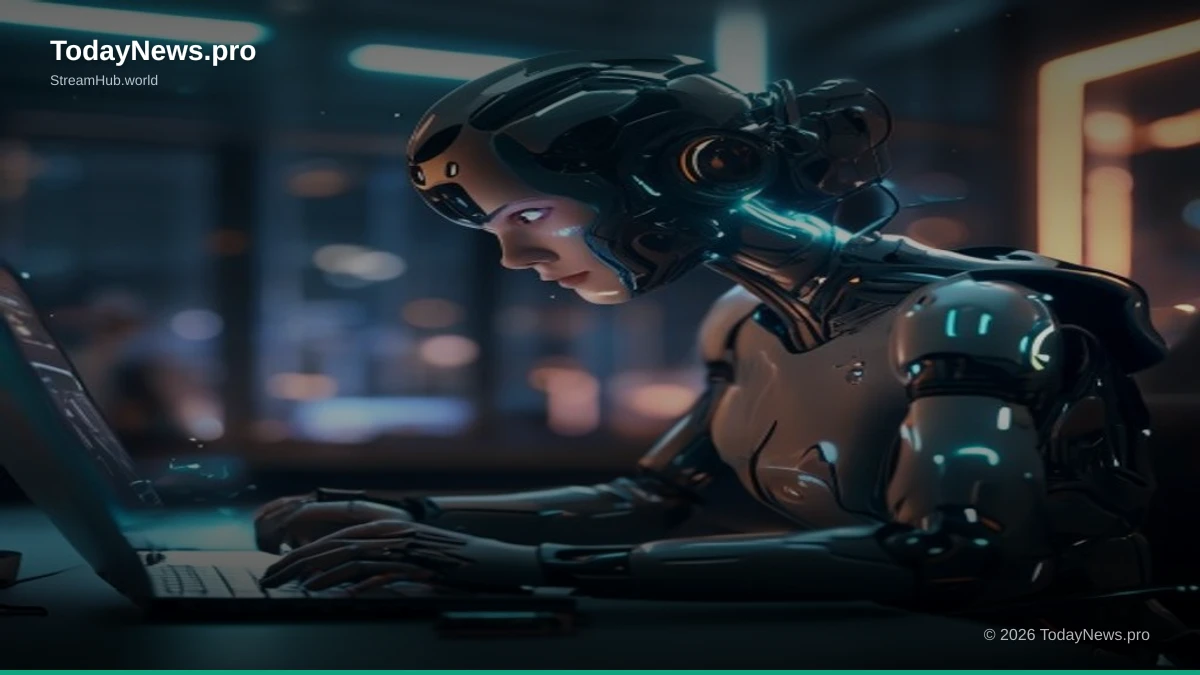
By 2026, 75% of large enterprises will have integrated AI into at least one core business process, a significant leap from just 20% in 2023, according to Gartner. This isn't merely about robots replacing humans; it's about a profound evolution in how we work, collaborate, and innovate.
The AI Inflection Point: 2026 and Beyond
The year 2026 stands at a critical juncture, often referred to as an "AI inflection point." We are moving beyond the initial hype cycles of Artificial Intelligence and witnessing its integration into the very fabric of our professional lives. The nascent stages of AI, characterized by task automation and data analysis, are giving way to more sophisticated applications that foster genuine collaboration between humans and machines.
This isn't a distant science fiction scenario; it's a tangible reality shaping industries today. Generative AI models, once confined to niche research labs, are now empowering creatives, coders, and communicators. Predictive analytics are no longer just dashboards; they are proactive partners guiding strategic decisions in real-time.
The speed of this transformation is unprecedented. Businesses that were hesitant to adopt AI even a few years ago are now facing competitive pressure to integrate these advanced tools. The landscape of work is being redrawn, not by a singular disruptive force, but by a pervasive and ever-evolving intelligence that complements and amplifies human capabilities.
The Evolution from Automation to Augmentation
Early AI applications primarily focused on automating repetitive tasks. Think of chatbots handling basic customer service inquiries or algorithms sorting vast datasets. While valuable, this represented a transactional relationship. The AI performed a function, freeing up human workers for other duties.
However, 2026 marks a significant shift towards augmented intelligence. Here, AI acts as a co-pilot, an advisor, and an enhancer of human cognitive abilities. It's about working *with* AI, not just assigning tasks *to* it. This involves AI systems that can understand context, offer creative solutions, and even anticipate human needs.
This augmentation is visible across various sectors. In healthcare, AI assists radiologists in spotting anomalies in scans, not replacing them, but making their work more efficient and accurate. In law, AI tools sift through millions of legal documents, identifying relevant precedents far faster than any human paralegal could. The focus has shifted from 'doing' to 'doing better', 'doing faster', and 'doing more creatively'.
Augmented Intelligence: Beyond Automation
Augmented intelligence is the cornerstone of the redefined human-machine collaboration in 2026. It represents a paradigm shift from AI as a mere tool for automation to AI as a dynamic partner that enhances human decision-making, creativity, and problem-solving. This symbiotic relationship unlocks new levels of productivity and innovation.
Consider the implications for fields traditionally reliant on human intuition and experience. AI is now capable of providing personalized insights and recommendations, acting as an intelligent assistant that surfaces critical information precisely when it's needed. This allows professionals to focus on higher-level strategic thinking and complex problem-solving, rather than being bogged down by data synthesis and routine analysis.
This evolution is not about replacing human jobs but about augmenting human potential. The skills that are becoming increasingly valuable are those that complement AI's strengths: critical thinking, emotional intelligence, creativity, and the ability to interpret and leverage AI-generated insights. The future of work is not human *versus* machine, but human *with* machine.
AI as a Creative Catalyst
Generative AI has emerged as a powerful creative catalyst. Tools like DALL-E 3, Midjourney, and sophisticated large language models (LLMs) are no longer just novelties; they are integral to the creative process for many professionals. Designers can rapidly prototype visual concepts, writers can brainstorm plotlines or draft marketing copy, and musicians can explore new sonic landscapes.
However, the human element remains indispensable. AI can generate an infinite number of variations, but it lacks the human touch, the nuanced understanding of cultural context, and the deep emotional resonance that connects with audiences. The truly groundbreaking work in 2026 will come from creatives who can skillfully prompt, curate, and refine AI-generated outputs, imbuing them with their unique vision and intent.
This collaboration allows for a dramatic acceleration in the ideation and production phases. What once took days or weeks of iterative design can now be explored in hours. This frees up creatives to spend more time on strategic conceptualization, client communication, and pushing the boundaries of their art form.
Intelligent Assistants and Predictive Insights
The rise of AI-powered intelligent assistants is profoundly impacting how professionals manage their daily tasks and make decisions. These systems go beyond simple scheduling or information retrieval; they proactively analyze workflows, predict potential bottlenecks, and offer solutions before issues arise. In sales, AI can forecast customer needs and suggest optimal engagement strategies. In project management, it can identify risks and propose resource reallocations.
This predictive capability is a game-changer. Instead of reacting to problems, organizations can now anticipate and mitigate them. This proactive approach reduces downtime, optimizes resource allocation, and ultimately drives greater efficiency and profitability. The data generated by these AI systems provides a continuous feedback loop, allowing for ongoing refinement of both the AI models and human strategies.
The integration of AI into decision-making processes is also becoming more democratized. Complex analytical tools that were once the exclusive domain of data scientists are now accessible to a wider range of professionals, presented in intuitive interfaces that highlight actionable insights. This empowers individuals at all levels to make more informed, data-driven choices.
Redefining Roles: Skill Shifts in the AI Era
The advent of widespread AI integration in 2026 necessitates a significant re-evaluation of job roles and the skills required to thrive. While some tasks will undoubtedly be automated, the overarching trend is not mass unemployment, but a substantial shift in the demand for specific human competencies. The skills that were once considered supplementary are now becoming core requirements.
The focus is moving from rote memorization and manual execution to critical thinking, complex problem-solving, and the ability to interpret and leverage AI outputs. Emotional intelligence, communication, and collaboration skills are also gaining prominence as AI takes over more of the purely analytical and transactional aspects of work.
This era demands continuous learning and adaptability. Professionals who embrace upskilling and reskilling will be best positioned to navigate this evolving landscape. The ability to work effectively alongside AI, to understand its limitations, and to harness its power will be the defining characteristic of the successful workforce of 2026.
The Rise of the AI Whisperer and Prompt Engineer
As AI models become more sophisticated, so does the need for individuals who can effectively communicate with them. The role of the "AI whisperer" or "prompt engineer" is rapidly evolving. These professionals are adept at crafting precise and nuanced prompts that elicit the desired outputs from generative AI and other advanced AI systems.
This is not simply about typing in a command. It involves a deep understanding of the AI's capabilities and limitations, an iterative process of refinement, and the ability to translate complex human intentions into machine-readable instructions. For LLMs, this means understanding how to guide the AI to generate specific tones, styles, and content formats. For image generation models, it involves detailed descriptions of composition, lighting, and artistic style.
This skill is becoming crucial in marketing, content creation, software development, and even scientific research. The better one can communicate with an AI, the more effectively they can leverage its power for innovation and productivity. This is a prime example of a new role created directly by AI advancements.
Emphasizing Soft Skills and Human Judgment
While AI excels at data processing and pattern recognition, it fundamentally lacks human qualities such as empathy, creativity, and nuanced ethical judgment. Consequently, soft skills are experiencing a renaissance in the professional world. The ability to build rapport with clients, lead diverse teams, and navigate complex interpersonal dynamics is becoming more valuable than ever.
In decision-making, AI can provide data-driven recommendations, but the ultimate judgment often rests with a human. This is particularly true in fields with significant ethical considerations, such as healthcare, law, and finance. A doctor still needs to exercise compassion when delivering a diagnosis, a lawyer needs to understand the human impact of legal strategy, and a financial advisor needs to gauge a client's emotional readiness for risk.
These human skills are not easily replicated by machines. They form the bedrock of trust, innovation, and responsible application of technology. As AI handles more of the technical heavy lifting, professionals are freed to focus on these uniquely human contributions.
The Ethical Compass: Navigating AIs Societal Impact
As AI becomes more deeply embedded in our work and lives, the ethical considerations surrounding its development and deployment grow increasingly complex. In 2026, discussions around AI ethics are no longer theoretical; they are practical necessities demanding robust frameworks and responsible governance. Bias in algorithms, data privacy, and the potential for job displacement are critical issues that require proactive solutions.
Organizations are recognizing that ethical AI is not just a compliance issue but a strategic imperative. Building trust with customers and employees hinges on demonstrating a commitment to fairness, transparency, and accountability in AI systems. The development of ethical AI guidelines and the establishment of AI ethics review boards are becoming standard practice in forward-thinking companies.
The challenge lies in balancing innovation with responsibility. The rapid pace of AI development often outstrips the regulatory landscape, creating a dynamic and sometimes uncertain environment. Therefore, a proactive and principles-based approach to AI ethics is paramount for sustainable and beneficial human-machine collaboration.
Addressing Algorithmic Bias
One of the most persistent ethical challenges with AI is algorithmic bias. AI models learn from the data they are trained on, and if that data reflects existing societal biases, the AI will perpetuate and even amplify them. This can lead to discriminatory outcomes in hiring, loan applications, criminal justice, and many other areas.
In 2026, significant efforts are underway to identify and mitigate algorithmic bias. This involves rigorous data auditing, the development of bias detection tools, and the implementation of fairness-aware machine learning techniques. Companies are investing in diverse AI development teams to bring a wider range of perspectives to the design and testing of AI systems.
However, eliminating bias entirely is an ongoing struggle. It requires continuous monitoring and re-evaluation of AI models as societal norms and data distributions evolve. The goal is not perfection, but a demonstrable commitment to fairness and equity in AI applications. Wikipedia offers a comprehensive overview of this complex topic.
Data Privacy and Security in the AI Age
The effectiveness of AI often hinges on access to vast amounts of data, raising significant concerns about data privacy and security. In 2026, regulations like GDPR and CCPA have set a precedent, but the evolving nature of AI demands even more stringent measures. Organizations must ensure that personal data is collected, stored, and used responsibly, with explicit consent and robust anonymization techniques where applicable.
The threat of data breaches also looms larger. AI systems themselves can become targets for sophisticated cyberattacks, and the sheer volume of data they process makes them attractive to malicious actors. Secure AI development practices, encryption, and ongoing security audits are no longer optional but essential components of any AI deployment.
The balance between leveraging data for AI innovation and protecting individual privacy is a delicate one. Transparent data policies, user control over their data, and a commitment to cybersecurity best practices are critical for maintaining public trust in AI technologies. Reuters has frequently reported on the evolving landscape of data privacy regulations and AI's role within it.
Industry Deep Dive: AIs Transformative Power
The impact of AI on human-machine collaboration is not uniform across all industries. Each sector is experiencing unique transformations, driven by its specific challenges and opportunities. From the precision demands of manufacturing to the creative imperatives of media, AI is a catalyst for change, redefining roles and enhancing capabilities.
In manufacturing, AI is revolutionizing quality control and predictive maintenance. Robots, equipped with AI vision systems, can detect defects with superhuman accuracy, while AI algorithms predict equipment failures before they occur, minimizing costly downtime. This allows human workers to focus on more complex tasks, such as optimizing production lines and managing the overall workflow.
The healthcare sector is witnessing AI's ability to accelerate drug discovery, personalize treatment plans, and improve diagnostic accuracy. AI assists physicians in analyzing medical images, identifying potential diseases earlier, and suggesting tailored therapeutic interventions based on a patient's genetic makeup and medical history. This creates a powerful partnership between human expertise and machine intelligence.
Manufacturing: Smart Factories and Predictive Maintenance
The factory floor of 2026 is increasingly a "smart factory," where AI orchestrates complex operations. AI-powered robots, integrated with advanced sensors, perform intricate assembly tasks with precision and speed. Human operators are transitioning to roles of supervision, maintenance, and complex troubleshooting, overseeing an automated environment.
Predictive maintenance, powered by AI, is a cornerstone of this revolution. By analyzing data from sensors on machinery, AI can predict when a component is likely to fail. This allows for scheduled maintenance, preventing unexpected breakdowns that can halt production and incur significant costs. Instead of reactive repairs, manufacturers are adopting a proactive, AI-driven maintenance strategy.
This human-machine collaboration in manufacturing leads to higher quality products, reduced waste, and increased overall efficiency. It also creates new opportunities for skilled technicians who can manage and optimize these advanced automated systems.
Healthcare: Diagnostics, Drug Discovery, and Personalized Medicine
In healthcare, AI is proving to be an invaluable ally for medical professionals. AI algorithms are becoming remarkably adept at analyzing medical images, such as X-rays and CT scans, to detect subtle signs of disease that might be missed by the human eye. This augments the capabilities of radiologists and pathologists, leading to earlier and more accurate diagnoses.
The process of drug discovery and development, historically a lengthy and expensive endeavor, is being accelerated by AI. Machine learning models can sift through vast chemical libraries, identify promising drug candidates, and predict their efficacy and potential side effects. This significantly shortens the timeline from laboratory to clinic.
Furthermore, AI is paving the way for truly personalized medicine. By analyzing a patient's genetic data, lifestyle, and medical history, AI can help physicians tailor treatment plans to the individual, optimizing outcomes and minimizing adverse reactions. This represents a profound shift from a one-size-fits-all approach to highly individualized care.
Finance: Fraud Detection and Algorithmic Trading
The financial sector has been an early adopter of AI, leveraging its power for critical functions such as fraud detection and algorithmic trading. AI systems can analyze millions of transactions in real-time, identifying suspicious patterns that indicate fraudulent activity with a speed and accuracy that far surpasses human capabilities.
In algorithmic trading, AI algorithms execute trades at lightning speed, based on complex market predictions and data analysis. This has transformed the landscape of financial markets, creating opportunities for increased efficiency and profitability, but also introducing new challenges related to market stability and systemic risk. Human oversight remains crucial to monitor these systems and intervene when necessary.
The integration of AI in finance is also enhancing customer service through AI-powered chatbots and personalized financial advice platforms. These tools provide instant support and tailored recommendations, improving the customer experience while freeing up human advisors to focus on more complex client needs.
The Future is Collaborative: Human-AI Symbiosis
The prevailing narrative of AI replacing human jobs is being replaced by a more nuanced understanding: the future of work is one of symbiosis. In 2026, the most effective workplaces will be those where humans and AI systems work together in a seamless, collaborative fashion, each leveraging their unique strengths to achieve outcomes previously unimaginable.
This symbiosis is not just about efficiency; it's about unlocking new avenues for innovation and problem-solving. AI can process information and identify patterns at a scale and speed that humans cannot, while humans bring creativity, critical thinking, emotional intelligence, and ethical reasoning to the table. The synergy between these capabilities creates a potent force for progress.
The development of intuitive interfaces and natural language processing will further facilitate this collaboration, making AI more accessible and user-friendly for a wider range of professionals. The goal is to create an environment where AI is an extension of human intellect, augmenting our abilities and empowering us to tackle more complex challenges.
Designing for Human-AI Interaction
Creating effective human-AI collaboration requires deliberate design. User interfaces must be intuitive, providing clear feedback and allowing for easy control and customization. AI systems need to be transparent, explaining their reasoning and the data that informed their decisions, fostering trust and understanding.
The development of explainable AI (XAI) is crucial in this regard. When humans can understand *why* an AI made a particular recommendation or took a certain action, they are more likely to trust and effectively utilize its output. This transparency is vital for building robust human-AI partnerships, especially in high-stakes environments like healthcare or finance.
Moreover, the design process itself should involve a human-centered approach. Understanding the needs, workflows, and cognitive load of human users is paramount to creating AI tools that genuinely augment rather than hinder their work. This co-design approach ensures that technology serves humanity.
The Evolving Workplace Culture
The integration of AI is not just a technological shift; it's also a cultural one. Workplaces in 2026 are fostering cultures that embrace continuous learning, experimentation, and adaptability. Employees are encouraged to explore new AI tools, experiment with their applications, and share their findings with colleagues.
This cultural shift necessitates strong leadership that champions AI adoption and invests in employee training. It also requires open communication about the benefits and challenges of AI, addressing anxieties and ensuring that the human element remains central to the organization's values. The goal is to create an environment where AI is viewed as a supportive colleague rather than a looming threat.
Team structures may also evolve, with cross-functional teams that include AI specialists, domain experts, and ethicists working collaboratively on AI projects. This interdisciplinary approach ensures that AI solutions are technically sound, practically applicable, and ethically responsible.
Challenges and Opportunities on the Horizon
Despite the rapid advancements, the journey of human-machine collaboration is not without its hurdles. In 2026, several key challenges remain, but each presents a corresponding opportunity for innovation and growth. The responsible development and deployment of AI require ongoing vigilance and a commitment to addressing these complexities.
One of the primary challenges is ensuring equitable access to AI technology and the skills required to use it. The digital divide could widen if certain populations are left behind, exacerbating existing societal inequalities. Bridging this gap through accessible education and training programs is a critical opportunity for governments and educational institutions.
Furthermore, the pace of AI evolution outstrips traditional regulatory frameworks. Developing agile and effective governance structures that can keep pace with technological change is a pressing need. This requires international cooperation and a willingness to adapt policies as the technology matures.
Skills Gap and Lifelong Learning
The most significant challenge in the AI era is the widening skills gap. As AI automates certain tasks, demand for new skills, such as AI proficiency, data literacy, and critical thinking, surges. Many existing workers lack the necessary training to transition into these new roles, creating a bottleneck for both individuals and organizations.
This presents a massive opportunity for educational institutions, corporations, and governments to invest in lifelong learning initiatives. Online courses, bootcamps, and internal training programs are becoming essential for employees to remain relevant. The ability to adapt and acquire new skills will be the defining characteristic of a successful career in 2026 and beyond.
Businesses that prioritize reskilling and upskilling their workforce will gain a competitive advantage, fostering a more agile and future-ready organization. The concept of a static career path is rapidly becoming obsolete, replaced by a dynamic journey of continuous learning and adaptation.
Regulatory Adaptation and Governance
The rapid evolution of AI presents a significant challenge for regulators. Existing laws and ethical guidelines often struggle to keep pace with the speed of technological advancement, creating a lag in governance. This can lead to uncertainty and potential risks associated with the widespread deployment of AI.
The opportunity lies in developing flexible and forward-thinking regulatory frameworks. This involves fostering collaboration between technologists, policymakers, and ethicists to create guidelines that promote innovation while safeguarding against potential harms. International cooperation is also vital to establish consistent standards and prevent regulatory arbitrage.
The focus is shifting from reactive regulation to proactive governance, anticipating future AI capabilities and their societal implications. This requires a willingness to experiment with new policy approaches and to continuously adapt as the technology landscape changes. The Reuters technology section frequently covers the evolving regulatory landscape for AI.