

 Maria Curry
⏱ 15 min
The global population is projected to reach nearly 10 billion by 2050, demanding a staggering 70% increase in food production, according to the Food and Agriculture Organization of the United Nations. This stark reality is propelling a revolution in how we grow and consume food, with artificial intelligence-powered vertical farms and lab-grown meat emerging as two of the most promising, albeit technologically distinct, solutions. These innovations are not merely incremental improvements; they represent a fundamental rethinking of agriculture and protein production, driven by necessity and enabled by breakthroughs in science and technology.
The Dawn of a New Food Era: AI-Powered Farms and Lab-Grown Meat
The traditional agricultural system, with its vast land requirements, water dependency, and susceptibility to climate change, faces immense pressure. Urbanization further complicates food distribution, leading to increased transportation costs and a longer journey from farm to table. In this context, the concept of “food tech” has moved from niche to necessity. Vertical farming and cultivated meat, while disparate in their methodologies, share a common goal: to create sustainable, efficient, and resilient food systems capable of meeting future global demand. AI acts as a critical enabler for both, optimizing processes, enhancing yields, and driving down costs. The convergence of advanced computing, robotics, biotechnology, and a growing awareness of environmental sustainability is reshaping the food industry. We are witnessing a paradigm shift away from resource-intensive, geographically constrained agriculture towards highly controlled, technology-driven production methods. This article delves into the intricacies of AI-powered vertical farms and lab-grown meat, exploring their technological foundations, potential impacts, and the hurdles they must overcome to achieve widespread adoption.Vertical Farming: Cultivating the Future, One Layer at a Time
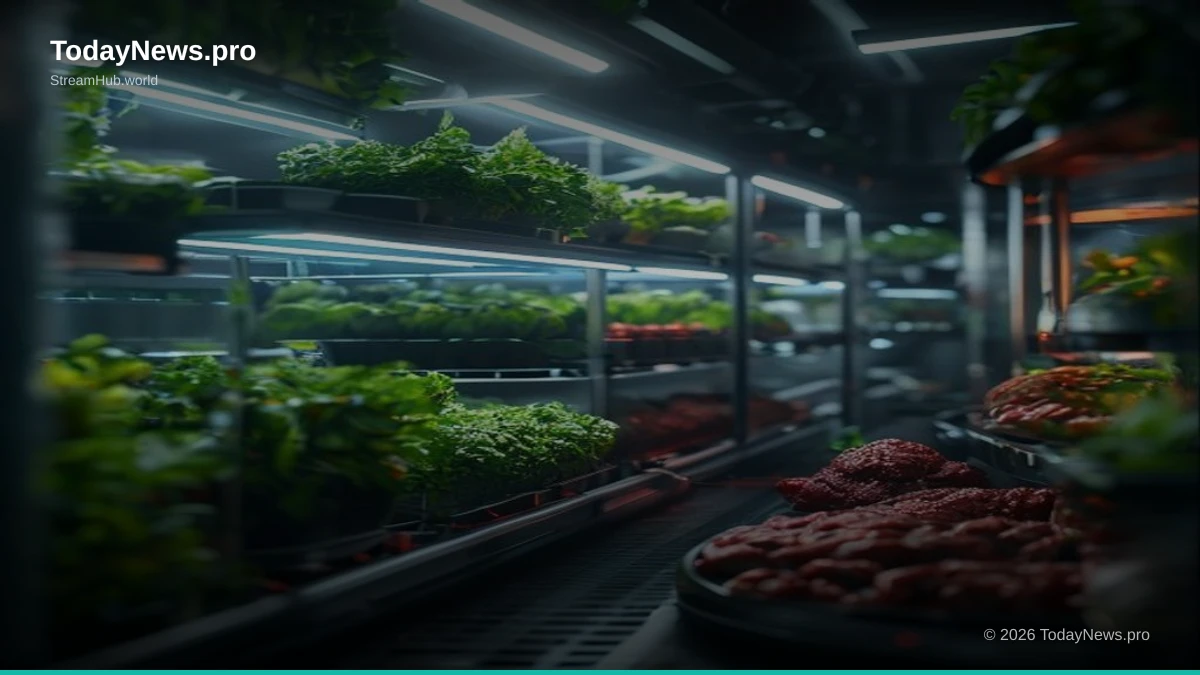
Vertical farming is the practice of growing crops in vertically stacked layers, often in a controlled environment. These farms can be situated in urban areas, utilizing abandoned warehouses, shipping containers, or purpose-built facilities. Unlike traditional agriculture, vertical farms are independent of soil, weather, and season, allowing for year-round production with significantly reduced land and water usage.The Controlled Environment Advantage
The core principle of vertical farming lies in its ability to meticulously control every aspect of the growing environment. This includes temperature, humidity, CO2 levels, light spectrum and intensity, and nutrient delivery. By precisely tailoring these conditions, growers can optimize plant growth for maximum yield, flavor, and nutritional content. This eliminates the variability and unpredictability inherent in outdoor farming, where pests, diseases, and adverse weather can devastate crops.Resource Efficiency: A Game Changer
One of the most compelling aspects of vertical farming is its remarkable resource efficiency. Water, a precious commodity, can be recirculated in hydroponic or aeroponic systems, reducing consumption by up to 95% compared to conventional farming. Land use is drastically minimized, as crops are grown in stacked layers, allowing for a significant output from a small footprint. This is particularly crucial in urban settings where land is scarce and expensive.Key Technologies in Play
* **Hydroponics:** Growing plants in nutrient-rich water solutions without soil. * **Aeroponics:** Growing plants with their roots suspended in the air and misted with nutrient solutions. * **Aquaponics:** A symbiotic system combining aquaculture (raising fish) and hydroponics, where fish waste provides nutrients for plants. * **LED Lighting:** Highly efficient and customizable LED lights provide the specific light spectrum plants need for photosynthesis, optimized for different growth stages.The Symphony of AI in Vertical Farms
Artificial intelligence is not just an add-on to vertical farming; it is increasingly becoming its central nervous system. AI algorithms analyze vast amounts of data generated by sensors within the farm to make real-time adjustments and predictive decisions. This allows for unprecedented levels of precision and efficiency, pushing the boundaries of what is possible in controlled environment agriculture.Optimizing Growth Parameters
AI systems monitor thousands of data points, from the subtle changes in leaf color indicating nutrient deficiency to the minute fluctuations in temperature that could stress a plant. Machine learning models are trained on historical data to identify optimal growing conditions for specific crops, factoring in everything from light intensity to nutrient ratios. This leads to faster growth cycles, higher yields, and improved crop quality.Predictive Maintenance and Pest Detection
AI can predict equipment failures before they occur, scheduling maintenance proactively and preventing costly downtime. Furthermore, computer vision algorithms can detect early signs of pest infestation or disease, often before they are visible to the human eye. This allows for targeted interventions, minimizing the need for broad-spectrum pesticides and protecting the integrity of the crop.Resource Management and Energy Efficiency
AI optimizes the use of resources like water, nutrients, and energy. By precisely controlling lighting schedules and nutrient delivery based on real-time plant needs and energy prices, AI can significantly reduce operational costs and environmental impact. For instance, AI can learn to adjust lighting intensity based on external light conditions or shift energy-intensive operations to off-peak hours.95%
Reduced Water Usage (vs. Traditional Farming)
100x
Higher Yield per Acre
70%
Reduction in Food Miles
365
Days of Year-Round Production
Lab-Grown Meat: From Petri Dish to Plate
Cultivated meat, also known as lab-grown meat, cell-based meat, or in-vitro meat, is produced by growing animal cells in a laboratory setting. This technology offers a potential alternative to traditional animal agriculture, promising to reduce the environmental footprint, ethical concerns, and health risks associated with conventional meat production.The Scientific Foundation
The process begins with a small sample of cells, typically muscle stem cells, taken from a living animal through a painless biopsy. These cells are then placed in a bioreactor, a controlled environment similar to those used in pharmaceutical production, and provided with a nutrient-rich medium. This medium contains amino acids, vitamins, sugars, and growth factors that encourage the cells to multiply and differentiate into muscle tissue, fat, and connective tissue.Differentiation and Structuring
The key challenge in producing cultivated meat is replicating the complex structure and texture of conventional meat. While initial products focused on ground meat applications like burgers, advancements are being made in creating more complex cuts. This involves guiding cell differentiation and encouraging the formation of muscle fibers and fat marbling. Edible scaffolding, either made from plant-based materials or other biocompatible substances, can be used to provide structure.Potential Benefits Beyond Sustainability
Beyond its environmental implications, cultivated meat offers several other potential advantages. It can be produced without the use of antibiotics, reducing the risk of antibiotic-resistant bacteria. The controlled production environment can also minimize the risk of foodborne illnesses such as E. coli and Salmonella. Furthermore, it could alleviate animal welfare concerns inherent in traditional livestock farming.The Technological Underpinnings of Cultivated Meat
The development of cultivated meat relies on sophisticated biotechnological processes and engineering. While the concept has been around for decades, recent advancements in cell culture techniques, bioreactor design, and growth media formulation have brought it closer to commercial viability.Bioreactor Technology
Bioreactors are the heart of cultivated meat production. These vessels are designed to provide the optimal conditions for cell growth, including temperature control, pH regulation, oxygen supply, and agitation to ensure nutrient distribution. Scaling up bioreactor capacity is crucial for meeting mass market demand. Early prototypes are being developed for large-scale industrial production.Growth Media Innovation
A significant area of research and development is focused on creating cost-effective and animal-free growth media. Traditionally, growth media often relied on fetal bovine serum (FBS), a byproduct of the meat industry, which presents ethical and scalability challenges. Researchers are now developing plant-based or chemically defined media that are less expensive and ethically neutral, paving the way for wider adoption.Scaffolding and Texture Development
Creating textured, whole-cut meat products like steaks requires innovative scaffolding techniques. These scaffolds provide a framework for cells to grow upon, mimicking the fibrous structure of muscle. Materials like plant-based proteins, hydrogels, and even edible fungi are being explored as potential scaffolding solutions. 3D bioprinting is also being investigated as a method to precisely arrange different cell types and create complex meat structures.Addressing the Challenges: Scalability, Cost, and Consumer Acceptance
Despite the immense promise, both AI-powered vertical farms and cultivated meat face significant hurdles before they can become mainstream. Overcoming these challenges will require continued innovation, significant investment, and a concerted effort to educate and engage consumers.Scalability and Production Costs
For vertical farms, the primary challenge is achieving profitability at scale. While yields are high, the initial capital investment in infrastructure, lighting, and automation is substantial. Reducing operational costs, particularly energy consumption for lighting and climate control, is crucial. For cultivated meat, the cost of growth media and the complexity of large-scale bioreactor production remain significant barriers to making it price-competitive with conventional meat."The dream of affordable, lab-grown steak hinges on breakthroughs in growth media and bioreactor efficiency. We're seeing incredible progress, but the path to parity with conventional meat prices is still a marathon, not a sprint."
— Dr. Anya Sharma, Lead Biotechnologist, Cultivated Food Innovations
Consumer Perception and Acceptance
Consumer acceptance is a critical factor for both technologies. For vertical farms, the perception of freshness and quality is generally positive, especially for leafy greens and herbs. However, for cultivated meat, overcoming the "ick factor" and educating consumers about the scientific process will be paramount. Transparent labeling and clear communication about the safety and benefits of cultivated meat are essential. Building trust will be a gradual process.Regulatory Frameworks
The regulatory landscape for both AI-driven agriculture and cultivated meat is still evolving. Clear guidelines and approval processes are needed to ensure product safety and build consumer confidence. Governments and international bodies are working to establish frameworks that balance innovation with consumer protection. For cultivated meat, this includes defining what constitutes "meat" and how these products should be labeled.The Environmental Imperative
The environmental benefits of these technologies are a primary driver of their development. Traditional agriculture is a significant contributor to greenhouse gas emissions, deforestation, water pollution, and biodiversity loss. Vertical farming and cultivated meat offer compelling alternatives that can mitigate these impacts.Reducing Greenhouse Gas Emissions
Livestock farming is a major source of methane, a potent greenhouse gas. Cultivated meat production has the potential to drastically reduce these emissions. Similarly, vertical farms, by reducing the need for long-distance transportation and land-intensive practices like plowing and fertilizing, can contribute to a lower carbon footprint for food production.Conserving Water and Land Resources
The water savings from vertical farming are substantial. By recirculating water in closed-loop systems, these farms minimize water waste. Land use is also dramatically reduced, freeing up valuable land for rewilding, conservation, or other essential uses. Cultivated meat, while requiring energy and water for its production, does not necessitate the vast tracts of land used for grazing and feed production.Minimizing Pollution and Biodiversity Loss
Conventional agriculture often leads to nutrient runoff into waterways, causing eutrophication and harming aquatic ecosystems. The controlled environments of vertical farms eliminate this risk. Furthermore, by reducing the pressure on natural habitats for livestock grazing and feed cultivation, these new food technologies can help preserve biodiversity."The food system is at a critical juncture. We can no longer afford to ignore the environmental toll of our current methods. Innovations like AI-driven vertical farms and cultivated meat offer a vital pathway towards a more sustainable and resilient future for food."
— Dr. Kenji Tanaka, Environmental Scientist, Global Food Security Institute
Economic Projections and Market Readiness
The economic potential of these sectors is substantial, with significant investment flowing into startups and established food companies exploring these innovations. While still in their nascent stages, projections indicate rapid growth.Investment and Market Growth
Venture capital funding for food tech, particularly in vertical farming and cultivated meat, has surged in recent years. Companies are attracting significant investments to scale their operations, refine their technologies, and bring products to market. Analysts predict a multi-billion dollar global market for both sectors within the next decade.$3.1B
Global Vertical Farming Market (2022)
30%
CAGR Projected for Vertical Farming
$500M
Global Cultivated Meat Investment (2023)
$50B+
Projected Cultivated Meat Market by 2030
Timeline to Mainstream Adoption
Vertical farming is already seeing commercial success, particularly with leafy greens and herbs. The expansion into fruits and vegetables with longer growth cycles is underway. Cultivated meat, on the other hand, is still in its early commercialization phase, with a few companies receiving regulatory approval in limited markets. Widespread availability and price parity are likely still several years away.The Role of Partnerships
Collaboration between technology providers, food manufacturers, and retailers will be crucial for driving adoption. Partnerships can help accelerate product development, streamline supply chains, and reach a broader consumer base. For instance, established food brands are investing in or partnering with cultivated meat startups to leverage their expertise and distribution networks. Reuters Article on Vertical Farming Wikipedia on Cultivated MeatThe Ethical Landscape
Beyond the technical and economic aspects, these food technologies raise important ethical considerations. While they offer potential solutions to many of the ethical dilemmas of current food production, they also present new questions.Animal Welfare and Sentience
Cultivated meat directly addresses the ethical concerns surrounding animal suffering and slaughter in traditional meat production. By growing meat from cells, it eliminates the need to raise and slaughter billions of animals. However, questions remain about the ethical sourcing of initial cell lines and the welfare of animals used for biopsies.Food Security and Equity
These technologies have the potential to enhance global food security by providing reliable, localized food sources. However, there is a risk that the benefits could be unevenly distributed, with access limited to wealthier nations or populations. Ensuring equitable access and preventing a widening of the food gap will be important.Environmental Ethics
While generally presenting a lower environmental impact, the energy requirements for vertical farms and cultivated meat production need to be carefully managed. Ensuring that the energy used is from renewable sources is crucial for realizing the full environmental benefits and avoiding simply shifting the environmental burden. The ethical imperative is to ensure these technologies contribute positively to planetary health.Frequently Asked Questions
What is the primary benefit of vertical farming?
The primary benefit is its ability to produce food sustainably and efficiently, independent of weather and seasons, using significantly less land and water, often within urban environments, reducing food miles.
How is lab-grown meat made?
Lab-grown meat, or cultivated meat, is produced by taking a small sample of animal cells, which are then grown in a nutrient-rich medium within a bioreactor to multiply and develop into muscle tissue.
Will AI-powered farms replace traditional farms?
It is unlikely that AI-powered farms will completely replace traditional farms in the near future. They are expected to complement traditional agriculture, particularly for high-value crops and in regions with limited arable land or water.
Is cultivated meat safe to eat?
Yes, regulatory bodies in several countries have approved cultivated meat for consumption after rigorous safety assessments. The controlled production environment aims to minimize contamination and the need for antibiotics.
What are the main challenges for cultivated meat?
The main challenges for cultivated meat include achieving cost-competitiveness with conventional meat, scaling up production efficiently, developing complex textures and whole cuts, and gaining broad consumer acceptance.