

 Eric Mason
⏱ 20 min
The global population is projected to reach nearly 10 billion by 2050, demanding a staggering 70% increase in food production, according to the United Nations. This stark statistic underscores a critical challenge: how can humanity feed itself sustainably in the face of dwindling resources, climate change, and environmental degradation? The answer, increasingly, lies not in traditional agricultural methods but in a radical reimagining of our food systems, driven by groundbreaking innovations in cellular agriculture, urban farming, and artificial intelligence.
The Looming Food Crisis and the Dawn of a New Era
For millennia, humanity has relied on vast swathes of land and considerable water resources to cultivate crops and raise livestock. This model, however, is proving increasingly unsustainable. Deforestation for agricultural expansion, intensive water usage, greenhouse gas emissions from livestock, and the environmental impact of long-distance food transportation all contribute to a planetary burden that cannot continue unchecked. The urgency of this situation has spurred a wave of innovation, leading to the development of what are being termed "alt-proteins" and "future farms." These new paradigms offer the promise of producing food more efficiently, with a significantly reduced environmental footprint, and in locations previously unsuitable for agriculture. The traditional agricultural sector, while essential, is inherently resource-intensive. The United Nations Food and Agriculture Organization (FAO) estimates that livestock farming alone accounts for approximately 14.5% of all human-caused greenhouse gas emissions. This figure is comparable to the emissions from all the world's cars, trucks, and airplanes combined. Furthermore, the expansion of agricultural land is a leading driver of deforestation and biodiversity loss. As the global population continues to grow, placing further strain on these finite resources becomes an untenable prospect. This is where the confluence of cutting-edge science and technology begins to offer tangible solutions. Lab-grown meat, also known as cultured meat or cellular agriculture, aims to produce real animal meat from cells, bypassing the need for animal slaughter. Vertical farming, on the other hand, seeks to grow crops in vertically stacked layers within controlled environments, often in urban settings. Intertwined with these physical innovations is the pervasive influence of artificial intelligence, which is revolutionizing every aspect of food production, from optimizing crop yields to predicting market demands.Lab-Grown Meat: From Petri Dish to Plate
The concept of growing meat without raising animals might sound like science fiction, but it is rapidly becoming a commercial reality. Cellular agriculture involves taking a small sample of cells from an animal and then cultivating them in a nutrient-rich medium within a bioreactor. This process allows the cells to multiply and differentiate into muscle and fat tissues, ultimately forming meat.The Science Behind Cultured Meat
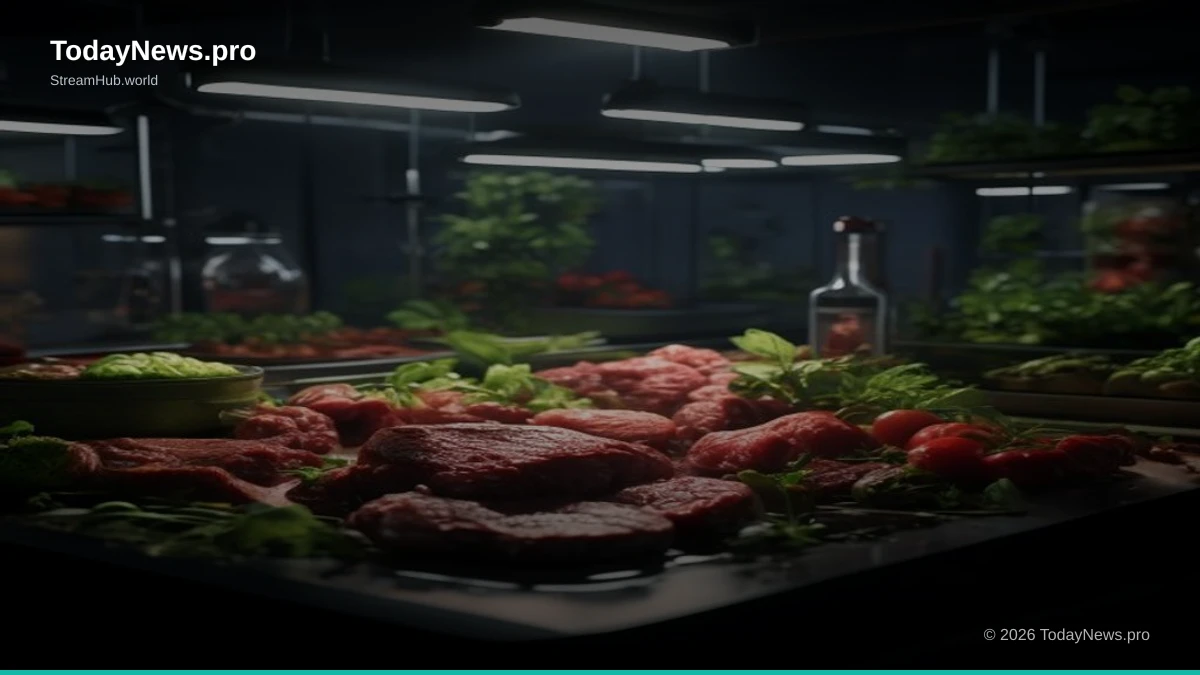
The journey begins with cell sourcing. Typically, a biopsy is taken from a living animal, a procedure that is relatively painless and does not harm the animal. These cells, often muscle stem cells, are then placed in a sterile environment and fed a proprietary blend of nutrients, including amino acids, vitamins, minerals, and carbohydrates, along with growth factors that stimulate cell proliferation and differentiation. This growth medium is crucial for mimicking the conditions within an animal's body. The cells are cultured in bioreactors, large vessels that provide a controlled environment for growth. These bioreactors can range in size from laboratory flasks to industrial-scale tanks. As the cells multiply, they are encouraged to form into the structures that constitute meat. This often involves providing a scaffold, either edible or biodegradable, onto which the cells can attach and organize themselves. The final product, once matured, can then be harvested and processed into familiar forms like burgers, sausages, or even steaks.Environmental Advantages and Challenges
The environmental benefits of lab-grown meat are potentially enormous. Proponents argue that it could dramatically reduce land use, water consumption, and greenhouse gas emissions associated with conventional meat production. Studies suggest that cultured meat could require up to 99% less land and 96% less water than traditional beef. Furthermore, by eliminating the need for animal farming, it could significantly curb methane emissions, a potent greenhouse gas. However, significant challenges remain. The energy consumption of the bioreactors and the production of the growth medium are areas that require further optimization to ensure a truly sustainable lifecycle. Scaling up production to meet global demand also presents a complex engineering and logistical puzzle. Regulatory hurdles, consumer acceptance, and the cost of production are also critical factors that will influence the widespread adoption of lab-grown meat.99%
Less Land Use (estimated)
96%
Less Water Use (estimated)
~14.5%
Global Greenhouse Gas Emissions from Livestock
Key Players and Market Trends
The lab-grown meat industry is burgeoning, with numerous startups and established companies investing heavily in research and development. Companies like Upside Foods, Eat Just (makers of GOOD Meat), and Mosa Meat are at the forefront, developing diverse products and seeking regulatory approvals in various markets. Singapore has been a pioneer, granting regulatory approval for cultured chicken meat. The United States, Israel, and the European Union are also progressing through their respective regulatory processes. The market for cell-based meat is projected to grow exponentially in the coming decades, driven by increasing consumer demand for sustainable and ethical protein sources, as well as the potential for technological advancements to reduce production costs."The potential of cellular agriculture to reshape our relationship with food and the planet is profound. We are at the cusp of a food revolution that could mitigate some of the most pressing environmental and ethical concerns of our time."
— Dr. Anya Sharma, Lead Researcher in Biotechnology, Future Foods Institute
Vertical Farming: Cultivating Crops in the Concrete Jungle
While lab-grown meat addresses protein production, vertical farming offers a solution for fruits, vegetables, and grains, particularly in urban environments where land is scarce and expensive. This innovative approach involves growing crops in vertically stacked layers, often indoors, using controlled-environment agriculture (CEA) techniques.The Technology of Controlled-Environment Agriculture
Vertical farms utilize a range of technologies to create optimized growing conditions. Hydroponics, aeroponics, or aquaponics systems are typically employed, eliminating the need for soil. In hydroponics, plants are grown in nutrient-rich water. Aeroponics involves misting plant roots with nutrient solutions. Aquaponics integrates aquaculture (fish farming) with hydroponics, using fish waste as a natural fertilizer for plants. Lighting is another critical component. Instead of relying on sunlight, vertical farms use energy-efficient LED lights that can be tuned to specific wavelengths to promote optimal plant growth, flowering, and fruiting. Climate control systems precisely manage temperature, humidity, and CO2 levels, creating an ideal microclimate for each crop. This meticulous control allows for year-round production, independent of external weather conditions.Benefits for Urban Food Security and Sustainability
The advantages of vertical farming are manifold. By locating farms within or near cities, it drastically reduces "food miles," the distance food travels from farm to consumer, leading to lower transportation emissions and fresher produce. This proximity also enhances food security, making urban populations less vulnerable to disruptions in global supply chains. Furthermore, vertical farms use significantly less water than traditional agriculture – up to 95% less, as water is recirculated within the system. They also eliminate the need for pesticides and herbicides, as the controlled environment minimizes pest and disease outbreaks. This results in cleaner, safer produce.| Farming Method | Water Usage (per kg of produce) | Land Use (per kg of produce) | Pesticide Use |
|---|---|---|---|
| Traditional Field Farming | ~1,000 liters (varies greatly) | High | Common |
| Vertical Farming (Hydroponics) | ~10-50 liters | Very Low | None |
Challenges and Future Prospects
Despite its promise, vertical farming faces its own set of challenges. The initial setup costs for sophisticated vertical farms can be substantial. Energy consumption, particularly for lighting and climate control, is a significant operational expense and a key area for ongoing innovation to improve efficiency. Finding suitable locations within urban areas, managing waste streams, and ensuring the economic viability of operations are also critical considerations. However, as technology advances and energy costs potentially decrease with renewable energy integration, vertical farming is poised to become an increasingly important part of the urban food landscape. It offers a pathway to more resilient, localized, and sustainable food production systems.The AI Revolution in Agriculture
Artificial intelligence is not just a supporting actor in this food system transformation; it is a central protagonist, driving efficiency, precision, and predictive capabilities across the entire value chain. From the microscopic world of cellular agriculture to the vast fields of traditional farming, AI is optimizing processes and unlocking new potential.Precision Agriculture and AI-Powered Insights
In traditional agriculture, AI is enabling "precision farming." Drones equipped with sensors and cameras, powered by AI algorithms, can monitor crop health, identify nutrient deficiencies, detect early signs of disease or pest infestation, and assess soil conditions with unprecedented accuracy. This data allows farmers to apply water, fertilizers, and pesticides only where and when they are needed, significantly reducing waste and environmental impact. Machine learning models can analyze vast datasets, including weather patterns, historical yield data, and soil sensor readings, to provide farmers with highly accurate yield predictions. This allows for better planning, resource allocation, and market forecasting. Robotic systems, guided by AI, are also emerging for tasks like automated planting, weeding, and harvesting, addressing labor shortages and improving efficiency.Impact of AI in Agriculture (Estimated Efficiency Gains)
AI in Lab-Grown Meat and Vertical Farms
The application of AI extends to the innovative food production methods as well. In cellular agriculture, AI can be used to optimize the nutrient formulations in growth media, predict cell growth rates, and control bioreactor parameters for maximum efficiency and output. Machine learning can analyze complex cellular data to understand differentiation pathways and improve the texture and flavor profiles of cultured meat. For vertical farms, AI plays a crucial role in fine-tuning the growing environment. AI algorithms can analyze sensor data to continuously adjust lighting, temperature, humidity, and nutrient delivery for each specific crop and growth stage. This ensures optimal conditions for faster growth, higher yields, and superior quality, while also minimizing energy and resource consumption. Predictive maintenance for farm equipment can also be implemented using AI, preventing costly downtime."AI is not just a tool for optimization; it's a catalyst for entirely new approaches to food production. It allows us to understand and manipulate biological processes with a level of precision previously unimaginable, leading to more resilient and sustainable food systems."
— Dr. Kenji Tanaka, Chief Technology Officer, Agri-AI Solutions
Synergies and Challenges: The Interplay of Innovation
The rise of lab-grown meat, vertical farming, and AI is not occurring in isolation. These technologies are increasingly interconnected, creating synergistic opportunities but also presenting new challenges that require careful consideration and collaborative solutions.Interconnected Ecosystems
The data generated by AI in precision agriculture can inform the development of better growth media for lab-grown meat or optimize nutrient delivery in vertical farms. Conversely, the controlled environments of vertical farms provide highly predictable datasets for AI to learn from, further refining its agricultural algorithms. The pursuit of sustainability across all these sectors means that energy efficiency is paramount, driving innovation in renewable energy sources to power these advanced food production facilities. Furthermore, the development of new proteins, whether from cell culture or advanced plant-based alternatives, creates demand for novel processing techniques and distribution networks, areas where AI can also contribute significantly through logistics optimization and demand forecasting.Regulatory and Ethical Considerations
As these technologies mature, robust regulatory frameworks are essential. For lab-grown meat, this includes ensuring food safety, clear labeling, and consumer education. For vertical farms, it might involve zoning regulations, energy use standards, and food safety protocols. AI in agriculture raises questions about data privacy, algorithmic bias, and the potential for job displacement. Ethical considerations are also paramount. While lab-grown meat offers an alternative to animal slaughter, questions about the welfare of donor animals and the ethical implications of creating food in a laboratory persist. Consumer acceptance is another significant hurdle; building trust and transparency around these novel food production methods is crucial for their widespread adoption. As noted by Wikipedia, "Cultured meat is meat produced by in vitro cell cultures of animal cells. It is a form of cellular agriculture." Learn more about cultured meat.Consumer Acceptance and Market Adoption
The ultimate success of these innovations hinges on consumer acceptance. While a growing segment of the population is open to trying novel food products, a broader shift in perception is needed. Clear communication about the benefits, safety, and sustainability of these technologies, coupled with taste and price parity, will be key. Early market entrants are focusing on introducing products that are familiar to consumers, such as burgers and chicken nuggets, to ease the transition.Economic and Environmental Imperatives
The shift towards these advanced food systems is driven by both pressing environmental imperatives and evolving economic realities. The long-term costs of climate change, resource depletion, and food insecurity are immense, making investment in sustainable solutions a strategic necessity.The True Cost of Food Production
Traditional agriculture, while providing essential nourishment, often externalizes its environmental costs. Deforestation, water pollution from agricultural runoff, and greenhouse gas emissions contribute to a global burden that is eventually borne by society. Sustainable food systems aim to internalize these costs, making the production of food more reflective of its true environmental impact. Lab-grown meat and vertical farming promise to reduce these externalities. While current production costs for lab-grown meat can be higher than conventional meat, technological advancements and economies of scale are expected to drive prices down significantly. Similarly, while vertical farms may have higher upfront capital costs, their efficiency in resource use and ability to operate year-round can lead to competitive pricing for certain produce.Investment and Innovation Landscape
The food tech sector, encompassing cellular agriculture, vertical farming, and AI-driven agricultural solutions, has attracted substantial investment in recent years. Venture capital firms, governments, and established food corporations are pouring billions into research, development, and scaling up these technologies. This influx of capital is accelerating innovation and bringing these solutions closer to commercial viability. According to Reuters, "Investment in alternative proteins, including plant-based and cultivated meat, reached $5.1 billion globally in 2021, more than doubling from the previous year." Read more on Reuters. This trend highlights the growing confidence in the future of these alternative food systems.The Future on Our Plates: What to Expect
The future of food is likely to be a diverse and integrated landscape, where traditional agriculture coexists with innovative new methods. Lab-grown meat and vertical farms are not intended to entirely replace existing systems but to complement them, offering solutions for specific challenges and consumer demands.A Multi-Faceted Food System
We can expect a future where consumers have a wider range of protein and produce options. Cultured meat might become a staple for those seeking the taste and texture of conventional meat with a lower environmental footprint. Vertical farms will likely supply a significant portion of fresh produce to urban centers, ensuring year-round availability and reduced spoilage. AI will continue to permeate all aspects of food production, making systems more efficient, resilient, and sustainable. The integration of these technologies will also lead to novel food products and culinary experiences. For instance, the ability to precisely control the composition of cultured meat could lead to healthier or more flavorful options. AI could help develop personalized nutrition plans based on individual needs and preferences.2030
Projected Year for Significant Market Share of Cultured Meat
70%
Projected Increase in Global Food Demand by 2050
100+
Companies Globally in Cellular Agriculture Space
The Road Ahead
The journey from innovation to widespread adoption is complex and requires sustained effort. Continued research and development, supportive regulatory policies, significant investment, and robust consumer engagement will all be critical. The challenges are real, but the potential rewards – a more sustainable, secure, and equitable food future for all – are immense. The cultivation of tomorrow's food systems has already begun, and the innovations we see today are laying the groundwork for a healthier planet and a more resilient global population.Is lab-grown meat safe to eat?
Yes, regulatory bodies like the U.S. Food and Drug Administration (FDA) and the U.S. Department of Agriculture (USDA) are establishing rigorous safety assessment processes for cultured meat. Companies must demonstrate that their products are safe for consumption before they can be brought to market.
What are the main environmental benefits of vertical farming?
Vertical farming significantly reduces water usage, eliminates the need for pesticides and herbicides, and minimizes land requirements. By locating farms in urban areas, it also drastically cuts down on transportation emissions and helps improve local food security.
How is AI being used in traditional farming?
AI is transforming traditional farming through precision agriculture. This includes using drones and sensors for crop monitoring, optimizing irrigation and fertilizer application, predicting yields, detecting diseases early, and automating tasks with robots.
Will lab-grown meat taste the same as conventional meat?
The goal of lab-grown meat producers is to replicate the taste, texture, and nutritional profile of conventional meat. As the technology advances, the sensory experience is expected to become increasingly indistinguishable from traditional meat.