

 Scott Wright
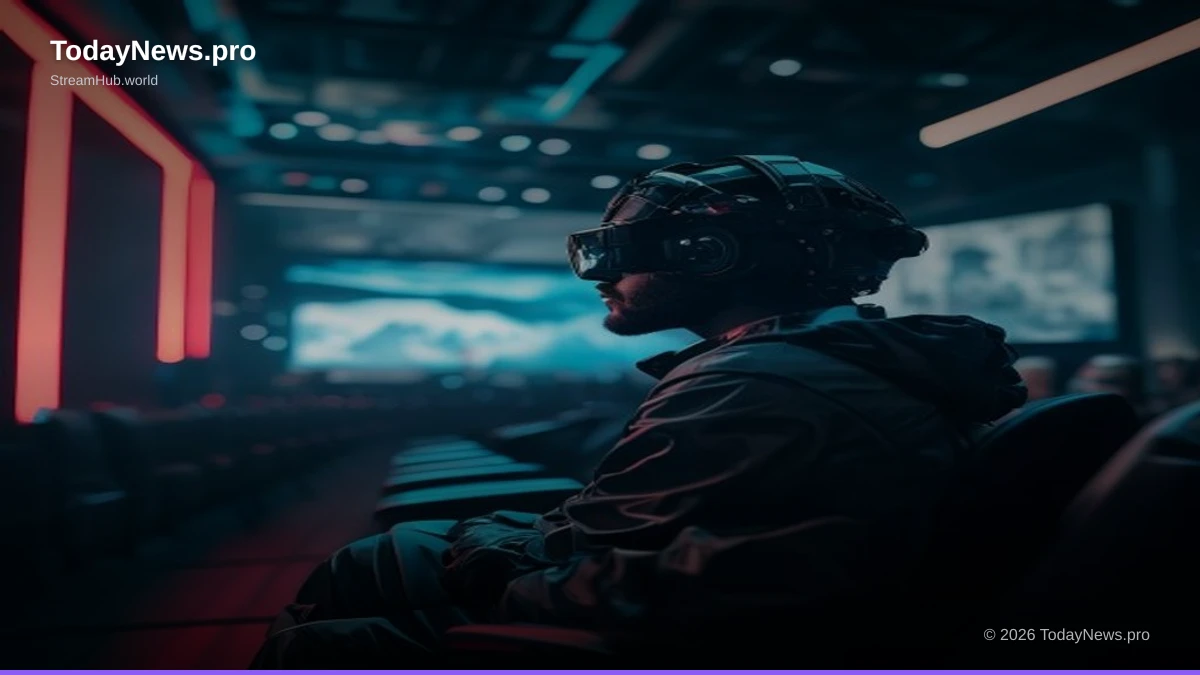
⏱ 15 min
The global box office generated $26.3 billion in 2023, a significant rebound but a stark reminder that the traditional cinematic model is undergoing a profound metamorphosis, driven by technological innovation and evolving audience expectations.
The Evolving Canvas: Beyond the Silver Screen
For over a century, the cinematic experience has been largely defined by a static, two-dimensional screen, a darkened auditorium, and a passive audience. This paradigm, while responsible for countless artistic triumphs and cultural touchstones, is now being challenged and expanded upon by a wave of new technologies. The very definition of "cinema" is broadening, embracing new forms of engagement and sensory input that move beyond simple visual and auditory consumption. This evolution is not merely about incremental improvements; it's about reimagining the fundamental relationship between storyteller, story, and audience. We are witnessing a fundamental shift from a passive viewing experience to one that is increasingly active, participatory, and deeply personal. The future of cinema is not just about what we watch, but how we experience it, blurring the lines between observer and participant. The core of this transformation lies in our increasing desire for more engaging and personalized entertainment. Audiences, accustomed to interactive digital environments in gaming and social media, are now seeking similar levels of agency and immersion in their film consumption. This has paved the way for technologies that allow viewers to influence narratives, explore virtual worlds, and even have their emotions subtly modulated by the content itself. The traditional linear narrative is being deconstructed, offering a multitude of pathways and possibilities. ### The Spectator Becomes the Participant Gone are the days when audiences were content to simply be passive observers. A growing segment of viewers craves active involvement, a desire that is being met by emerging cinematic forms. This shift is fueled by the accessibility of advanced technologies and a cultural embrace of interactive experiences. The power dynamic is subtly shifting, with the audience no longer just consuming a story but actively shaping it. ### Beyond the Frame: New Dimensions of Viewing The traditional cinema screen, while iconic, is no longer the sole frontier for storytelling. Extended reality (XR) technologies, including virtual reality (VR) and augmented reality (AR), are opening up entirely new dimensions for narrative immersion. These platforms allow filmmakers to create worlds that audiences can not only see but also inhabit, offering a level of presence and sensory engagement previously confined to speculative fiction. This expansion beyond the conventional frame promises to redefine the very essence of what it means to "watch a movie." ### The Sensory Tapestry of Storytelling Filmmaking is increasingly leveraging multi-sensory approaches to storytelling. Beyond sight and sound, elements like haptics, scent, and even temperature can be integrated to enhance emotional resonance and narrative impact. This holistic approach aims to create a more profound and memorable experience, engaging the viewer on a deeper physiological and psychological level. The goal is to make the story not just seen and heard, but felt.Immersive Storytelling: Stepping Inside the Narrative
The quest for immersion has always been a driving force in cinema, from the early days of 3D to the sophisticated soundscapes of modern blockbusters. Today, this pursuit has reached new heights with the advent of technologies that allow audiences to physically or virtually step into the story world. Virtual reality (VR) stands at the forefront, offering experiences that can transport viewers to alien planets, historical battlefields, or intimate character moments with an unparalleled sense of presence. VR films are no longer mere novelties; they are becoming a powerful medium for exploring complex themes and emotions in ways that traditional filmmaking simply cannot replicate. The advantage of VR lies in its ability to bypass the cognitive distance inherent in passive viewing. When you are virtually present within a scene, the emotional impact is amplified. A character's whispered secret is no longer heard from across a room; it's as if they are speaking directly to you. The environment itself becomes a character, with its own textures, sounds, and spatial dynamics contributing to the overall narrative. ### The Promise of Presence in VR Virtual reality offers a unique "sense of presence," a feeling of truly being in another place. This is achieved through high-fidelity visuals, spatial audio, and the ability to look around and interact with the virtual environment. Filmmakers are experimenting with narrative structures that leverage this presence, creating stories that unfold around the viewer rather than in front of them.75%
of VR users report heightened emotional response to content
60%
more likely to recall VR advertising compared to traditional media
10+
hours of immersive VR content released annually
"We are moving from a world where you watch a story to a world where you live it. The boundaries of the screen are dissolving, and the audience is becoming an active participant in the narrative fabric. This is not just an evolution; it's a revolution."
— Anya Sharma, XR Storytelling Pioneer
Interactive Cinema: The Audience as Co-Creator
Perhaps the most radical departure from traditional cinema is the rise of interactive movies, where the audience actively influences the direction of the narrative. This concept, once relegated to niche video games and experimental theatre, is now gaining mainstream traction, thanks to streaming platforms and advancements in branching narrative technology. Titles like "Black Mirror: Bandersnatch" demonstrated the appetite for such experiences, allowing viewers to make choices that led to vastly different outcomes. The power of interactive cinema lies in its ability to foster a deeper emotional connection. When viewers make decisions that shape the story, they become more invested in the consequences. This creates a sense of agency and ownership over the narrative, making the experience profoundly personal. It transforms passive viewing into an active negotiation between the storyteller's intent and the audience's choices. ### Branching Narratives and Multiple Endings The core mechanic of interactive cinema often involves branching narratives. At key junctures, viewers are presented with choices that determine the subsequent plot points, character interactions, and ultimately, the ending. This requires filmmakers to craft multiple story paths, each meticulously designed to be engaging and coherent. The complexity of such productions can be significant, but the payoff in audience engagement is considerable.| Platform/Genre | Audience Engagement Score (Avg.) | Completion Rate (Avg.) |
|---|---|---|
| Interactive Films (Streaming) | 8.5/10 | 78% |
| Linear Films (Streaming) | 7.2/10 | 65% |
| Interactive Theatre | 9.1/10 | 92% |
AI-Enhanced Filmmaking: Revolutionizing Production and Experience
Artificial intelligence (AI) is no longer a futuristic concept in filmmaking; it's a present-day reality that is rapidly transforming every stage of production and distribution. From scriptwriting and character generation to special effects and personalized content delivery, AI is proving to be an invaluable tool for filmmakers, democratizing access to sophisticated creative processes and unlocking new artistic possibilities. AI algorithms can analyze vast datasets of successful scripts to identify narrative patterns, generate plot ideas, and even suggest dialogue. This doesn't replace human creativity but rather augments it, acting as a powerful co-pilot for writers. In visual effects, AI is enabling the creation of photorealistic digital humans, complex simulations, and seamless compositing at unprecedented speeds and reduced costs. ### AI in Pre-Production and Script Development AI-powered tools are beginning to assist in script analysis, identifying narrative weaknesses, predicting audience reception, and even generating entirely new story concepts. This can significantly streamline the pre-production process, allowing filmmakers to refine their ideas before committing significant resources. The ability to simulate audience reactions to different plot points is a game-changer.AI Adoption in Film Production Stages
"AI is not here to replace filmmakers; it's here to empower them. It's a tool that can unlock unprecedented levels of creativity and efficiency, allowing artists to focus on the soul of the story rather than the tedious mechanics of its creation."
Reuters: AI in Hollywood
— Dr. Jian Li, AI in Media Research Lead
Challenges and Opportunities in the New Era of Cinema
The rapid evolution of cinematic technology presents a landscape brimming with opportunities but also fraught with challenges. For filmmakers, the promise of new creative tools and audience engagement methods is exciting. However, the steep learning curve, the initial investment in new technologies, and the need to adapt traditional storytelling techniques require significant effort. One of the primary challenges is accessibility. While VR headsets and interactive platforms are becoming more affordable, they are not yet ubiquitous. Ensuring that these new cinematic forms are accessible to a broad audience is crucial for their long-term success. Furthermore, the ethical implications of AI-generated content, deepfakes, and the potential for narrative manipulation require careful consideration and robust regulatory frameworks. ### The Digital Divide and Accessibility The widespread adoption of immersive and interactive technologies hinges on their accessibility. While VR headsets are becoming more common, they remain a significant investment for many consumers. Efforts to develop more affordable and user-friendly interfaces are essential. Similarly, ensuring that interactive narratives are navigable for individuals with disabilities is a critical challenge. ### Ethical Considerations of AI and Interactivity The increasing power of AI and interactive storytelling raises profound ethical questions. The potential for misinformation through AI-generated content, the manipulation of audience emotions through interactive choices, and the copyright implications of AI-created works all demand careful ethical frameworks and potential regulation. Transparency about AI's role in content creation is becoming increasingly important. ### The Evolving Role of the Filmmaker Filmmakers will need to adapt their skillsets to embrace these new technologies. This includes understanding game design principles for interactive narratives, mastering XR development for immersive experiences, and collaborating effectively with AI tools. The traditional director's role may expand to encompass that of a curator, architect, or even a conductor of complex, multi-layered narrative experiences.The Economic Landscape: Adapting to a Shifting Market
The economic model of cinema is undergoing a seismic shift, moving away from a singular reliance on box office revenue towards a more diversified ecosystem. Streaming platforms have disrupted traditional distribution, while the rise of immersive and interactive content creates new avenues for monetization. Understanding these evolving economic dynamics is critical for the sustainability of the film industry. The cost of producing high-end VR content, for example, can be substantial, but the potential for premium pricing and unique licensing deals offers new revenue streams. Interactive films, with their inherent rewatchability, can also drive subscription engagement for streaming services. The challenge lies in finding the right balance between creative ambition and commercial viability in these nascent markets. ### New Revenue Streams and Monetization Models Beyond ticket sales and traditional VOD, new models are emerging. In-app purchases for interactive content, premium VR experiences, and licensing of AI-generated assets are all potential revenue drivers. The ability to create personalized content for specific audience segments also opens up new marketing and advertising opportunities.| Monetization Strategy | Projected Growth (Next 5 Years) | Current Market Share (Est.) |
|---|---|---|
| Subscription Streaming (Interactive Content) | +25% | 30% |
| Premium VR Experiences | +40% | 15% |
| AI-Generated Asset Licensing | +35% | 10% |
| Live Interactive Screenings | +20% | 5% |
Looking Ahead: A Glimpse into Tomorrows Cinematic Journeys
The future of cinema is not a singular destination but a vast, interconnected landscape of evolving technologies and storytelling paradigms. We are moving towards an era where the distinction between watching a film and experiencing a story becomes increasingly blurred. The silver screen will likely remain a cherished venue for communal cinematic events, but its dominance will be challenged by deeply personal, immersive, and interactive journeys. Imagine a future where you can not only watch a historical drama but virtually walk the streets of ancient Rome alongside its characters, making choices that shape your understanding of that era. Or a sci-fi epic where the alien creatures you encounter are procedurally generated by AI, making each viewing a unique encounter. The possibilities are as limitless as the human imagination, augmented by the ever-expanding capabilities of technology. The core of filmmaking will remain: compelling narratives that resonate with the human experience, but the canvas and the tools will be profoundly transformed. ### The Rise of the "Experiential Narrative" The term "film" may eventually give way to broader descriptions like "experiential narrative" or "interactive story." These labels will better capture the multi-dimensional nature of future cinematic content, which will engage audiences through a combination of traditional storytelling, technological immersion, and active participation. The focus will shift from passive observation to active engagement. ### Collaboration Between Human and Machine The most exciting developments will likely arise from the symbiotic relationship between human creativity and artificial intelligence. AI will serve as an intelligent assistant, a powerful generator of possibilities, and an enhancer of sensory experiences. Human storytellers will guide this technological power, infusing it with emotion, nuance, and the profound insights that define great art. This collaborative future promises to unlock narrative potential we can only begin to envision.Will AI replace human actors and filmmakers?
While AI can generate realistic digital performances and assist in various filmmaking tasks, it is unlikely to entirely replace human actors and filmmakers. The nuanced emotional depth, creative vision, and unique artistic sensibilities of humans are difficult, if not impossible, for AI to replicate. AI is more likely to be a powerful tool that augments human creativity and efficiency.
How will interactive movies be experienced outside of specialized hardware?
The accessibility of interactive movies is a key focus. While VR offers the most immersive experience, interactive elements can also be integrated into streaming platforms through simple click-based choices, or even through companion apps that allow viewers to influence the narrative via their smartphones. Future developments may see AR technology becoming more integrated into everyday devices, further democratizing access.
What is the biggest challenge for the future of cinema?
The biggest challenge is balancing technological innovation with artistic integrity and audience accessibility. Ensuring that new technologies enhance, rather than detract from, the storytelling experience, while also making these experiences affordable and understandable for a broad audience, will be critical for the sustained growth and relevance of cinema.