

 Roger Evans
⏱ 18 min
In 2023, over 200,000 deepfake videos were identified and removed from major social media platforms, a stark indicator of the escalating challenge posed by synthetic media.
The Uncanny Valley: Navigating the Frontier of Hyper-Realism
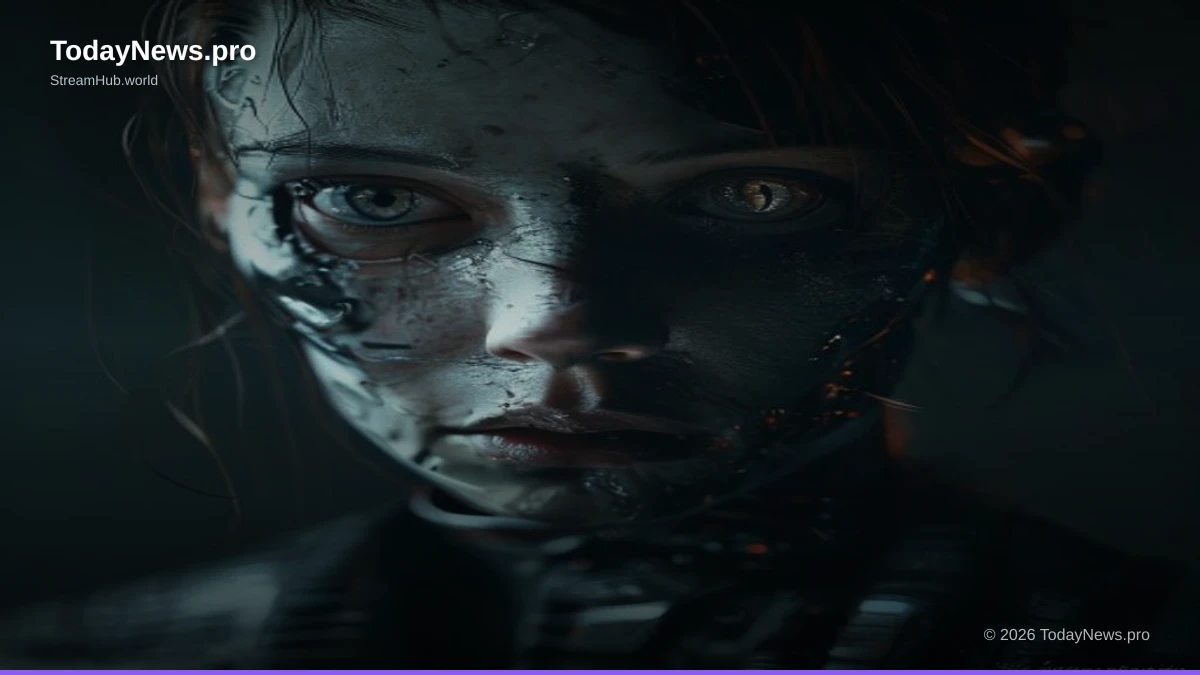
The human capacity for visual perception is incredibly sophisticated. For millennia, our survival and understanding of the world have relied on our ability to discern reality from illusion. Yet, as technology advances at an unprecedented pace, this very ability is being tested and, in some cases, fundamentally challenged. We stand at the precipice of a new era in visual storytelling, one defined by hyper-realism and the unsettling phenomenon known as the "uncanny valley." This concept, originally coined by roboticist Masahiro Mori in 1970, describes the point where something becomes almost, but not quite, human, eliciting a sense of revulsion or unease rather than empathy. Today, this applies not just to robots but to digitally generated images and videos – deepfakes – that blur the lines between what is real and what is fabricated with alarming precision. The implications of this technological leap are profound, touching everything from entertainment and art to journalism and politics. As synthetic media becomes more accessible and sophisticated, its potential to deceive, manipulate, and entertain grows exponentially. Understanding this emerging landscape requires a deep dive into the technology, its societal impact, and the psychological responses it provokes.The Dawn of Deepfakes: A Technological Revolution
Deepfakes, a portmanteau of "deep learning" and "fake," represent a significant advancement in artificial intelligence and generative adversarial networks (GANs). At their core, GANs involve two neural networks: a generator that creates synthetic data (images, videos, audio) and a discriminator that tries to distinguish between real and fake data. Through this adversarial process, the generator becomes increasingly adept at producing highly convincing outputs that can fool even discerning human eyes. The initial wave of deepfake technology primarily focused on face-swapping, allowing individuals to superimpose one person's face onto another's body in a video. However, the capabilities have rapidly expanded. We now see technologies that can: * Generate entirely new, photorealistic faces of people who do not exist. * Alter facial expressions and emotions in existing videos. * Recreate the voice of individuals with remarkable accuracy. * Synthesize entire video scenes with realistic human actors and environments. This democratisation of sophisticated visual manipulation tools means that creating convincing synthetic media is no longer solely the domain of Hollywood studios or advanced research labs. Individuals with moderate technical skills can now produce content that was once technically impossible for the average person.Growth of Deepfake Detection and Generation Technologies
The rapid progress in generation capabilities often outpaces the development of reliable detection methods, creating a continuous arms race.
Beyond the Fiction: Real-World Applications and Ethical Quagmires
The power of deepfake technology extends far beyond mere novelty. Its applications span various sectors, presenting both immense opportunities and significant ethical challenges.Misinformation and Malice: The Dark Side of Synthetic Media
The most widely discussed and feared application of deepfakes is their potential for malicious use. The ability to create fabricated videos of politicians making inflammatory statements, celebrities engaging in compromising acts, or individuals being framed for crimes they did not commit poses a grave threat to public trust, democratic processes, and individual reputations. The spread of misinformation through deepfakes can have far-reaching consequences: * Political Destabilization: Fabricated videos can influence elections, incite social unrest, and undermine diplomatic relations. Imagine a deepfake of a world leader declaring war. * Reputational Damage: Individuals can be subjected to severe public scrutiny and personal harm based on false visual evidence. This is particularly concerning for women, who are disproportionately targeted with non-consensual deepfake pornography. * Financial Fraud: Deepfakes can be used in sophisticated scams, such as impersonating executives to authorize fraudulent wire transfers or creating fake testimonials for fraudulent investment schemes. * Erosion of Trust: As the public becomes more aware of the possibility of deepfakes, trust in all forms of visual media, including legitimate news reporting and personal recordings, can erode. The speed at which these fabricated videos can spread across social media platforms makes containment and correction incredibly difficult. A compelling but false narrative can take root before its veracity can be properly investigated.Legitimate Uses: Creativity, Education, and Accessibility
Despite the negative connotations, deepfake technology also holds immense potential for positive applications. * Creative Arts and Entertainment: Filmmakers can use deepfakes to de-age actors, recreate historical figures, or even bring fictional characters to life in more convincing ways. This can lower production costs and unlock new storytelling possibilities. The ability to "resurrect" deceased actors for new roles is also a growing consideration. * Education and Training: Historical reenactments can be made more vivid and engaging. Complex scientific concepts can be visualised with animated presenters. Medical professionals can practice surgical procedures on realistic synthetic patients. * Accessibility: Deepfakes can be used to create personalized avatars for individuals with communication disabilities, allowing them to express themselves more fluidly. Dubbing films into different languages with synchronized lip movements can also be dramatically improved. * Personal Expression: For creative individuals, deepfake tools offer new avenues for satire, parody, and artistic expression, pushing the boundaries of digital art.| Category | Positive Applications | Negative Applications |
|---|---|---|
| Entertainment | De-aging actors, historical reenactments, bringing fictional characters to life | Non-consensual pornography, celebrity impersonation scams |
| Education | Interactive historical simulations, personalized learning avatars | Fabricated historical narratives, misleading scientific demonstrations |
| Journalism | Visualizing historical events, animated data representation | Fabricated news footage, discrediting real evidence |
| Business | Enhanced marketing campaigns, virtual customer service agents | CEO impersonation fraud, fake product reviews |
The Psychology of the Uncanny: Why Near-Perfect Can Be Disturbing
The "uncanny valley" describes a specific psychological response. As artificial entities (robots, CGI characters, or in this case, deepfakes) become more human-like, our positive emotional response increases. However, at a certain point, when the resemblance is nearly perfect but contains subtle flaws or inconsistencies, our response plummets into revulsion and unease. This reaction is thought to stem from several factors: * Mismatch in Cues: Our brains are adept at processing a complex array of subtle cues that signal humanness – micro-expressions, natural body language, the subtle nuances of voice. When a synthetic creation mimics these cues almost perfectly but gets a few wrong, it creates a disturbing dissonance. The eyes might not quite convey emotion correctly, or the movement might be just a fraction too smooth or jerky. * Mortality Salience: Some theories suggest that nearly human but imperfect creations remind us of death or disease, triggering an innate aversion to things that appear "wrong" or unhealthy. * Threat to Identity: Deepfakes, by mimicking human appearance and behaviour so closely, can challenge our sense of what it means to be human and the uniqueness of our individual identity.70%
of people report feeling uneasy when viewing highly realistic but imperfect CGI characters.
50%
of surveyed individuals claim they would be hesitant to trust a video of a public figure if it were potentially deepfaked.
85%
of experts predict deepfake technology will be indistinguishable from reality within the next decade.
As deepfake technology improves, it is moving beyond the valley, becoming increasingly difficult to distinguish from reality. This transition poses a significant challenge to our perception of truth.
"The uncanny valley is a fascinating psychological barrier. As deepfakes become virtually indistinguishable from reality, we are not just confronting a technological challenge, but a profound shift in how we perceive and trust visual information. The very foundations of evidence and truth are being re-evaluated."
— Dr. Anya Sharma, Cognitive Psychologist
Detecting the Deception: The Arms Race in Verification
The proliferation of deepfakes has spurred a parallel development in detection technologies. Researchers and cybersecurity firms are working tirelessly to create tools that can identify synthetic media. These methods often rely on detecting subtle artifacts or inconsistencies that are difficult for GANs to replicate perfectly. Common detection techniques include: * Artifact Analysis: Looking for digital "fingerprints" left by the generation process, such as unusual pixel patterns, inconsistencies in lighting or shadows, or unnatural blinking patterns. * Physiological Inconsistencies: Analyzing subtle, often unconscious, human physiological signals like heartbeat patterns reflected in skin tone changes, or the natural asymmetry of facial movements. * Source Verification: Implementing digital watermarking or blockchain-based solutions to authenticate the origin and integrity of media files from the point of creation. * AI-Powered Forensics: Training advanced AI models to recognize the tell-tale signs of deepfake generation, much like how spam filters learn to identify malicious emails. However, this is an ongoing battle. As detection methods improve, so do the algorithms used to create deepfakes, making them more evasive. This constant evolution necessitates continuous innovation in the field of digital forensics and verification. Wikipedia's entry on Deepfake provides a comprehensive overview of the technology and its implications.The Future of Visual Storytelling: A New Era of Illusion and Trust
The advent of hyper-realism and deepfake technology is not merely an evolution; it is a revolution in how we create, consume, and understand visual narratives. The future of visual storytelling will be characterized by an unprecedented fusion of reality and artificiality, demanding new literacies and critical thinking skills from audiences.Immersive Narratives and Experiential Media
Deepfakes, combined with advancements in virtual reality (VR) and augmented reality (AR), promise to unlock entirely new forms of immersive storytelling. Imagine: * Historical documentaries where you can "walk" alongside figures from the past, interacting with AI-generated personas that respond realistically. * Interactive films where your choices dynamically alter the on-screen characters' appearance and behaviour in real-time. * Personalized entertainment experiences where avatars of loved ones can appear in your living room, participating in fictional narratives. The line between observer and participant will blur, offering experiences that are more engaging and emotionally resonant than ever before. This also opens up new possibilities for therapeutic applications, allowing individuals to confront fears or practice social interactions in safe, controlled environments.The Evolving Role of the Creator and the Audience
In this new landscape, the role of the storyteller will shift. Creators will not only be tasked with crafting compelling narratives but also with the ethical responsibility of transparency regarding the synthetic elements within their work. The concept of "authenticity" will need to be redefined. For the audience, the challenge will be to develop a heightened sense of media literacy. Critical consumption will become paramount. Questions like "Who created this?", "What is its purpose?", and "What evidence supports its veracity?" will be as important as the narrative itself. The rise of verifiable digital signatures and authentication protocols will become crucial. News organizations and content creators may adopt systems that cryptographically prove the origin and integrity of their visual content. This will be vital for maintaining trust in a world where the visual can be so easily manipulated. Reuters provides ongoing coverage of the developments in deepfake technology and its impact. The future of visual storytelling is undeniably exciting, offering boundless creative potential. However, it is a future that also demands vigilance, ethical consideration, and a renewed commitment to discerning truth in an increasingly complex digital world. Navigating the uncanny valley will require a collective effort to harness the power of these technologies for good, while mitigating their inherent risks.What is the uncanny valley?
The uncanny valley is a concept in aesthetics and robotics that describes the unsettling feeling people experience when encountering something that appears almost, but not quite, human. As artificial creations become more human-like, our affinity for them generally increases, but this affinity drops sharply when they reach a point of near-perfect resemblance that still contains subtle flaws, leading to feelings of revulsion or unease.
Are deepfakes dangerous?
Deepfakes can be dangerous due to their potential for malicious use, including spreading misinformation, political manipulation, defamation of character, fraud, and the creation of non-consensual pornography. Their ability to convincingly impersonate individuals poses significant threats to trust and security.
How can I tell if a video is a deepfake?
Detecting deepfakes can be challenging as the technology improves. However, some indicators include unnatural facial movements (e.g., lack of blinking or irregular blinking), inconsistent lighting or shadows, pixelation or artifacts around the edges of the face, and voice that doesn't quite match the lip movements. Specialized detection software is also being developed, but it's an ongoing arms race. Always critically assess the source and context of the video.
What are some legitimate uses of deepfake technology?
Legitimate uses include advancements in filmmaking (e.g., de-aging actors), educational tools (e.g., historical reenactments), accessibility features (e.g., personalized avatars for those with communication disabilities), artistic expression, and virtual reality/augmented reality experiences.