

 Amanda Pope
⏱ 15 min
The global market for generative AI in media and entertainment is projected to reach \$125 billion by 2030, signaling a seismic shift in how films are conceived, produced, and consumed.
The Algorithmic Tsunami: AI Reshaping Cinematic Narratives
We stand at the precipice of a profound transformation in filmmaking, driven by the relentless advance of artificial intelligence. This isn't merely about faster editing or more sophisticated visual effects; it's about a fundamental reimagining of storytelling itself. Deepfake technology, once confined to internet memes and political disinformation, is now poised to redefine the very concept of a "performance." AI actors, generated and manipulated by algorithms, are emerging from the digital ether, ready to step into the spotlight. Coupled with the burgeoning field of interactive filmmaking, where audiences dictate plot and character arcs, the future of cinema promises to be more dynamic, personalized, and, perhaps, more controversial than ever before. TodayNews.pro delves into this algorithmic revolution, exploring its implications for creators, audiences, and the very essence of cinematic art. The traditional model of filmmaking – a director with a script, a cast of human actors, and a largely passive audience – is being challenged at its core. AI’s ability to generate photorealistic imagery, synthesize human speech, and even craft entire narrative structures is dismantling long-held assumptions about what constitutes a film and who can bring it to life. This shift isn't a distant hypothetical; it's happening now, with early experiments already pushing the boundaries of what was once thought impossible. ### The Genesis of Algorithmic Cinema The roots of this transformation can be traced back to advancements in machine learning, particularly in areas like neural networks and generative adversarial networks (GANs). These technologies have enabled machines to learn patterns, mimic styles, and create novel content that is increasingly indistinguishable from human-generated work. The leap from generating static images or text to producing coherent, emotionally resonant video sequences is a testament to the exponential growth in AI capabilities. The increasing accessibility of sophisticated AI tools further democratizes this creative process. While Hollywood studios are investing heavily in these technologies, independent filmmakers and even hobbyists are beginning to experiment, opening up new avenues for artistic expression and potentially disrupting established power structures within the industry.Deepfakes: From Parody to Performance Art
Deepfake technology, initially notorious for its potential for misuse, is now being cautiously explored for its artistic applications. The ability to digitally alter or entirely generate a performer's likeness and voice opens up unprecedented creative possibilities. Imagine bringing historical figures to life with uncanny realism, de-aging actors seamlessly for flashback sequences, or even resurrecting deceased performers for posthumous roles. ### Resurrecting the Icons and Reshaping Performances The ethical implications of using deepfakes to revive deceased actors are complex, sparking debates about consent, legacy, and the potential for exploitation. However, the allure of seeing beloved stars back on screen, or witnessing entirely new performances from them, is undeniable. This technology allows for performances that transcend the limitations of mortality, offering a tantalizing glimpse into a future where the past can be reanimated for the present. Furthermore, deepfakes can be used to enhance or alter the performances of living actors. A director could decide, in post-production, that a particular emotional nuance was missed and digitally insert it, or even alter the actor's appearance to better fit a character's evolving persona throughout a film. This level of granular control over performance was previously unimaginable. ### The Legal and Ethical Minefield The rise of deepfakes has ignited a fierce debate about intellectual property, privacy, and consent. Legal frameworks are struggling to keep pace with the technology's rapid evolution. Questions surrounding the ownership of a digitally recreated performance, the rights of the original actor (or their estate), and the potential for unauthorized commercial exploitation are paramount. Many jurisdictions are now enacting or considering legislation to address the malicious use of deepfakes, particularly in cases of defamation or non-consensual pornography. However, drawing a clear line between harmful impersonation and legitimate artistic use remains a significant challenge, requiring careful consideration from lawmakers, legal scholars, and the industry itself.AI Actors: The Rise of the Digital Persona
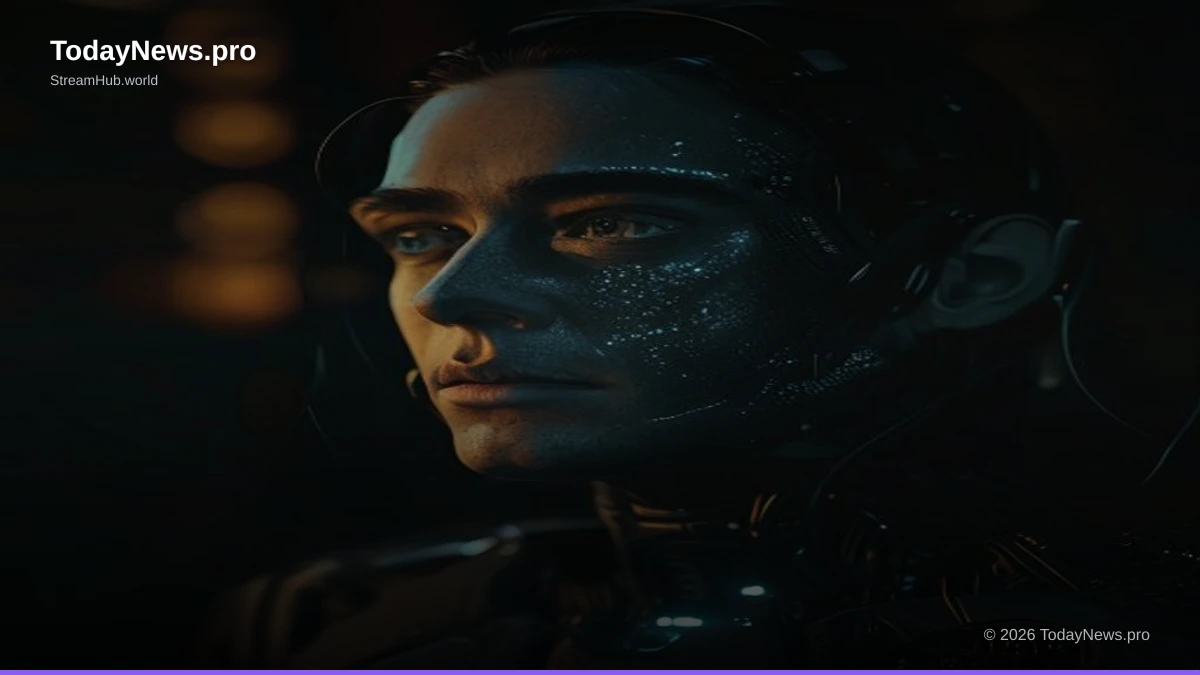
Beyond manipulating existing footage, AI is now capable of generating entirely new actors from scratch. These AI actors, often referred to as "digital humans" or "virtual influencers," can be designed with specific looks, personalities, and vocal characteristics. This development promises to revolutionize casting, offering directors an infinite pool of talent that can be tailored to any role. ### The Infinite Casting Couch The concept of an AI actor offers a compelling alternative to the limitations of human casting. AI can be programmed to possess any conceivable trait, emotion, or physical ability, freeing filmmakers from the constraints of finding the "perfect" human fit. This could lead to more diverse and imaginative casting choices, as well as the creation of entirely new archetypes of characters. For instance, an AI actor could be designed to perfectly embody an alien species, a mythical creature, or a historical figure with an accuracy that surpasses the capabilities of even the most dedicated human actor in prosthetics or makeup. The creative freedom this affords is immense. ### The "Uncanny Valley" and Beyond The development of AI actors often grapples with the "uncanny valley" phenomenon, where near-perfectly human-like creations evoke feelings of unease or revulsion. However, as AI technology advances, these digital personas are becoming increasingly lifelike and emotionally expressive, potentially bridging the gap that has historically made them unsettling. The goal is not just to create realistic visuals but to imbue these digital entities with believable emotional depth and nuance. This requires sophisticated AI models trained on vast datasets of human behavior, facial expressions, and vocal inflections, allowing them to convey a range of emotions convincingly.| Aspect | Current Status | Future Projection |
|---|---|---|
| Photorealism | High, but subtle imperfections remain | Indistinguishable from real humans |
| Emotional Range | Developing, can convey basic emotions | Sophisticated, nuanced emotional expression |
| Performance Nuance | Improving, can mimic basic acting styles | Adaptable, capable of original and innovative performances |
| Ethical Framework | Nascent, largely undefined | Robust, with clear guidelines and regulations |
"The lines between creator and creation are blurring. We're moving towards a future where a director can sculpt a performance from raw code, an actor who never needs sleep, never demands a trailer, and can embody any persona imaginable. The implications for creative control and artistic expression are staggering, but so are the ethical challenges." — Dr. Anya Sharma, Lead AI Ethicist, Future of Media Institute
Interactive Storytelling: Audiences as Co-Authors
The democratization of content creation extends beyond production to the very narrative structure of films. Interactive films, powered by AI, empower audiences to make choices that influence the plot, character development, and even the ending. This shifts the viewer from a passive observer to an active participant, blurring the lines between film and gaming. ### Branching Narratives and Personalized Journeys Platforms like Netflix have already experimented with interactive content, allowing viewers to select choices that alter the course of a story. AI can elevate this by creating more dynamic and responsive narratives, adapting to individual viewer preferences and decisions in real-time. Each viewing experience can become unique, offering a highly personalized cinematic journey. Imagine a thriller where your choices dictate whether the protagonist trusts a suspicious informant or goes it alone, leading to vastly different outcomes. Or a romance where your dialogue options shape the relationship's trajectory and ultimate resolution. AI's ability to process these choices and generate corresponding narrative branches in real-time is the key to this evolving form of storytelling.Audience Interest in Interactive Films
Ethical Crossroads and the Future of Authenticity
The integration of deepfakes, AI actors, and interactive narratives forces us to confront fundamental questions about authenticity, authorship, and the very definition of human creativity. As AI-generated content becomes increasingly indistinguishable from human-made art, how will we navigate this new landscape? ### The Authenticity Dilemma One of the most pressing concerns is the erosion of authenticity. If an AI can generate a performance indistinguishable from a human one, or craft a narrative that feels deeply personal, what does it mean for the value we place on human experience and artistry? The "soul" of a performance, often attributed to the actor's lived experiences and emotional depth, is a concept that AI currently struggles to replicate genuinely. The debate around AI art mirrors historical anxieties about new technologies – photography challenging painting, for example. While AI can mimic, the question remains whether it can truly innovate or imbue work with the subjective, often messy, essence of human consciousness.80%
Believe AI can enhance creativity
65%
Concerned about job displacement for actors
70%
Worry about the spread of misinformation via deepfakes
55%
Intrigued by interactive film experiences
Case Studies: Pioneers in Algorithmic Filmmaking
While the full realization of AI-driven cinema is still on the horizon, several pioneering projects offer a glimpse into its potential. These early experiments, often born out of academic research or independent labs, are pushing the boundaries and demonstrating the capabilities of this emerging technology. ### "Sunspring": The AI-Scripted Short Film One of the earliest notable examples is "Sunspring," a 2016 short film written by an AI algorithm called Benjamin. Developed by researchers at the University of the West of England andbosch, the AI analyzed thousands of film scripts and generated its own screenplay. While the resulting narrative was surreal and often nonsensical, it marked a significant milestone in AI's ability to generate creative text. The film's human actors were tasked with interpreting the AI's bizarre dialogue and stage directions, highlighting the collaborative potential between human performance and algorithmic creativity. It demonstrated that while AI could generate the raw material, human interpretation and performance were still essential for bringing it to life. ### "The Road" and AI-Generated Visuals More recently, AI has been employed to generate visual elements for films. For instance, experimental projects have explored using AI to create entire animated sequences or generate realistic backgrounds. While not yet a fully AI-produced feature, these initiatives showcase the power of AI in augmenting the visual storytelling process, creating environments and imagery that might be prohibitively expensive or time-consuming to produce through traditional means. The ability to generate vast, complex digital environments with AI can open up new creative avenues, allowing filmmakers to explore fantastical worlds and visual metaphors with unprecedented fidelity. ### The Rise of AI-Powered Animation Studios Emerging studios are focusing on leveraging AI to streamline and innovate in animation production. These companies are developing proprietary AI tools for character generation, motion capture processing, and even the creation of entire animated sequences. Their goal is to reduce production times and costs, making high-quality animation more accessible. These studios are not necessarily replacing human animators but rather augmenting their workflows, allowing them to focus on higher-level creative tasks while AI handles more repetitive or technically demanding aspects.Technical Hurdles and Creative Opportunities
Despite the rapid progress, significant technical challenges remain in realizing the full potential of AI in filmmaking. Overcoming these hurdles will unlock even greater creative opportunities. ### Bridging the Gap: From Data to Emotion One of the biggest technical challenges is imbuing AI-generated content with genuine emotional depth and nuance. While AI can mimic human expressions and speech patterns, capturing the subtle complexities of human emotion remains an elusive goal. Training AI models on vast datasets of emotional performance is a start, but replicating the lived experience that informs true emotional expression is a profound undertaking. The "uncanny valley" persists not just in visual realism but also in emotional authenticity. Audiences can often detect when an emotional performance feels manufactured rather than felt, a distinction that AI currently struggles to consistently bridge. ### Computational Power and Real-Time Generation The processing power required for sophisticated AI-driven filmmaking, particularly for real-time interactive narratives or the generation of complex digital humans, is immense. Significant advancements in hardware and algorithms are needed to make these processes more efficient and cost-effective. Real-time generation of photorealistic visuals and coherent narratives is the holy grail for interactive filmmaking. Achieving this will require breakthroughs in parallel processing, GPU computing, and optimized AI model architectures. ### The Creative Synergy: Human and AI Collaboration The greatest creative opportunities lie in the synergistic collaboration between human artists and AI. Rather than viewing AI as a replacement, filmmakers are beginning to see it as a powerful tool that can augment human creativity. AI can handle tedious tasks, generate novel ideas, and explore possibilities that a human alone might not conceive. This collaborative approach allows human creators to focus on conceptualization, emotional direction, and the overarching artistic vision, while AI assists with execution and exploration. It’s a partnership that promises to push the boundaries of cinematic expression.The Evolving Landscape of Film Finance and Distribution
The algorithmic future of filmmaking will inevitably reshape the economics of the industry, from how films are funded to how they reach audiences. ### Shifting Production Models and Costs The ability to generate digital actors and environments could drastically reduce production costs, particularly for visual effects-heavy films. This might democratize filmmaking further, enabling smaller studios and independent creators to produce content previously only accessible to major studios. However, the initial investment in AI technology and the specialized talent required to operate it can be substantial. The long-term financial impact will depend on the scalability and accessibility of these AI tools. ### New Distribution Channels and Monetization Strategies Interactive films and personalized cinematic experiences will necessitate new distribution models. Platforms capable of handling dynamic content generation and user-specific narratives will become increasingly important. Monetization strategies may evolve to include personalized subscription tiers or revenue sharing based on audience engagement metrics. The data generated by interactive films, tracking viewer choices and preferences, will also offer unprecedented insights into audience behavior, potentially influencing future content creation and marketing strategies. ### The Future of Talent and Employment The rise of AI actors and deepfakes inevitably raises concerns about job displacement for human actors, stunt performers, and other traditional roles. However, it also creates new opportunities for AI supervisors, digital character designers, and professionals skilled in ethical AI implementation for creative industries. The industry will need to adapt, with training programs and new job descriptions emerging to support this evolving landscape. The focus will likely shift towards roles that involve guiding, curating, and ethically integrating AI into the creative process.Will AI replace human actors entirely?
It's highly unlikely that AI will completely replace human actors. While AI can generate incredibly realistic performances, the nuances of human emotion, lived experience, and the intangible spark of a human connection on screen are difficult, if not impossible, for AI to replicate. AI is more likely to become a powerful tool for augmentation, enabling new forms of performance and creative expression rather than outright replacement.
How will deepfakes impact the legal landscape of filmmaking?
Deepfakes present significant legal challenges related to intellectual property, consent, defamation, and the rights of performers. New legislation and legal precedents will be required to address issues like the unauthorized use of an actor's likeness, ownership of AI-generated performances, and the potential for misuse in creating fabricated evidence or propaganda. Establishing clear guidelines for consent and disclosure will be critical.
What are the ethical considerations for AI actors?
The ethical considerations for AI actors include issues of authenticity, the potential for deceptive content, the impact on human employment in the acting profession, and the ownership of the AI's "performance." Ensuring transparency, establishing consent mechanisms for the training data used, and developing frameworks for attributing authorship are crucial steps in navigating these ethical complexities.
Can audiences truly "co-author" a film with AI?
Yes, interactive films powered by AI allow audiences to become co-authors by making choices that influence the narrative, character development, and outcomes. AI algorithms are designed to process these choices and dynamically generate corresponding plot branches, dialogue, and even scenes, creating a personalized and participatory viewing experience where the audience directly shapes the story.
How will AI affect the cost of filmmaking?
AI has the potential to both reduce and increase filmmaking costs. On one hand, AI can automate many labor-intensive tasks like visual effects, animation, and even script generation, potentially lowering production expenses. On the other hand, developing and implementing sophisticated AI systems, acquiring necessary computational resources, and hiring specialized AI talent can involve significant upfront investment. The overall impact will likely vary depending on the scale and ambition of the production.