

 Alexander Veller
⏱ 18 min
The global market for generative AI is projected to reach $110.8 billion by 2030, a stark indicator of its rapidly expanding influence across creative industries.
The Dawn of Algorithmic Artistry
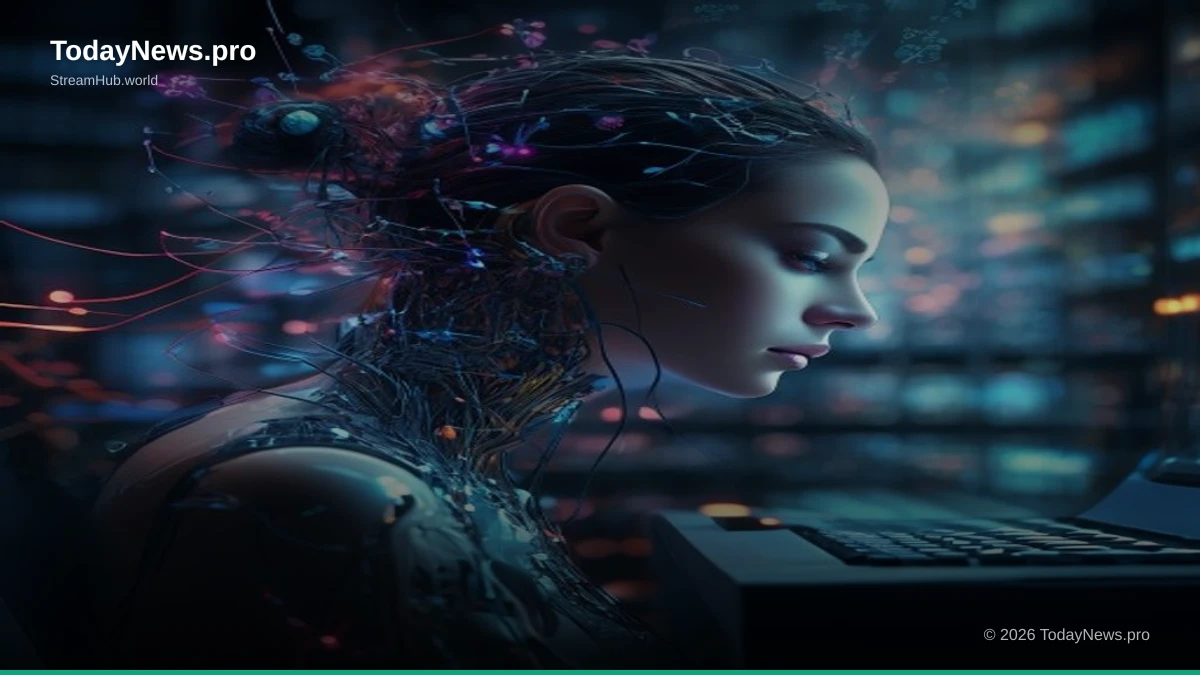
The very notion of creativity has long been considered an exclusively human domain, a complex tapestry woven from consciousness, emotion, and lived experience. However, the advent of generative artificial intelligence has begun to profoundly challenge this perception. These sophisticated algorithms, trained on vast datasets of existing art, music, and literature, are no longer mere tools for creation but are emerging as collaborators, co-creators, and even independent artists in their own right. The current wave of generative AI, powered by advancements in deep learning models like Generative Adversarial Networks (GANs) and Transformer architectures, is democratizing creative processes and simultaneously raising profound questions about the nature of art itself. From breathtaking visual landscapes to haunting musical compositions and compelling narratives, AI is demonstrating an uncanny ability to produce outputs that are not only technically proficient but often emotionally resonant and conceptually innovative. This revolution is not happening in a vacuum; it is a tangible shift reshaping how we define, produce, and consume creative content.The Underpinnings of Algorithmic Creativity
Generative AI models function by learning patterns, styles, and structures from enormous collections of human-created works. For visual art, this might involve analyzing millions of images to understand color theory, composition, and artistic movements. In music, algorithms dissect symphonies, pop songs, and jazz improvisations to grasp melody, harmony, rhythm, and timbre. For storytelling, they ingest novels, screenplays, and poetry to learn narrative arcs, character development, dialogue, and thematic progression. The core of this process lies in probabilistic modeling, where the AI predicts the most likely next element (a pixel, a note, a word) given the preceding context, thereby constructing entirely new pieces that are statistically similar to, yet distinct from, their training data. This ability to synthesize novel content based on learned distributions is what distinguishes generative AI from simpler forms of algorithmic art that might have relied on pre-defined rules or random processes.| AI Model Type | Primary Application | Key Characteristic |
|---|---|---|
| Generative Adversarial Networks (GANs) | Image generation, style transfer, deepfakes | Two networks (generator and discriminator) compete to create realistic outputs. |
| Transformer Models (e.g., GPT, LaMDA) | Text generation, translation, summarization, code generation | Self-attention mechanisms allow for processing long-range dependencies. |
| Variational Autoencoders (VAEs) | Image and music generation, anomaly detection | Learn a latent space representation of data for generation. |
| Diffusion Models | High-fidelity image and video generation | Gradually add noise to data and then learn to reverse the process. |
From Pixels to Prose: The Algorithmic Brushstroke
The development of powerful text-to-image models has been a pivotal moment. Tools like Midjourney, DALL-E, and Stable Diffusion have empowered anyone with a prompt to conjure visual art that was once the sole purview of skilled illustrators and painters. Users can describe abstract concepts, specific styles, or fantastical scenes, and the AI will interpret these instructions to render unique images. This has democratized visual art creation, allowing individuals to visualize their ideas without needing traditional artistic skills. The outputs range from photorealistic renderings to impressionistic paintings and surrealist compositions, demonstrating a remarkable flexibility and an evolving understanding of aesthetic principles.Visual Revolutions: AI as a Painter and Sculptor
The visual arts have been one of the earliest and most visibly impacted domains by generative AI. The ability to translate textual descriptions into complex and often stunning imagery has moved from science fiction to everyday reality. This has not only provided new avenues for artistic expression but has also begun to blur the lines between human intention and algorithmic execution. Artists are now using AI as a powerful tool in their workflow, augmenting their creative process, exploring new aesthetic territories, and even challenging traditional notions of authorship. The sheer speed and versatility with which AI can generate variations of an image, explore different styles, or create entirely novel visual concepts are unparalleled.AI in Character Design and Concept Art
The entertainment industry, particularly in film, gaming, and animation, is rapidly adopting generative AI for concept art and character design. Instead of spending weeks or months sketching multiple iterations, a director or concept artist can now provide textual prompts to an AI model to generate dozens of distinct character designs or environmental concepts within minutes. This dramatically accelerates the pre-production phase, allowing for broader exploration of ideas and faster refinement. For instance, a prompt like "a stern, grizzled space pirate with cybernetic enhancements, in the style of H.R. Giger" could yield a series of unique character concepts, each with distinct features and atmospheric lighting, providing a rich visual vocabulary for further development.The Rise of AI-Generated Art Galleries and Exhibitions
We are now witnessing the emergence of art exhibitions and galleries dedicated solely to AI-generated art. These events serve not only as showcases for the technology but also as platforms for critical discourse surrounding AI's role in the art world. Galleries are grappling with how to curate, present, and even price works created by algorithms. This has led to fascinating debates about originality, intentionality, and the definition of "artist" in the 21st century. The debate often centers on whether the human who crafts the prompt is the artist, or if the AI itself possesses a form of emergent creativity."Generative AI is not replacing artists; it's providing them with a vastly expanded palette and a powerful new assistant. The true art lies in the vision, the curation, and the understanding of how to wield these tools to express something new."
— Dr. Evelyn Reed, Professor of Digital Arts, University of Arts and Sciences
Ethical Considerations in Visual AI
Beyond the creative possibilities, visual AI technologies raise significant ethical concerns. The ease with which realistic images can be generated has fueled the proliferation of deepfakes, misleading imagery, and the potential for mass disinformation. Copyright issues are also complex; who owns the copyright for an image generated by an AI model trained on millions of existing copyrighted works? These questions are far from settled and are the subject of ongoing legal and philosophical debate. The potential for AI to replicate or even mimic the distinctive styles of living artists without their consent is another major area of concern, leading to calls for robust ethical guidelines and regulatory frameworks.Melodies from the Machine: Generative Music Takes Center Stage
The realm of music, with its intricate patterns of melody, harmony, and rhythm, has always seemed particularly resistant to purely algorithmic creation. Yet, generative AI is proving to be a formidable force in this domain as well. From composing background scores for films and video games to generating ambient soundscapes and even crafting entire songs with vocal performances, AI is demonstrating an impressive capacity to produce music that is both technically sound and emotionally evocative. This is opening up new possibilities for musicians, composers, and sound designers, offering tools to break creative blocks, explore novel sonic territories, and generate bespoke music on demand.AI as a Compositional Partner
For composers and musicians, generative AI is becoming an invaluable compositional partner. Tools like Amper Music, AIVA (Artificial Intelligence Virtual Artist), and OpenAI's Jukebox can generate original musical pieces based on user-defined parameters such as genre, mood, tempo, and instrumentation. A filmmaker might use an AI to quickly generate a variety of score options for a specific scene, which can then be refined or used as inspiration. Similarly, game developers can leverage AI to create adaptive soundtracks that change dynamically based on player actions, enhancing immersion. This collaborative approach allows human artists to focus on higher-level creative decisions, while the AI handles the often time-consuming task of generating musical material.The Evolution of AI-Generated Performances
Beyond composition, AI is also making inroads into actual musical performance. Projects are exploring AI-generated vocals that can mimic specific singers or create entirely new vocal personas. While still in its nascent stages, the potential for AI to perform instrumental solos or even lead entire ensembles is a subject of intense research and development. This raises fascinating questions about the future of live music and the role of human performers in an increasingly automated world. The ability to generate a performance that is technically flawless, or even to explore musical ideas that a human might not conceive, presents a unique artistic frontier.90%
of independent game developers surveyed reported using AI for music generation.
500+
hours of original music generated daily by leading AI music platforms.
80%
of composers see AI as a tool for creative exploration rather than a replacement.
Challenges in Algorithmic Harmony
Despite the advancements, creating truly groundbreaking or deeply emotive music with AI remains a significant challenge. While AI can master technical aspects like harmony and melody, capturing the nuanced emotional depth, improvisational spontaneity, and cultural context that define great human music is an ongoing pursuit. The "soul" of music, often linked to human experience and vulnerability, is a difficult quality for algorithms to replicate. Furthermore, the legal and ethical landscape surrounding AI-generated music, particularly concerning copyright of underlying melodies and the use of AI to mimic existing artists' voices, is still being charted.Narrative Architects: AIs Role in Storytelling
The art of storytelling, with its emphasis on character, plot, theme, and emotional arc, has long been considered one of the most complex and human-centric forms of creative expression. However, generative AI is now making significant inroads into this domain, assisting writers, generating plot outlines, crafting dialogue, and even producing entire short stories and scripts. This technological advancement offers a powerful new toolkit for authors and content creators, promising to streamline the writing process, overcome writer's block, and explore narrative possibilities that might have been previously unfeasible.AI-Assisted Novel and Screenplay Writing
Large language models (LLMs) like GPT-3 and its successors are proving to be incredibly adept at generating human-like text. Writers are using these models to brainstorm ideas, develop character backstories, write descriptive passages, and even draft entire chapters or scenes. An author struggling with a plot point might ask an AI to suggest several possible narrative directions. Similarly, a screenwriter could use AI to generate dialogue options for a scene, exploring different character voices and conversational rhythms. This not only accelerates the drafting process but can also introduce unexpected twists and turns, pushing the narrative in new and exciting directions.| AI Tool Category | Primary Function in Storytelling | Example Applications |
|---|---|---|
| Large Language Models (LLMs) | Text generation, summarization, translation, idea generation | Drafting plots, writing dialogue, creating character descriptions, generating marketing copy. |
| AI-Powered Editing Software | Grammar and style checking, plagiarism detection, tone analysis | Refining prose, ensuring consistency, identifying stylistic weaknesses. |
| AI Story Generators | Automated narrative creation based on prompts | Producing short stories, generating game narratives, creating interactive fiction. |
The Future of Interactive Narratives and Games
Generative AI holds immense potential for revolutionizing interactive storytelling, particularly in video games. Imagine games where the plot, character interactions, and even the world itself dynamically adapt to the player's choices in real-time, guided by sophisticated AI narrative engines. This could lead to truly emergent narratives, where each playthrough is a unique experience, offering unprecedented levels of replayability and player immersion. AI could also be used to generate endless side quests, unique NPC dialogue, and evolving story arcs, creating living, breathing game worlds.Limitations and the Uniquely Human Element
Despite these advances, AI's ability to craft truly compelling and emotionally resonant narratives still faces limitations. While AI can mimic human language and narrative structures, it lacks genuine consciousness, lived experience, and the capacity for deep empathy. The subtle nuances of human emotion, the profound exploration of the human condition, and the unique authorial voice that defines great literature are still largely the domain of human writers. AI-generated stories can sometimes feel formulaic, lacking the unexpected insights, the raw vulnerability, or the profound thematic depth that comes from human introspection and creativity. The role of the human author remains crucial for imbuing stories with true meaning and emotional impact.The Ethical Palette: Copyright, Authenticity, and the Human Touch
The rapid integration of generative AI into creative fields has ignited a firestorm of ethical debates, centering on issues of copyright, authenticity, and the irreplaceable value of the human touch. As AI-generated works flood the market, we are forced to confront fundamental questions about ownership, originality, and what it truly means to be an artist in the digital age. The legal frameworks and societal norms that once governed creative production are being stretched to their breaking point, demanding new considerations and potentially new regulations.Copyright Conundrums and Ownership Disputes
A central legal challenge is determining copyright ownership for AI-generated works. Current copyright law typically grants rights to human creators. When an AI generates an artwork, a piece of music, or a story, who holds the copyright? Is it the developer of the AI model, the user who provided the prompt, or the AI itself (a concept currently not recognized legally)? This ambiguity has led to numerous disputes, with artists and content creators worried about their original works being used to train AI models without permission or compensation, and then having AI-generated derivatives compete with their own creations. Organizations like the U.S. Copyright Office are actively grappling with these issues, issuing guidance that emphasizes the need for significant human authorship.Authenticity and the Value of Human Experience
Another critical debate revolves around authenticity. Can an AI truly be "creative" in the human sense, or is it merely mimicking patterns? Many argue that true art stems from subjective experience, emotion, intention, and the artist's unique perspective on the world – elements that AI currently lacks. The concern is that an over-reliance on AI could lead to a homogenization of creative output, a flood of technically perfect but soulless content, diminishing the value and impact of art that is born from genuine human struggle, joy, and introspection. The "human touch" is often seen as the vital ingredient that imbues art with depth, meaning, and resonance.Mitigating Bias in AI Creative Outputs
Generative AI models are trained on existing data, which often reflects societal biases. This means that AI-generated art, music, and stories can inadvertently perpetuate stereotypes related to race, gender, and other social categories. For example, an image generator might consistently depict certain professions with a specific gender or ethnicity, or a music generator might favor styles associated with dominant cultural groups. Addressing this requires careful curation of training data, the development of bias detection and mitigation techniques, and ongoing ethical oversight to ensure that AI-generated content is inclusive and equitable. AI art copyright confusion continues as US Supreme Court declines to review caseThe Future Canvas: Collaboration and Evolution
The trajectory of generative AI in the creative industries is not one of simple replacement, but rather of profound integration and evolution. The future is increasingly pointing towards a model of human-AI collaboration, where algorithms act as powerful co-creators, augmenting human capabilities and pushing the boundaries of artistic expression. This symbiotic relationship promises to unlock new forms of creativity, democratize artistic production, and redefine the roles of artists and creators in the coming years.AI as an Enhanced Creative Toolset
Instead of viewing AI as an autonomous creator, the more immediate and impactful future lies in its role as an advanced tool. For graphic designers, AI can automate tedious tasks like background removal or image upscaling, freeing them to focus on conceptual design. For musicians, AI can assist in generating complex arrangements or exploring new sonic textures. For writers, AI can act as an ever-present brainstorming partner, suggesting plot twists or character arcs. This augmentation allows human creators to achieve more, faster, and with greater creative freedom, exploring avenues that might have been too time-consuming or technically demanding to pursue previously."The most exciting prospect for generative AI in the arts is not in its ability to mimic human output, but in its capacity to forge entirely new forms of expression that we haven't even imagined yet, through human-AI synergy."
— Dr. Kenji Tanaka, Lead AI Ethicist, FutureTech Institute
Democratization of Creative Expression
Generative AI is also a powerful force for democratization. It lowers the barrier to entry for individuals who may not have had the traditional skills, training, or resources to engage in artistic pursuits. Anyone with an idea and access to these tools can now create visuals, music, or written content that was once the exclusive domain of professionals. This widespread access fosters a more inclusive creative landscape, enabling a broader range of voices and perspectives to be expressed and shared. This can lead to a richer, more diverse cultural ecosystem.Emerging New Art Forms and Genres
As humans and AI collaborate, entirely new art forms and genres are likely to emerge. We may see the rise of "prompt-based" art as a distinct medium, with mastery of language and conceptual framing becoming as critical as brushwork or musical technique. Interactive and adaptive narratives powered by AI could lead to new forms of experiential art. The fusion of AI-generated elements with traditional artistic practices will undoubtedly yield innovations that challenge our current definitions of art and creativity.Economic Ripples: New Markets and Disrupted Industries
The pervasive influence of generative AI is sending significant economic ripples across creative industries, creating new markets, transforming existing business models, and disrupting traditional employment structures. While promising unprecedented efficiency and innovation, these changes also necessitate careful consideration of economic fairness and workforce adaptation. The economic landscape of creative production is undergoing a rapid and often unpredictable transformation.The Rise of AI-Powered Content Creation Services
A burgeoning market is emerging for services that leverage generative AI to produce content at scale. Companies are offering AI-generated marketing copy, social media visuals, background music for videos, and even personalized educational materials. These services promise cost savings and rapid turnaround times, appealing to businesses that need to produce high volumes of creative assets quickly. This shift is creating new opportunities for AI developers and prompt engineers, while also posing a challenge to traditional content creation agencies and freelance professionals. Generative artificial intelligence - WikipediaDisruption in Creative Professions
Certain creative professions are facing significant disruption. Roles focused on repetitive or highly standardized tasks, such as basic graphic design, copywriting for advertisements, or generating simple musical jingles, are particularly vulnerable to automation. This doesn't necessarily mean mass unemployment, but rather a shift in the skills required. Professionals will need to adapt by learning to work with AI tools, focusing on higher-level conceptualization, curation, and strategic thinking. The demand for skills like prompt engineering, AI ethics oversight, and human-AI collaboration management is expected to grow.New Business Models and Intellectual Property Challenges
Generative AI is also spurring the development of entirely new business models. Subscription services offering access to advanced AI creative tools, platforms for licensing AI-generated assets, and marketplaces for AI art are already gaining traction. However, these innovations also bring complex intellectual property challenges, particularly concerning the ownership and licensing of AI-generated content, and the ethical use of copyrighted material in training datasets. Resolving these issues will be crucial for the sustainable growth of AI in the creative economy.Can AI truly be considered creative?
This is a highly debated topic. While AI can generate novel and aesthetically pleasing outputs by learning patterns from vast datasets, many argue that true creativity stems from consciousness, subjective experience, emotion, and intentionality, which AI currently lacks. AI is often seen as a powerful tool for enhancing human creativity rather than a creative entity in itself.
Who owns the copyright of AI-generated art?
Currently, copyright law generally requires human authorship. The legal status of AI-generated works is evolving and varies by jurisdiction. In many cases, significant human input in the creation process (e.g., through detailed prompting and curation) is necessary for copyright to be granted to a human user. This area is subject to ongoing legal interpretation and development.
Will AI replace human artists, musicians, and writers?
It is unlikely that AI will completely replace human creators. Instead, AI is expected to transform creative professions by acting as a powerful tool and collaborator. Human skills like conceptual thinking, emotional intelligence, critical judgment, and unique perspective will become even more valuable. AI will likely automate certain tasks, allowing humans to focus on higher-level creative endeavors.
How can I start using generative AI for creative projects?
There are many accessible generative AI tools available. For image generation, you can explore platforms like Midjourney, DALL-E, or Stable Diffusion. For text generation, models like ChatGPT and its derivatives are widely used. For music, services like Amper Music or AIVA offer AI composition capabilities. Many of these platforms have free trials or affordable subscription plans. Experimentation with prompts and a willingness to iterate are key to achieving desired results.