

 Maria Gonzalez
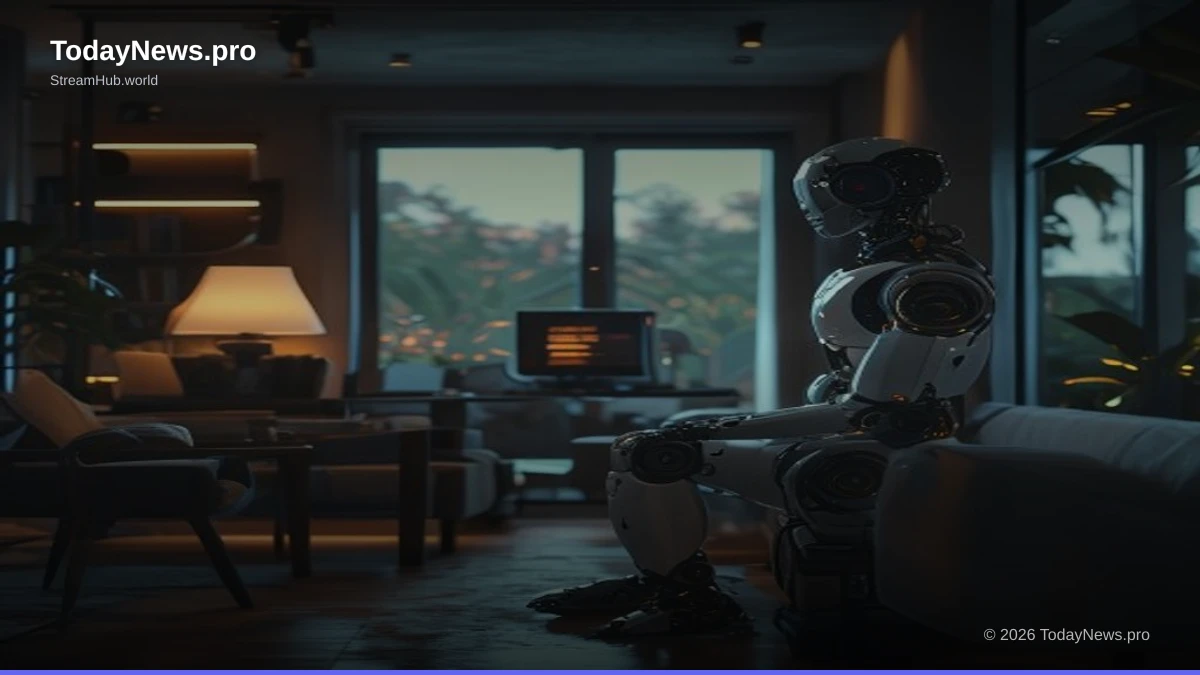
By 2030, the global market for companion robots is projected to reach a staggering $10.8 billion, indicating a seismic shift in how we perceive and integrate artificial intelligence into our most personal spaces.
The Silent Revolution: Companion Robots Emerge from Sci-Fi to Our Homes
For decades, the concept of robots as companions resided firmly in the realm of science fiction. Visions of metallic friends assisting the elderly, comforting the lonely, or even acting as interactive playmates seemed like distant dreams. However, this narrative is rapidly transforming into reality. Driven by advancements in artificial intelligence, sophisticated sensor technology, and a growing societal awareness of isolation and the need for assistance, companion robotics are no longer mere novelties. They are becoming integral, albeit silent, members of households worldwide, blurring the lines between technology and genuine human connection.
This evolution is not a sudden leap but a culmination of years of research and development in fields ranging from human-robot interaction (HRI) to affective computing. Early iterations of robotic companions were often clunky and limited in their capabilities, primarily serving as educational tools or simplistic entertainment devices. Today's companion robots, however, are far more nuanced. They can learn, adapt, and even exhibit forms of simulated empathy, responding to human emotions and needs with increasing sophistication. This transition from novelty to necessity is underpinned by a confluence of demographic shifts, technological breakthroughs, and a fundamental re-evaluation of what constitutes a supportive presence in our lives.
Defining the Companion Robot
At its core, a companion robot is designed to provide social, emotional, or practical support to its human user. Unlike industrial robots or autonomous vacuum cleaners, their primary function is not task-specific in the traditional sense. Instead, they aim to foster a sense of presence, engagement, and well-being. This can manifest in various ways, from engaging in conversation and playing games to reminding users to take medication or even monitoring for signs of distress. The key differentiator is the focus on the human-robot relationship and the enrichment of the user's life through interaction.
The spectrum of companion robots is broad, encompassing everything from small, pet-like devices designed for emotional comfort to more advanced humanoid or anthropomorphic robots capable of complex social interactions. Companies are exploring diverse form factors and functionalities to cater to a wide range of user needs and preferences. The goal is to create a seamless integration into daily routines, making the robot feel less like a piece of machinery and more like a helpful, if artificial, companion.
More Than Just a Novelty: Addressing the Growing Need
The rise of companion robotics is not driven by a desire for futuristic gadgets alone. It is a direct response to significant societal challenges. An aging global population means a growing number of elderly individuals who may experience loneliness, require assistance with daily tasks, or need constant monitoring. Simultaneously, the increasing prevalence of remote work and digital lifestyles can lead to social isolation for people of all ages. Companion robots offer a potential solution, providing a consistent and reliable form of interaction and support.
Consider the demographic shifts: In many developed nations, the proportion of individuals over 65 is rapidly increasing. This demographic often faces challenges related to mobility, cognitive decline, and social isolation. Companion robots can act as an extra set of eyes and ears, alerting caregivers to emergencies, providing reminders for medication, and offering a consistent source of conversation. This not only improves the quality of life for seniors but also alleviates some of the immense pressure on family caregivers and healthcare systems.
Combating Loneliness and Social Isolation
Loneliness is increasingly recognized as a serious public health concern, linked to a host of physical and mental health issues, including depression, anxiety, and even increased mortality risk. Companion robots, particularly those designed for interactive engagement, can offer a tangible way to mitigate these feelings. For individuals who are housebound, live alone, or have limited social circles, a robot can provide a sense of connection, reduce feelings of isolation, and offer a platform for communication.
Early research into therapeutic robots, such as Paro the seal, has shown promising results in reducing stress and anxiety in elderly individuals. While these robots do not replace human interaction, they can provide a valuable supplement, offering comfort and a focus for attention. The ability of newer robots to engage in conversation, play games, and even learn about their user's preferences further enhances their potential to combat loneliness.
Assisting the Elderly and Those with Disabilities
The practical applications of companion robots extend far beyond mere companionship. For individuals with physical or cognitive impairments, these robots can be invaluable tools for maintaining independence. They can serve as intelligent assistants, managing schedules, controlling smart home devices, and providing reminders for crucial tasks like taking medication or attending appointments. For those with mobility issues, a robot could assist with simple tasks like retrieving dropped items or delivering small objects within the home.
The potential for monitoring is also significant. Companion robots equipped with sensors can detect falls, unusual inactivity, or changes in vital signs, automatically alerting emergency services or designated caregivers. This proactive approach to safety can provide peace of mind for both individuals and their families, allowing people to live independently for longer while ensuring their well-being is continuously monitored. This integration of technology into daily care routines represents a paradigm shift in how we approach elder care and support for individuals with disabilities.
The Ethical Landscape: Navigating the Complexities
As companion robots become more sophisticated and integrated into our lives, a complex web of ethical considerations arises. The very nature of a "companion" implies a degree of emotional engagement, raising questions about the authenticity of the relationship, the potential for over-reliance, and the impact on human-to-human interaction. Manufacturers and users alike must grapple with these profound questions to ensure responsible development and deployment.
One of the most significant ethical debates revolves around the concept of emotional attachment. Can a machine truly evoke genuine emotional responses, or are users simply projecting their own feelings onto a sophisticated piece of technology? While research suggests that interactions with robots can elicit positive emotional states, the long-term implications of forming emotional bonds with artificial entities are still being explored. It is crucial to distinguish between therapeutic benefits and the potential for creating artificial relationships that might ultimately stunt genuine human connection.
Privacy and Data Security Concerns
Companion robots, by their very nature, collect vast amounts of data about their users and their environment. This includes personal conversations, daily routines, and even biometric information. Ensuring the robust privacy and security of this sensitive data is paramount. Breaches could lead to identity theft, exploitation, or even the misuse of personal information for targeted advertising or surveillance. Robust encryption, transparent data policies, and user control over data sharing are essential safeguards.
The potential for misuse extends beyond simple data breaches. If a companion robot is compromised by malicious actors, it could be used to spy on individuals, manipulate their behavior, or even facilitate physical intrusion. Companies developing these robots have a significant responsibility to implement industry-leading security measures and to be transparent with users about how their data is collected, stored, and protected. Regulatory frameworks will also need to evolve to address these new frontiers of data privacy.
The Impact on Human Relationships
A common concern is that over-reliance on companion robots could lead to a decline in human-to-human interaction. If individuals find sufficient comfort and engagement from their robotic companions, they may become less motivated to seek out social connections with other people. This could exacerbate the very problem of loneliness that these robots are intended to address, creating a paradoxical outcome.
It is crucial to position companion robots as tools to *augment* human connection, not replace it. Education and user guidance should emphasize the importance of maintaining real-world relationships. Furthermore, the design of these robots should ideally encourage interaction with humans rather than isolate the user. For instance, a robot that facilitates video calls or reminds users to connect with friends and family could be more beneficial than one that simply occupies their attention.
Autonomy and Agency of Users
As robots become more integrated into daily life, questions about user autonomy and agency arise. Who is in control? Can a robot subtly influence a user's decisions or behavior? For individuals who are vulnerable, such as the elderly or those with cognitive impairments, the risk of manipulation, intentional or unintentional, is a significant concern. Clear boundaries and user control mechanisms are vital to ensure that the robot serves the user, not the other way around.
The ability for users to override robot commands, customize their functions, and understand the robot's limitations is essential. Furthermore, the algorithms that govern robot behavior must be transparent and ethical, designed to promote user well-being and independence. The development of these robots must prioritize user empowerment and respect for individual autonomy above all else.
Practical Applications: How Robots Are Enhancing Daily Life
Beyond the philosophical and ethical debates, the tangible benefits of companion robots are becoming increasingly evident. From assisting with household chores to providing personalized learning experiences, these machines are weaving themselves into the fabric of everyday existence in practical and beneficial ways.
Consider the elderly population. For many, maintaining independence at home is a primary goal. Companion robots can facilitate this by providing reminders for medication, helping to track daily routines, and even alerting caregivers in case of emergencies. This allows individuals to live safely in their own homes for longer, preserving their dignity and quality of life. The ability of some robots to monitor vital signs or detect falls can be a life-saving feature.
Assistance with Daily Living
Companion robots are increasingly equipped with the ability to perform simple, repetitive tasks that can be challenging for some individuals. This includes reminding users to drink water, stand up and move around, or take prescribed medications. More advanced robots can help with scheduling appointments, managing smart home devices (like lights and thermostats), and even ordering groceries online. These functions can significantly improve the quality of life and independence for individuals with physical or cognitive limitations.
For individuals with visual impairments, robots can act as navigators, reading aloud text from mail or product labels, or describing their surroundings. This can greatly enhance their ability to interact with their environment and perform daily tasks with greater ease and confidence. The potential for assistive robots to bridge gaps in physical capability is immense.
Educational and Therapeutic Tools
The application of companion robots in education and therapy is another rapidly growing area. Robots can be programmed to provide personalized learning experiences for children, adapting to their pace and learning style. They can also be used in speech therapy, helping children practice pronunciation and engage in interactive exercises. In therapeutic settings, robots can act as non-judgmental listeners, providing a safe space for individuals to express themselves.
For children with autism spectrum disorder (ASD), robots can be particularly effective. Their predictable behavior and non-threatening nature can help children practice social skills, improve communication, and reduce anxiety in social situations. The ability of robots to offer consistent, repetitive social cues can be invaluable for these children.
A study published in Nature highlighted the effectiveness of robotic companions in reducing loneliness and improving social interaction among older adults, demonstrating measurable improvements in mood and engagement.
Entertainment and Engagement
Beyond their practical uses, companion robots also offer a source of entertainment and engagement. They can play music, tell stories, engage in simple games, and even react to facial expressions and vocal tones. This can provide a welcome distraction and a sense of enjoyment, particularly for individuals who may have limited opportunities for social interaction.
Imagine a robot that can learn your favorite music genres, suggest new artists, and even engage in lighthearted banter about current events. This level of personalization can make the robot feel like a truly engaging companion, contributing to a more vibrant and stimulating home environment. The entertainment value, while seemingly superficial, plays a crucial role in user satisfaction and the formation of a positive user experience.
The Design Imperative: Bridging Technology and Empathy
The success of companion robotics hinges not only on their technological capabilities but also on their design. Creating robots that are perceived as approachable, trustworthy, and even endearing requires a delicate balance between functionality and emotional resonance. Designers are increasingly focusing on anthropomorphism, intuitive interfaces, and the ability to express simulated emotions to foster a stronger bond with users.
The appearance of a companion robot can significantly influence how users interact with it. Robots that are overly mechanical or intimidating may fail to elicit the desired level of comfort and trust. Conversely, designs that are too human-like can sometimes lead to the "uncanny valley" effect, where a near-human appearance evokes feelings of unease. Finding the right balance is key.
User Experience and Intuitive Interaction
A companion robot's usefulness is directly tied to how easy it is for its intended user to interact with it. This means intuitive controls, clear communication, and a responsiveness that feels natural. Voice commands, touch interfaces, and gesture recognition are all being employed to make interaction as seamless as possible. The goal is to minimize the learning curve and make the robot an accessible tool for everyone, regardless of their technological proficiency.
Consider a robot designed for an elderly user with potential vision or dexterity challenges. The interface needs to be large, clear, and forgiving. Voice commands should be robust enough to understand various accents and speech patterns. The robot's responses should be audible and easy to comprehend. The entire user experience must be designed with empathy and accessibility at its forefront.
The Role of Aesthetics and Form Factor
The aesthetic appeal of companion robots is a critical factor in their acceptance and integration into homes. Companies are exploring a wide range of designs, from sleek, minimalist forms to more whimsical, animal-inspired shapes. The choice of materials, colors, and overall visual language plays a significant role in shaping user perception and emotional connection. Some robots are designed to be unobtrusive, blending into the home environment, while others are intended to be a focal point, sparking conversation and interaction.
For example, a robot designed for children might have bright colors, rounded edges, and a friendly face. A robot for elder care might prioritize a calm, comforting aesthetic with a muted color palette and a non-threatening demeanor. The goal is to create a robot that users *want* to have around, not one they feel obligated to tolerate.
Simulated Empathy and Emotional Intelligence
A key element in making a robot a true "companion" is its ability to exhibit simulated empathy and emotional intelligence. This involves processing user emotions through facial recognition, vocal tone analysis, and linguistic cues, and responding in a way that acknowledges and validates those emotions. While true consciousness is not yet achievable, programming robots to respond appropriately to sadness, joy, or frustration can foster a sense of understanding and connection.
This requires sophisticated AI algorithms that can interpret subtle human signals. A robot that can offer a comforting phrase when sensing sadness, or share in a user's excitement, can significantly enhance the perception of companionship. However, it is crucial to maintain transparency about the artificial nature of these responses to avoid misleading users.
The Future Were Building: Integration and Evolution
The trajectory of companion robotics points towards increasingly sophisticated and integrated systems. As AI continues to advance, these robots will likely become more autonomous, predictive, and capable of forming deeper, more personalized relationships with their human counterparts. The future envisions not just isolated robotic units, but interconnected ecosystems that enhance our lives in multifaceted ways.
The current generation of companion robots, while impressive, represents only the nascent stages of this technology. Future iterations will likely possess enhanced learning capabilities, allowing them to adapt more fluidly to individual user needs and preferences. This could mean robots that proactively anticipate needs before they are even articulated, or that develop unique "personalities" based on their interactions.
Advanced AI and Learning Capabilities
The integration of more advanced AI will enable companion robots to learn and evolve alongside their users. This goes beyond simple task memorization; it involves understanding context, predicting future needs, and adapting communication styles. Imagine a robot that learns your favorite jokes, remembers the names of your family members, and can even offer personalized advice based on your past conversations and stated preferences. This level of personalized interaction will be key to fostering strong, lasting companion relationships.
This also includes the ability for robots to improve their own performance over time. Through machine learning, they can refine their responses, optimize their task execution, and become more efficient and effective companions. This continuous learning loop will be a hallmark of future robotic companions.
Interconnectivity and Smart Home Integration
The future of companion robotics is inextricably linked to the broader ecosystem of the smart home. These robots will likely act as central hubs, seamlessly interacting with other connected devices to create a truly intelligent and responsive living environment. They could orchestrate lighting, temperature, entertainment systems, and security with minimal user input, all managed through intuitive voice commands or even proactive automation.
This interconnectedness will enable a more holistic approach to home management and personal assistance. For example, a companion robot could detect that you are feeling unwell, automatically adjust the thermostat, dim the lights, and suggest a relaxing playlist, all without being explicitly instructed. This level of seamless integration promises to redefine convenience and comfort in our homes.
The Evolving Definition of Companionship
As companion robots become more sophisticated, they will undoubtedly challenge and expand our traditional definitions of companionship. While they will never fully replicate the richness and complexity of human relationships, they offer a unique form of support and connection that addresses specific needs in our modern society. The key will be to embrace these new forms of companionship while continuing to prioritize and nurture our human connections.
The ethical discourse surrounding companion robotics will continue to evolve alongside the technology itself. Society will need to establish clear guidelines and expectations for how these robots are developed, used, and regulated to ensure they contribute positively to human well-being. The ongoing dialogue is crucial for shaping a future where technology enhances, rather than diminishes, our human experience.
Challenges and Concerns on the Horizon
Despite the immense promise and accelerating development of companion robots, several significant challenges and concerns remain that must be addressed for their widespread and ethical adoption. These range from technical limitations to societal acceptance and regulatory hurdles. Overcoming these obstacles will be crucial for realizing the full potential of this transformative technology.
One of the most persistent challenges is the cost of sophisticated companion robots. Currently, many advanced models are prohibitively expensive for the average consumer, limiting their accessibility. As manufacturing processes become more efficient and economies of scale kick in, prices are expected to decrease, but affordability will remain a key factor in market penetration.
Cost and Accessibility
The current price point of advanced companion robots often places them in the luxury or specialized assistive technology categories. For widespread adoption, particularly among the demographics who stand to benefit most, such as the elderly or those with chronic health conditions, affordability is a critical barrier. Continued innovation in manufacturing and component design is needed to bring down costs without compromising functionality or safety.
Government subsidies, insurance coverage, and innovative financing models could also play a role in making these technologies more accessible. The societal benefits of reduced healthcare costs and improved quality of life could well justify public investment in making companion robots more readily available.
Technical Limitations and Reliability
While AI and robotics have made remarkable strides, current companion robots still face technical limitations. Their ability to understand complex human nuances, navigate unpredictable environments, and perform delicate tasks remains a work in progress. Reliability is also a concern; a malfunctioning robot, especially one providing critical care or assistance, could have serious consequences.
Ensuring that these robots are robust, dependable, and fail-safe is paramount. This involves rigorous testing, advanced error detection, and robust backup systems. The ongoing research in areas like natural language processing, computer vision, and dexterous manipulation is crucial for overcoming these technical hurdles and building truly reliable robotic companions.
Regulatory and Legal Frameworks
The rapid advancement of companion robotics has outpaced the development of comprehensive regulatory and legal frameworks. Questions surrounding liability in case of malfunction or harm, data ownership, and the ethical use of AI in human interactions need clear answers. Establishing these guidelines is essential for providing clarity to manufacturers, users, and the public, and for ensuring responsible innovation.
International cooperation will be necessary to develop consistent standards and regulations. The development of ethical AI guidelines and standards for human-robot interaction will be a critical component of this regulatory landscape. Wikipedia offers a good overview of the ethical considerations surrounding robotics, which is a useful starting point for understanding these complex issues.