

 Sophie Turner
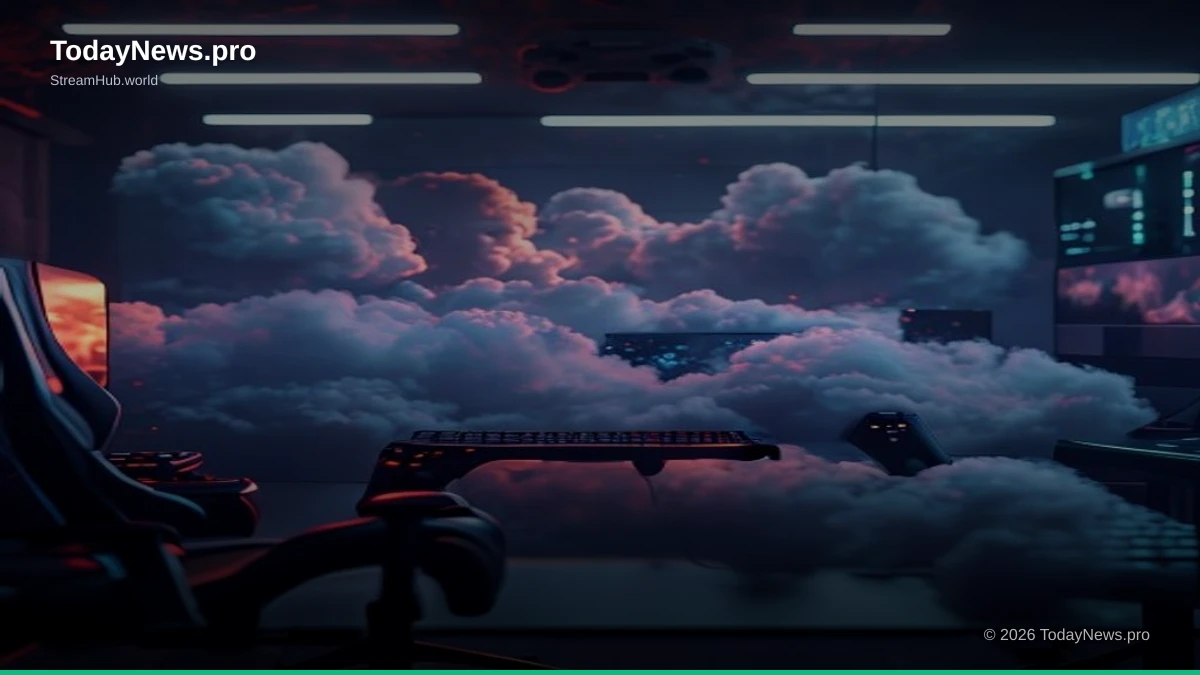
The global cloud gaming market is projected to reach $26.28 billion by 2027, a staggering growth from an estimated $1.90 billion in 2022, signaling a seismic shift in how we play.
The Dawn of the Cloud Gaming Era
The familiar hum of a console, the dedicated space it occupies, and the significant upfront investment required for hardware are becoming increasingly antiquated notions. Cloud gaming, also known as game streaming, is rapidly moving from a niche curiosity to a dominant force, poised to redefine the very essence of interactive entertainment. Instead of downloading and installing games, or relying on powerful local hardware, players access games streamed directly from remote servers over the internet. This fundamental shift liberates gaming from the confines of specific devices, democratizing access and promising an unprecedented level of convenience and flexibility.
This transition is not merely an evolutionary step; it represents a revolutionary leap. For decades, the gaming industry has been predicated on the iterative improvement of hardware – more powerful processors, better graphics cards, larger storage capacities. Cloud gaming, however, flips this model on its head. The processing power resides not in a player's living room, but in vast data centers, allowing for theoretically limitless graphical fidelity and computational complexity. This architectural divergence has profound implications for developers, publishers, and most importantly, for players.
The implications are far-reaching, impacting everything from game design and distribution models to the competitive landscape between major players in the industry. We are witnessing the genesis of a new era, one where the barriers to entry for high-fidelity gaming are significantly lowered, and the definition of "playing a game" expands to encompass a wider array of devices and scenarios than ever before.
Beyond the Box: Shifting Paradigms
The traditional console model, dominated by Sony's PlayStation and Microsoft's Xbox for generations, has been characterized by cyclical hardware upgrades and a fierce competition for market share based on exclusive titles and technological prowess. Cloud gaming challenges this established order by decoupling the gaming experience from dedicated, expensive hardware. Imagine playing the latest AAA title, with stunning graphics and complex physics, not on a $500 console, but on a budget laptop, a smart TV, or even a smartphone. This is the promise of cloud gaming.
This shift fundamentally alters the player's relationship with games. Instead of owning a physical disc or a digital license tied to a specific console, players subscribe to a service, gaining access to a library of games that can be played on demand. This subscription-based model, akin to streaming services for movies and music, offers a more fluid and accessible way to engage with a diverse range of titles. It democratizes access to experiences that were once exclusive to those with the latest, most powerful hardware.
The potential for gaming to become truly ubiquitous is immense. A user could start a game on their PC at home, seamlessly switch to their tablet during their commute, and then continue on their smart TV in the evening, all without interruption. This fluidity removes the friction often associated with gaming, making it more integrated into everyday life. This is a stark contrast to the current model, where progress is often tied to a single, stationary device.
The convenience factor cannot be overstated. No more waiting for lengthy downloads and installations. No more worrying about storage space. The game is ready to play the moment you click the icon. This immediate gratification is a powerful draw for a generation accustomed to instant access and on-demand services.
The Democratization of High-End Gaming
Historically, experiencing cutting-edge graphics and performance in gaming required a significant financial commitment to powerful consoles or PCs. Cloud gaming fundamentally disrupts this paradigm. By leveraging remote server infrastructure, services like NVIDIA GeForce NOW, Xbox Cloud Gaming, and PlayStation Plus Premium offer access to graphically demanding titles on a wide range of less powerful devices. This allows individuals who might not be able to afford a high-end gaming rig or the latest console to enjoy the same high-fidelity experiences.
This democratization extends beyond just affordability. It also lowers the technical barrier to entry. Gamers no longer need to concern themselves with optimizing settings, troubleshooting driver issues, or upgrading components. The cloud provider handles all the heavy lifting, ensuring a consistent and optimal gaming experience across various supported platforms. This accessibility is key to broadening the appeal of gaming to a wider demographic.
Shifting Business Models: From Ownership to Access
The gaming industry has traditionally relied on a model of game ownership, whether through physical media or digital purchases. Cloud gaming ushers in a new era of access-based consumption. Subscription services are becoming the norm, offering players a rotating or curated library of games for a monthly fee. This model fosters a more continuous engagement with gaming services and encourages exploration of a wider variety of titles.
Publishers and developers are also adapting. While some may still offer traditional purchase options, many are embracing the subscription model, seeing it as a way to ensure a steady revenue stream and maintain a consistent player base. This shift in business models has significant implications for how games are developed, marketed, and monetized in the future. The emphasis moves from selling a singular product to providing an ongoing service.
The Technological Pillars of Cloud Gaming
The feasibility of cloud gaming hinges on a complex interplay of advanced technologies. The most critical component is a robust and low-latency internet connection. Without it, the experience degrades into frustrating lag and visual artifacts, rendering games unplayable. High-speed broadband, widespread fiber optic networks, and the ongoing rollout of 5G cellular technology are all essential enablers.
On the server-side, massive data centers equipped with powerful GPUs and CPUs are required to render games in real-time. These servers must be capable of handling a vast number of simultaneous streams, processing player inputs, and transmitting video and audio data back to the user with minimal delay. The efficiency and scalability of these data centers are paramount to the success of any cloud gaming service.
Furthermore, sophisticated video compression and streaming protocols are employed to deliver high-quality visuals and audio with the smallest possible bandwidth footprint. Algorithms are constantly being refined to reduce latency and improve image fidelity, even under suboptimal network conditions. The continuous innovation in these areas is what allows for an increasingly seamless and immersive cloud gaming experience.
Network Infrastructure: The Unseen Foundation
The backbone of cloud gaming is an ultra-fast and reliable internet connection. Latency, the delay between sending a command and receiving a response, is the ultimate enemy of smooth gameplay. For cloud gaming to be viable, this latency needs to be in the low milliseconds, comparable to playing on local hardware. The widespread deployment of fiber-optic networks and the advancements in 5G technology are crucial in achieving this goal.
According to Reuters, 5G deployment continues to accelerate globally, promising higher speeds and lower latency, which directly benefits cloud gaming services. This infrastructure upgrade is not just about speed; it's about ensuring consistent performance across a multitude of devices and locations, a critical factor for mass adoption.
Server-Side Rendering and Edge Computing
Cloud gaming services rely on powerful server farms to render game graphics and process game logic. These servers, often located in data centers, are equipped with high-end GPUs and CPUs. To minimize latency, there is a growing trend towards "edge computing," where servers are placed closer to the end-users. This reduces the physical distance data has to travel, significantly cutting down on response times.
The computational power required for rendering modern AAA games is immense. A single server might need to handle multiple game instances simultaneously. This necessitates highly efficient hardware and sophisticated resource management to ensure a smooth experience for every player. The ongoing advancements in data center technology and the push towards decentralized computing are directly supporting the growth of cloud gaming.
Video Compression and Streaming Technologies
Delivering high-fidelity video streams over the internet without consuming excessive bandwidth requires advanced video compression techniques and efficient streaming protocols. Cloud gaming services employ sophisticated codecs to compress game visuals and audio, transmitting them to the player's device. The player's device then decompresses this data and displays it. The challenge lies in achieving this compression without introducing noticeable artifacts or significant latency.
Ongoing research and development in video encoding and streaming are crucial. Companies are constantly innovating to reduce the bitrate required for a given quality level and to further minimize the delay in the streaming pipeline. This technological race ensures that the visual experience of cloud gaming continues to improve, rivaling that of traditional consoles and PCs.
The Evolving Console Wars: A Streaming Battlefield
The rise of cloud gaming is not just a technological shift; it's a seismic event that is fundamentally reshaping the competitive landscape of the video game industry. For decades, the "console wars" have been a familiar narrative, primarily fought between Sony's PlayStation and Microsoft's Xbox, with Nintendo carving out its own unique niche. These battles were characterized by exclusive titles, hardware specifications, and the ongoing pursuit of graphical superiority.
Now, the battlefield is expanding, and the weapons are different. While traditional consoles still hold significant sway, cloud gaming introduces new contenders and new strategies. Microsoft, with its Xbox Game Pass Ultimate and Xbox Cloud Gaming service, has aggressively positioned itself as a leader in this new paradigm. By offering a vast library of games accessible across multiple devices, it aims to expand its ecosystem beyond the confines of its console hardware.
Sony, while initially slower to embrace cloud streaming as a primary strategy, is making significant strides with its PlayStation Plus Premium tier, which offers cloud streaming for select PlayStation 4 and PlayStation 5 titles, as well as classic games. The integration of cloud gaming into its existing subscription service is a clear indication of its strategic shift. The ability to play a game without a download, or to access a back catalog of titles on different devices, is a powerful proposition.
Beyond the established giants, new players are emerging. NVIDIA's GeForce NOW offers a compelling proposition by allowing users to stream games they already own on platforms like Steam and Epic Games Store, effectively acting as a powerful remote PC. Amazon Luna also presents a growing library of games accessible through a subscription model. This diversification of services ensures a healthy level of competition and innovation, benefiting consumers with more choices and potentially lower prices.
The concept of console exclusivity is also being challenged. While first-party exclusives will likely remain a crucial differentiator, the ability to stream a wide variety of titles across different platforms means that the traditional walled gardens of console ecosystems are beginning to erode. A gamer might subscribe to Xbox Game Pass for its PC and cloud offerings, while still owning a PlayStation for its exclusive single-player experiences. This hybrid approach is becoming increasingly common.
Microsofts Cloud-First Strategy
Microsoft has been remarkably forward-thinking in its embrace of cloud gaming. With Xbox Game Pass Ultimate, the company offers not only a vast library of games to download and play on Xbox and PC but also the ability to stream a curated selection of those games to mobile devices, tablets, and even smart TVs. This "cloud-first" approach aims to make Xbox gaming accessible to a broader audience, irrespective of their hardware ownership.
The integration of cloud gaming into the Xbox ecosystem is designed to reduce the friction associated with accessing games. Players can jump into a game within seconds, without lengthy downloads or installations. This strategy is crucial for Microsoft as it seeks to expand its gaming footprint beyond traditional console sales and establish a dominant presence in the subscription and streaming services market.
Sonys Evolving Approach to Streaming
While Sony has a history with cloud gaming through its now-discontinued PlayStation Now service, its current strategy with PlayStation Plus Premium is a more integrated and refined approach. This tier offers cloud streaming for a selection of PS4, PS5, and classic PlayStation titles, allowing subscribers to play games without downloading them. This is particularly appealing for those with limited storage space or slower internet connections.
Sony's focus remains on its strong first-party exclusive content, but the inclusion of cloud streaming in PlayStation Plus indicates a recognition of the growing importance of the accessibility and convenience offered by streaming. The ability to play PlayStation games on devices other than a PS5 console represents a significant step towards broadening its reach and adapting to evolving consumer preferences.
Niche Players and Disruptors
Beyond the duopoly of Sony and Microsoft, several other companies are making significant inroads into the cloud gaming market. NVIDIA's GeForce NOW has garnered a dedicated following by allowing users to stream games they already own from popular PC game stores like Steam, Epic Games Store, and Ubisoft Connect. This model offers a unique value proposition by leveraging a user's existing game library and providing access to high-end gaming experiences on less powerful hardware.
Amazon Luna is another competitor, offering a variety of "channels" with different game selections available through monthly subscriptions. These services, while perhaps not as massive in scope as Microsoft's offerings, contribute to a more competitive and diverse cloud gaming landscape. They often cater to specific audiences or offer unique features, pushing the boundaries of what is possible with game streaming.
| Service | Primary Model | Key Differentiator | Hardware Requirement (Minimum) |
|---|---|---|---|
| Xbox Cloud Gaming | Subscription (part of Game Pass Ultimate) | Extensive library, cross-platform play, console integration | Smartphone, Tablet, PC, Smart TV |
| PlayStation Plus Premium | Subscription | Access to PS4, PS5, and classic titles via streaming | PS4, PS5, PC |
| NVIDIA GeForce NOW | Subscription (Free tier available) | Stream owned PC games, high-end hardware access | PC, Mac, Android, iOS, Smart TVs |
| Amazon Luna | Subscription (Channel-based) | Curated game libraries, device-agnostic | PC, Mac, Fire TV, Smart TVs, Mobile Devices |
Challenges and Roadblocks on the Path to Ubiquity
Despite the immense promise of cloud gaming, several significant challenges must be overcome before it can achieve true ubiquity. The most persistent hurdle remains network infrastructure. While internet speeds are improving globally, a substantial portion of the world's population still lacks the reliable, high-bandwidth, low-latency connections required for a seamless cloud gaming experience. In many rural areas or regions with underdeveloped internet infrastructure, cloud gaming remains a distant dream.
Latency, as previously discussed, is the Achilles' heel of game streaming. Even with the best networks, there will always be some inherent delay. For fast-paced, competitive games that demand split-second reactions, such as first-person shooters or fighting games, even a few milliseconds of lag can be the difference between victory and defeat. While advancements are being made, achieving parity with local hardware for all game genres is a monumental task.
Another significant factor is the cost of data. For many users, particularly those with mobile data plans or metered home internet, streaming high-definition video games can consume a substantial amount of data. This can lead to unexpected charges or force users to limit their gaming sessions, undermining the convenience proposition of cloud gaming. Publishers and service providers need to consider data caps and offer more flexible pricing models.
Furthermore, the accessibility of input devices is also a consideration. While streaming to a smartphone or tablet is convenient, playing graphically intensive games often requires a controller or a keyboard and mouse for optimal control. Ensuring seamless integration and availability of these peripherals across various devices is crucial for a comprehensive gaming experience.
The Latency Barrier for Competitive Gaming
The inherent nature of sending data to a remote server, processing it, and sending it back introduces a delay that can be detrimental to competitive gaming. For genres like esports titles (e.g., Counter-Strike, Valorant, League of Legends) or fast-paced fighting games, where player reaction times are paramount, even a slight increase in latency can be the difference between a winning shot and a missed opportunity. While cloud gaming providers are continuously working to minimize this latency, achieving true parity with local hardware remains a significant technical challenge.
The development of predictive algorithms and more localized server infrastructure (edge computing) are key strategies being employed to combat this issue. However, for the most demanding competitive players, the slight lag will likely remain a deal-breaker for the foreseeable future. The evolution of specialized network protocols and hardware optimization will be critical in overcoming this hurdle.
Data Consumption and Cost Implications
Streaming high-definition video games is a data-intensive activity. A single hour of gameplay can consume several gigabytes of data, depending on the resolution and quality settings. For individuals with limited data plans, either through mobile carriers or capped home internet services, this can quickly become prohibitively expensive. This cost barrier can significantly limit the adoption of cloud gaming for a large segment of the population.
To address this, cloud gaming services need to continue optimizing their streaming efficiency to reduce data usage. Furthermore, partnerships with internet service providers and mobile carriers to offer unmetered data for gaming or more affordable data plans specifically for streaming services could be crucial. Without addressing the data cost, cloud gaming's promise of ubiquity remains incomplete.
Hardware and Input Device Fragmentation
While cloud gaming aims to liberate players from specific hardware, the experience can still be fragmented. Playing a graphically intensive game on a smartphone might be technically possible, but the experience is vastly different from using a dedicated controller or a keyboard and mouse. Ensuring seamless compatibility and optimal performance across a wide array of input devices, from touchscreens to specialized gaming controllers, presents a significant challenge for developers and service providers.
The fragmentation extends to the devices themselves. While many smart TVs now support cloud gaming apps, the performance and user interface can vary. For a truly ubiquitous experience, services need to offer a consistent and high-quality experience regardless of the end-user's device, which requires ongoing optimization and robust platform support. The availability and affordability of compatible controllers on various platforms are also key considerations for user adoption.
The Economic Landscape of Cloud Gaming
The economic implications of cloud gaming are profound, reshaping revenue streams for developers, publishers, and platform holders. The shift from a perpetual ownership model to a subscription-based access model fundamentally alters how money is made in the industry. Companies are investing heavily in cloud infrastructure and service development, anticipating a future where recurring revenue from subscriptions will surpass one-off game sales.
This economic transition has a ripple effect on game development. With a larger, more engaged player base accessible through subscriptions, developers may be incentivized to create more "live service" games – titles that are continually updated with new content and features, encouraging long-term player retention and subscription renewals. This could lead to a greater emphasis on multiplayer experiences and games that evolve over time.
The initial investment required for cloud gaming services is substantial. Building and maintaining massive data centers, developing sophisticated streaming technology, and securing game licenses all represent significant capital outlays. However, the potential for a recurring revenue model offers a stable and predictable income stream, which can be attractive to investors. The long-term profitability will depend on subscriber growth, churn rates, and the ability to effectively monetize the vast libraries of games.
Furthermore, the economic model of game distribution is also evolving. Publishers may see reduced reliance on physical retail and traditional digital storefronts, with their own subscription services or partnerships becoming the primary distribution channels. This could lead to new opportunities for smaller developers to reach a global audience without the same marketing and distribution challenges they face today.
Subscription Models and Recurring Revenue
The cornerstone of cloud gaming's economic model is the subscription service. Companies like Microsoft, Sony, and Amazon offer tiered subscription plans that grant access to a library of games. This shift from selling individual game copies to providing ongoing access to a service creates a predictable and recurring revenue stream. This stability is highly attractive for businesses, allowing for better financial planning and investment in future development.
The success of these subscription models hinges on customer retention. Services that offer a compelling library of high-quality games, regular updates, and a seamless user experience are more likely to retain subscribers. The "Netflix of gaming" analogy is apt here; the value proposition lies in the breadth and depth of content available at a given time, encouraging users to remain subscribed.
Investment in Infrastructure and Technology
The development and deployment of cloud gaming services require enormous upfront investment. Companies are pouring billions of dollars into building and expanding their global data center networks, upgrading server hardware, and investing in cutting-edge streaming technologies. This includes the development of proprietary codecs, efficient data compression algorithms, and sophisticated network management systems.
This significant investment signifies a long-term commitment to the cloud gaming paradigm. It suggests a belief that this model will eventually dominate the industry, justifying the substantial capital expenditure. The competitive landscape is driving this investment, as companies race to build the most robust and scalable cloud gaming infrastructure to attract and retain players.
The Future of Game Development and Monetization
The economic shift towards cloud gaming will inevitably influence how games are developed and monetized. With subscription services, the emphasis may shift from maximizing upfront sales to fostering long-term player engagement. This could lead to a greater prevalence of "games as a service" (GaaS) models, where games are continuously updated with new content, features, and events to keep players invested.
This model encourages the development of titles that are designed for longevity and continuous play, rather than single-player experiences with a finite playtime. Monetization strategies may also evolve, with in-game purchases, battle passes, and cosmetic items becoming even more prevalent as a means of generating revenue beyond the initial subscription fee. The focus shifts from the initial purchase to ongoing player investment.
The Future of Play: Immersive and Accessible
The trajectory of cloud gaming points towards a future where high-fidelity gaming experiences are no longer tethered to expensive, dedicated hardware. The promise is one of unparalleled accessibility, allowing anyone with a stable internet connection to dive into the latest AAA titles on any device they choose. This democratization of gaming will undoubtedly broaden its appeal, drawing in new demographics and fostering a more inclusive gaming culture.
Imagine a world where geographical location and socioeconomic status are no longer significant barriers to experiencing the most visually stunning and complex games. This is the transformative potential of cloud gaming. It opens doors for educational gaming, collaborative experiences that transcend physical limitations, and entirely new forms of interactive entertainment yet to be conceived.
The evolution of virtual reality (VR) and augmented reality (AR) will also likely be intertwined with cloud gaming. Offloading the intensive processing demands of VR/AR experiences to the cloud could make these immersive technologies more accessible and affordable, removing the need for extremely powerful and expensive local hardware. This could accelerate the adoption of VR/AR and lead to more sophisticated and realistic virtual worlds.
As technology continues to advance and infrastructure improves, the limitations that currently constrain cloud gaming will diminish. We are on the cusp of a new era in gaming, one defined by seamless access, boundless experiences, and a truly global community of players. The console wars, as we've known them, may be fading into history, replaced by a new battlefield where the ultimate prize is user engagement in the ever-expanding cloud.
Ubiquitous Access and Inclusivity
The ultimate vision for cloud gaming is one of universal accessibility. The goal is to make high-end gaming available to anyone, anywhere, on any device, provided they have a reliable internet connection. This removes the significant financial barrier of purchasing expensive consoles or gaming PCs, making the medium more inclusive for a wider range of players across different socioeconomic backgrounds and geographical locations.
This democratization has the potential to significantly expand the global gaming audience, bringing in individuals who may have previously been priced out or deterred by the technical complexities of traditional gaming setups. The ability to play on a smart TV, a laptop, or even a tablet means that gaming can be seamlessly integrated into more aspects of daily life, fostering a more widespread and casual engagement with the medium.
The Intersection with VR and AR
The computational demands of virtual reality (VR) and augmented reality (AR) are exceptionally high, requiring powerful local hardware to render complex environments and provide a smooth, immersive experience. Cloud gaming technology is ideally positioned to address this challenge. By offloading the heavy processing to remote servers, cloud-based VR/AR could become significantly more accessible and affordable.
Imagine experiencing a fully immersive VR game without needing a top-tier gaming PC or an expensive headset. Cloud streaming could enable lighter, more affordable VR/AR headsets that rely on the cloud for rendering. This synergy between cloud gaming and immersive technologies could accelerate the adoption of VR/AR, paving the way for more sophisticated and widespread use cases in entertainment, education, and beyond. The potential for truly seamless virtual worlds, powered by cloud infrastructure, is immense.
Evolving Gameplay and New Experiences
The capabilities of cloud gaming extend beyond simply replicating existing gaming experiences on different devices. The power of cloud-based servers opens up possibilities for entirely new forms of gameplay and emergent experiences. Games with massive, persistent worlds populated by thousands of players, complex AI simulations, and procedurally generated content at an unprecedented scale could become feasible.
Developers can leverage the virtually limitless processing power of the cloud to create more dynamic and reactive game environments. Imagine games where player actions have a truly global and persistent impact on the game world, or where AI characters exhibit a level of complexity and autonomy never before seen. The future of play, powered by the cloud, promises to be more immersive, interactive, and expansive than ever before, pushing the boundaries of what we consider possible in interactive entertainment.
Learn more about Cloud Gaming on Wikipedia.