

 Diana Prince
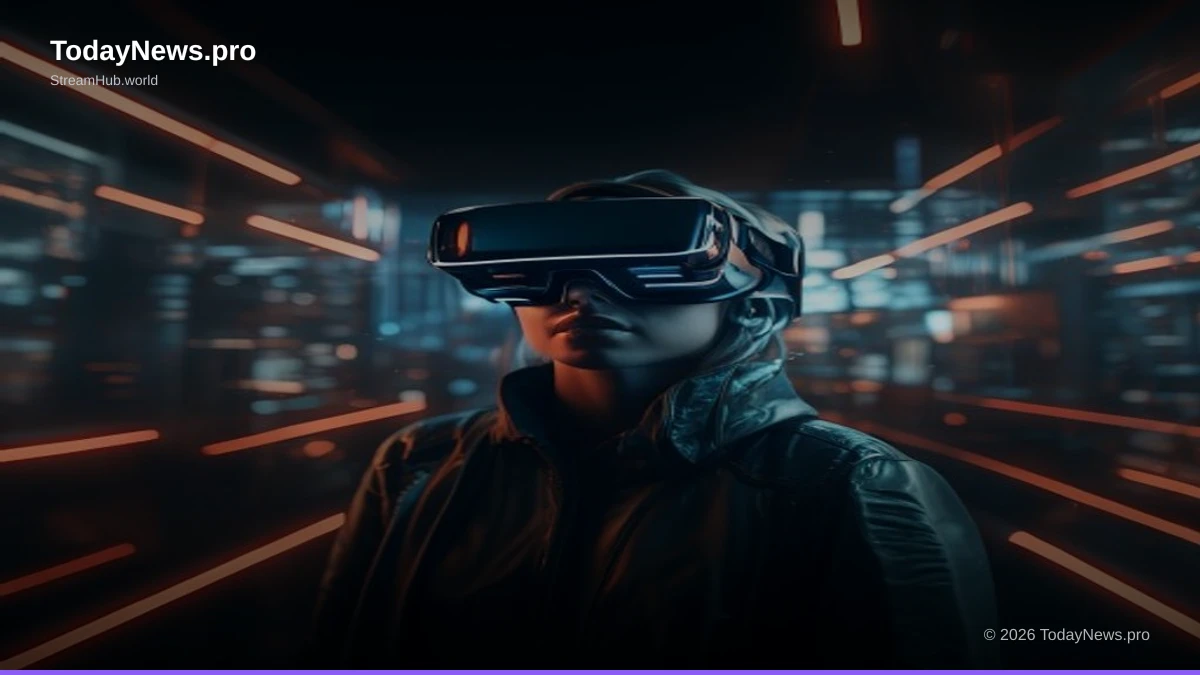
The global VR/AR market is projected to reach over $270 billion by 2028, a staggering testament to the burgeoning interest and investment in immersive technologies that are poised to fundamentally alter how we consume and interact with visual narratives.
The Immersive Dawn: VR/ARs Leap into Narrative
For decades, cinema has been a passive, one-way communication: a director's vision delivered to a seated audience. Virtual Reality (VR) and Augmented Reality (AR) are dismantling this paradigm, transforming audiences from passive observers into active participants. This shift isn't merely about putting on a headset; it's about inviting viewers to step *inside* the story, to inhabit its world and influence its course. The cinematic metaverse is not a future aspiration; it is a rapidly unfolding reality, driven by technological advancements and a growing desire for deeper, more personal storytelling experiences.
VR, in particular, offers an unparalleled sense of presence. By blocking out the external world and immersing the user in a computer-generated environment, it allows for a level of emotional connection and realism previously unimaginable. AR, on its part, overlays digital information and experiences onto the real world, blending fiction with our everyday reality in subtle yet profound ways. Together, these technologies are forging a new frontier for filmmakers and storytellers, one where the boundaries of imagination are constantly being pushed.
The Nature of Presence
Presence, in VR, is the subjective feeling of "being there" in the virtual environment. It's a complex psychological phenomenon that current VR technology strives to achieve through high-fidelity visuals, spatial audio, and responsive interactivity. When achieved, presence allows a narrative to bypass traditional cognitive filters, impacting the viewer on a more primal, emotional level. This is crucial for storytelling, as it enables empathy and engagement to flourish in ways that flat screens can only approximate.
From Spectator to Participant
The most significant divergence from traditional cinema is the introduction of viewer agency. In a VR narrative, a viewer might be able to look around corners, choose which character to follow, or even make decisions that alter the plot's trajectory. This co-creation of the narrative experience is a powerful draw, offering a sense of ownership and a deeply personal connection to the story. AR experiences can also foster this by integrating narrative elements into the user's physical environment.
Beyond the Screen: Redefining Cinematography for Spatial Storytelling
Traditional filmmaking relies on a carefully curated frame, guiding the viewer's eye through composition, camera movement, and editing. In VR/AR, this frame is removed. The viewer has 360-degree vision and the freedom to look wherever they choose. This necessitates a complete rethinking of cinematic language. Storytelling must now be crafted not just in front of the viewer, but all around them. Directors must consider what lies beyond the immediate focus of attention, ensuring that narrative cues and emotional impact are delivered regardless of where the viewer is looking.
Spatial audio plays a critical role in directing attention and conveying information in VR. A sound coming from behind the viewer can instantly orient them to a new event or character. Similarly, visual cues must be thoughtfully placed to draw the eye without feeling forced. This often involves utilizing subtle environmental storytelling, where details within the virtual space convey backstory or foreshadow plot developments.
The Challenges of 360-Degree Framing
One of the primary challenges is maintaining narrative coherence. How do you ensure a viewer sees a crucial plot point if they are looking the other way? Filmmakers are exploring various techniques, including ambient storytelling, where important information is woven into the background, and subtle visual or auditory cues that gently guide attention. The use of characters' gazes, the direction of their movement, and the sound design are becoming paramount in this new visual grammar.
Ambient Storytelling and Environmental Cues
Instead of relying solely on dialogue or action, VR narratives can leverage the environment itself to tell a story. A cluttered room might suggest a character's chaotic life, while a faded photograph on a wall could hint at a lost love. These environmental cues allow for a more organic and less didactic form of storytelling, rewarding attentive viewers and adding layers of depth to the virtual world.
Spatial Audio as a Narrative Tool
Sound is no longer just an accompaniment to visuals; it is an integral part of the narrative fabric. Spatial audio, which mimics how sound behaves in real life, allows for directional cues that can guide the viewer's attention. A whisper from behind, a distant siren, or the footsteps of an approaching character can all be used to create tension, convey information, and enhance immersion. Developers are meticulously crafting soundscapes that are as dynamic and responsive as the visuals.
| Feature | Traditional Cinema | VR Cinema |
|---|---|---|
| Viewer Perspective | Fixed, director-controlled | Variable, viewer-controlled |
| Framing | Precise, curated | 360-degree, unbounded |
| Focus Guidance | Composition, editing, camera movement | Spatial audio, environmental cues, character gaze, subtle animation |
| Viewer Agency | Passive consumption | Active participation, potential for interaction |
| Sense of Presence | Limited | High, subjective experience |
Viewer as Protagonist: The Agency of Interactive Narratives
The most profound shift VR and AR bring to storytelling is the empowerment of the viewer. Interactive narratives move beyond simply watching a story unfold to actively participating in its creation. This can range from simple choices – like deciding which door to open – to complex branching storylines where the viewer's decisions have significant consequences. This level of engagement fosters a deeper emotional investment and a unique sense of ownership over the narrative experience.
The concept of the "player character" in video games has long been a precursor to this. However, in VR/AR cinema, the narrative is often designed with a more universal protagonist in mind, or the viewer embodies a distinct character with their own motivations and relationships within the story world. This is where the lines between film, gaming, and theatre begin to blur, creating entirely new forms of entertainment.
Branching Narratives and Player Choice
The architecture of interactive VR/AR stories is significantly more complex than linear films. Developers must design multiple narrative paths, outcomes, and dialogue options. This requires meticulous planning and extensive content creation, but the reward is a highly personalized and replayable experience. The viewer's choices become the driving force, making each playthrough a unique journey.
Empathy Through Embodiment
When viewers embody a character, they don't just observe their struggles; they experience them directly. This can lead to an unprecedented level of empathy. Feeling the fear of a character, the exhilaration of their triumphs, or the weight of their decisions creates a potent emotional connection that transcends traditional cinematic techniques. This embodied storytelling has profound implications for how we understand and connect with diverse perspectives.
The Spectrum of Interactivity
Interactivity in VR/AR cinema exists on a spectrum. At one end, there's passive viewing with the ability to look around. At the other, there's full agency, where choices directly impact the narrative. Many experiences fall somewhere in between, offering guided interactivity that enhances the story without overwhelming the viewer. The key is to ensure that interactivity serves the narrative, rather than feeling like a gimmick.
The Technology Crucible: Hardware, Software, and the Evolving Ecosystem
The advancement of the cinematic metaverse is intrinsically linked to the evolution of VR and AR hardware and software. High-resolution displays, wider fields of view, improved tracking, and more intuitive controllers are constantly pushing the boundaries of what's possible. Similarly, sophisticated game engines and content creation tools are enabling filmmakers to build increasingly realistic and interactive virtual worlds.
While VR headsets like the Meta Quest series and the PlayStation VR2 have made immersive experiences more accessible, AR glasses from companies like Apple and Meta are poised to bring these narratives into our everyday lives. The interplay between these different hardware platforms and the software that powers them is creating a dynamic and rapidly evolving ecosystem.
Hardware Advancements
Current VR headsets offer stunning visual fidelity and precise head and hand tracking. However, challenges remain, including comfort, battery life, and the potential for motion sickness. AR glasses face hurdles in terms of form factor, processing power, and display technology. Yet, each new generation of hardware brings us closer to seamless, believable immersive experiences.
Content Creation Tools
Platforms like Unity and Unreal Engine are at the forefront of enabling creators to build complex VR/AR experiences. These engines provide powerful tools for 3D modeling, animation, scripting, and real-time rendering, allowing for the creation of photorealistic environments and dynamic character interactions. Specialized VR/AR development kits and software are also emerging, streamlining the production pipeline.
The Rise of Standalone VR
The advent of powerful standalone VR headsets, which do not require a tethered PC, has democratized access to high-quality VR experiences. This has led to a surge in content creation and consumer adoption, fueling the growth of the VR market and paving the way for more ambitious cinematic projects. The ease of use and portability are key drivers of this trend.
The Interoperability Challenge
As the metaverse expands, the challenge of interoperability between different platforms and devices becomes increasingly important. For cinematic experiences to truly flourish, content needs to be accessible across a range of VR and AR hardware. Standards and open protocols will be crucial for fostering a unified and user-friendly immersive ecosystem.
Case Studies and Emerging Trends in Cinematic VR/AR
Several pioneering VR/AR narrative projects have already demonstrated the potential of this new medium. From short, emotionally resonant VR experiences to ambitious interactive AR installations, these examples offer a glimpse into the future of storytelling. Documentaries, dramas, and even abstract artistic pieces are finding new life and new audiences in immersive formats.
One notable trend is the exploration of VR documentaries, which allow viewers to experience historical events or remote locations with an unparalleled sense of presence. Another is the use of AR for location-based storytelling, where narratives unfold in specific real-world environments, blending the digital and physical realms. The short-form VR narrative, often designed for maximum emotional impact within a limited runtime, is also proving to be a popular entry point for audiences.
VR Documentaries: Bearing Witness
Projects like "Clouds Over Sidra," which placed viewers in a Syrian refugee camp, or "The Displaced," which allowed users to experience the journey of a refugee, have showcased the power of VR to foster empathy and understanding. By placing viewers directly into the lives of others, these documentaries offer a visceral and unforgettable perspective that traditional media struggles to replicate.
AR Storytelling: Bridging Realities
Augmented reality is being used to enhance real-world locations with narrative layers. Imagine walking through a historical city and seeing holographic reconstructions of past events, or interacting with virtual characters that are seamlessly integrated into your surroundings. This creates a dynamic and engaging form of storytelling that transforms everyday environments into immersive experiences.
Interactive Dramas and Experiential Films
Companies are experimenting with fully interactive dramas where viewer choices genuinely shape the narrative. These experiences often blur the lines between film and gaming, offering compelling stories that are deeply personal. Experiential films, which prioritize sensory immersion and emotional impact over traditional plot structures, are also a growing area of exploration.
Challenges and the Road Ahead for the Cinematic Metaverse
Despite the immense potential, the widespread adoption of VR/AR cinematic experiences faces several significant hurdles. High hardware costs, the need for specialized content creation skills, and the current limitations of technology all present challenges. Furthermore, establishing robust distribution channels and monetization models for immersive content is still in its nascent stages. The ethical implications of deeply immersive experiences, such as potential for addiction or desensitization, also warrant careful consideration.
The industry is actively working to overcome these obstacles. Efforts are underway to reduce hardware costs, develop more accessible content creation tools, and explore new business models, including subscription services and interactive advertising. The development of standards for interoperability and the establishment of best practices for responsible immersive content are also crucial for the long-term health of the cinematic metaverse.
Accessibility and Cost Barriers
The current cost of high-end VR headsets and powerful PCs can be a significant barrier to entry for many consumers. While standalone VR has improved accessibility, the premium experiences often still require more expensive hardware. Likewise, high-quality AR glasses are still largely in their early adoption phases, making them inaccessible to the general public.
Content Creation Bottlenecks
Creating compelling VR/AR narratives is a complex and resource-intensive process. It requires specialized skills in 3D modeling, animation, programming, spatial audio design, and interactive narrative design. The talent pool for these niche areas is still developing, creating a bottleneck in content production. The learning curve for aspiring creators can also be steep.
Distribution and Monetization Models
Unlike traditional film and television, which have established distribution platforms like cinemas, streaming services, and broadcast networks, the distribution of VR/AR content is fragmented. Platforms like SteamVR, Oculus Store, and Viveport exist, but finding and accessing content can still be a challenge. Developing sustainable monetization strategies that incentivize creators and offer value to consumers is an ongoing effort.
The Future is Here: Predicting the Next Wave of Immersive Cinema
The trajectory of VR/AR cinema suggests a future where immersive experiences become increasingly indistinguishable from reality. We can anticipate more sophisticated haptic feedback, allowing viewers to "feel" the virtual world. Brain-computer interfaces might one day enable even more direct emotional and cognitive engagement with narratives. The integration of AI will likely lead to more dynamic and responsive characters and environments.
The lines between gaming, film, and social interaction will continue to blur. Imagine attending a live VR concert where you can interact with other attendees and even influence the performance, or a collaborative AR storytelling experience that unfolds across multiple devices and physical locations. The cinematic metaverse is not just about watching stories; it's about living them, co-creating them, and sharing them in ways we are only just beginning to comprehend. The industry's rapid innovation suggests that the most transformative developments are still on the horizon, promising a future of storytelling that is more engaging, empathetic, and profoundly human.
AI-Driven Narratives
The integration of artificial intelligence into VR/AR storytelling holds immense potential. AI could power dynamic characters that react realistically to viewer actions, adapt storylines in real-time based on viewer engagement, and even generate procedural content that offers endless narrative possibilities. This could lead to hyper-personalized and infinitely replayable cinematic experiences.
Haptic Feedback and Sensory Immersion
Beyond sight and sound, future developments will focus on engaging other senses. Advanced haptic suits and gloves could allow users to feel textures, impacts, and even the subtle nuances of touch within virtual environments. This multi-sensory immersion will deepen the sense of presence and emotional impact of cinematic narratives.
The Convergence of VR, AR, and the Physical World
The ultimate vision for the cinematic metaverse involves a seamless blend of virtual and augmented realities with our physical world. AR glasses will overlay narrative elements onto our surroundings, while VR will offer complete escapism. This convergence will create opportunities for entirely new forms of entertainment, education, and social interaction, fundamentally reshaping our relationship with digital content and with each other.