

 Scott Wright
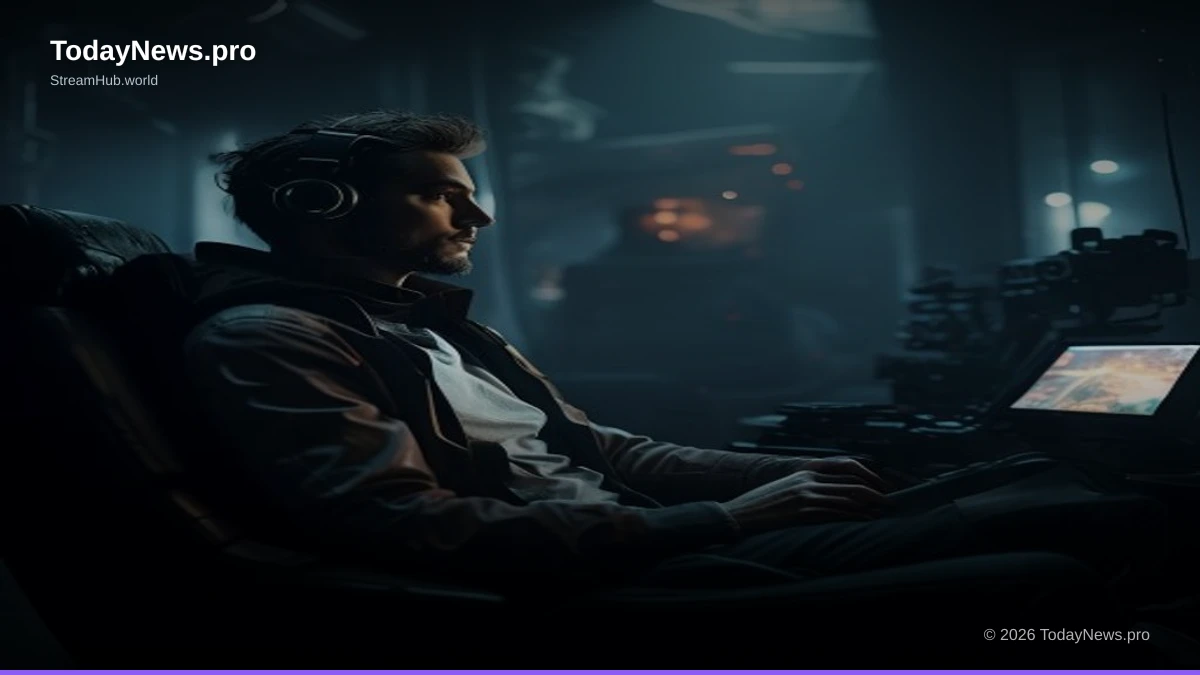
Global spending on interactive and immersive entertainment is projected to reach over $100 billion by 2027, signaling a dramatic shift in how audiences engage with stories.
The Shifting Sands of Narrative: From Linear to Lived Experience
For millennia, storytelling has been a largely passive, one-way transmission of information and emotion. From oral traditions around crackling fires to the flickering silver screen and the omnipresent glow of digital displays, audiences have predominantly been observers. The narrative arc was fixed, the character's fate predetermined, and the viewer's role confined to interpretation and emotional resonance. This traditional, linear model, while profoundly effective and deeply ingrained in human culture, is undergoing a radical metamorphosis. The advent of digital technologies, coupled with evolving audience expectations, is propelling storytelling beyond mere observation into realms of active participation and embodied experience. This evolution is not a subtle shift but a fundamental redefinition of what it means to tell and consume a story.
The core of this transformation lies in the concept of agency. Traditionally, the author or director held absolute control over the narrative. The audience received a meticulously crafted experience, designed to elicit specific emotional responses and intellectual contemplations. While the interpretation of a story can be subjective and deeply personal, the story itself remained static. Now, technologies are emerging that grant the audience a degree of control, allowing them to influence the plot, interact with characters, and even shape the very outcome of the narrative. This shift from passive reception to active co-creation is the bedrock of both interactive cinema and XR storytelling.
Consider the humble beginnings of this shift: early video games offered branching narratives, where player choices led to different story paths. This laid the groundwork, demonstrating that audiences were not only willing but eager to engage with stories in a more dynamic way. However, these early forms were often constrained by technological limitations, leading to narratives that felt somewhat rudimentary or siloed. The current wave of innovation is far more sophisticated, leveraging advanced computing power, sophisticated AI, and groundbreaking display technologies to create experiences that are not just interactive, but truly immersive and emotionally resonant.
The Passive Paradigm: A Legacy of Observation
For centuries, the dominant mode of storytelling involved a distinct separation between the storyteller and the audience. Whether it was a bard reciting an epic, a playwright's actors on a stage, or a filmmaker's projected images, the content was delivered in a predetermined sequence. The power lay in the creator's ability to evoke empathy, build suspense, and deliver catharsis through skillful manipulation of plot, character, and theme. This model fostered deep cultural traditions and shaped our understanding of narrative structure, with clear beginnings, middles, and ends. The impact was undeniable, creating shared cultural touchstones and profound individual experiences, all within the confines of a fixed narrative.
The advent of cinema in the late 19th century amplified this paradigm. The moving image offered unprecedented realism and emotional depth, captivating audiences worldwide. Yet, it remained a largely passive experience. The viewer watched, felt, and understood, but had no power to alter the unfolding drama. This linear, director-driven approach dominated filmmaking for over a century, becoming the lingua franca of visual storytelling. Even with the rise of home video and digital streaming, allowing for rewatches and pause functions, the fundamental nature of the narrative remained immutable. The story was told, and the audience received it.
The Seeds of Change: Early Interactive Experiments
The early forays into interactive storytelling were often born out of necessity and technological experimentation. Text-based adventure games like "Colossal Cave Adventure" and "Zork" in the late 1970s and early 1980s allowed players to input commands and influence the unfolding narrative, albeit through a textual interface. This was a significant departure, suggesting that users could be active participants rather than passive recipients. The introduction of graphical interfaces and CD-ROM technology in the 1990s brought about more visually rich interactive experiences, such as "Myst" and "The 7th Guest," which blended puzzles with atmospheric storytelling. These titles demonstrated the potential for narrative to be driven by exploration and discovery.
However, these early forms often struggled to balance interactivity with compelling, character-driven narratives. The choices presented could feel superficial, leading to a sense of artificial branching rather than genuine story evolution. Furthermore, the technological limitations meant that the "interactivity" was often confined to puzzle-solving or selecting dialogue options, rather than truly influencing the core plot or character development in a deeply meaningful way. The aspiration for a truly cinematic, yet interactive, experience remained largely a future prospect.
Interactive Cinema: The Dawn of Audience Agency
Interactive cinema represents a pivotal evolution, bridging the gap between the passive consumption of traditional film and the active engagement of video games. It's a medium where the audience is no longer just a spectator but a co-author, whose choices directly influence the unfolding narrative. This isn't about simply choosing a dialogue option or solving a puzzle; it's about making decisions that can alter plot points, change character relationships, and even lead to entirely different endings. This newfound agency fundamentally redefines the relationship between the viewer and the story, transforming a static experience into a dynamic, personalized journey.
The appeal of interactive cinema lies in its ability to offer a unique, tailor-made experience for each viewer. No two playthroughs are necessarily the same, encouraging repeat engagement and fostering a deeper connection with the characters and the world. This personalization is a powerful draw in an era saturated with content, offering a distinct value proposition. It taps into a primal human desire to influence outcomes, to see "what if," and to explore the myriad possibilities inherent in any given situation. The lines between viewer and participant blur, creating a more profound and memorable emotional impact.
The technological underpinnings of interactive cinema have matured significantly. Sophisticated branching narrative engines, AI-driven character behaviors, and advanced animation systems allow for seamless integration of player input without breaking the illusion of immersion. This means that audience choices can feel organic and consequential, rather than tacked on. The challenge for creators is to design narratives that are robust enough to accommodate these choices while still maintaining a cohesive and compelling story arc. It requires a meticulous approach to storyboarding, scripting, and development, ensuring that every possible path leads to a satisfying, albeit different, conclusion.
Defining the Interactive Element
The term "interactive cinema" can encompass a spectrum of engagement. At its simplest, it might involve viewers making binary choices via a remote or app that affect immediate plot developments, much like early "choose your own adventure" books brought to the screen. Platforms like Netflix have experimented with this, offering titles where viewers select paths at key junctures. However, the more sophisticated iterations move beyond simple branching. They might involve real-time decision-making under pressure, influencing character actions through subtle gestures or voice commands, or even contributing to the collective narrative of a shared viewing experience. The goal is to make the audience's input feel integral to the story's progression, not just an optional add-on.
A key differentiator is the depth of impact these choices have. Does a choice merely lead to a different scene, or does it fundamentally alter character motivations, introduce new conflicts, or even change the entire thematic resonance of the story? Truly compelling interactive cinema ensures that choices have weight and consequence, making the audience feel accountable for the narrative's trajectory. This requires intricate plot design and careful consideration of causality, ensuring that the narrative remains coherent regardless of the path taken.
Case Studies: Innovations in Audience Choice
One of the most prominent examples of interactive cinema is "Black Mirror: Bandersnatch." This Netflix film allowed viewers to make over a billion different choices, impacting the fate of the protagonist, Stefan Butler, and his attempts to adapt a choose-your-own-adventure novel into a video game. The film cleverly mirrored its own interactive nature, creating a meta-narrative that was both intriguing and unsettling. The experience highlighted the potential for truly non-linear storytelling, where the viewer's choices could lead to vastly different outcomes, including multiple distinct endings.
Beyond Netflix, other platforms and independent developers have explored interactive storytelling. Interactive documentaries, for instance, allow viewers to delve into specific topics, explore interconnected narratives, or even make ethical choices that affect the presentation of information. Games like "Detroit: Become Human" and "Until Dawn" blur the lines between cinema and gaming, featuring cinematic presentation, strong character development, and a heavy emphasis on player choice that significantly impacts the narrative and character survival. These titles demonstrate that interactive storytelling can deliver the emotional punch and artistic depth of traditional cinema while offering unparalleled audience agency.
| Interactive Cinema Platform/Title | Primary Interactive Mechanism | Narrative Impact | Release Year |
|---|---|---|---|
| Netflix - Black Mirror: Bandersnatch | Viewer choice at key plot junctures (via remote/app) | Significant plot divergence, multiple endings, meta-narrative exploration | 2018 |
| Quantic Dream - Detroit: Become Human | Player-controlled character actions, dialogue choices, quick-time events | Major plot alterations, character survival, branching story paths | 2018 |
| Supermassive Games - Until Dawn | Player-controlled character actions, dialogue choices, "butterfly effect" decisions | Character survival/death, varied plot outcomes, multiple endings | 2015 |
| Google Spotlight Stories | Gaze-based interaction, simple tap choices (mobile VR/360 video) | Subtle narrative shifts, exploration of story elements | Ongoing |
XRs Immersive Promise: Beyond Viewing, Towards Being
Extended Reality (XR), encompassing Virtual Reality (VR), Augmented Reality (AR), and Mixed Reality (MR), represents the next frontier in storytelling, moving beyond interactive cinema's focus on plot manipulation to an emphasis on embodied presence and experiential immersion. XR doesn't just invite you to influence a story; it places you *within* it. In VR, you are transported to entirely new worlds, able to look around, move, and interact with your surroundings as if you were physically there. AR, conversely, overlays digital elements onto the real world, transforming your immediate environment into a canvas for narrative. MR further blends these by allowing digital objects to interact with the physical world in real-time.
The power of XR storytelling lies in its ability to engage multiple senses and evoke a profound sense of "being there." This heightened immersion can lead to deeper emotional connections, greater empathy for characters, and a more visceral understanding of the narrative's themes. Imagine experiencing a historical event not by watching a documentary, but by standing on the battlefield or within the council chambers. Or consider a horror story where the scares are not just visual but tactile and auditory, amplified by your own physical presence in a virtual or augmented space. XR storytelling promises to make us feel the story, not just watch it.
This form of storytelling is not merely about spectacle; it's about crafting narratives that leverage the unique affordances of XR. This means designing for spatial awareness, intuitive interaction, and the psychological effects of immersion. The challenge for creators is to move beyond simply porting traditional narrative structures into XR and to develop entirely new storytelling paradigms that are native to these immersive environments. This includes exploring how sound design, environmental storytelling, and user locomotion can all contribute to a cohesive and impactful narrative experience.
Virtual Reality (VR): Stepping into the Narrative
Virtual Reality offers the most complete departure from traditional viewing. By donning a VR headset, users are effectively removed from their physical surroundings and placed within a fully computer-generated environment. This allows for unparalleled immersion, where the narrative can unfold around the user, and their gaze and movement become primary means of interaction. VR experiences can range from linear, cinematic narratives where the user simply observes from a fixed perspective but can look around freely, to fully interactive adventures where users can manipulate objects, converse with characters, and make choices that affect the story's progression.
The emotional impact of VR can be profound. Studies have shown that experiences in VR can elicit stronger emotional responses than similar content viewed on a traditional screen, due to the sense of presence and embodiment. This makes VR a powerful tool for empathy-building, allowing users to experience life from different perspectives, whether it's understanding the plight of a refugee or experiencing the challenges of a disability. However, VR storytelling also faces challenges, including motion sickness for some users, the cost of hardware, and the complexity of creating compelling, interactive 3D environments.
Augmented Reality (AR): Blending Worlds
Augmented Reality overlays digital information and graphics onto the real world, typically viewed through a smartphone, tablet, or AR glasses. Unlike VR, AR keeps the user grounded in their physical reality, enhancing it with digital elements. This offers a unique set of storytelling possibilities. Imagine an AR application that transforms your living room into a medieval castle, with characters interacting with your furniture, or an AR historical tour where you see a virtual ghost of a historical figure appear on the actual street where they lived. Pokémon Go, while primarily a game, demonstrated the public's appetite for AR experiences that integrate digital characters into their everyday lives.
AR storytelling can be highly personal and contextual, adapting to the user's immediate environment. It can be used for educational purposes, bringing static textbook illustrations to life, or for entertainment, creating interactive scavenger hunts that span physical locations. The narrative can be woven into the user's reality, blurring the lines between the digital and the physical in a way that feels both magical and natural. The widespread adoption of smartphones has made AR content accessible to a vast audience, paving the way for innovative narrative experiences.
Mixed Reality (MR): A Harmonious Blend
Mixed Reality takes AR a step further by allowing digital objects to not only appear in the real world but also to interact with it. MR devices, such as Microsoft's HoloLens, can map a physical space and enable virtual objects to be occluded by real-world objects, appear to rest on surfaces, and be manipulated by users in a way that feels physically intuitive. This opens up new avenues for narrative design where the digital characters and environments can truly coexist and interact with the user's physical space.
For example, a mystery narrative could involve virtual clues that are hidden behind real furniture, or a character might appear to be hiding behind your actual door. This level of interaction creates a more believable and engaging experience. MR storytelling has the potential to revolutionize training simulations, remote collaboration, and even interactive theatre, where digital actors can perform alongside human ones in a shared physical space. The technology is still developing, but the potential for deeply integrated, believable narratives is immense.
Technological Catalysts: Enabling New Forms of Storytelling
The transformative evolution of storytelling from passive observation to active participation and embodied immersion is not a sudden leap but a gradual ascent powered by significant technological advancements. These catalysts have lowered barriers to entry, increased fidelity, and opened up entirely new creative possibilities. From the processing power of modern hardware to the sophistication of AI and the development of intuitive input methods, technology is not just supporting new narrative forms; it's actively shaping them, pushing the boundaries of what stories can be and how we experience them.
The progress in computing power is fundamental. Rendering complex 3D environments in real-time for VR, or seamlessly overlaying detailed AR graphics onto the real world, requires immense computational resources. Advancements in GPUs and CPUs have made these once-unimaginable feats possible. Simultaneously, the development of sophisticated game engines like Unity and Unreal Engine has democratized content creation, providing powerful toolkits that allow storytellers to build interactive and immersive worlds without needing to be expert programmers.
Furthermore, the emergence of sophisticated AI is revolutionizing character interaction and narrative generation. AI-powered NPCs can exhibit more nuanced behaviors, respond dynamically to player actions, and even adapt their dialogue and motivations based on the unfolding story. This moves beyond pre-scripted responses, allowing for a more organic and believable character experience. The convergence of these technologies is creating a fertile ground for an explosion of new, engaging, and deeply personal narrative experiences.
Hardware Innovations: The Physical Interface
The physical devices through which we experience these stories are critical. In VR, advancements in headset technology have been rapid. Higher resolution displays reduce the "screen door effect," wider fields of view enhance immersion, and inside-out tracking systems (which track the headset's position in space without external sensors) have made VR more accessible and user-friendly. Haptic feedback suits and gloves are also emerging, allowing users to "feel" virtual objects and interactions, adding another layer of sensory engagement. For AR and MR, the development of lightweight, comfortable, and powerful smart glasses is the next frontier, promising a future where digital overlays are as seamless as looking at the real world.
The evolution of input devices has also been crucial. Traditional controllers have given way to motion controllers that track hand movements, allowing for more natural interactions within virtual spaces. Eye-tracking technology is becoming more commonplace, enabling narratives to respond to where a user is looking, adding a subtle yet powerful layer of interaction. Voice recognition, already widely adopted, is also being integrated more deeply into XR experiences, allowing for natural language commands and character dialogue.
Software and Engine Advancements: Building the Worlds
Game engines like Unity and Unreal Engine are the invisible architects of much of the interactive and XR content being created today. These powerful software suites provide a comprehensive set of tools for 3D modeling, animation, scripting, physics simulation, and rendering. Their continuous development, with features like real-time ray tracing for enhanced visual fidelity and robust networking capabilities for multiplayer experiences, empowers creators to build increasingly sophisticated and immersive worlds. The accessibility of these engines, coupled with extensive online communities and educational resources, has lowered the barrier to entry for aspiring narrative designers and developers.
Beyond engines, specialized software for narrative design is also emerging. Tools that facilitate the creation of complex branching narratives, manage large volumes of dialogue, and integrate AI behaviors are becoming more sophisticated. This allows storytellers to focus more on the creative aspects of narrative construction, while the software handles the technical complexities of managing interactive elements and ensuring narrative coherence across multiple player choices. The integration of AI for procedural content generation and dynamic narrative adaptation is also a rapidly developing area, promising to make interactive stories feel more organic and less reliant on pre-defined paths.
The Creative Frontier: Rewriting the Rules of Narrative Design
The advent of interactive cinema and XR storytelling necessitates a fundamental reimagining of traditional narrative design principles. Creators are no longer confined to a linear, author-centric approach. Instead, they must consider the audience's agency, the spatiality of the experience, and the dynamic nature of emergent narratives. This shift demands new skill sets, new methodologies, and a willingness to experiment and embrace the inherent unpredictability of user-driven stories. The creative frontier is vast, offering opportunities to explore uncharted territories of human connection and narrative possibility.
One of the core challenges is moving from crafting a single, fixed narrative to designing a web of interconnected possibilities. This involves not just writing multiple plot branches but also considering how character motivations, world states, and even thematic undertones can shift based on user choices. It requires a deep understanding of causality and consequence, ensuring that every interaction, no matter how small, feels meaningful and contributes to the overall narrative tapestry. The goal is to create experiences that feel organic and responsive, rather than rigidly pre-determined.
Furthermore, the spatial nature of XR storytelling opens up new avenues for environmental storytelling. The environment itself can become a character, revealing its history and secrets through subtle details, interactive objects, and emergent gameplay. Narrative can be conveyed through sensory cues, ambient sounds, and the very layout of the virtual space, allowing for a more immersive and subconscious form of storytelling. This requires a shift in focus from dialogue-heavy exposition to a more visual, experiential, and environmental approach to conveying information and emotion.
From Script to Web: Designing for Branching Narratives
Traditional screenwriting follows a linear structure, meticulously charting the progression of a story. Interactive narrative design, however, is more akin to creating a complex flowchart or a 'narrative web.' Instead of a single plot line, creators must map out multiple paths, decision points, and potential outcomes. This requires a shift in thinking from "what happens next?" to "what *could* happen next, depending on the user's choices?" Tools like Twine, or more advanced narrative design software, are used to visualize these complex structures, ensuring that all branches are accounted for and that the narrative remains coherent and engaging across all possible player journeys.
This approach also necessitates careful consideration of pacing and emotional arcs. Even with branching paths, a compelling story needs moments of tension, release, and character development. Designers must ensure that regardless of the choices made, the audience experiences a satisfying narrative journey. This might involve dynamically adjusting the pacing of events, introducing new challenges, or altering the emotional tone of scenes based on user actions. The ultimate aim is to create a sense of player agency that feels impactful and integral to the storytelling, not merely an illusion.
Spatial Storytelling and Environmental Narrative
In XR, the environment is not just a backdrop; it's a fundamental component of the narrative. Creators can use the physical space of VR or the augmented reality of AR/MR to convey information and evoke emotion in ways that are impossible with traditional media. A deserted room in VR might tell a story of abandonment through its disarray and decaying objects. In an AR experience, a historical site could be brought to life with virtual characters and events appearing in their original locations, offering a visceral connection to the past. This form of storytelling is often more subtle and experiential, encouraging exploration and discovery.
The design process involves thinking about how the user will navigate and interact with the environment. What visual cues will guide them? What objects will be interactive, and what will they reveal? How can the environment itself communicate mood, theme, or backstory? This requires a close collaboration between narrative designers, 3D artists, and sound designers to create a cohesive and immersive world that tells its own story, even in the absence of explicit dialogue or action. The user's journey through this space becomes intrinsically linked to their engagement with the narrative.
Challenges and Opportunities: Navigating the Interactive Landscape
While the potential of interactive cinema and XR storytelling is immense, the path forward is not without its hurdles. Creators and platforms face significant challenges, ranging from technological limitations and development costs to audience adoption and the very definition of what constitutes a successful narrative experience. However, these challenges also present unique opportunities for innovation, pushing the boundaries of creative expression and audience engagement in unprecedented ways.
One of the primary challenges is the inherent complexity and cost of developing interactive and XR content. Creating robust branching narratives, designing responsive AI, and building immersive virtual or augmented environments requires substantial resources, time, and specialized expertise. This can be a barrier for smaller independent creators, potentially concentrating power in the hands of larger studios with deeper pockets. Furthermore, the hardware requirements for immersive XR experiences can still be a barrier to widespread adoption, limiting the audience size for many projects.
Conversely, these challenges are driving incredible innovation. The need for more efficient development tools is spurring advancements in AI-assisted content creation and procedural generation. The push for greater accessibility is leading to the development of more affordable and user-friendly XR hardware. And the evolving nature of audience expectations is encouraging creators to experiment with new forms of storytelling that are truly native to these emerging mediums, leading to richer, more engaging, and ultimately more impactful narrative experiences.
The Development Hurdle: Cost, Complexity, and Talent
Developing high-quality interactive cinema and XR content is a significantly more complex and expensive undertaking than traditional linear media production. Creating multiple narrative paths, ensuring seamless transitions between them, and developing responsive AI characters requires a larger, more specialized team of writers, programmers, designers, and artists. The iterative nature of development, where constant testing and refinement are crucial to balance agency with narrative coherence, adds to the time and cost. For XR, the added challenge of spatial design, performance optimization for real-time rendering, and the need for specific hardware expertise further exacerbates these difficulties.
The talent pool for these specialized skills is also still developing. While many game developers possess relevant expertise, adapting those skills to purely narrative-driven interactive experiences or XR storytelling requires a unique blend of creative writing, technical proficiency, and an understanding of user psychology within immersive environments. This talent gap can be a significant bottleneck for studios looking to enter this space.
Audience Adoption and Monetization Models
Despite the growing interest, widespread audience adoption of XR technologies remains a significant hurdle. The cost of high-end VR headsets, the need for dedicated space to move around, and the initial learning curve for some interfaces can deter potential users. For interactive cinema, while accessible via existing platforms like smart TVs and computers, the novelty of the format can also be a factor. Furthermore, establishing robust and sustainable monetization models for these new forms of storytelling is an ongoing challenge. While some platforms have experimented with subscription models, pay-per-experience, or integrated in-app purchases, finding the right balance that respects user agency while ensuring creator viability is a complex equation.
However, the very challenges in adoption are creating opportunities. As hardware becomes more affordable and user-friendly, and as more compelling content emerges, the audience for interactive and XR storytelling is poised for significant growth. The success of platforms like and the increasing demand for personalized content suggest a strong appetite for engaging, interactive experiences. This growing audience, in turn, attracts more investment and talent, creating a positive feedback loop that will drive further innovation and broaden the appeal of these narrative forms. The exploration of new monetization strategies, such as episodic releases, community-driven content creation, and even interactive advertising, will be crucial for long-term success.
| Challenge | Description | Opportunity |
|---|---|---|
| High Development Costs | Complex scripting, AI, 3D asset creation, and testing. | Advancements in AI-assisted content creation, procedural generation, and more accessible game engines. |
| Hardware Accessibility | Cost of VR headsets, need for powerful PCs/consoles, limited AR adoption. | Decreasing hardware prices, development of standalone XR devices, increased AR integration on smartphones. |
| Talent Gap | Shortage of developers skilled in interactive narrative design and XR. | Growth of specialized educational programs, online courses, and cross-disciplinary collaboration. |
| Monetization Models | Uncertainty in effective revenue streams for interactive/XR content. | Exploration of subscription services, unique in-app purchases, episodic content, and interactive advertising. |
| Audience Education | Familiarizing the general public with new forms of storytelling. | Increased exposure through mainstream platforms, viral marketing, and word-of-mouth driven by compelling experiences. |
The Future is Now: Whats Next for Interactive and XR Narratives
The trajectory of storytelling is clear: it is moving from a passive art form to an active, embodied experience. Interactive cinema and XR narratives are not just fleeting trends; they represent a fundamental shift in how we connect with stories, characters, and worlds. As technology continues to advance and creative imaginations are unleashed, we can anticipate a future where the lines between creator and audience, reality and simulation, become increasingly blurred. The potential for profound, personalized, and deeply resonant storytelling is only just beginning to be realized.
We are on the cusp of a new golden age of narrative, one that is not dictated by the limitations of a physical medium but by the boundless possibilities of digital and immersive environments. The future promises narratives that adapt in real-time to our emotions, environments that transform based on our actions, and characters that feel as real and complex as the people we know. This evolution will not only redefine entertainment but also shape how we learn, connect, and understand ourselves and the world around us.
The integration of AI will likely play an even more significant role, moving beyond responsive characters to dynamically generated narrative arcs that are unique to each user's journey. Imagine stories that evolve based on your emotional state, your past choices, and even your real-world interactions. Furthermore, the metaverse, in its nascent stages, hints at persistent, shared narrative universes where audiences can not only participate but actively contribute to the ongoing evolution of stories and worlds. The democratization of storytelling tools will empower a new generation of creators, leading to a diverse and vibrant ecosystem of interactive and immersive narratives.
The journey beyond the screen is well underway. As technology democratizes, and as creators continue to innovate, the very fabric of storytelling will be rewoven, offering experiences that are more personal, more engaging, and more transformative than ever before. The future of narrative is not something we will watch; it is something we will live.