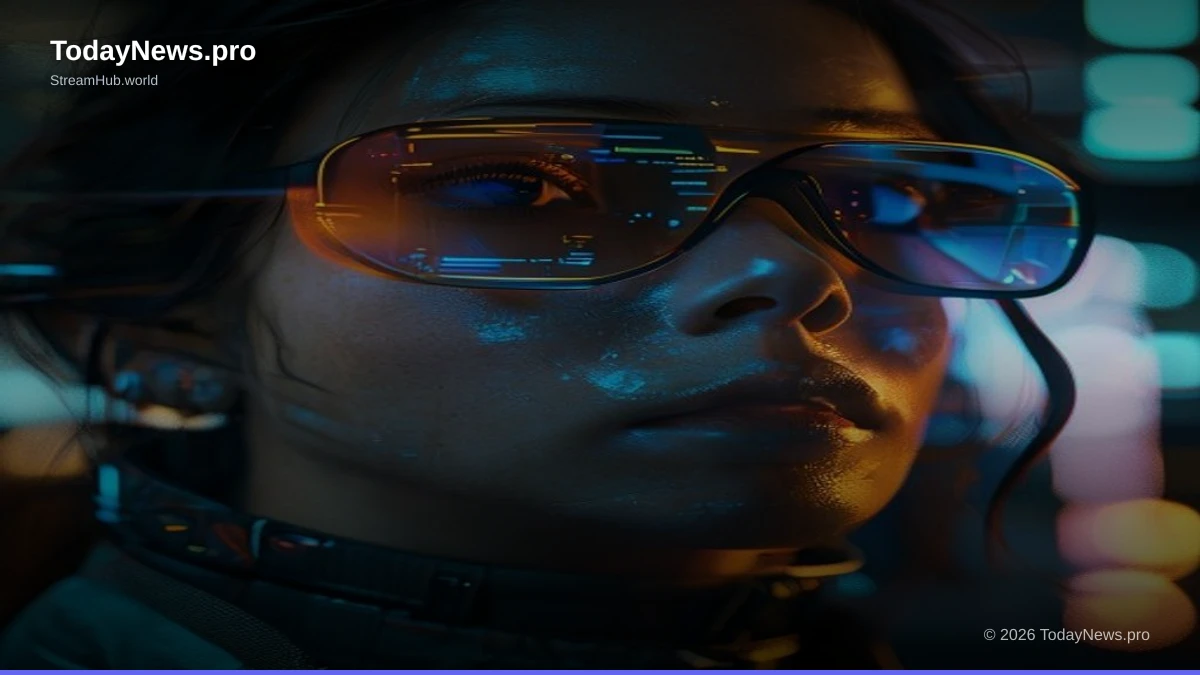
Augmented Realitys Imminent Ascent: A Paradigm Shift by 2030
Global spending on augmented reality (AR) and virtual reality (VR) is projected to reach over $300 billion by 2027, a significant leap from the estimated $70 billion in 2022, with AR poised to capture the larger share of this burgeoning market as it moves beyond niche applications into mainstream daily use. This isn't a distant sci-fi fantasy; it's a tangible technological evolution rapidly approaching its inflection point. By 2030, augmented reality will no longer be a novelty but an integral layer of our everyday existence, fundamentally altering how we communicate, work, learn, and play. The seamless blending of the digital and physical worlds promises to unlock unprecedented levels of convenience, efficiency, and immersive experience, ushering in an era where information and interaction are no longer confined to flat screens.
The AR Ecosystem: Hardware, Software, and the User Interface Revolution
The maturation of augmented reality hinges on a robust and interconnected ecosystem. At its core are the hardware advancements, with smart glasses and other wearable devices shedding their clunky prototypes for sleeker, more comfortable, and powerful designs. These devices are becoming increasingly sophisticated, boasting higher resolution displays, wider fields of view, improved battery life, and advanced sensors capable of accurately mapping and understanding the user's environment. Chipset manufacturers are developing specialized processors optimized for AR tasks, enabling real-time rendering of complex 3D graphics and sophisticated spatial computing. Complementing the hardware is the software infrastructure, a dynamic landscape of operating systems, development platforms, and content creation tools. Companies are investing heavily in creating intuitive AR operating systems that manage the flow of information and interactions between the user, the device, and the digital overlays. Development kits (SDKs) are becoming more accessible, empowering a wider range of developers to build compelling AR applications. This democratization of creation is crucial for populating the AR world with meaningful and useful content. The user interface (UI) and user experience (UX) for AR are undergoing a radical transformation. Traditional touchscreens and keyboards are giving way to more natural and intuitive interaction methods. Voice commands, gesture recognition, and eye-tracking are emerging as primary modes of control, allowing users to interact with digital elements in a hands-free, intuitive manner. This shift aims to minimize cognitive load and make AR feel like a natural extension of human perception rather than a separate technological interface.
The Evolution of AR Wearables
The journey from bulky Google Glass to sophisticated, everyday-wearable smart glasses is a testament to rapid technological progress. Manufacturers are focusing on aesthetics, comfort, and battery efficiency to encourage widespread adoption. These devices are no longer just for tech enthusiasts; they are gradually becoming integrated into the fashion and functionality of personal accessories.
Spatial Computing and Environmental Understanding
At the heart of advanced AR lies spatial computing. This involves devices not only displaying digital content but also understanding and interacting with the physical space around them. Through sensors like lidar and advanced computer vision, AR devices can create precise 3D maps of their surroundings, allowing digital objects to be anchored realistically and interact with real-world surfaces and objects.
Content Creation and Distribution Platforms
The success of any immersive technology depends on the richness of its content. Platforms are emerging that simplify the creation of 3D assets and AR experiences, making it easier for businesses and individuals to develop and deploy AR applications. These platforms are crucial for building a vibrant AR ecosystem, from gaming and entertainment to educational tools and professional simulations.
Reshaping Daily Life: ARs Impact Across Key Sectors
The pervasive nature of AR by 2030 will lead to profound transformations across numerous sectors, touching virtually every aspect of our daily routines and professional lives. The ability to overlay digital information and interactive elements onto our physical world offers unprecedented opportunities for enhancement and innovation.
Consumer and Entertainment Transformation
The way we consume media, shop, and entertain ourselves will be revolutionized. Imagine trying on clothes virtually, seeing how furniture would look in your living room before purchasing, or engaging with interactive museum exhibits that bring historical artifacts to life. Gaming will evolve into deeply immersive experiences where virtual characters and environments merge seamlessly with our surroundings. Navigation will become more intuitive, with directional arrows and points of interest overlaid directly onto our view of the street.
The Professional Landscape: Productivity and Training
For professionals, AR promises a significant boost in productivity and efficiency. In manufacturing and assembly, workers can receive real-time instructions and visual guides directly in their line of sight, reducing errors and speeding up processes. Technicians can receive remote assistance from experts who can annotate their view of a problem. Architects and designers can visualize their creations in situ, allowing for better client understanding and design iteration. Training will become more hands-on and effective, with complex procedures simulated in a safe, augmented environment.
Healthcare and Beyond: Precision and Accessibility
The medical field stands to benefit immensely. Surgeons could benefit from overlaid anatomical information during procedures, enhancing precision. Medical students could practice complex surgeries on virtual patients with realistic feedback. AR can also improve patient care through remote diagnostics and personalized health monitoring, making healthcare more accessible and efficient. Beyond these, AR can enhance education, tourism, and even social interactions, fostering deeper understanding and connection.
Consumer and Entertainment Transformation
Shopping will transform from a passive browsing experience to an active, immersive one. Brands will leverage AR to create virtual showrooms, allowing consumers to explore products in detail from the comfort of their homes. The entertainment industry will see the rise of interactive AR games and experiences that extend beyond the screen. Imagine attending a concert where visual effects blend with your actual surroundings, or playing a board game that comes to life on your coffee table.
The Professional Landscape: Productivity and Training
Field service technicians will be able to access repair manuals, schematics, and expert guidance overlaid directly onto the equipment they are servicing, drastically reducing downtime. Architects and engineers can walk through virtual models of buildings on-site, identifying potential issues before construction begins. Logistics and warehousing operations can be optimized with AR-guided picking and packing systems.
Healthcare and Beyond: Precision and Accessibility
In surgery, AR can provide real-time visualization of patient anatomy, blood vessels, and tumor margins, enabling greater precision and minimizing invasiveness. Medical training will become more engaging and effective, allowing students to practice procedures repeatedly in a risk-free environment. Telemedicine will be enhanced, with doctors able to see and interact with patient data overlaid on their physical examination.
75%
of consumers interested in trying AR for online shopping.
60%
of businesses expect to use AR for employee training by 2028.
40%
increase in productivity reported in pilot AR implementation in manufacturing.
Navigating the Challenges: Hurdles to Widespread AR Adoption
Despite the immense potential, several significant challenges must be overcome before AR becomes a ubiquitous part of our lives by 2030. The primary hurdles include the cost and accessibility of advanced hardware, the development of compelling and useful content, and critical issues surrounding user privacy and data security. The current generation of high-end AR headsets, while impressive, remains prohibitively expensive for the average consumer. As manufacturing scales and technology matures, costs are expected to decrease, similar to the trajectory of smartphones and personal computers. However, achieving mass-market affordability will be a gradual process, likely involving tiered product offerings. Content creation remains a bottleneck. While development tools are improving, building sophisticated and engaging AR experiences requires specialized skills and significant investment. A critical mass of developers and content creators is needed to fill the AR landscape with applications that offer genuine value and utility, moving beyond novelty into indispensable tools.
"The biggest barrier isn't the technology itself, but the 'killer app' – the AR experience that makes people say, 'I can't live without this.' We're still searching for that universally compelling use case that will drive mass adoption."
— Dr. Anya Sharma, Lead Researcher, Immersive Technologies Institute
Privacy and data security are paramount concerns. AR devices, by their nature, collect vast amounts of data about their users and their environments. Ensuring this data is collected, stored, and used responsibly, with robust user consent and strong encryption, will be crucial for building public trust. The potential for intrusive surveillance or the misuse of personal spatial data requires careful ethical consideration and strong regulatory frameworks.
Hardware Cost and Accessibility
The initial high price point of AR headsets is a significant barrier to entry for many consumers. Mass production and technological advancements are expected to drive down costs, but achieving parity with existing consumer electronics will take time. The development of more affordable, yet capable, AR glasses is a key milestone for widespread adoption.
Content Creation and Ecosystem Maturity
A rich ecosystem of AR applications is essential for user engagement. The current limitations in user-friendly development tools and the need for specialized expertise in 3D modeling and AR programming present a challenge. Encouraging broader developer participation and creating accessible content creation platforms are vital.
Privacy, Security, and Ethical Concerns
The continuous capture of real-world data by AR devices raises significant privacy concerns. Robust security measures and clear ethical guidelines are necessary to prevent misuse of personal information and spatial data. Building public trust through transparency and responsible data handling will be critical.
Economies of scale, component cost reduction, tiered product offerings.
Content Availability
Lack of compelling use cases, user engagement issues.
Developer tool improvement, open platforms, creator incentives, cross-platform compatibility.
User Privacy & Security
Erodes public trust, invites regulatory scrutiny.
Robust data encryption, transparent consent mechanisms, clear privacy policies, industry standards.
Interoperability
Fragmented user experience, limits app portability.
Standardized AR frameworks, cross-platform development tools.
The Economic Tides: Market Growth and Investment Prospects
The economic implications of augmented reality are vast and are already attracting significant investment from major technology players and venture capitalists. The global AR market is poised for exponential growth, driven by its transformative potential across industries. Analysts predict that the market will not only expand but also diversify, with new business models and revenue streams emerging as AR becomes more integrated into daily life.
Global AR Market Size Forecast (USD Billion)
2023$28.2
2025$65.8
2028$142.7
2030$250.0+
Investment is flowing into hardware manufacturers, software developers, and content creators specializing in AR. Major tech giants like Apple, Meta, Google, and Microsoft are heavily investing in R&D and strategic acquisitions, signaling their commitment to leading the AR revolution. This sustained investment is crucial for overcoming the technical and economic hurdles, accelerating innovation, and driving down costs for consumers. The commercial applications of AR are particularly promising for economic growth. Businesses are recognizing AR's ability to enhance customer engagement, improve operational efficiency, and create new avenues for marketing and sales. From e-commerce and retail to manufacturing, healthcare, and education, AR is expected to unlock significant economic value, creating new jobs and industries. The development of the "metaverse," while still in its nascent stages, is intrinsically linked to AR's growth, promising a persistent, interconnected digital layer that will necessitate a robust AR infrastructure.
"The economic potential of AR is staggering. We're not just looking at a new device category; we're looking at a fundamental shift in how commerce, communication, and creation will occur. Companies that don't embrace AR risk being left behind."
— Benjamin Carter, Chief Technology Analyst, Global Market Insights
The rise of AR will also spur innovation in related fields such as artificial intelligence (AI), 5G connectivity, and edge computing, all of which are essential for delivering seamless and responsive AR experiences. The interplay between these technologies will create a powerful synergy, driving further advancements and economic opportunities.
Ethical Considerations and the Future of Human-Computer Interaction
As augmented reality becomes more ingrained in our daily lives, a critical examination of its ethical implications is paramount. The pervasive nature of AR raises profound questions about privacy, data security, the nature of reality itself, and the future of human-computer interaction. One of the most pressing concerns is privacy. AR devices, particularly smart glasses, will constantly be collecting visual and audio data of their surroundings. This raises the specter of ubiquitous surveillance, both by corporations and potentially by governments. Ensuring robust data anonymization, transparent data collection policies, and strong user consent mechanisms will be crucial. The ability for individuals to control what data their AR devices collect and share is fundamental to building trust.
80%
of users concerned about AR data privacy.
65%
of AR experiences expected to be location-aware.
50%
of AR content to be personalized by 2029.
The blurring lines between the physical and digital worlds also bring ethical challenges related to misinformation and manipulation. AR could be used to overlay false information onto real-world environments, creating sophisticated forms of propaganda or deception. Developing mechanisms for verifying the authenticity of AR content and fostering digital literacy will be vital. Furthermore, the continuous interaction with digital overlays could impact our perception of reality and social interactions. Will we become so accustomed to augmented information that we lose the ability to engage with the world purely as it is? Will our empathy and social skills diminish if our interactions are mediated by digital interfaces? These are complex questions that will require ongoing societal dialogue and research. The evolution of human-computer interaction (HCI) through AR is moving towards more intuitive and less intrusive interfaces. The goal is to make technology disappear into the background, becoming a seamless extension of our senses and intentions. However, this also raises questions about digital addiction and the potential for AR to create echo chambers or filter out dissenting views, further exacerbating societal divisions. The development of ethical guidelines and regulatory frameworks for AR must be a collaborative effort involving technologists, ethicists, policymakers, and the public. Proactive measures are essential to ensure that AR technology is developed and deployed in a way that benefits humanity and upholds fundamental human rights.
Looking Ahead: The Next Frontier of Augmented Reality
As we stand on the precipice of augmented reality's widespread adoption, the horizon of possibilities continues to expand. By 2030, the AR landscape will likely be characterized by increased sophistication, deeper integration, and a more profound impact on our societal fabric. The technology will move beyond mere overlaying of information to creating truly interactive and contextually aware experiences. One of the key advancements will be the maturation of AI within AR systems. AI will enable AR devices to understand user intent more accurately, anticipate needs, and provide proactive assistance. This could range from an AI companion offering real-time language translation seamlessly during a conversation to an intelligent assistant guiding you through complex tasks with personalized, context-aware instructions.
"The true power of AR lies not just in seeing digital objects in the real world, but in having them understand and interact with that world in a meaningful way. The integration of advanced AI is the key to unlocking that potential."
— Professor Jian Li, Director of Human-Computer Interaction Lab, Tech University
The development of persistent AR experiences, often referred to as the "spatial web" or "AR cloud," will be another significant leap. This would mean that digital information and experiences can be anchored to specific physical locations and remain there for others to discover and interact with. Imagine leaving digital notes for friends at specific spots, or historical information appearing as you walk past a landmark. This shared digital layer will foster new forms of social interaction, collaboration, and discovery. Furthermore, the convergence of AR with other emerging technologies will open up entirely new paradigms. Integration with haptic feedback systems could allow users to "feel" virtual objects. Advanced biometric sensors within AR devices could enable personalized health monitoring and adaptive user experiences. The seamless integration with the Internet of Things (IoT) will allow AR to provide intuitive control and interaction with our connected environments. The journey towards a fully realized AR future by 2030 will undoubtedly be dynamic and challenging, but the trajectory is clear. Augmented reality is set to move from a supplementary technology to a foundational layer of our digital and physical lives, fundamentally reshaping how we perceive, interact with, and understand the world around us. The next decade promises to be a defining period for this transformative technology.
Will AR glasses replace smartphones by 2030?
It's unlikely that AR glasses will entirely replace smartphones by 2030. Instead, they are expected to complement smartphones, with many functions migrating to wearable AR devices. Smartphones will likely remain important for their processing power, extensive app ecosystems, and as a backup or primary device for users not yet ready for full AR integration.
What are the biggest industries AR will impact most significantly?
The industries expected to see the most significant impact from AR by 2030 include retail and e-commerce (virtual try-ons, immersive shopping), manufacturing and logistics (training, assembly guidance, maintenance), healthcare (surgical assistance, medical training, diagnostics), education (interactive learning experiences), and entertainment (gaming, live events).
How will AR affect our social interactions?
AR could enhance social interactions by facilitating real-time translation, providing contextual information about people (with their consent), and enabling shared immersive experiences. However, there are also concerns about potential over-reliance on digital mediation, which could impact authentic human connection and empathy if not carefully managed.
What is the difference between Augmented Reality (AR) and Virtual Reality (VR)?
Virtual Reality (VR) completely immerses the user in a simulated digital environment, replacing their view of the real world. Augmented Reality (AR), on the other hand, overlays digital information, such as images, sounds, or text, onto the user's view of the real world, enhancing rather than replacing it.


 Maria Gonzalez